Raised bed materials: choose the frame for the years and conditions you actually need
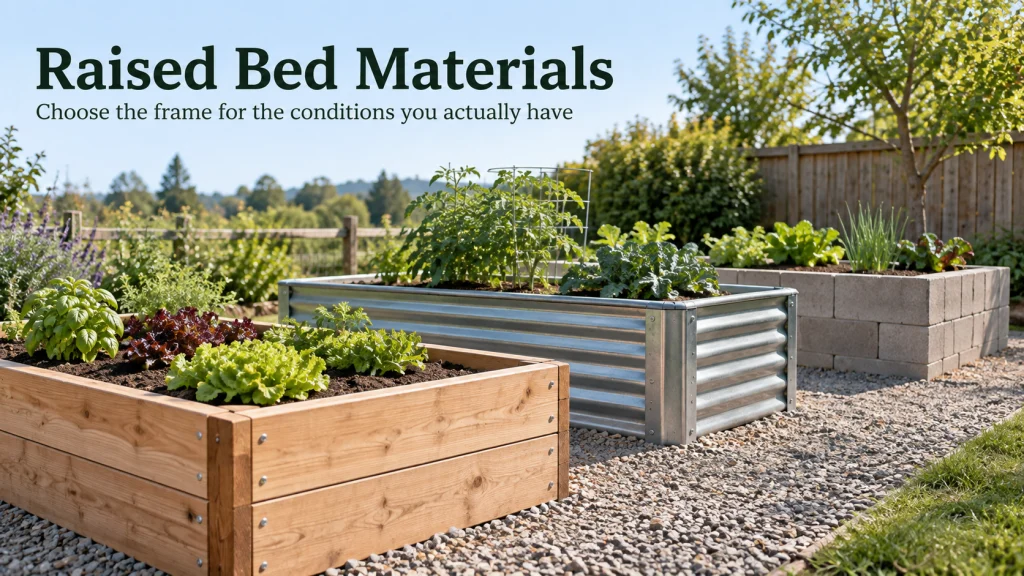
Raised Bed Materials

Raised garden bed materials are best chosen by site conditions, budget, maintenance tolerance, and how easily the frame can be repaired or replaced. Wood, metal, masonry, plastic, and composite systems can all work, but a material name alone does not prove lifespan, safety, or performance. The useful comparison starts with what touches wet soil, how
How much soil for raised bed projects before the bag count gets expensive

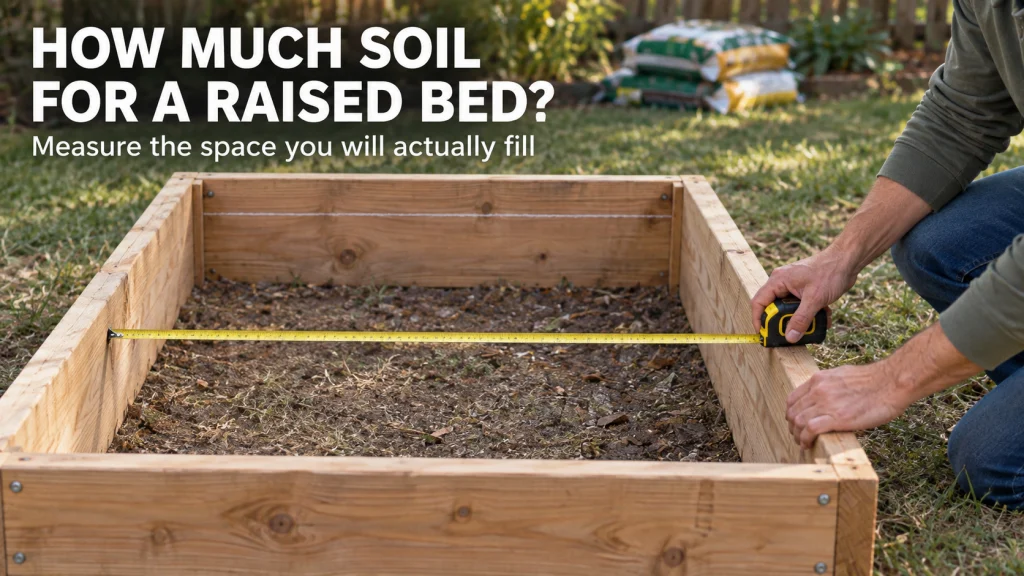
How Much Soil For Raised Bed

A raised bed soil order should start with the space you actually plan to fill, not the size printed on a kit or the outside dimensions of the frame. Measure the usable inside length and width, decide the intended fill depth, then calculate cubic feet before converting to cubic yards or bag counts. Freeboard, wall

How wide should a raised garden bed be? Let reach decide before lumber length

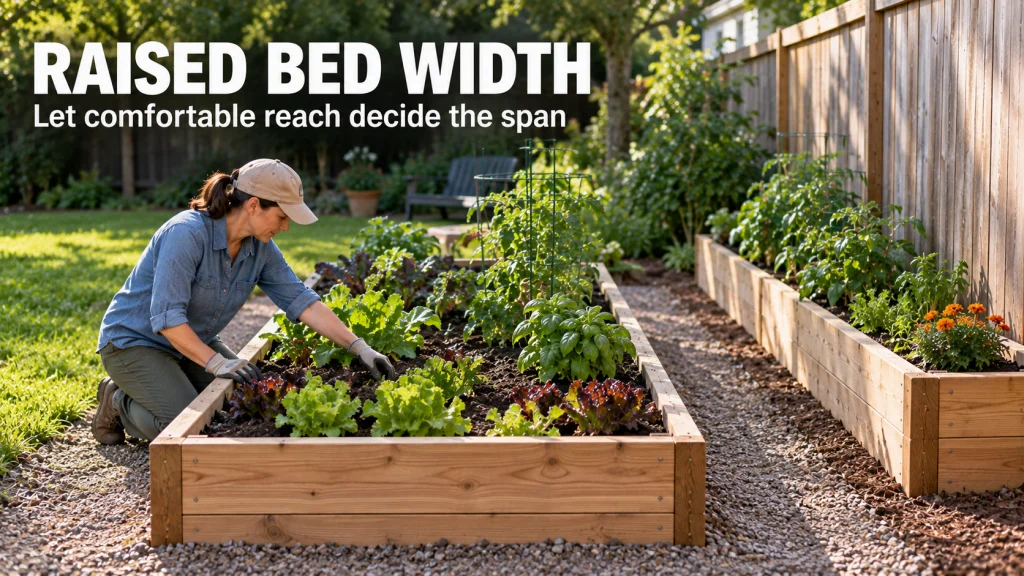
How Wide Should A Raised Garden Bed Be

How wide should a raised garden bed be? Start with the number of sides you can actually work from, then choose a width that keeps the center within comfortable reach without stepping into the growing area. A bed that works from two sides can usually be wider than the same bed placed against a wall

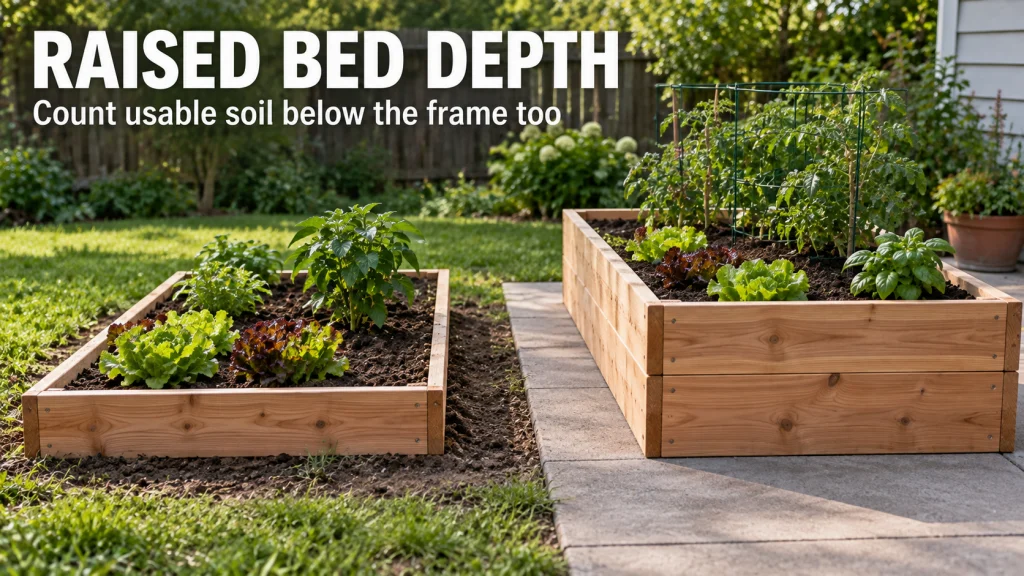
How deep should a raised garden bed be? Count the soil below it too

How Deep Should A Raised Garden Bed Be

Raised bed depth is not just the height of the frame. An open-bottom bed over healthy, loosened soil may give roots usable space below the boards, while a bed on concrete or another hard surface must provide its full root zone inside the bed. Crop needs, the condition of the soil underneath, room left for

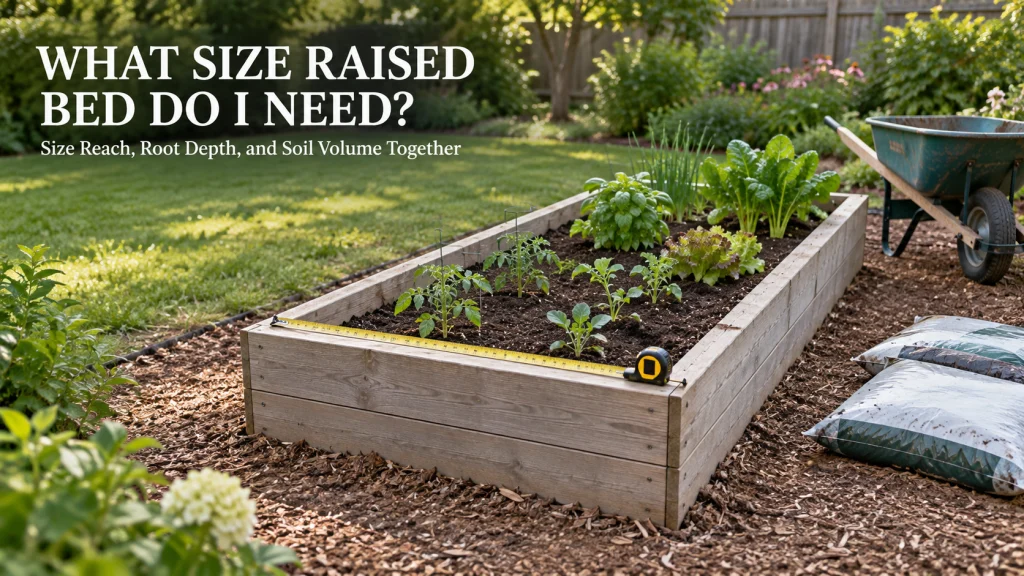
What size raised bed do I need? Size reach, root depth and soil bill together

What Size Raised Bed Do I Need

A useful raised bed size is not just a footprint such as 4 by 8 feet. Width should come from how many sides you can reach, length should fit the site and work route, and wall height should be separated from the total rootable depth available to plants. Beds on usable soil can let roots

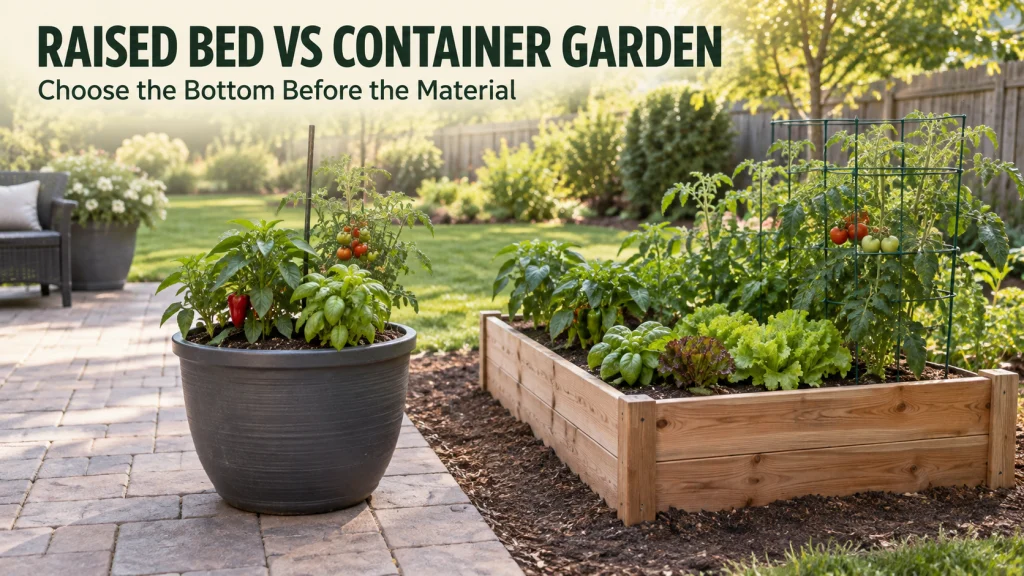
Raised bed vs container garden: open bottom or closed root zone

Raised Bed Vs Container Garden

A raised bed and a container can sit at the same height and still create very different root zones. The most useful distinction is whether roots can continue into the ground below or remain inside a closed volume of growing media. That difference affects rootable depth, portability, watering margin, fill volume, stability, and how permanent

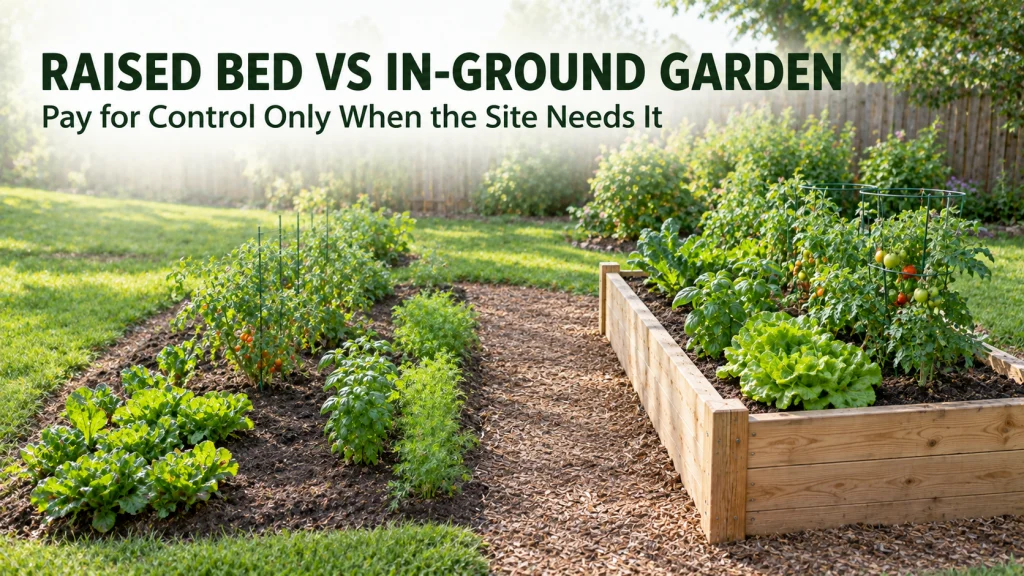
Raised bed vs in ground garden: pay for control only when the site needs it

Raised Bed Vs In Ground Garden

Raised beds make sense when they solve a real problem with soil, drainage, access, or the usable growing area. In-ground planting is often the simpler choice when the existing soil can be used safely, water moves through the site reasonably well, and working at ground level is practical. The comparison should include the cost and

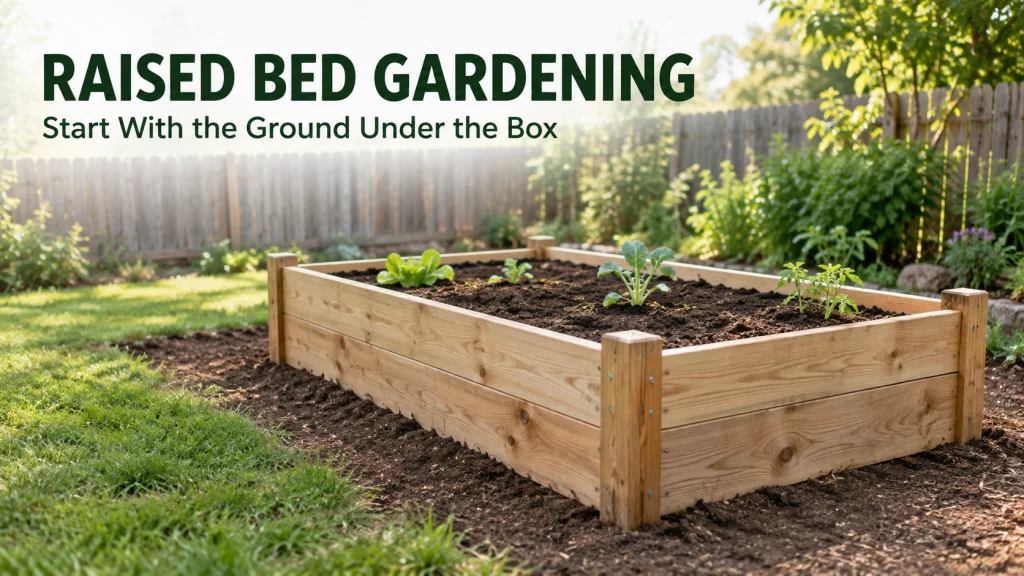
Raised bed gardening starts with the ground under the box

Raised Bed Gardening

Raised bed gardening works best when the bed is chosen from the site upward, not from a catalog size downward. The ground below the frame, the distance you can comfortably reach, the crops you plan to grow, and the amount of soil you need all change what a sensible bed looks like. An open-bottom bed