Raised beds make sense when they solve a real problem with soil, drainage, access, or the usable growing area. In-ground planting is often the simpler choice when the existing soil can be used safely, water moves through the site reasonably well, and working at ground level is practical. The comparison should include the cost and fill burden of a framed bed, its tendency to need closer moisture monitoring, and the maintenance that comes with keeping a separate growing zone. The useful question is not which system looks more finished, but which one removes a constraint that actually exists in your yard.
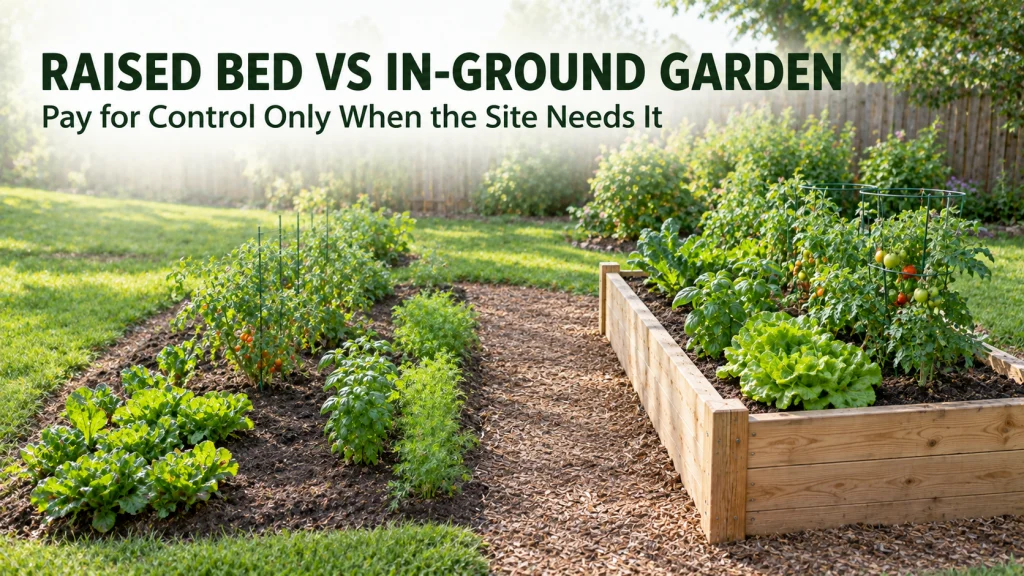
A raised bed should solve a constraint, not signal progress
The raised bed vs in ground garden decision gets distorted when the box itself starts to feel like an upgrade. A perfectly workable patch of ground can grow vegetables, herbs, and flowers without first being surrounded by lumber or metal and filled with purchased material. The frame becomes useful when it changes something that matters, such as keeping the root zone above a wet site, improving access, or giving you a controlled growing area where the existing soil is unsuitable. If it does none of those things, the structure may be adding work rather than removing it.
Start with the site before looking at bed materials or fill. Check where water collects, how difficult the soil is to work, whether you can reach the growing area comfortably, and whether the location itself has enough light and convenient access to water. If you are still deciding where the garden belongs, work through how to choose a garden site before deciding how to contain the soil. For the broader setup choices that come after location, the raised bed gardening guide explains how the system fits into an ordinary home garden.

This metal raised garden bed measures 4 by 2 by 1 feet and uses Q195 galvanized sheet. Its oval frame creates a defined raised growing zone above the surrounding ground. It fits this section because added structure makes sense when extra soil depth, drainage, or a separate growing area solves a real site constraint.
Check On AmazonIf you click this link and buy, we earn a commission at no additional cost to you.
Compare existing soil usability before pricing a frame
Native soil does not need to be perfect to justify an in-ground garden. It needs to be workable enough for the plants you intend to grow, free from known problems that make food gardening inappropriate, and capable of supporting a root zone after reasonable preparation. Compaction, poor structure, low organic matter, or an inconvenient pH can sometimes be improved without building a new growing system. The important distinction is between soil that needs ordinary improvement and a site condition that makes bypassing the soil a better decision.
A soil test is more useful than guessing from color or texture alone when fertility, pH, or possible contamination affects the decision. If the ground is usable and the main concern is that it feels heavy, sparse, or neglected, soil improvement may be a more direct response than buying a frame and importing an entirely new root zone. A known or suspected contamination problem needs its own management plan; do not assume an open-bottom frame by itself makes the site suitable for food gardening. Severe compaction, persistent saturation, or very shallow usable soil can still justify adding root-zone depth, but the setup should match the specific constraint rather than treating a frame as a substitute for understanding the site.
| Constraint to check | What favors in-ground | What can justify a raised bed |
|---|---|---|
| Existing soil | Usable soil that can be improved with ordinary homeowner practices | Soil that is unsuitable, extremely compacted, very shallow, or a poor fit for the intended use |
| Drainage | Water drains without prolonged saturation in the intended planting area | The root zone needs to be elevated above a persistently wet or poorly drained area |
| Access | Working, kneeling, and reaching at ground level are practical | Bringing the growing surface higher would meaningfully reduce bending or improve reach |
| Budget and setup | You want to use existing ground and keep startup materials limited | You are willing to pay for a separate frame, fill, and the maintenance that follows |
| Reversibility | You may move, expand, or reshape the garden later | You want a defined planting footprint and are comfortable planning around it |
The table is a filter, not a scorecard. A single serious constraint can justify the added structure, while several mild preferences may not. If your ground passes the soil, drainage, and access checks, keep that result in view before shopping for anything. That simple pause prevents a decorative preference from being mistaken for a horticultural requirement.
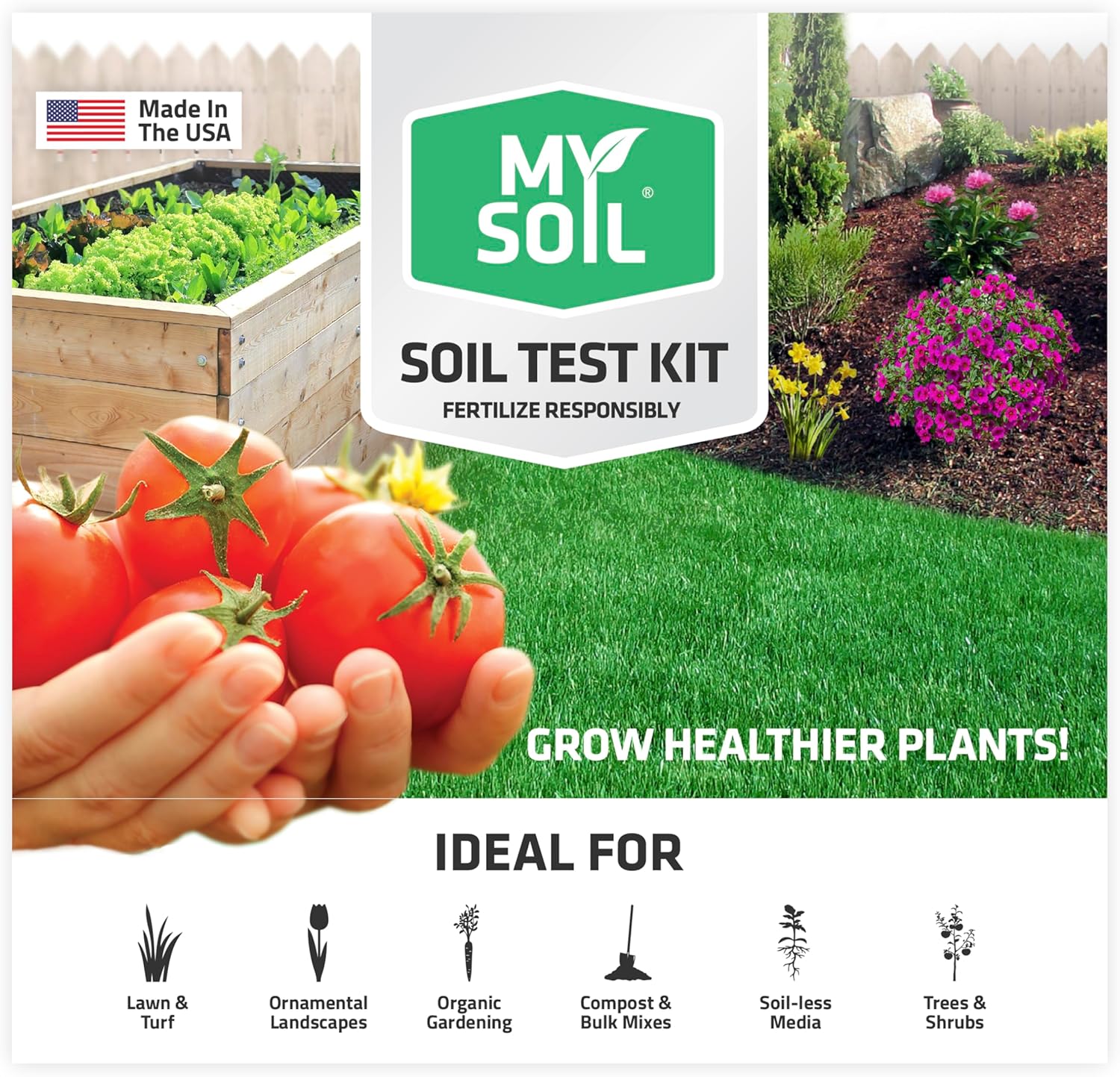
This mail-in soil test measures 13 plant-available nutrient levels, including nitrogen, along with soil pH. The kit provides lab-based results and soil-specific recommendations instead of relying on soil color or texture alone. It is a practical fit for checking fertility and pH before deciding whether ordinary soil improvement may be enough.
Check On AmazonIf you click this link and buy, we earn a commission at no additional cost to you.
Put drainage and root connection beside soil control
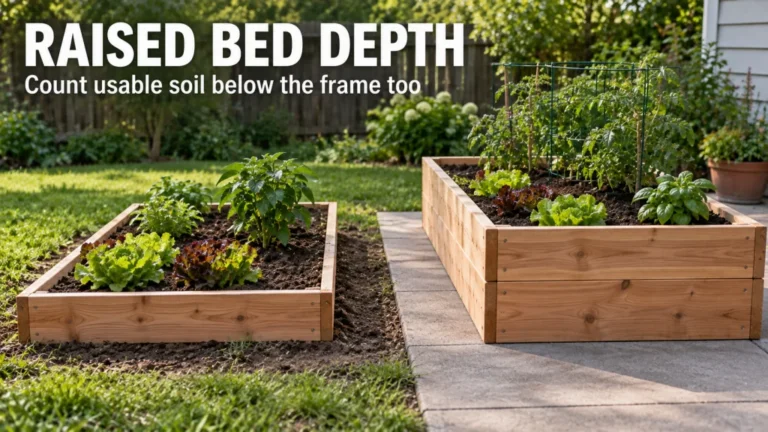
Raised beds are often described as if the frame creates a completely separate soil environment, but an open-bottom bed placed over usable ground usually remains connected to the soil below. Roots can move beyond the added layer when the underlying soil allows it, which means the condition of that ground still matters. This is one reason to avoid treating every raised bed like a giant container. A bed on soil and a bed on an impermeable surface may look similar above the rim while behaving very differently below it.
The practical advantage is that elevating the root zone can improve drainage in a difficult site and let you start with a more controlled soil blend. The trade-off is that better drainage can also mean faster drying, especially during hot, dry weather, so the benefit is not simply “more drainage is better.” If the native soil already drains well, raising it further may create a watering problem you did not previously have. That extra watering burden matters most when summer heat, wind, or a coarse soil mix already pushes moisture loss higher. For readers comparing other above-ground growing systems, raised beds and container gardening covers the broader differences in root volume, mobility, and growing space.

This heavy-duty hand tool has a stainless steel blade with a sharpened edge, serrated edge, depth markings, and a forked tip. It is designed for digging, planting, splitting, transplanting, and weeding. Those functions make it useful for working the soil interface where drainage, planting depth, and root access matter.
Check On AmazonIf you click this link and buy, we earn a commission at no additional cost to you.
Compare startup cost and fill burden
A framed bed creates two startup jobs that an in-ground plot may avoid: building or assembling the enclosure, then filling the volume you created. The larger or taller the bed, the more material has to be sourced, moved, and placed before the first planting goes in. That is not automatically a reason to avoid raised beds, because the extra work can be justified by poor soil or a meaningful access need. It does mean the cost comparison should include the whole setup rather than the frame price by itself.
In ground gardening can still have costs for testing, compost, mulch, tools, or correcting a genuine soil problem, so it should not be presented as free. The fair comparison is the amount of work and material needed to make each option functional on the same site. If the existing soil needs only modest improvement, importing a full bed volume may be unnecessary duplication. If the existing site would require extensive correction or cannot provide the needed growing zone, the raised bed expense is paying for a specific capability rather than appearance.
| Cost or maintenance item | In-ground garden | Open-bottom raised bed | Decision question |
|---|---|---|---|
| Initial structure | Usually none | Frame or other enclosure if a contained bed is used | Does the structure solve a site or access problem? |
| Growing medium | Existing soil plus only the amendments actually needed | Enough suitable material to establish the raised root zone | Are you replacing poor soil or replacing soil that was already usable? |
| Water management | Depends on soil texture, weather, mulch, and crop demand | Often needs closer monitoring because the raised zone can dry faster | Can your watering routine support the difference? |
| Long-term upkeep | Soil care, weed control, mulch, and routine garden maintenance | The same garden work plus settling fill and eventual enclosure upkeep when applicable | Are you comfortable maintaining a separate structure and soil volume? |
| Future changes | Usually easier to expand, reshape, or return to another yard use | More committed to the footprint, especially with durable materials | How likely are you to move or redesign the growing area? |
Use this worksheet before reducing the decision to a single purchase price. Fill, delivery, moving material, irrigation changes, and later maintenance can matter as much as the enclosure itself. An inexpensive frame can still create an expensive root zone if the bed is larger than the site problem requires. The reverse is also true: a well-targeted raised bed can be a sensible expense when it replaces repeated struggle with an unsuitable patch of ground.

This garden cart has a 4-cubic-foot poly bed and a 600-pound maximum load capacity. Its quick-release dump design and pneumatic tires are intended for moving yard and garden materials. That makes it useful when comparing the real labor of hauling soil and amendments needed to fill a raised bed.
Check On AmazonIf you click this link and buy, we earn a commission at no additional cost to you.
Compare repeat watering and maintenance
Watering is where the raised bed decision keeps charging rent after construction is finished. Extension guidance consistently notes that raised bed soil can dry faster than surrounding ground, particularly in hot and dry conditions, which means moisture needs to be checked rather than assumed from a familiar calendar. That does not mean every raised bed needs constant watering, because soil mix, bed depth, mulch, weather, plant size, and connection to the ground all change how quickly moisture is lost. It does mean that a system chosen for drainage should not be evaluated as if drainage has no maintenance consequence.
Fill can also settle as organic material decomposes and particles consolidate, so maintaining the intended root zone may require adding material over time. Framing materials can weather, loosen, corrode, rot, or otherwise age depending on what the bed is made from and how it is installed. In ground beds avoid the enclosure maintenance but still require weed control, soil care, mulching, and seasonal cleanup. The choice is therefore not maintenance versus no maintenance, but which maintenance pattern fits your site and routine better.
- Choose in-ground when the soil holds usable moisture, drains adequately, and you want fewer built components to maintain.
- Choose a raised bed when the improved access, drainage, or controlled root zone is worth closer moisture monitoring and added upkeep.
- Skip extra height when a lower bed already solves the constraint, because unnecessary volume increases fill and water management burden.
- Recheck the decision if the garden expands, because repeating a raised bed system across a larger area multiplies fill, path, irrigation, and maintenance needs.
That last point matters for beginners because the first bed often feels manageable while the fourth one changes the workload. A system that works well at small scale can become tedious when every bed needs separate filling, edging, watering checks, and material replacement. Plan the routine, not just the opening weekend. A garden that fits your repeat workload is more useful than one that simply looks organized at installation.

This single-outlet hose timer supports programmed watering, manual watering, automatic operation, and a rain-delay function. It is made for garden hose and soaker-hose watering in yards and gardens. It helps turn repeat watering into a scheduled task when a raised growing zone needs closer moisture management.
Check On AmazonIf you click this link and buy, we earn a commission at no additional cost to you.
Use access and a no-step growing area as practical advantages
Access is one of the strongest reasons to build upward because it can change how the garden is actually used. A raised growing surface can reduce bending, create a defined edge to sit beside, and make it easier to keep foot traffic out of the root zone. The benefit depends on height, width, approach space, and the gardener’s reach, so a bed that is merely raised is not automatically accessible. The design has to match the person and the route used to approach it.
In ground plots can also be arranged as narrow beds with permanent paths so no one needs to step where plants are rooted. That can preserve soil structure without requiring a framed enclosure, and it is often simpler when ground level access is comfortable. Before adding height, walk the route with the hose, cart, or tools you expect to use and check whether the edge will help or obstruct that movement. The broader garden planning process is useful here because reach, path width, water access, and future expansion are layout questions before they become construction questions.

This foldable garden kneeler works as both a kneeling platform and a raised seat and includes two tool pouches. Amazon lists a maximum recommended user weight of 330 pounds for this model. It can reduce repeated kneeling and standing when ground-level gardening is workable but comfort and reach still need support.
Check On AmazonIf you click this link and buy, we earn a commission at no additional cost to you.
Keep yield claims out unless the systems are actually comparable
Raised bed comparisons often imply that the structure itself produces more food, but that is too simple to be useful. Yield changes with crop choice, spacing, fertility, soil condition, water availability, light, pest pressure, season, and how intensively the growing area is planted. A productive raised bed may be using better soil and tighter spacing than a poorly prepared in-ground plot, which means the frame is not the only variable. Without a controlled comparison, a universal yield multiplier is not a sound reason to spend more.
The same caution applies to claims about earlier planting or longer seasons. Raised soil can warm sooner in some conditions, but the practical value depends on climate, crop, weather, and whether the gardener is prepared to manage the rest of the season. If your real constraint is poor drainage or difficult access, those are strong reasons because they can be observed directly on the site. If your only reason is a promise of automatically higher yield, return to the soil, water, light, and access checks first.

This planting template uses color-coded spacing and includes a magnetic dibber, built-in ruler, and planting guide. It helps keep seed and seedling spacing consistent instead of treating the raised-bed frame itself as the cause of higher yield. The tool is especially relevant when garden comparisons need spacing treated as a separate variable.
Check On AmazonIf you click this link and buy, we earn a commission at no additional cost to you.
Choose the simpler system when both meet the site need
When both systems can support the same plants on the same site, simplicity becomes a real advantage. In-ground gardening uses the root zone you already have, avoids a frame, and usually keeps future expansion or redesign easier. A raised bed earns its extra materials when it improves something you would otherwise keep fighting, such as drainage, usable soil depth, or access. A contamination concern is different because it requires a deliberate exposure-control plan rather than assuming an open-bottom frame provides sufficient separation by itself. If you cannot name that problem clearly, the simpler system deserves serious consideration.
You do not have to make one permanent choice for the whole yard. A home garden can use in-ground beds where the soil is workable and a raised bed only where one section has a genuine constraint. That mixed approach keeps the expensive solution focused on the place where it does useful work. It also makes the decision reversible, because you can learn from a smaller setup before committing the entire growing area to one construction style.
Key point: pay for control only when you can identify what the extra control is solving. Soil, drainage, access, water, and maintenance are stronger decision criteria than appearance or a generic promise that one system is more productive. A bed that fixes no observable constraint is hard to justify on practical grounds alone. A bed that removes a real limitation has a clear job to do.
Use the flow below as a rejection test rather than a scorecard. Move to the next check only when the current condition does not already justify the extra structure. A raised bed should enter the plan because it removes a defined limitation, not because several small preferences add up to a vague sense that it must be better.
| Decision check | If the answer is yes | If the answer is no |
|---|---|---|
| Is the existing soil suitable for the intended garden after ordinary preparation? | Keep in-ground planting in consideration and move to drainage. | Identify why it is unsuitable. A soil or contamination problem needs the appropriate test or management response before a frame is treated as the solution. |
| Does the site drain well enough for the plants you plan to grow? | Move to access and work height. | A raised root zone may be useful if elevation actually addresses the wet condition. |
| Can you reach, tend, and move around the bed comfortably at ground level? | Move to cost, fill, watering, and maintenance. | A raised bed may earn its added structure by improving practical access. |
| Are the fill volume, startup work, repeat watering, and enclosure upkeep acceptable? | Use a raised bed if one of the earlier checks identified a real constraint it solves. | Prefer the simpler in-ground system when it already meets the site need. |
If none of the checks produces a clear reason for added height or a separate growing zone, start in-ground and improve only what the site actually needs. If one does, size the raised bed around that constraint instead of making it taller or larger by default. This keeps the purchase and maintenance burden proportional to the problem. You can always add structure later, while unnecessary fill, framing, and irrigation work are harder to take back.

This hand trowel uses a cast-aluminum head and an ergonomic grip for digging, planting, and turning soil. Its compact format supports ordinary in-ground preparation without adding a permanent structure. It fits a simpler-system approach when the existing site already provides a usable root zone.
Check On AmazonIf you click this link and buy, we earn a commission at no additional cost to you.
Final thoughts: pay for the bed only when it solves the site
A raised bed is a tool for changing a growing site, not a required milestone in becoming a gardener. It is useful when it gives you a safer or more workable root zone, improves access, or raises plants above a drainage problem that the existing ground does not handle well. It is less convincing when the soil already works and the main effect is to add framing, imported fill, faster drying, and another structure to maintain. The decision gets easier when you name the exact constraint before choosing the system.
Use the least complicated setup that gives the plants and the gardener what they need. Verify the existing soil, watch how water behaves, think through reach and paths, and include repeat maintenance in the comparison. If both approaches satisfy those checks, in-ground planting is a perfectly complete garden system rather than the option you use before upgrading. If a raised bed fixes a real limitation, then the extra structure is doing useful work and the expense has a clear reason.

This battery-free meter gives an instant soil-moisture reading through a single 304 stainless steel probe. Its clear display is designed for quick indoor or outdoor soil checks. It is useful for comparing how quickly raised and in-ground root zones dry so watering decisions can follow actual moisture rather than a fixed calendar.
Check On AmazonIf you click this link and buy, we earn a commission at no additional cost to you.
Frequently asked questions
🌱 Are raised beds better than in-ground gardens?
Not automatically. Raised beds are useful when they solve a soil, drainage, access, or site problem, while in-ground beds are often simpler when the existing soil is workable and drains adequately. Compare the actual constraint before paying for extra structure and fill.
💧 Do raised beds need more water than in-ground gardens?
They can need more frequent moisture checks because raised soil often dries faster, especially in hot or dry conditions. Bed depth, soil mix, mulch, weather, crop size, and contact with the soil below all affect the result. Water according to root zone moisture rather than assuming one schedule fits both systems.
🪴 Can I build a raised bed over good garden soil?
Yes, but first ask what the bed will improve. If the soil is already usable, the strongest reasons may be access, a defined no-step growing area, or a layout preference rather than soil replacement. If those benefits are minor, planting directly in the existing ground may be simpler.
🧱 Is a taller raised bed always better?
No. Extra height can improve access for some gardeners, but it also increases fill volume and can increase the burden of moving material and managing moisture. Choose height from the access need and the underlying surface instead of assuming more depth is automatically better.
🌿 Can plant roots grow into the soil below a raised bed?
They can when the bed has an open-bottom design and sits over usable soil that roots can enter. A bed on concrete or another impermeable surface behaves differently because roots are confined to the filled area. Check the surface under the bed before deciding how much rootable depth the system really provides.
🛠️ Is in-ground gardening cheaper than building raised beds?
It often has fewer startup material costs because there is no enclosure and less imported fill, but the site still may need testing, compost, mulch, or other preparation. Compare the work required to make each system functional on your specific ground. A raised bed can still be worth the added cost when it solves a costly or persistent site problem.
References and sources
- University of Maryland Extension raised bed guidance: Supports the comparison of drainage, root connection, soil testing, faster drying, fill decisions, and ongoing enclosure maintenance.
- University of Maryland Extension lead in garden soils guidance: Supports using contamination-specific guidance and clean growing media when lead levels make direct food gardening in native soil inappropriate.
- Washington State University Extension raised bed guidance: Supports the trade-offs involving unsuitable soil, accessibility, faster summer drying, fill settling, and maintenance burden.
- University of Minnesota Extension raised bed guidance: Supports raised bed use for access, difficult sites, and situations where existing soil conditions make direct planting less suitable.