Learning how to improve garden soil starts with identifying what is actually limiting the root zone, not with choosing a bagged amendment. A soil may need measured chemistry information, more organic matter, better drainage, less compaction, surface protection, a different fertility decision, or a completely different growing medium in a container. The right next step depends on the plant, the site, the soil condition, and whether the problem can be observed directly or needs testing. The goal is to make the smallest useful change that addresses the real constraint without creating a second one.
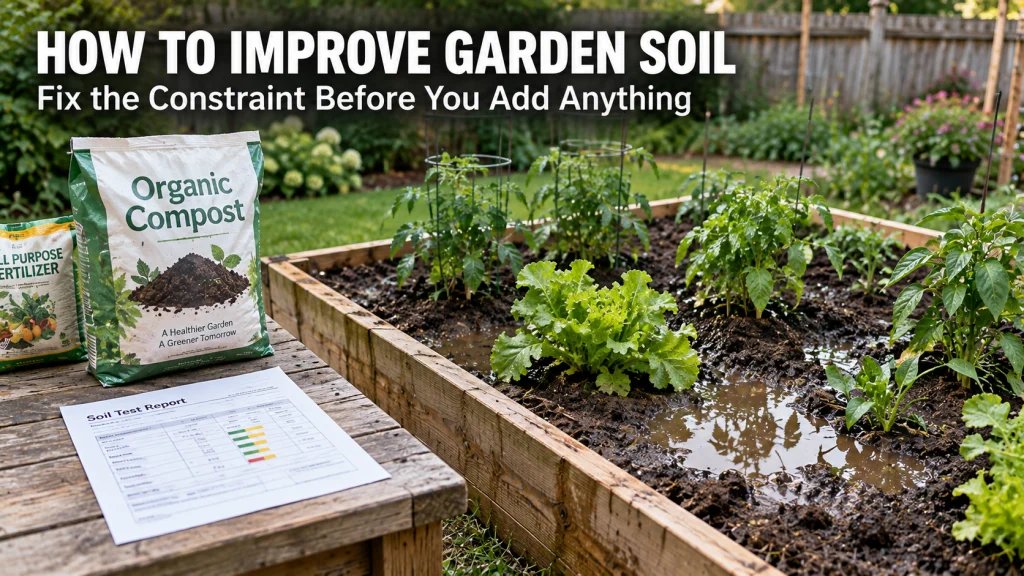
One phrase can hide several different soil jobs
A bag of compost, a pH report, a fertilizer label, and a puddle sitting in a bed can all make a gardener think the same thing: I need to improve this soil. Those four situations are not the same job. Compost changes organic matter and can influence structure, a pH report describes chemistry, fertilizer supplies nutrients, and persistent puddling points toward a water movement or compaction problem. Starting with the material instead of the problem is how a simple soil fix turns into an expensive guessing game.
The practical first question is not what should I add, but what is the soil failing to do for the plants I want to grow. Roots need a workable balance of air, water, nutrients, physical space, and suitable chemistry, and different problems can disrupt different parts of that system. A bed that dries rapidly may need a different response from one that stays saturated, even if both plants look weak. The rest of the decision becomes much easier once the limiting layer is named.

Rapitest 1602 provides at-home checks for soil pH, nitrogen, phosphorus, and potash. The kit includes supplies for 20 tests, with five tests for each variable. It gives a gardener a compact first-pass tool for separating chemistry questions from physical issues such as puddling or compaction.
Check On AmazonIf you click this link and buy, we earn a commission at no additional cost to you.
Start by naming the soil constraint instead of the product
Begin with what you can observe without trying to diagnose every plant symptom from appearance alone. Look at how water enters and leaves the bed, whether the surface crusts, whether the soil compacts under normal foot traffic, how quickly containers dry, and whether the site has received repeated amendments or fertilizer. Then separate observations from questions that need measurement, such as pH or nutrient status. If chemistry is part of the decision, the next stop should be a properly collected garden soil test, not a shelf of corrective products.
A useful soil decision also considers the planting situation. A vegetable bed, a shrub border, and a container do not share the same root volume, disturbance pattern, or nutrient cycle, so a single treatment cannot be assumed to fit all three. Conditions also vary by region, rainfall pattern, irrigation, plant type, and the history of the site. That is why garden soil improvement works best as a routing problem rather than a universal recipe.
| Constraint you can name | Evidence needed next | System to use | Lower-burden first move |
|---|---|---|---|
| Unknown pH or nutrient status | Representative soil test | Testing, then pH or fertility | Measure before adding material |
| Hard, low-organic-matter soil | Texture, compaction, and amendment history | Soil amendments | Match the amendment to the physical constraint |
| Ponding, saturation, or restricted infiltration | Water path, compaction, grade, and site inputs | Drainage and compaction | Identify why water is staying first |
| Bare surface, evaporation, or weed pressure | Planting type and current soil moisture | Mulch | Manage the surface without pretending it fixes deeper problems |
| Container mix stays wet, collapses, or dries too fast | Medium, drainage, pot size, plant, and watering | Potting media | Fix the confined root zone rather than treating it like field soil |
If two constraints appear at once, start with the one that most directly limits root function. A reversible change is easier to judge and easier to undo if the assumption was wrong.

The Fiskars Ergo Garden Trowel is a heavy-duty hand tool for digging and planting. Its cast aluminum head is rust resistant, and the handle is shaped for a comfortable grip. It is useful for opening a small inspection spot in a bed so soil texture, moisture, and root-zone conditions can be observed directly.
Check On AmazonIf you click this link and buy, we earn a commission at no additional cost to you.
Test when pH or nutrient decisions need measured evidence
Some soil questions cannot be answered reliably by color, texture in the hand, or the way a plant looks. Soil pH and nutrient levels are the clearest examples because visible symptoms can overlap with watering stress, root damage, disease, weather, and poor site fit. A laboratory test can provide the evidence needed to decide whether a chemistry change is justified. It can also prevent unnecessary applications when the soil already contains enough of a nutrient.
Sampling quality matters because a test only represents the soil that was collected. Samples should come from the actual root zone and from areas that are similar enough to manage together, rather than mixing a wet low spot with a dry raised area and expecting one result to describe both. If a problem is localized, test that area separately instead of averaging it away. Use the report as a decision tool, then match the recommendation to the plants and the conditions in that bed.
| Decision | Observation may be enough | Test before changing the soil |
|---|---|---|
| Surface is bare or weeds are emerging | Yes, choose surface management from the planting situation | No, unless another chemistry question is also present |
| Water ponds after irrigation or rain | Yes, begin by tracing water movement and compaction | No, a nutrient test does not explain physical drainage |
| You are considering lime, sulfur, or a nutrient correction | No | Yes, measure the chemistry first |
| A container mix stays wet or has collapsed | Often, inspect the medium, drainage, roots, and watering pattern | Not usually for the first routing decision |
Observe physical and surface conditions first, but measure chemistry before making a chemistry-dependent correction. Testing should answer a decision question, not become a ritual before every garden task.
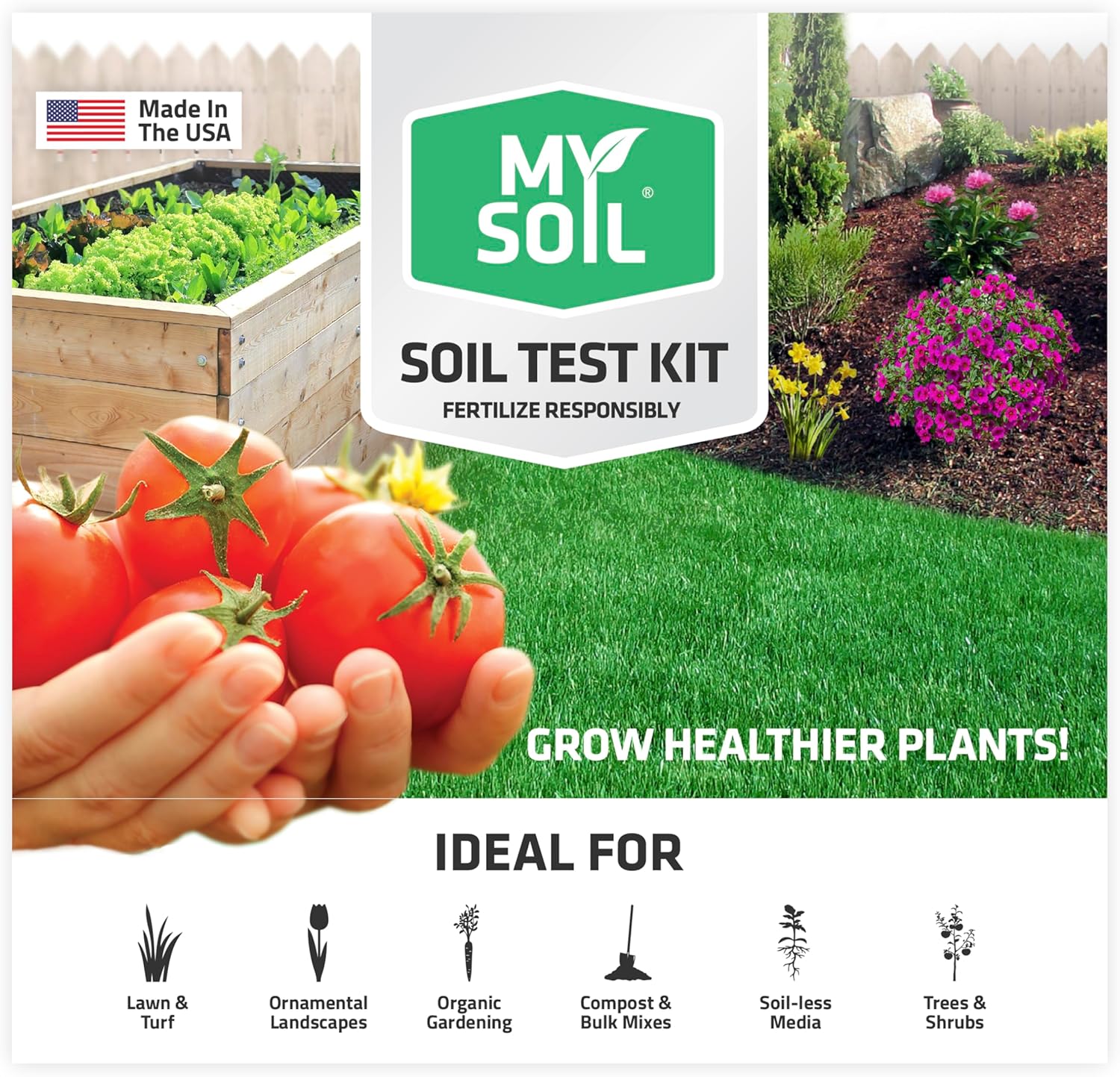
MySoil is a mail-in soil test that reports pH and 13 plant-available nutrients. The single-test kit includes sampling supplies, prepaid return shipping, laboratory analysis, and online results with recommendations. It fits sections where pH or nutrient decisions need measured evidence rather than visual diagnosis alone.
Check On AmazonIf you click this link and buy, we earn a commission at no additional cost to you.
Treat pH correction as separate from fertilizer
Soil pH affects how available certain nutrients are to plant roots, but that does not make pH adjustment a form of fertilizing. A soil can contain nutrients and still have chemistry that makes some of them harder for a plant to use. It can also have an acceptable pH while being low in a nutrient that a soil test identifies. Keeping those two decisions separate prevents the common mistake of applying fertilizer to a chemistry problem or changing pH when no correction is needed.
If a test shows that pH is outside the useful range for the plants being grown, follow the interpretation and use a material appropriate to that measured need. Do not infer that lime, sulfur, or another pH-changing amendment is required just because leaves are pale or growth is slow. Regional soils differ, and plant preferences differ, so the same amendment can be helpful in one bed and wrong in another. For a deeper chemistry decision, use the site’s guide to understanding and managing garden soil pH before making a correction.
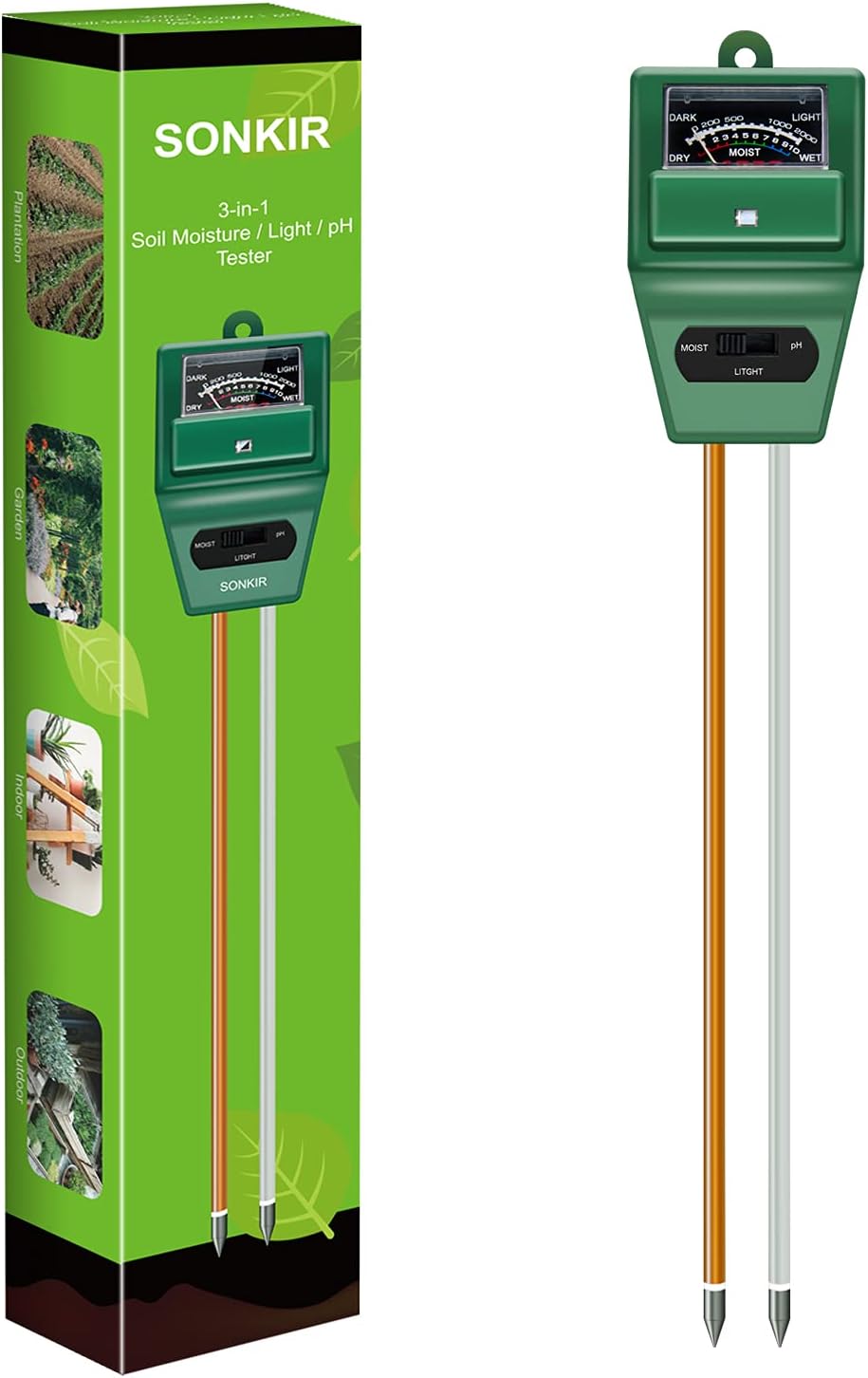
The SONKIR MS02 combines soil pH, moisture, and light checks in one probe-style garden meter. It is sold for garden, lawn, farm, and indoor or outdoor plant care. The pH function keeps acidity and alkalinity screening separate from fertilizer application when the section calls for a chemistry-specific check.
Check On AmazonIf you click this link and buy, we earn a commission at no additional cost to you.
Improve structure and organic matter with the right amendment strategy
Organic matter can improve the way a mineral soil holds water, exchanges air, forms aggregates, and supports biological activity. That makes compost and other organic materials useful tools when the constraint is low organic matter or poor structure. It does not mean every bed benefits from repeated heavy additions. A garden that has received compost for years may already have high nutrient levels, while a newly disturbed bed may need a very different plan.
Choose an amendment for the property you need to change, then consider how much disturbance the bed can tolerate and how permanent the planting is. New annual beds allow more incorporation than established shrub or perennial beds, where aggressive digging can damage roots and soil structure. The site’s broader guide to garden soil amendments can help separate materials that change structure from those used mainly for chemistry or nutrition. The safest improvement is the one tied to a named constraint, not the longest ingredient list.
| Route | Use it for | Effort and reversibility | Consequence of choosing it for the wrong job |
|---|---|---|---|
| Amendment | Structure or organic-matter constraint | Moderate effort, slower to reverse after incorporation | Can add unnecessary material or nutrients without fixing drainage or chemistry |
| Fertilizer | Documented nutrient need | Low application effort, consequences can appear quickly | Can worsen nutrient imbalance and still leave the real constraint untouched |
| Mulch | Surface moisture, temperature, erosion, and weed management | Low to moderate effort, usually easy to adjust | Can hide a deeper water problem if used as a substitute for diagnosis |
| Drainage or compaction response | Ponding, saturation, restricted infiltration, or compressed soil | Ranges from low effort to high consequence depending on the cause | Unnecessary excavation or disturbance can create a larger property problem |
These routes are not interchangeable. Favor the least disruptive option that matches the constraint, especially when the alternative is difficult to reverse or could change water movement across the property.

The Fiskars Ergo Garden Cultivator is made for digging, aerating, loosening soil, and weeding in garden beds and pots. Its heavy-duty cast aluminum tines are rust resistant, and the ergonomic handle includes a hang hole. It suits small disturbed areas where a gardener needs to work the surface or mix an amendment without bringing in powered equipment.
Check On AmazonIf you click this link and buy, we earn a commission at no additional cost to you.
Separate slow drainage and compaction from fertility problems
Roots need oxygen as well as water, so soil that remains saturated can limit root function even when nutrient levels are adequate. Compaction can also reduce pore space and slow the movement of both air and water through the soil. Those are physical problems, not proof that the bed needs more fertilizer. Before changing nutrients, look at where water comes from, how long it remains, whether traffic has compacted the area, and whether the site sits in a natural low spot.
A homeowner-level drainage decision can include reducing compaction, keeping traffic off wet soil, improving soil structure where appropriate, changing plant selection, or using a raised growing area when the site supports that choice. It should not jump straight to excavation, subsurface drainage systems, or structural grading without understanding the property and water path. The guide to garden soil drainage and compaction is the better place for that narrower decision. If water is arriving from a larger property or structural problem, the correct soil-improvement step may be to stop adding materials and address the water source first.

The Radius Garden 203 PRO is a full-size stainless steel digging fork with four tines and an ergonomic handle. It is built for digging, cultivating, and aerating garden soil. In a compacted bed, a digging fork provides a homeowner-scale way to loosen soil while keeping the decision separate from fertilizer or major drainage construction.
Check On AmazonIf you click this link and buy, we earn a commission at no additional cost to you.
Choose composting or vermicomposting by household feedstock and maintenance
Composting is useful when the household has a steady mix of yard material and kitchen scraps and enough space to manage a pile or bin. The system works best when it can stay reasonably aerated and moist without becoming a chore that gets abandoned. Large amounts of leaves, garden debris, and plant-based scraps often fit a backyard system better than an indoor one. If that matches the property, the site’s home composting guide can help match the method to space and maintenance.
Vermicomposting solves a different household problem. It can handle modest amounts of appropriate kitchen scraps in a compact, sheltered system, but it requires suitable worms, bedding, moisture, airflow, and feeding habits. It is not simply a miniature outdoor compost pile, and ordinary garden earthworms are not interchangeable with composting worms. For a small-space or indoor route, use the guide to vermicomposting at home and choose the system only if the ongoing care fits the household.
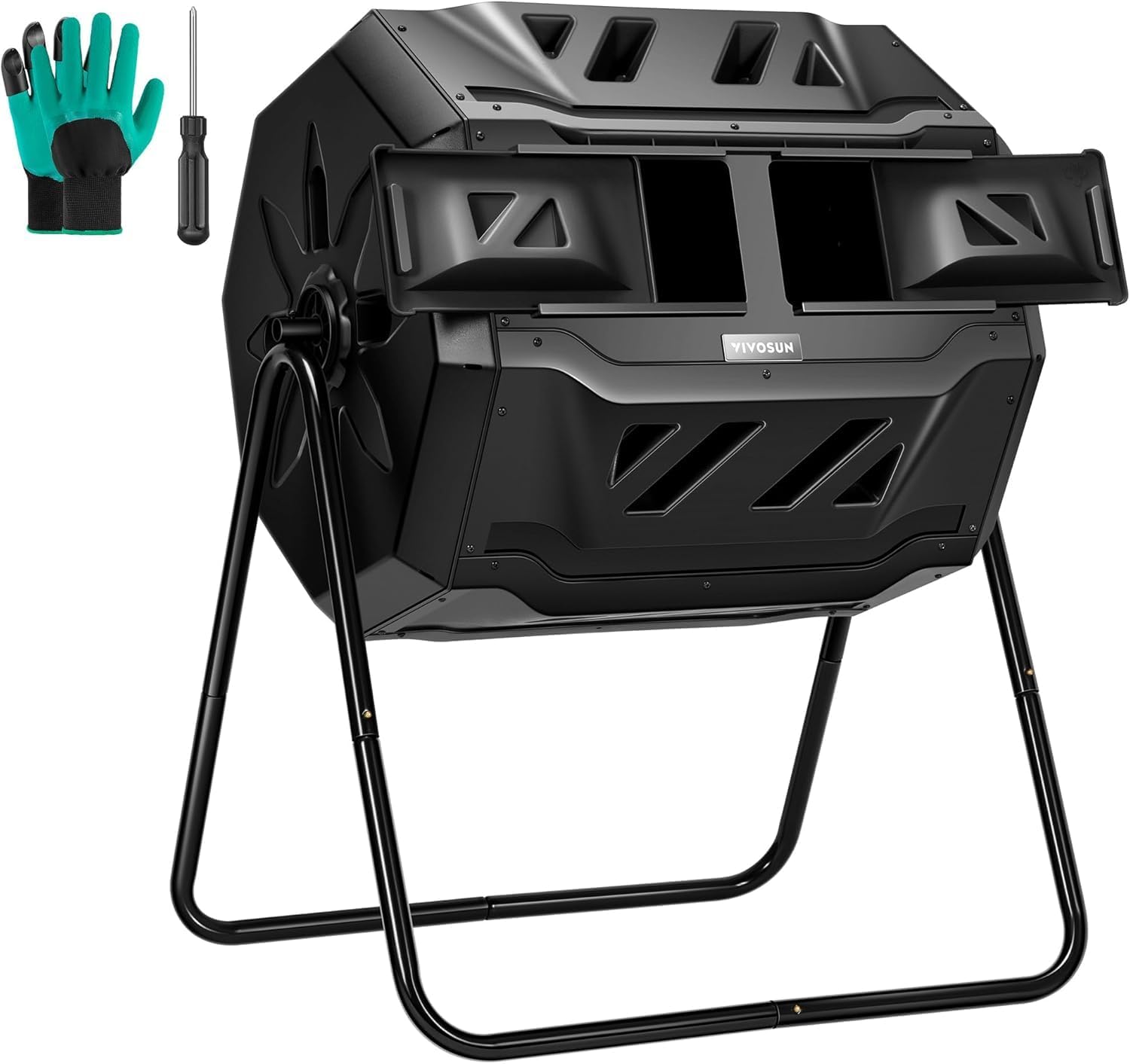
The VIVOSUN 43-Gallon Tumbling Composter uses two chambers so one batch can finish while fresh material goes into the other side. Its rotating body and ventilation features are designed to mix and aerate compost without hand turning a pile. The unit fits the outdoor composting route when household feedstock, space, and ongoing maintenance support a tumbler system.
Check On AmazonIf you click this link and buy, we earn a commission at no additional cost to you.
Use mulch as a surface-management layer
Mulch works at the soil surface, which is why it should not be treated as a substitute for fixing every condition below it. A suitable mulch can reduce evaporation, moderate soil temperature, reduce erosion, and suppress many weeds by limiting light at the surface. Organic mulches also break down gradually and contribute material to the upper soil layer. Those benefits are real, but they do not correct a measured pH problem, a severe drainage issue, or a nutrient deficiency by themselves.
Match the mulch to the planting and maintenance pattern rather than choosing only by appearance. Vegetable beds, perennial borders, paths, and areas around woody plants can have different needs, and material piled against stems or trunks can create problems instead of preventing them. If the soil is already wet, a heavy surface layer can also change how quickly it dries, so watering should be adjusted to actual moisture conditions. The site’s guide to choosing and using garden mulch covers that surface-management decision in more detail.
The Bully Tools 16-Tine Stone Rake uses a 66-inch fiberglass handle and a heavy-duty steel rake head. The listing describes it for spreading mulch, moving gravel, and leveling or smoothing soil. That makes it directly useful when mulch is being managed as a surface layer rather than treated as a cure for deeper soil problems.
Check On AmazonIf you click this link and buy, we earn a commission at no additional cost to you.
Translate nutrient recommendations into fertilizer only when needed
Fertilizer is a nutrient tool, not a general soil repair product. It cannot fix compacted soil, poor drainage, unsuitable light, root disease, or a pH problem simply by supplying more nutrients. A soil test, plant requirement, and the history of the bed should guide whether fertilizer is needed at all. Many established landscape plants can perform well without routine supplemental feeding, while intensively harvested crops may remove more nutrients and require a different approach.
If fertilizer is justified, follow the recommendation and the current product label rather than inventing a rate from a different crop or garden. The three analysis numbers on a fertilizer label describe nutrient content, but they do not tell you whether your soil actually needs those nutrients. More is not a safety margin because excess nutrients can contribute to weak growth, nutrient imbalance, and water pollution. The site’s guide to garden fertilizer decisions is where nutrient sources, label reading, and application choices belong.

The Scotts Whirl is a hand-powered spreader for seed, fertilizer, salt, and ice melt. It has adjustable arm support and is rated to hold enough Scotts lawn product for up to 1,500 square feet. For a documented fertilizer need, the spreader provides controlled distribution without turning fertilizer into a general soil-repair tool.
Check On AmazonIf you click this link and buy, we earn a commission at no additional cost to you.
Treat potting media as a container root-zone system
A container is not a small patch of in-ground soil. Roots are confined to a limited volume, drainage depends on the container and medium, and the mix must hold enough water while still allowing air back into the root zone after irrigation. Dense garden soil often performs poorly in pots because the physical conditions change when that soil is confined. This is why a container problem should be routed to the growing medium, drainage, container size, plant, and watering pattern before adding a soil amendment.
Potting mixes also change over time as organic components decompose and particles settle, which can reduce pore space and alter water behavior. Reusing a mix may be reasonable in some situations, but the condition of the old medium and the health history of the container matter. If roots stayed wet, the mix collapsed, or disease was present, simply adding fertilizer does not address the underlying problem. Use the site’s guide to potting soil and container growing media for that separate root-zone decision.
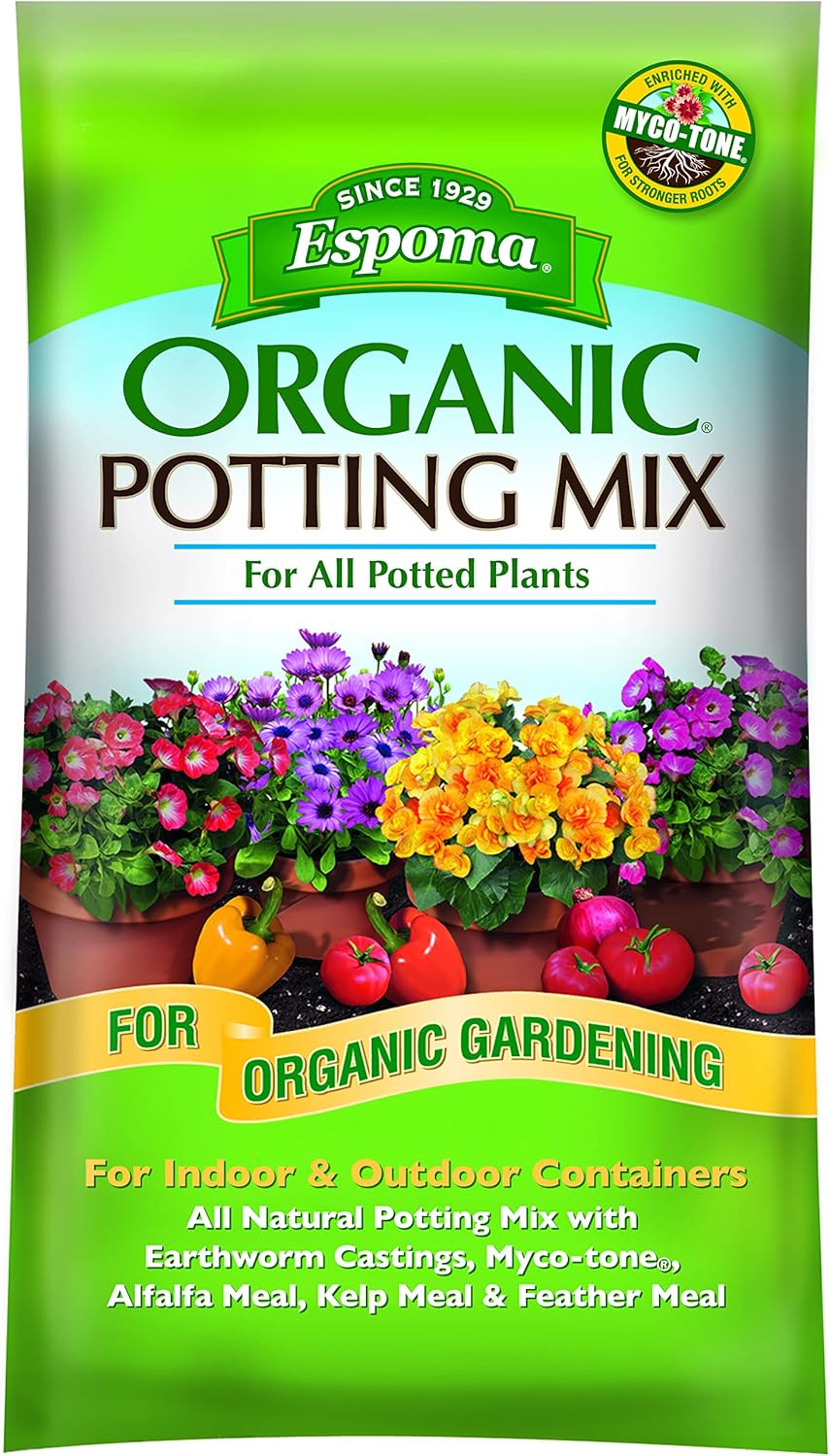
Espoma Organic Potting Soil Mix is a 16-quart mix for indoor and outdoor containers, including herbs and vegetables. The blend includes sphagnum peat moss, humus, perlite, earthworm castings, organic meals, and Myco-tone mycorrhizae. It belongs in a container-root-zone section because it is formulated as potting media rather than ordinary in-ground garden soil.
Check On AmazonIf you click this link and buy, we earn a commission at no additional cost to you.
Use cover crops only when the planting window includes a termination plan
Cover crops can protect bare soil, add organic residue, support soil structure, and keep living roots in a bed between primary crops. The benefit depends on choosing a crop that fits the season, the next planting date, and the way it will be terminated. A cover crop that grows vigorously but cannot be ended in time for the next vegetables can become a workload problem instead of a soil improvement. This is especially important in small home beds where planting windows are tight.
Before sowing, decide what the bed needs and what will happen to the cover crop before the next crop goes in. Some gardeners want winter soil cover, some want more biomass, and others need a species that is easier to terminate without heavy tillage. Regional climate changes establishment and winter survival, so a generic seed choice is not enough. The site’s guide to cover crops for home gardens is the right place to compare those options.

Outsidepride Crimson Clover is a 1/4-pound package of annual, inoculated cover-crop seed. The listing identifies it for outdoor use and includes cover crop, green manure, pasture, and forage applications. Because it is a living crop rather than a bagged amendment, it should be matched to the local planting window and a clear termination plan before sowing.
Check On AmazonIf you click this link and buy, we earn a commission at no additional cost to you.
Know when the correct soil-improvement decision is to add nothing
Soil improvement does not always require an amendment, fertilizer, mulch refresh, or new material. If the test is acceptable, drainage is functional, organic matter is already sufficient for the bed, and the plants match the site, another input may solve nothing. In that situation, the better work may be protecting the soil from compaction, adjusting irrigation, rotating crops, keeping living roots where practical, or simply observing how the bed performs. Restraint is a real management choice when the system is already doing its job.
This is also the point to stop treating every plant problem as a soil problem. A plant can struggle because of light, heat, cold, watering pattern, pests, disease, root damage, transplant stress, or a mismatch with the site even when the soil is adequate. If the evidence points away from soil, move the investigation to the condition that actually fits the symptoms and context. Adding one more material because the bag promises healthier soil is not a substitute for identifying the real limitation.
- Test before changing pH or making a nutrient correction that depends on measured soil chemistry.
- Observe water movement and compaction before treating slow drainage as a fertility problem.
- Use organic matter when structure or organic matter is the constraint, not as an automatic yearly dose.
- Keep container growing media decisions separate from in-ground soil decisions.
- Skip another input when the soil system already meets the needs of the plants and site.
| If the next decision is about | Use this guide |
|---|---|
| Measured pH or nutrient status | Soil testing |
| Changing soil acidity or alkalinity | Soil pH |
| Organic matter or structural amendment | Soil amendments |
| Backyard decomposition of yard and kitchen material | Composting |
| A compact worm-based food-scrap system | Vermicomposting |
| Surface moisture, weed, and temperature management | Garden mulch |
| A documented nutrient need | Garden fertilizer |
| A confined container root zone | Potting soil |
| Keeping a bed covered between primary crops | Cover crops for gardens |
| Ponding, saturation, or compaction | Soil drainage |
The simplest workable change is often easier to judge than several changes made at once. When only one constraint is addressed, you can see whether that decision actually improved the root environment before adding another variable.

The XLUX Soil Moisture Meter is a battery-free, single-probe meter for indoor and outdoor plant soil. Its 304 stainless steel probe provides an instant moisture reading without batteries. It supports the add-nothing decision by checking actual soil moisture before changing irrigation or adding another material to a bed or container.
Check On AmazonIf you click this link and buy, we earn a commission at no additional cost to you.
Final Thoughts: fix the constraint you can name before adding another material
The most reliable way to improve garden soil is to separate chemistry, nutrients, structure, drainage, organic matter, surface management, and container media into different decisions. Observe first, test when the decision needs measurement, and choose the narrowest action that matches the evidence. That approach may lead to compost, mulch, fertilizer, a pH correction, a different potting mix, a cover crop, a drainage change, or no new material at all. The point is not to do more to the soil, but to make the root zone work better for the plants and conditions you actually have.
Make one meaningful change at a time when the situation allows it, then watch how the bed responds before stacking another treatment on top. Keep site conditions in the decision because rainfall, irrigation, plant choice, traffic, and growing space can change what the same soil needs. If a test or observation does not support an intervention, skipping that intervention is a valid result. Good soil management is less about collecting fixes and more about knowing which job actually needs to be done.

The Legend Garden Journal is a hardcover five-year gardening planner and log book. It includes a planting calendar and plant logs for tracking seasons, plants, and progress over time. That record-keeping format fits a one-change-at-a-time approach because observations can be compared across later garden work instead of relying on memory.
Check On AmazonIf you click this link and buy, we earn a commission at no additional cost to you.
FAQs
🌱 What is the fastest way to improve poor garden soil?
The fastest useful step is identifying what is actually poor about it. Compaction, low organic matter, unsuitable pH, nutrient deficiency, and slow drainage need different responses, so observe the site and test chemistry when the decision depends on it.
🧪 Should I test soil before adding compost?
Testing is especially useful when a bed has received repeated compost or fertilizer, or when you need to make pH and nutrient decisions. A modest organic matter addition can help many soils, but repeated heavy applications can build nutrient levels beyond what the plants need.
💧 Can compost fix poorly drained soil?
Compost can improve soil structure in some mineral soils, but it cannot correct every drainage problem. Persistent saturation may also involve compaction, a low spot, a high water table, runoff, or another site condition that needs separate attention.
🧱 Is hard soil always clay soil?
No. Soil can feel hard because of compaction, surface crusting, low organic matter, construction disturbance, or texture, and those causes do not all require the same treatment. Look at the site history and water behavior before deciding what to add.
🍂 Is mulch the same as a soil amendment?
Not in how it is used. Mulch is primarily a surface layer for moisture, temperature, erosion, and weed management, while an amendment is used to change properties of the soil itself, although organic mulch can contribute organic matter as it decomposes.
🪴 Can I use garden soil in containers?
Ordinary garden soil is often too dense when confined in a container, where air and water movement depend on limited pore space and drainage holes. A container growing medium should be evaluated as its own root-zone system rather than copied directly from an in-ground bed.
References and Sources
- Oregon State University Extension soil testing guidance: supports using soil testing to make informed pH, nutrient, fertilizer, and amendment decisions.
- Oregon State University Extension soil pH guidance: supports the distinction between soil pH, nutrient availability, and fertilizer decisions.
- University of Maryland Extension organic matter and soil amendments: supports how organic matter and amendments can change soil structure, water behavior, and root conditions.
- Iowa State University Extension soil drainage guidance: supports the separation of drainage and compaction problems from fertility problems.
- UConn Extension home composting guide: supports matching composting systems to household materials, space, moisture, airflow, and maintenance.
- University of Maryland Extension vermicomposting guidance: supports the distinct habitat, worm, bedding, feeding, and moisture needs of indoor worm bins.
- University of Minnesota Extension mulching guidance: supports the role of mulch in moisture conservation, weed suppression, erosion reduction, and temperature moderation.
- University of Maryland Extension fertilizer basics: supports using fertilizer according to soil evidence, plant need, and label guidance rather than as a universal soil fix.
- University of Maryland Extension container growing media guidance: supports treating potting media as a separate root-zone system with its own air, water, and physical requirements.
- University of Maryland Extension cover crop guidance: supports using cover crops for soil protection and improvement while planning for establishment and termination.