Lawn scalping: stop chasing green with a lower deck
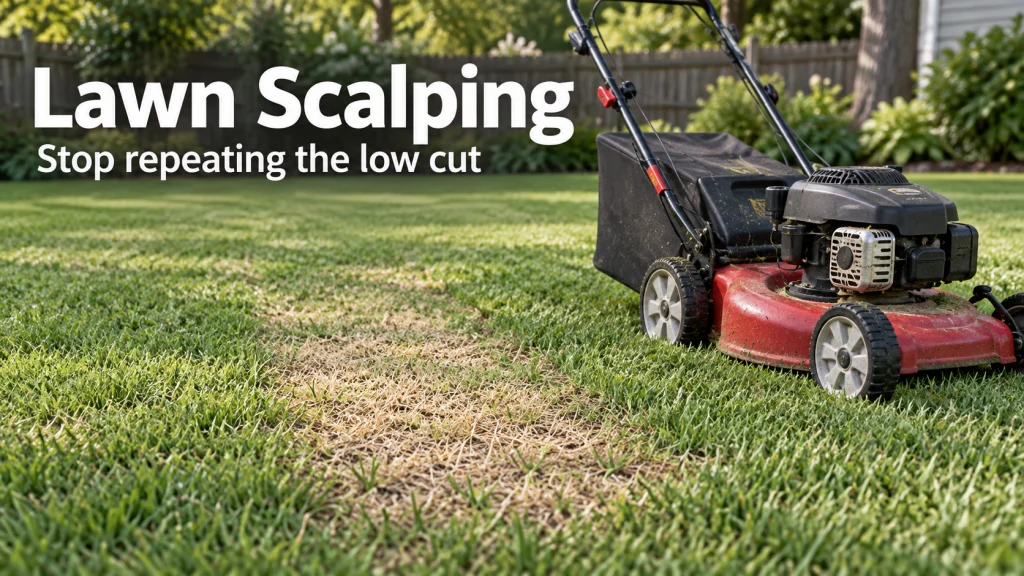
Lawn Scalping

Lawn scalping is usually a mowing problem before it is a fertilizer, watering, or reseeding problem. A low deck setting, uneven ground, excessive thatch, or a mower that does not hold a consistent cutting height can expose pale stems, crowns, or soil. The practical fix is to stop repeating the damaging cut, return to a
Bagging vs mulching grass clippings: choose by clipping volume, not lawn care myth

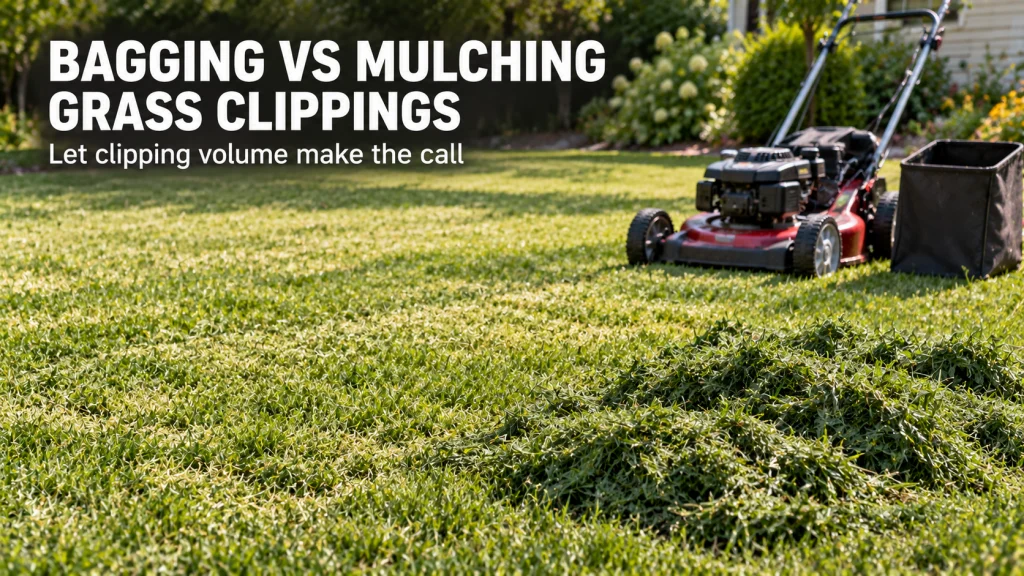
Bagging Vs Mulching Grass Clippings

Grass clippings do not need the same treatment after every mow. Short, dry clippings that settle into the canopy can usually stay, while heavy or wet clipping loads are more likely to form mats that should be broken up or collected. Disease and seed-bearing weeds can create specific reasons to bag, but neither situation supports

Mowing during drought: know when brown grass needs less cutting, not more

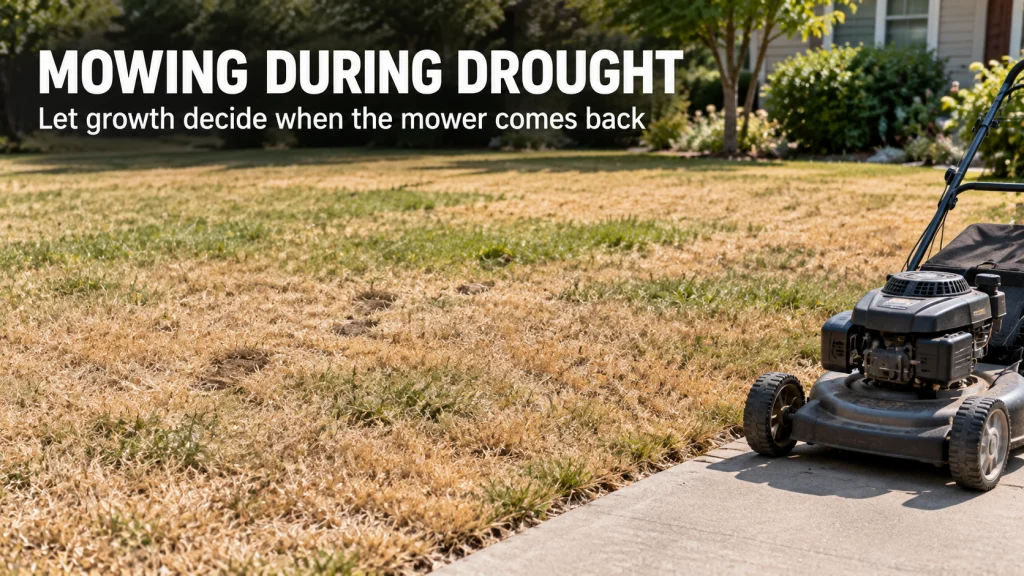
Mowing During Drought

Mowing during drought should follow grass growth, not the calendar or the color of the lawn. Brown turf may be dormant, stressed, damaged, or simply uneven, so the first job is to check whether the grass is still producing enough new leaf to need cutting. When growth has paused, repeated mowing adds wheel and foot

Mowing wet grass: the problem is more than an ugly cut

Mowing Wet Grass

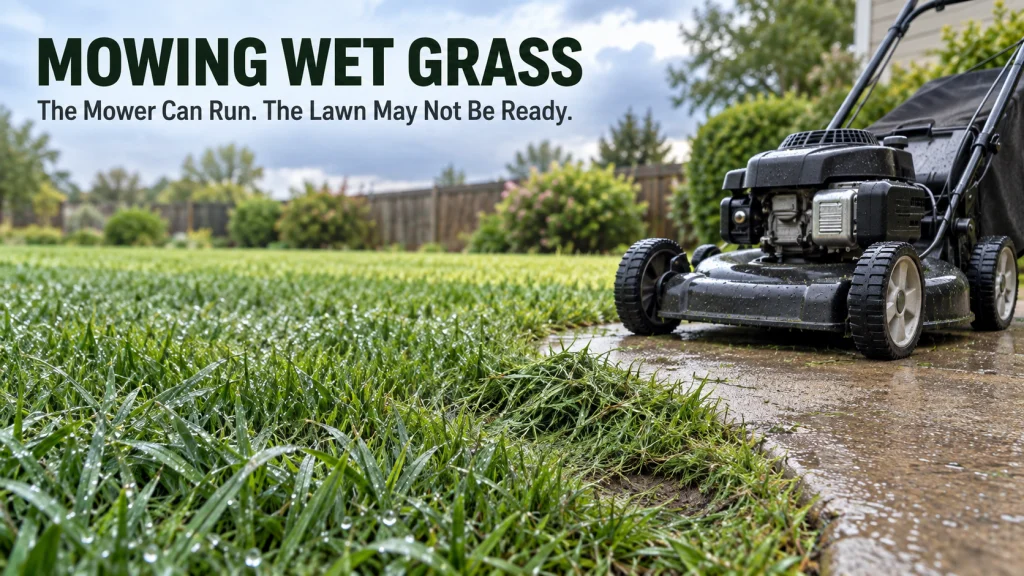
Mowing wet grass is usually a poor trade when the blades are wet enough to clump, the soil is soft enough to rut, or the surface is slick enough to reduce traction. The mower may run normally while the lawn itself is not ready for traffic or a clean cut. Instead of using a fixed

How often to mow a lawn when growth refuses to follow a weekly schedule

How Often To Mow Lawn

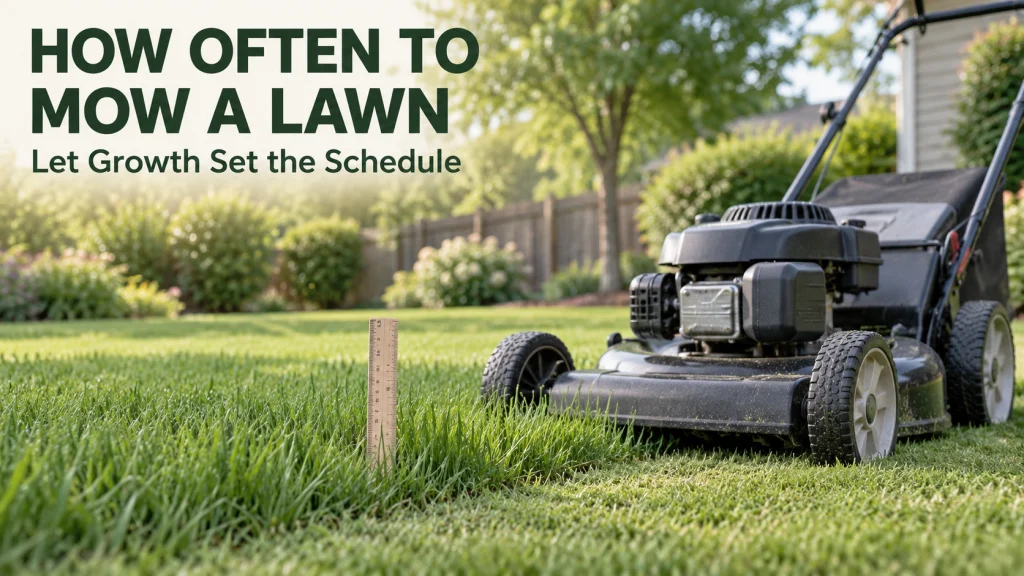
How often a lawn needs mowing is determined by how quickly the grass is growing toward its target height, not by a fixed weekly schedule. The useful trigger is the amount of leaf growth since the last cut, with the one-third rule setting an upper limit on how much to remove at once. Grass type,

Lawn mowing height: the right setting depends on the grass you actually have

Lawn Mowing Height

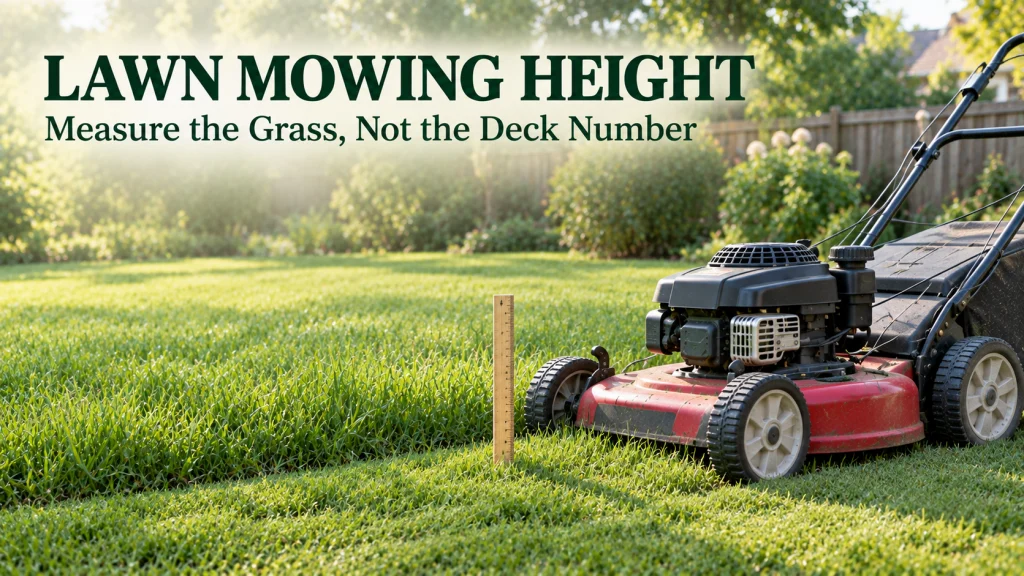
Lawn mowing height is not one universal number. The right finished height depends first on the turfgrass species, then on local growing conditions, active growth, and whether the lawn is under heat, drought, shade, or renovation stress. Use a land-grant or Extension range for the grass you actually have, measure the grass after mowing instead

Lawn mowing: set height and frequency from the grass, not the weekend

Lawn Mowing

Lawn mowing works better when the grass sets the schedule instead of the calendar. The right cutting height depends on turf type, while mowing frequency changes with growth rate, moisture, heat, drought stress, and the condition of the lawn. A practical routine is to identify the grass, choose a defensible height range, and mow often