Grass clippings do not need the same treatment after every mow. Short, dry clippings that settle into the canopy can usually stay, while heavy or wet clipping loads are more likely to form mats that should be broken up or collected. Disease and seed-bearing weeds can create specific reasons to bag, but neither situation supports a permanent rule to remove every clipping. The practical choice comes from clipping volume, lawn condition, and what the mower actually leaves behind.
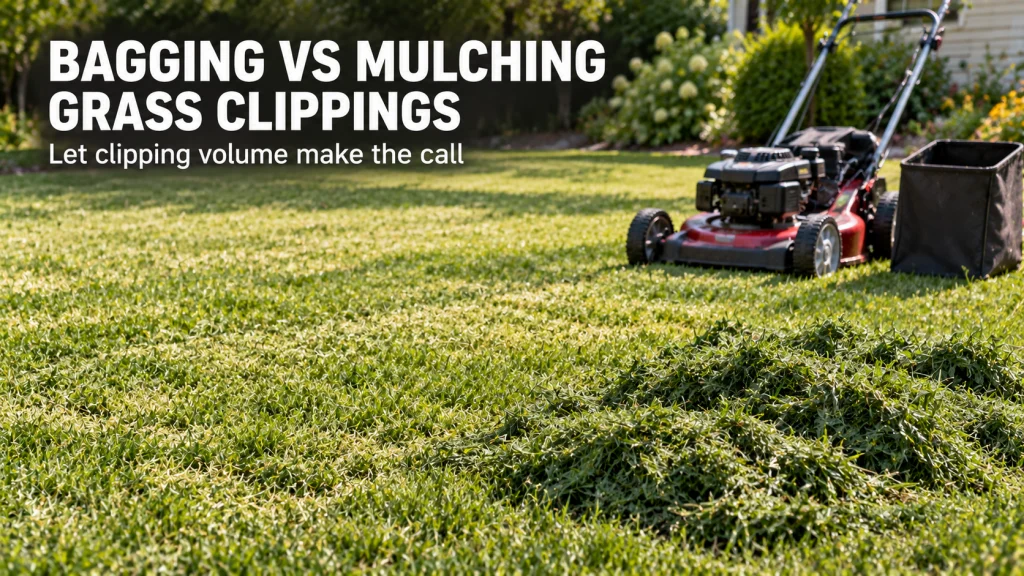
Not all clipping loads behave the same
Bagging vs mulching grass clippings is not a permanent lawn philosophy. A thin scatter of short leaf pieces can disappear between grass blades soon after mowing, while a heavy layer from an overgrown or wet lawn can sit on top as a dense mat. Those two outcomes came from the same mower, but they do not create the same conditions at the turf surface. I would make the decision after looking at the clipping load rather than choosing one setting for the entire season.
The first check is simple: can you still see upright grass through the clippings, and are the pieces spread rather than packed together? If the answer is yes, leaving them in place usually preserves nutrients and avoids unnecessary collection work. If the clippings cover the turf in ropes, piles, or flattened sheets, the immediate problem is excess material at one time. That distinction is more useful than asking whether bagging or mulching is always better.

This metal leaf rake has an expandable 8- to 17-inch head for gathering loose material across narrow or wider lawn areas. Its long handle keeps the tool suited to routine residential yard cleanup. It can help redistribute or collect localized clipping piles when the lawn shows uneven buildup.
Check On AmazonIf you click this link and buy, we earn a commission at no additional cost to you.
Normal grass clippings are not the same as thatch
Thatch is the layer of slowly decomposing stems, roots, crowns, and similar plant material that accumulates between green turf and the soil surface. Fresh leaf clippings are different because they contain a great deal of water and normally break down much faster when mowing is regular. University Extension guidance consistently separates ordinary clippings from the structural plant material that makes up most thatch. That means leaving normal clippings is not the same as deliberately building a thatch layer.
The confusion becomes easier to understand when a lawn is mowed too late and leaves thick piles behind. A visible mat of clippings can block light and trap moisture at the surface, but that is an overload problem, not proof that normal clipping recycling causes thatch. The correct response is to fix the amount and distribution of material from that mow. Bagging every future mow does not address the cultural conditions that actually favor excessive thatch.

This manual lawn rake uses a dual-sided 19-tine head to lift thatch and dead grass from the turf surface. The adjustable handle can be assembled to a 70-inch working length. It gives homeowners a dedicated tool for established thatch cleanup rather than treating ordinary fresh clippings as the same material.
Check On AmazonIf you click this link and buy, we earn a commission at no additional cost to you.
Return short dry clippings when they disperse evenly
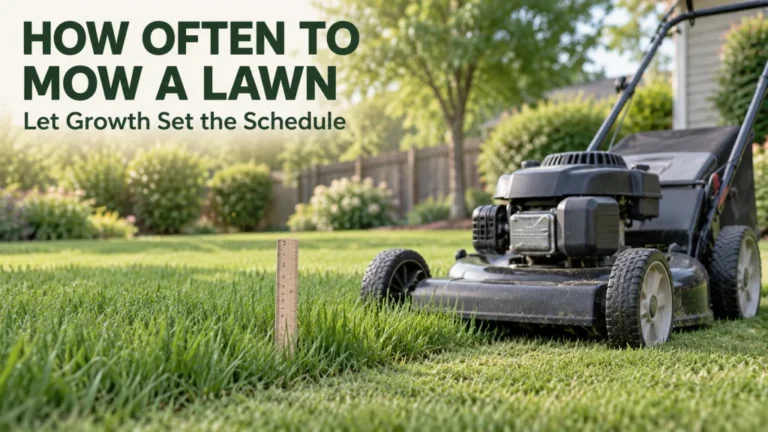
Short, dry clippings are the easiest material to leave on the lawn because they can filter down through the canopy instead of remaining as a surface layer. Regular mowing helps keep each clipping load small enough for that to happen. If the lawn is actively growing, the mowing interval may need to change with grass type, rainfall, fertility, and temperature rather than following a fixed weekly habit. The goal is a cut that leaves small pieces, not a calendar that forces the same schedule under every condition.
After mowing, walk a few representative areas and look across the turf from a low angle. A clean result does not mean every clipping is invisible, but the lawn should not have long windrows or thick patches that cover the leaf blades below. If the clippings are evenly scattered, there is little reason to create extra handling work just to make the lawn look freshly vacuumed. For the mowing height, timing, and stress decisions that come before clipping disposal, use the broader lawn mowing routine as the starting point.
- Leave clippings when the pieces are short and loose.
- Prefer mowing when the foliage is dry enough to cut and disperse cleanly.
- Check the finished lawn for clumps instead of assuming the mower setting worked.
- Adjust mowing frequency when rapid growth creates too much material at once.
This check also prevents an unnecessary equipment conclusion. Poor dispersal can come from mowing too much growth at once, wet foliage, or the way the mower is configured, so the first question should be what condition created the heavy load. Once that is clear, the homeowner can decide whether the fix belongs to mowing timing, clipping collection, or equipment setup. That keeps a simple clipping problem from turning into an automatic shopping decision.

This narrow garden rake has 11 metal tines across an 8.5-inch head for working through smaller lawn and shrub areas. Its long handle extends the reach for light yard cleanup. It is a practical way to break apart or redistribute the occasional dry clipping clump without collecting an entire lawn.
Check On AmazonIf you click this link and buy, we earn a commission at no additional cost to you.
Bag when clipping volume would smother or mat
Bagging becomes useful when the mower leaves more material than the turf can absorb cleanly at one time. This often happens after rapid growth, a delayed mow, or mowing while the grass is damp enough for the pieces to stick together. Thick clumps can shade the grass beneath them and create a wet, flattened layer that stays visible instead of filtering down. In that situation, collecting the excess is a practical cleanup step rather than a judgment that clippings are bad for the lawn.
Collection is not the only possible response when the problem is limited to a few patches. Once clumps dry, they can sometimes be redistributed so the material no longer covers the turf in a dense layer. A larger, uniformly heavy clipping load is a better candidate for bagging because raking or redistributing the entire lawn may take more work than collection. The decision should follow the amount of material and how evenly it can be spread without burying active grass.
| Lawn after mowing | Practical response | Why |
|---|---|---|
| Short clippings scattered through the canopy | Leave them | The material can settle and decompose without forming a surface mat. |
| A few small dry clumps | Break up or redistribute them | Local correction may be easier than collecting the whole lawn. |
| Heavy wet rows or broad mats | Collect the excess | Dense material can cover and hold moisture against the turf below. |
| Repeated heavy loads after every mow | Recheck mowing interval and setup | The recurring problem may begin before the clippings reach the ground. |
The table is not a substitute for looking at the actual lawn. Two lawns cut on the same day can produce very different clipping loads because their growth rate, moisture, and mowing interval were different. Use the condition after the pass as the final check. If the turf remains open and visible, the clipping volume is probably not the problem you need to solve.

This manual push sweeper uses a 21-inch pickup width, adjustable brush height, and two spinning brushes for lawn debris. Its collection hopper holds 3.5 cubic feet of material. It is suited to gathering broad, heavy clipping loads when leaving or hand-redistributing the material would be impractical.
Check On AmazonIf you click this link and buy, we earn a commission at no additional cost to you.
Treat disease-related collection as pathogen specific
A lawn disease should not automatically turn every future mowing into a bagging job. Some Extension disease guidance recommends collecting clippings while a particular disease is active, while other turf guidance notes that returning normal clippings does not generally increase disease in a properly maintained lawn. Those statements are not necessarily contradictory because the useful sanitation step depends on the disease, the infected tissue, and the conditions that help it spread. The homeowner first needs a credible identification or disease-specific recommendation before treating clipping removal as part of management.
This is also where visual guessing can create unnecessary work. Brown patches, thinning, discoloration, and stressed turf can have several causes, so appearance alone is not enough to justify a disease control routine. If a reliable source for the diagnosed problem specifically recommends collecting infected clippings, bagging those mowings can make sense as a targeted step. If no such guidance exists, do not assume routine clipping removal is a universal disease treatment.
These brown paper bags have a 30-gallon capacity and come in a 25-pack for lawn and garden refuse. Their open-top format makes it straightforward to collect clippings designated for removal. They fit targeted cleanup when reliable disease-specific guidance calls for taking infected mowing debris off the lawn.
Check On AmazonIf you click this link and buy, we earn a commission at no additional cost to you.
Collect seed-bearing weed material when removal can limit spread
Weeds change the clipping decision most clearly when they are carrying mature or nearly mature seed. In that case, collection can remove some seed-bearing material before the mower redistributes it across the lawn. The benefit is situational because many lawns already contain a soil seed bank, and not every weed depends mainly on seed for spread. I would treat bagging as one containment step, not as a replacement for identifying the weed and correcting the conditions that let it persist.
A lawn with scattered broadleaf weeds that have not gone to seed is different from a lawn covered with visible seed heads. The first situation may not justify collecting every clipping, while the second gives collection a clearer purpose. Weeds that spread aggressively through stems, stolons, rhizomes, or fragments can also require a different management strategy than simply catching seed heads. The practical question is whether removing the material from that specific mow meaningfully reduces what would otherwise be redistributed.

This stand-up weed puller combines a bamboo long handle with a four-claw steel head. The lever-style design is made to grip and remove weeds with their roots while the user remains standing. It supports direct weed removal before mature seed-bearing plants are redistributed through mowing.
Check On AmazonIf you click this link and buy, we earn a commission at no additional cost to you.
Do not bag solely to prevent thatch
Bagging every mow is a poor fix for a thatch problem because ordinary grass clippings are not the main material that forms thatch. Excessive thatch is more closely tied to the accumulation of tougher stems and roots, along with cultural and soil conditions that slow breakdown or drive excessive growth. Removing leaf clippings may make the surface look cleaner, but it does not correct compaction, overwatering, excessive fertility, or other conditions that can contribute to the underlying problem. A homeowner who sees a spongy layer should verify that layer instead of assuming visible clippings caused it.
If the lawn has an actual thatch problem, the response should address the thickness and the conditions behind it rather than turning collection into a permanent habit. That keeps two separate decisions from getting mixed together: what to do with today’s clipping load and how to manage an established thatch layer. Broader home lawn maintenance guidance is the better place to connect mowing with watering, fertility, aeration, overseeding, and seasonal care. Clipping disposal is only one small part of that system.

This manual standing aerator uses 15 iron spikes to create small openings in lawn soil. It works without a motor, battery, or mower attachment and is intended for residential lawn aeration. It gives homeowners a tool for addressing compacted soil conditions instead of using routine clipping removal as a substitute for broader lawn management.
Check On AmazonIf you click this link and buy, we earn a commission at no additional cost to you.
Keep mower hardware separate from the clipping decision
The lawn can tell you whether a clipping load should stay or go, but it cannot tell you whether a particular mower needs a plug, blade, bagger, deck setting, or other part. Those details depend on the exact mower design and its operating instructions. A homeowner should not assume that removing the bag automatically creates a safe or effective mulching setup. If the machine has a required discharge cover, plug, attachment, or configuration, the operator manual should control that equipment decision.
The current setup deserves a closer look only after the mowing conditions are reasonably favorable. If the grass is dry, the lawn has not been allowed to become badly overgrown, and the mower still leaves repeated rows, coarse pieces, or dense clumps across several normal mowings, the problem may be moving from clipping volume into equipment performance or configuration. That is the point to verify whether the mower is designed to mulch in its present setup and whether the required parts or settings are actually in place. A persistent dispersal problem under otherwise suitable conditions gives the equipment evaluation a clear job to solve.
That same test also gives a reason not to buy or change anything. If the clumping disappears when the lawn is mowed dry, at a more appropriate interval, or with the existing machine configured correctly, the equipment was not the main constraint. If poor dispersal continues after those checks, compare the next equipment option by the specific capability you need, such as producing finer clippings, distributing them more evenly, or collecting heavy loads when necessary. Judge the clipping load first, verify the present setup second, and only then decide whether a hardware change would solve a recurring problem.
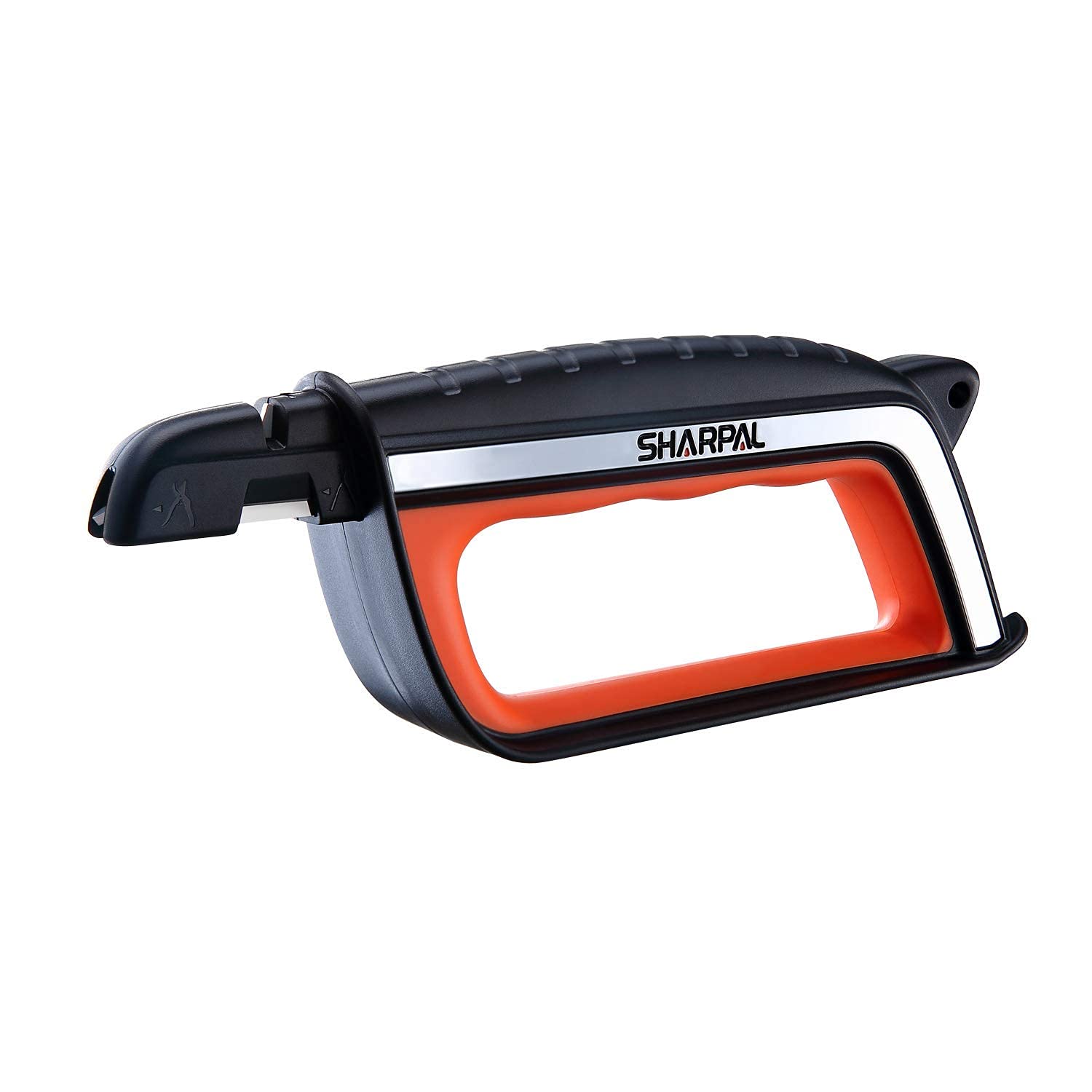
The SHARPAL 103N is a manual multi-sharpener designed for lawn mower blades as well as pruners, shears, axes, and other edged tools. It combines preset sharpening slots with tungsten-carbide and ceramic sharpening components. It is a model-independent maintenance tool for evaluating mower cutting performance without assuming a particular mulching plug or bagger will fit.
Check On AmazonIf you click this link and buy, we earn a commission at no additional cost to you.
Final Thoughts: let clipping volume make the call
Most routine mowings do not require clipping collection when the grass is dry enough to cut cleanly and the pieces disperse through the canopy. Bagging becomes more useful when clipping volume is heavy enough to mat, when disease-specific guidance calls for collection, or when seed-bearing weed material is worth removing. Those are temporary conditions, not reasons to treat bagging as the only responsible lawn practice. Looking at the material left behind gives a better answer than following a fixed habit.
The next time the mower stops, check the surface before changing anything. If you can see healthy turf through a light scatter of clippings, leaving them is usually the simpler choice. If the lawn is hidden under wet rows or thick piles, remove or redistribute the excess and ask why so much material was created at once. That one observation keeps the decision tied to the lawn in front of you.

This package contains 38 black lawn and leaf bags with a 39-gallon capacity. The bags use drawstring closures and are designed for outdoor cleanup that includes leaves, grass clippings, twigs, and sticks. They provide a simple collection option for the occasional heavy clipping load that the final decision framework says should be removed.
Check On AmazonIf you click this link and buy, we earn a commission at no additional cost to you.
FAQs
🌱 Should I bag grass clippings every time I mow?
No. If the clippings are short, dry, and evenly dispersed, they can usually remain on the lawn. Collect them when the volume is heavy enough to form mats or when a specific sanitation reason makes removal useful.
🍃 Do grass clippings cause thatch?
Normal grass clippings are not the primary cause of thatch. Thatch is made mainly from slower-decomposing stems, roots, crowns, and similar turf material. Heavy clipping clumps can still be a surface problem, but that is different from normal thatch formation.
💧 Should I leave wet grass clippings on the lawn?
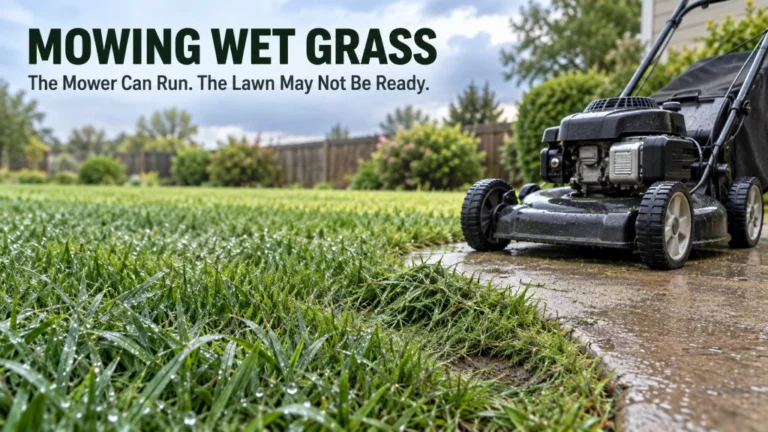
Wet clippings are more likely to stick together and form clumps. If mowing cannot be delayed and the clippings create dense mats, collect or redistribute the excess after the cut. Avoid treating wet mowing as the normal routine when the lawn can be allowed to dry first.
🌾 Should I bag grass clippings if the lawn has weeds?
Bagging is most useful when weeds are carrying seed that would otherwise be redistributed. A few weeds without seed heads do not automatically justify collecting the entire lawn. Weed species and how they spread still matter.
🦠 Should I bag clippings from a diseased lawn?
Only when reliable guidance for the identified disease recommends collection or sanitation. Do not diagnose disease from color or patch shape alone, and do not assume bagging is a universal disease treatment. The disease and the management recommendation should come first.
References and Sources
- University of Maryland Extension lawn maintenance guidance: Supports routine clipping return, proper mowing, and the distinction between clippings and thatch.
- Illinois Extension thatch guidance: Explains what thatch is and why normal clippings are not its primary cause.
- Wisconsin Extension lawn disease guidance: Shows that clipping collection can be recommended for specific active turf diseases rather than as a universal rule.
- University of Maryland Extension weed clipping guidance: Supports treating seed-bearing weed material differently from ordinary grass clippings.