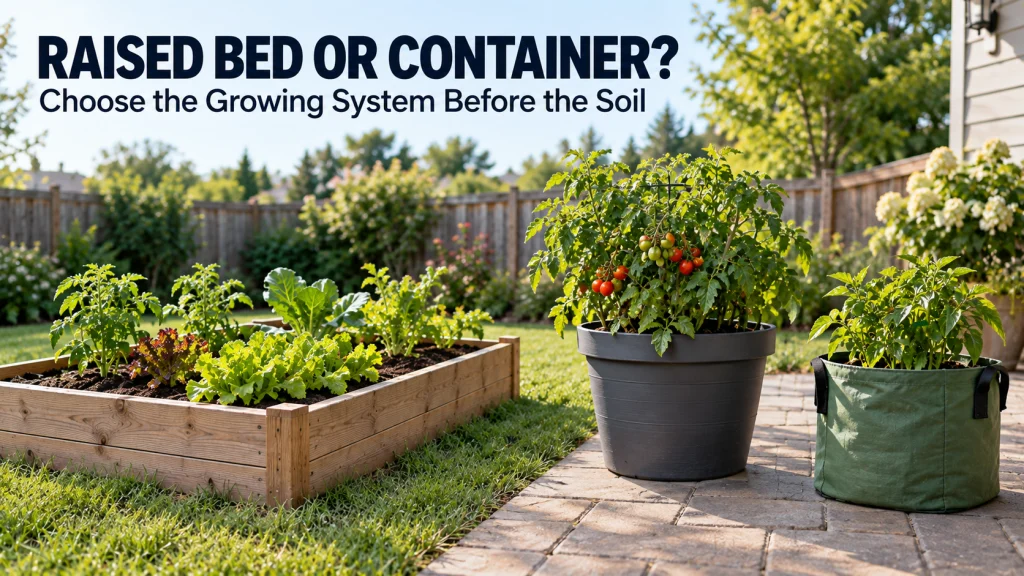
Raised beds and container gardening solve different site problems even when the plants and visible footprint look similar. The useful choice starts with root connection, portability, watering margin, permanence, and the limits of the space you actually have. This guide separates open-bottom beds, rigid pots, grow bags, vertical support, small-space setups, season covers, and hobby greenhouses so you can choose the least complicated system that solves the real constraint. Once that system is clear, soil, irrigation, crop selection, and equipment decisions become much easier to make.
Why the same planting goal behaves differently above ground
Raised beds and container gardening can look almost interchangeable from a few steps away, but the plants are not living in the same root environment. Put the same pepper plant in native ground, an open-bottom raised bed, a rigid pot, and a fabric bag, and the visible footprint may stay modest while drainage, root reach, heat exposure, and watering needs change. The practical question is not which setup looks neater or gives you more control. It is which system removes a real limitation without creating a larger maintenance burden somewhere else.
An open-bottom raised bed placed over usable soil can let roots continue into the ground below, while a pot on pavement has a completely contained root zone. A fabric bag may be easy to move when empty, yet it can lose moisture faster because air reaches more of the growing medium. A greenhouse can protect a larger managed space, but it also brings ventilation, temperature management, and structure into the job. If you are still deciding whether the site itself works, start with how to start a garden around light, soil, water, and workload before choosing a more specialized growing system.
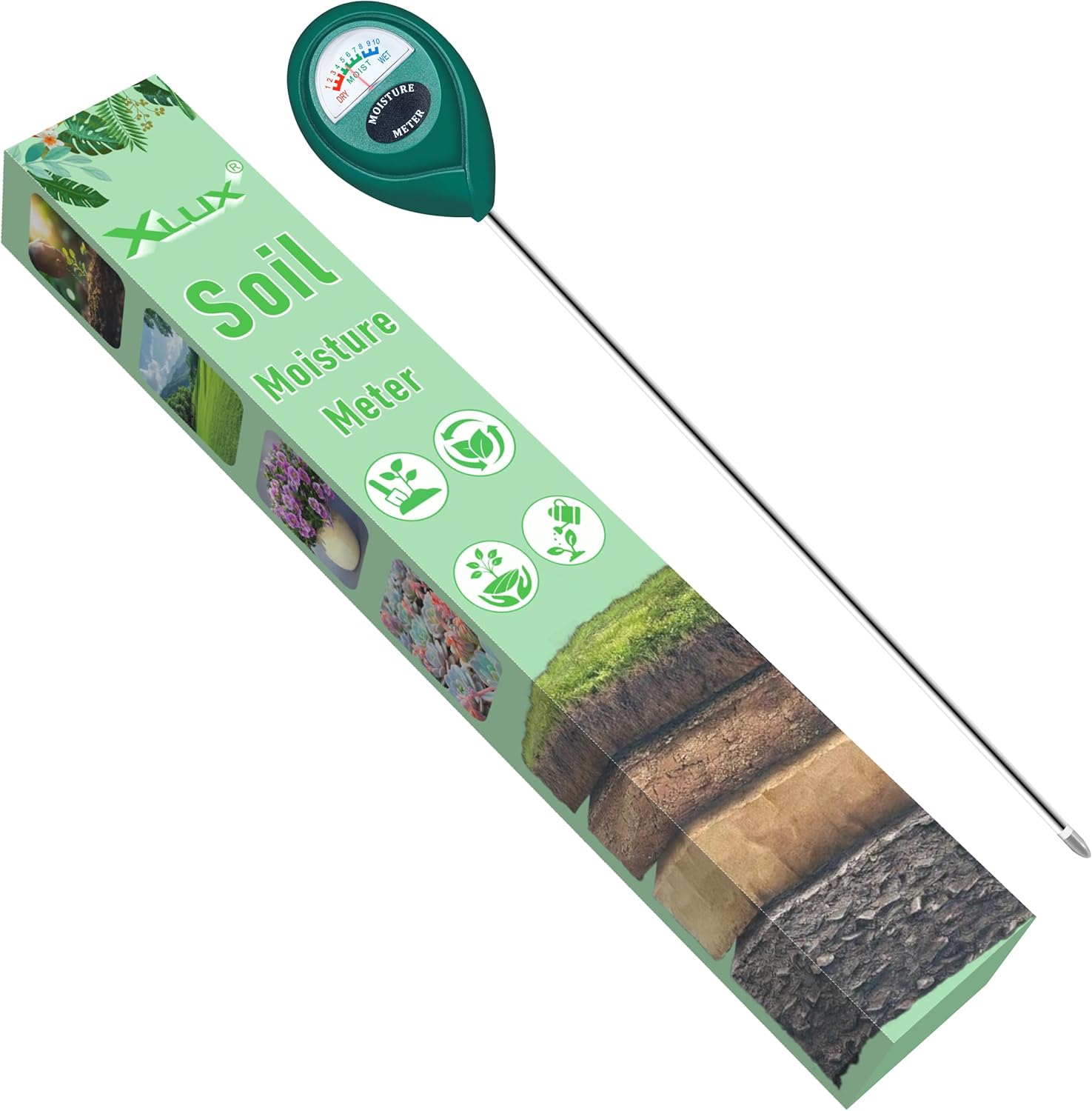
This battery-free meter uses a single long probe to check moisture below the soil surface in pots or garden beds. The large dial has dry, moist, and wet zones across a ten-scale display. It is useful for comparing how different raised-bed and container systems dry between waterings without relying only on surface appearance.
Check On AmazonIf you click this link and buy, we earn a commission at no additional cost to you.
Start with the constraint the existing ground or space creates
The simplest system is usually the one that leaves good conditions alone. If you have usable soil, enough sunlight, reasonable drainage, and a place you expect to keep gardening, there may be no need to build a tall bed or buy a collection of containers. Raised structures make more sense when they solve a specific problem such as compacted soil, difficult access, pavement, contaminated ground, limited reach, or a need to define the growing area. Containers become more useful when there is no plantable ground at all, or when the root zone has to remain separate and movable.
Look at the site before looking at products. Check where water can drain, whether the surface heats strongly in sun, how far you must carry soil and water, and whether the setup can remain in place between seasons. On a rental patio, reversibility may matter more than maximizing soil volume. In a permanent backyard bed, reducing daily watering may matter more than portability, which is why the raised bed gardening guide is the better next step once an open-bottom bed clearly fits the site.
| System | Root connection | Main reason to choose it | Main burden to check |
|---|---|---|---|
| Open-bottom raised bed | Can connect with usable soil below | Improve the growing zone while keeping a permanent garden footprint | Fill volume, construction, irrigation, and long-term placement |
| Rigid container | Contained root zone | Grow on hard surfaces or keep the planting movable | Weight, drainage, root volume, and more frequent moisture checks |
| Grow bag | Contained, porous root zone | Reduce empty weight and simplify seasonal storage | Faster dry-down and less rigid support |
| Vertical support | Depends on the base system | Use height when plant habit and footprint justify it | Stability, access, shading, and attachment |
| Passive season cover | Usually keeps the existing bed or container | Add limited weather protection without creating a full enclosure | Ventilation, securing the cover, and crop access |
| Hobby greenhouse | Varies by beds and containers inside | Create a recurring enclosed growing space | Heat, ventilation, structure, cost, and ongoing management |
Use the table as a routing check rather than a ranking. A more elaborate system is not automatically a better one, and two gardeners with the same crop may make different choices because one has deep usable soil while the other has only concrete. The first useful decision is therefore about the site constraint, not the feature list. Once that constraint is named, the rest of the comparison becomes much less vague.
| If this is the main constraint | Start with this system | Then verify |
|---|---|---|
| Usable ground, but the root zone or working height needs improvement | Open-bottom raised bed | Soil below, fill volume, access, drainage, and permanence |
| No usable ground or the planting must stay fully contained | Rigid container | Root volume, drainage, filled weight, heat exposure, and watering |
| Seasonal storage and low empty weight matter more than maximum moisture reserve | Grow bag | Dry-down rate, support, placement, and watering access |
| Horizontal space is tight and the plant can naturally climb or be trained | Vertical support added to the base system | Stability, shade, access, attachment, and mature plant weight |
| The main limit is a patio, balcony, rental, doorway, or shared-space rule | Small-space setup | Sun, drainage, route width, filled weight, reversibility, and local rules |
| Only a small area needs temporary weather protection | Passive season cover | Ventilation, access, securing the cover, and crop tolerance |
| A recurring need requires an enclosed protected growing area | Hobby greenhouse | Ventilation, heat, water, structure, access, and ongoing management |
This decision path is deliberately simple: name the constraint first, choose the lightest system that solves it, then verify the new burdens that system creates. If two rows seem equally plausible, compare permanence and watering before looking at accessories or upgrades. A system that removes one problem but creates daily work you cannot sustain is not a better fit. That keeps the choice tied to the garden rather than to the amount of equipment available.

This open-reel fiberglass tape measures up to 100 feet and shows both inch and metric scales. The 1/2-inch tape is paired with an impact-resistant shell and shock-absorbing handle. It is a practical way to measure available garden footprints, access routes, and spacing before choosing a bed or container system.
Check On AmazonIf you click this link and buy, we earn a commission at no additional cost to you.
Separate open-bottom raised beds from closed containers
A raised bed sitting directly on soil should not be treated like a giant flowerpot. University of Maryland Extension notes that roots can grow through raised-bed soil into the ground beneath when the bed is placed over soil, which means the usable root zone is not defined only by the visible wall height. That connection can affect how plants reach moisture and how much depth you truly need to import. Put the same bed on an impermeable surface and the logic changes because the roots are then confined to the material inside the structure.
Closed containers start with that confinement from the beginning. Their drainage openings let excess water leave, but roots cannot simply continue into native ground when the pot sits on a patio, balcony, or driveway. That makes container size, material, plant size, and watering rhythm more important than they would be in a bed connected to good soil. If your site calls for a fully contained root zone, the container gardening guide should own the next decisions about pot size, drainage, and plant fit.
| Root-zone condition | Open-bottom bed over usable soil | Closed container on a hard surface |
|---|---|---|
| Where roots can go | Roots may continue into suitable soil below the bed | Roots remain inside the container |
| What visible wall height means | It does not always equal total rootable depth | It more directly limits the contained root volume |
| Water reserve | May benefit from contact with soil below, depending on site conditions | Depends on container volume, material, drainage, weather, and plant demand |
| Drainage check | Evaluate both the imported growing layer and the soil underneath | Verify drainage openings and where runoff can safely go |
| Portability | Normally treated as a permanent or semi-permanent installation | Potentially movable, but filled weight can make relocation difficult |
| When the distinction matters most | When deciding fill depth, permanence, and how much the native soil still participates | When sizing the root zone and planning watering on patios, balconies, or pavement |
The practical difference is the boundary around the roots. An open-bottom bed can improve the upper growing zone without necessarily isolating the plant from the ground, while a closed container makes the imported medium the entire root environment. That distinction changes how you think about depth, moisture reserve, drainage, and long-term placement. Check the surface under the system before using container rules for a bed or bed rules for a container.

This oval raised bed uses galvanized metal panels and measures 4 x 2 x 1 feet. Its open-base design keeps the growing area connected to the ground instead of enclosing it like a closed pot. That makes it a direct physical example for comparing an open-bottom bed with a fully contained root zone.
Check On AmazonIf you click this link and buy, we earn a commission at no additional cost to you.
Use rigid containers when portability and a fully contained root zone matter
Rigid pots work well when the growing area is a hard surface, when you want individual plants in separate root zones, or when the layout may need to change. They can be placed near a door, arranged around a patio, or moved seasonally if the filled weight stays manageable. The important word is filled, because a container that feels easy to carry in the store can become extremely heavy once it holds moist growing medium and a mature plant. Drainage also has to work without sending water where it damages a surface or bothers a neighbor below.
Container material changes maintenance as well as appearance. Porous materials can dry more quickly than less porous materials, while darker or heat-absorbing containers may increase root-zone heat in exposed locations. A larger pot can provide a bigger moisture buffer, but it also increases soil volume, weight, and the difficulty of moving the planting later. Choose the container around the plant and the site, then decide whether that added volume solves a real watering or stability problem rather than assuming bigger is always better.

This set includes three rigid 10-inch plastic planters with drainage holes and matching saucers. The containers create separate, fully contained root zones while the saucers help manage drainage on patios or other hard surfaces. Their individual pot format also makes placement and later rearrangement simpler than a fixed bed.
Check On AmazonIf you click this link and buy, we earn a commission at no additional cost to you.
Use grow bags when low empty weight and seasonal storage justify faster dry-down
Grow bags are useful when you want a container that is light when empty, folds or nests more easily for storage, and can be rearranged without handling a bulky rigid pot. Their porous sides also expose the growing medium to more air than a typical plastic container. That can be helpful for drainage, but it usually means the moisture reserve is smaller and the gardener must pay closer attention during hot, dry, or windy weather. A fabric bag is therefore not a low-maintenance shortcut simply because it is inexpensive and easy to store.
Think about where the bag will sit before filling it. On soil, roots from some plants may eventually move through the fabric into the ground below, while on a hard surface the root system remains limited to the bag itself. Tall or top-heavy plants may also need separate support because a soft-sided container does not provide the same rigid base as a heavy pot. If those trade-offs still fit the site, grow bag gardening is the right place to work through sizing, watering, placement, and seasonal handling in more detail.

These 5-gallon grow bags use thickened 300G nonwoven fabric and come as a four-pack. The fabric sides provide drainage and the attached handles make empty or lightly loaded bags easier to reposition. They match a section focused on the storage, mobility, and faster dry-down trade-offs of fabric containers.
Check On AmazonIf you click this link and buy, we earn a commission at no additional cost to you.
Add vertical support only when plant habit and footprint make it useful
Vertical growing is most useful when the plant naturally climbs, sprawls, or can be trained upward without turning support into a constant correction job. A trellis can keep vining growth out of paths and use height when horizontal space is scarce, but it does not create more root volume by itself. The container or bed still has to support the roots, moisture demand, and weight of the plant. A tall structure attached to an undersized pot may save floor space while creating a stability problem.
Placement matters because vertical growth can cast shade, catch wind, and block access to plants behind it. Support should also be strong enough for the mature plant and positioned so you can still harvest, prune, or inspect the planting without awkward reaching. Use height because the crop habit and footprint benefit from it, not because every small garden needs something climbing a wall. For the mechanics of matching supports to spaces and plant habits, continue with vertical gardening strategies for limited footprints.

This three-pack provides plant support cages that extend up to 68 inches tall. The alloy-steel and plastic construction is intended for tomatoes and other plants that benefit from upright support in beds or pots. It suits a section where vertical structure should be added only after plant habit, stability, and footprint justify it.
Check On AmazonIf you click this link and buy, we earn a commission at no additional cost to you.
Treat balcony, patio, rental, and other small-space limits as system constraints
A small space is not just a smaller version of a backyard. The useful area may be interrupted by doors, railings, furniture, utility access, overhangs, or places where water cannot drain freely. Containers can make these spaces productive, but several large pots can also become heavy, hard to move, and difficult to water without making a mess. Sun exposure may change sharply across only a few feet, especially near walls and under balconies above.
Renters also need to think about reversibility and surface protection. A system that requires permanent anchors, large deliveries of fill, or difficult cleanup may be a poor match even if it would work horticulturally. Start with the smallest footprint that gives the plant enough root space and leaves a practical route for watering and maintenance. The small space gardening guide takes over when access, layout, movement, and limited square footage are the main constraints rather than the root-zone system alone.

This two-pack uses 12-inch rolling plant caddies to support movable pots on patios and other hard surfaces. The wheeled trays can make a heavy container easier to reposition for access, cleaning, or layout changes. That directly supports small-space setups where reversibility and keeping routes usable matter.
Check On AmazonIf you click this link and buy, we earn a commission at no additional cost to you.
Use passive covers before buying a greenhouse when only limited extra protection is needed
If the goal is to protect a few plants from brief cold, wind, or a narrow shoulder-season problem, a full greenhouse may be more system than the job requires. Row covers, low tunnels, cloches, and cold frames can add protection while leaving the main growing bed or container system in place. They still need management because covered spaces can warm quickly in sun and may need opening, venting, or removal. The value is that you can solve a limited weather problem without committing to an enclosed structure that demands attention across a much larger area.
The right cover depends on climate, crop, exposure, and what kind of protection you actually need. A method that helps during a light cold event in one region may not provide enough protection in a colder climate, and a sealed cover can create overheating on a mild sunny day. Treat passive protection as a specific tool, not a promise to make every crop grow through every season. If this is the constraint you are solving, use the guide to extend the growing season with appropriately scaled protection before moving to a greenhouse.

This 10 x 30-foot floating row cover uses 0.9 oz per square yard garden fabric. It is intended for frost, sun, and pest protection without requiring a permanent enclosed structure. That makes it a scaled passive-cover option for protecting a limited bed area before moving to a greenhouse.
Check On AmazonIf you click this link and buy, we earn a commission at no additional cost to you.
Use a hobby greenhouse only when an enclosed managed space solves a recurring need
A greenhouse changes the problem from covering a few plants to managing an enclosed growing environment. The structure can shelter plants from outdoor conditions, but it also creates new work around ventilation, heat buildup, watering, access, and the condition of the structure itself. Depending on climate and goals, heating or other equipment may become part of the system as well. That is a reasonable trade when you repeatedly need protected space, but it is excessive if the real need is simply to protect one bed for a short period.
Before committing, describe what you expect the greenhouse to do that a simpler cover cannot. If the answer is vague, the structure may become an expensive storage space rather than a useful growing system. If the answer is a recurring need for protected propagation, overwintering, or controlled season extension, then the added management may be justified. The greenhouse gardening guide should handle those enclosure-specific decisions once the need is clear.

This walk-in greenhouse uses an 8 x 6-foot footprint with a polyethylene cover over a steel frame. Roll-up zippered access and ventilation openings help manage an enclosed growing space rather than simply covering one bed. It fits the section where recurring protected-space needs justify the added structure and ventilation work.
Check On AmazonIf you click this link and buy, we earn a commission at no additional cost to you.
Route growing media, irrigation, and plant culture to the decision they actually belong to
Choosing a raised bed, pot, bag, or protected structure does not settle every growing question. A plant still needs an appropriate root medium, enough light, suitable temperature, and a watering approach that matches its actual moisture use. Container media usually behaves differently from native garden soil, and irrigation needs can change with container size, material, wind, heat, and plant maturity. Those are important decisions, but they should not be confused with the earlier question of which growing-space system fits the site.
Keep the boundaries clean so one purchase does not become a chain of assumptions. A raised bed does not automatically fix poor irrigation planning, and a greenhouse does not compensate for choosing a plant that is badly matched to available light. Likewise, a vertical trellis is not a substitute for enough root volume, and a larger container does not remove the need to check moisture. Treat the growing system as the platform, then make soil, water, and plant-specific choices from the conditions that platform creates.

This garden drip kit includes 100 feet of irrigation tubing with barbed fittings and adjustable emitters. The listing specifies 5/16-inch mainline components, 1/4-inch tubing, and 30 emitters for garden and raised-bed watering. It supports the article's point that irrigation should be matched to the conditions created by the chosen growing system.
Check On AmazonIf you click this link and buy, we earn a commission at no additional cost to you.
Run the final choice through permanence, maintenance, and buy-or-skip checks
Before buying or building, imagine the system when it is full, wet, mature, and in active use rather than when it is empty and clean. Ask how often you will need to water, whether you can reach every plant, where excess water goes, and how the setup will be emptied or repaired later. Check whether the growing area will still work when plants are larger and paths feel narrower. The best system is the one that continues to fit after the novelty of setup is gone.
A useful final check is whether each added feature removes a known constraint. If you cannot name the problem a taller bed, larger pot, trellis, cover, or greenhouse solves, skip it for now and keep the system simpler. You can expand after the garden shows you a real limitation instead of buying around a hypothetical one. Use this checklist before committing money or soil volume:
- Can the plant reach enough root volume in this system without unnecessary excess?
- Can water drain safely, and can I supply water often enough for this material and exposure?
- Will the filled system be too heavy or too permanent for the space?
- Can I reach the planting for routine care without blocking doors, paths, or shared areas?
- Does vertical or protected growing solve a repeated need, or am I adding complexity without a clear job?
- Can a simpler, cheaper, or more reversible option solve the same constraint?
If the answers expose a mismatch, change the system before optimizing details such as finish, accessories, or layout. That is much cheaper than discovering the problem after the structure is filled and planted. A modest setup that matches the site is easier to improve later than a complicated one built around the wrong assumption. The goal is not maximum control, but enough control to make the space workable without making the garden harder to maintain.

This single-outlet hose timer supports programmed watering plus manual watering and rain-delay functions. Its schedule controls can help test whether a chosen setup creates a watering routine that is practical to maintain. It belongs at the final-check stage because irrigation workload is one of the burdens to verify before adding more equipment.
Check On AmazonIf you click this link and buy, we earn a commission at no additional cost to you.
Final Thoughts: choose the growing system before optimizing the details
Raised beds, rigid containers, grow bags, vertical supports, covers, and greenhouses are not steps on a ladder from basic to advanced. They solve different combinations of ground access, root containment, portability, space, weather exposure, and maintenance. Start with the limiting condition you can actually observe, then choose the least complicated system that removes it. That keeps the garden tied to the site instead of to whatever structure happens to be popular.
Once the system is chosen, measure the real footprint, confirm drainage and access, and plan how you will water it when conditions are hottest or driest. Then move into the more specific guidance for bed construction, containers, grow bags, small spaces, supports, or season protection. A clear system choice makes those later decisions narrower and easier to verify. It also makes it much easier to know when the right purchase is no purchase at all.

This 15-inch metal watering wand provides ten spray patterns and thumb-operated flow control. The longer wand format is intended for watering tasks such as hanging baskets and shrubs while keeping water control at the handle. It works here as a later-stage watering detail to consider only after the growing system itself has been chosen.
Check On AmazonIf you click this link and buy, we earn a commission at no additional cost to you.
FAQs
🌱 Is a raised bed better than a container garden?
Not universally. A raised bed usually makes more sense when you have a permanent site and want an improved growing zone connected to the ground, while containers fit hard surfaces, movable layouts, and fully contained roots.
🪴 Can I put a raised bed on concrete?
Yes, but the root zone then behaves more like a contained system because roots cannot reach soil below. Depth, drainage, heat from the hard surface, and watering become more important than they are for the same bed placed over usable ground.
💧 Do grow bags need more watering than plastic pots?
They often need closer moisture monitoring because porous fabric can dry more quickly than nonporous materials. Weather, bag size, plant size, wind, and the growing medium still determine how often watering is actually needed.
🏙️ What is the simplest option for a balcony or patio?
A small group of appropriately sized containers is often the simplest starting point because it avoids permanent construction. Check sunlight, drainage, filled weight, access to water, and any building or rental rules before expanding the setup.
🌤️ Do I need a greenhouse to extend the growing season?
Usually not if the goal is limited extra protection for a small area. Row covers, low tunnels, cloches, or cold frames may solve the problem with less cost and management, depending on local climate and the crop being protected.
References and Sources
- USDA National Agricultural Library: Provides a broad technical distinction between raised beds, containers, and the resources used to manage them.
- University of Maryland Extension raised bed guidance: Supports the distinction between raised beds placed over soil and beds placed on hard surfaces, including root connection, drainage, and drying behavior.
- University of Maryland Extension container guidance: Supports container root-zone limits, material differences, watering considerations, grow-bag behavior, weight, and portability trade-offs.
- Utah State University Extension season extension guidance: Supports the use of row covers, tunnels, cold frames, and greenhouses as different levels of weather protection and management.