Heat mat for seedlings: warm the germination zone, not every seed forever
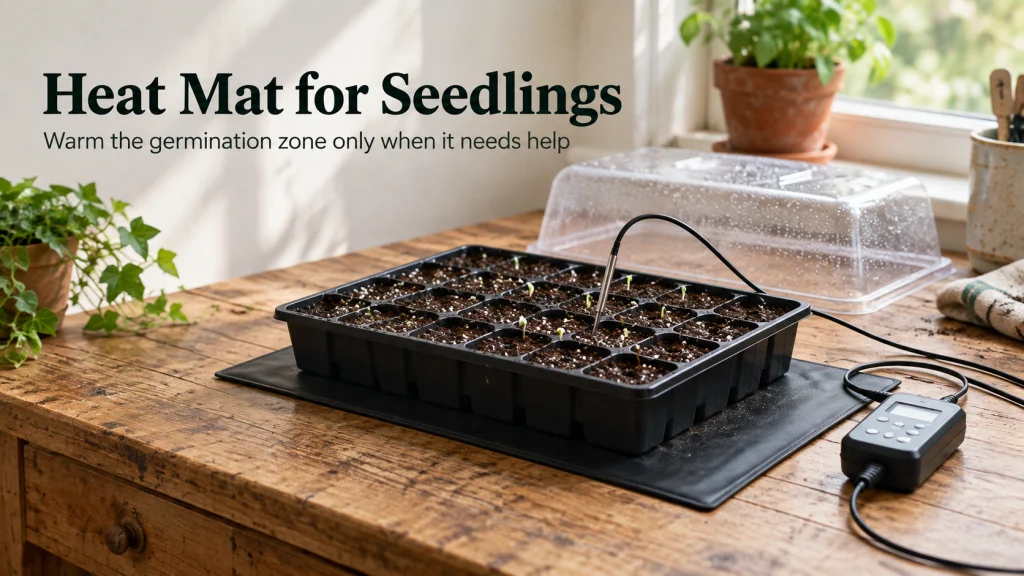
Heat Mat For Seedlings

A heat mat for seedlings is useful when the seed-starting medium is cooler than the germination range needed by the seeds you are starting. It is not automatic equipment for every tray, because different crops tolerate or prefer different germination temperatures and a warm room may already provide enough heat. The practical decision is to
Grow lights for seedlings: size the lit area before chasing wattage

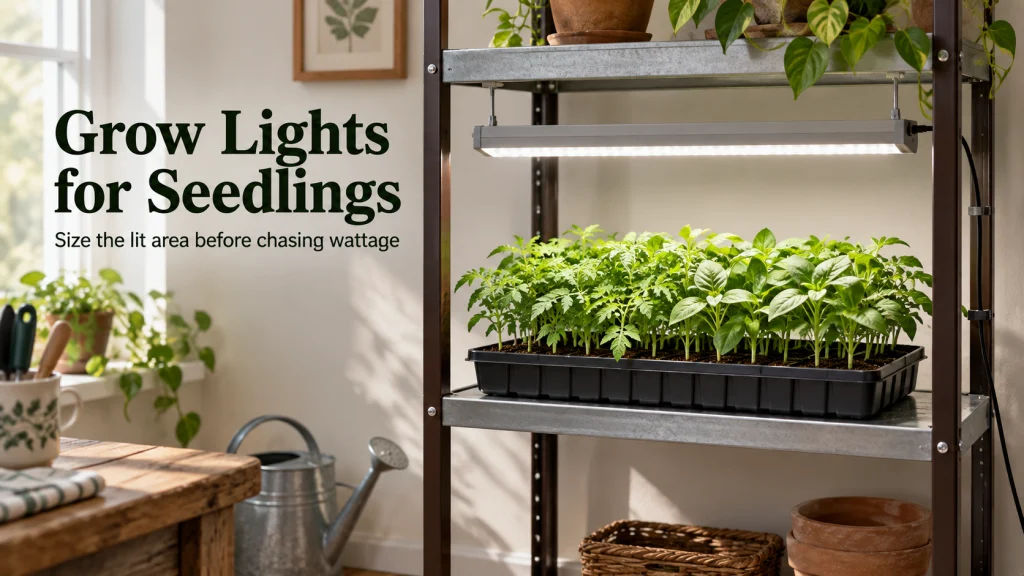
Grow Lights For Seedlings

Grow lights for seedlings work best when the fixture is matched to the area that actually needs useful light, not chosen by wattage alone. Start with the tray footprint, then check whether the fixture can cover that footprint at an appropriate adjustable distance without creating avoidable heat or electrical problems. A consistent light and dark

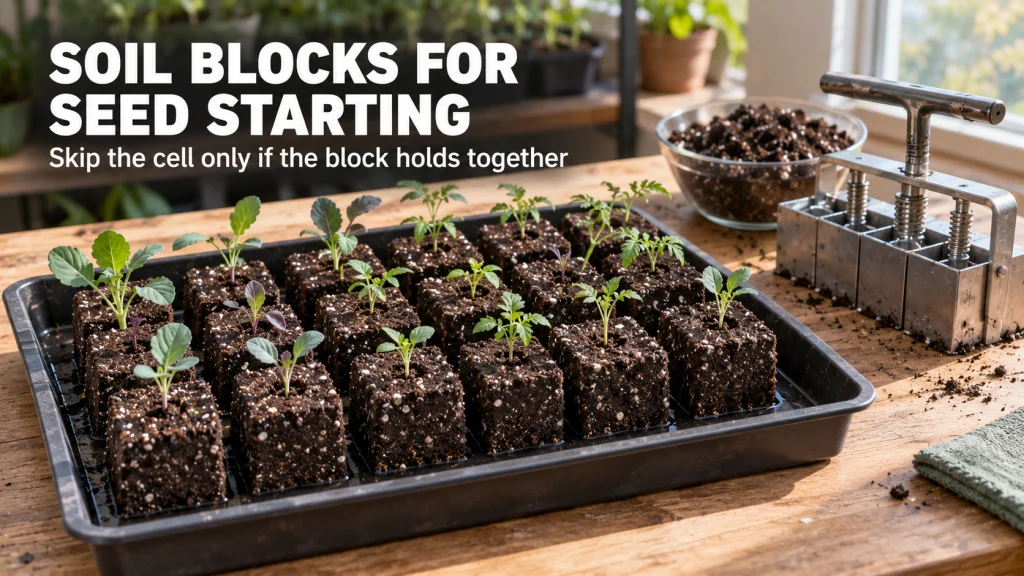
Soil blocks for seed starting: Skip the cell only if the block holds together

Soil Blocks For Seed Starting

Soil blocks replace individual seedling cells with compressed growing medium, but they do not remove the need for a stable mix, a rigid tray, careful watering, and a realistic transplant schedule. They fit best when reducing disposable cells or avoiding root circling matters enough to justify a different workflow. The useful question is not whether

Seed starting containers: choose the cell for the transplant plan

Seed Starting Containers

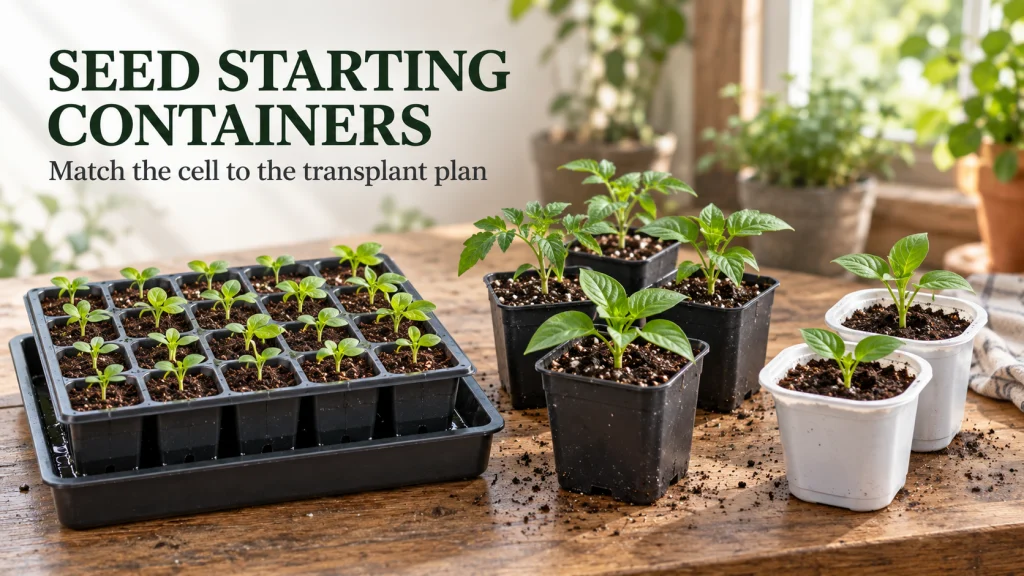
Seed starting containers work best when the container fits the seedling’s planned indoor stay instead of simply fitting the largest number of seeds. Drainage comes first, then cell volume, watering access, cleaning, storage, and how easily the seedling can leave the container without unnecessary root disturbance. Small cells can be efficient when seedlings move on

Seed starting mix: Give germination what it needs, not a full-season soil recipe

Seed Starting Mix

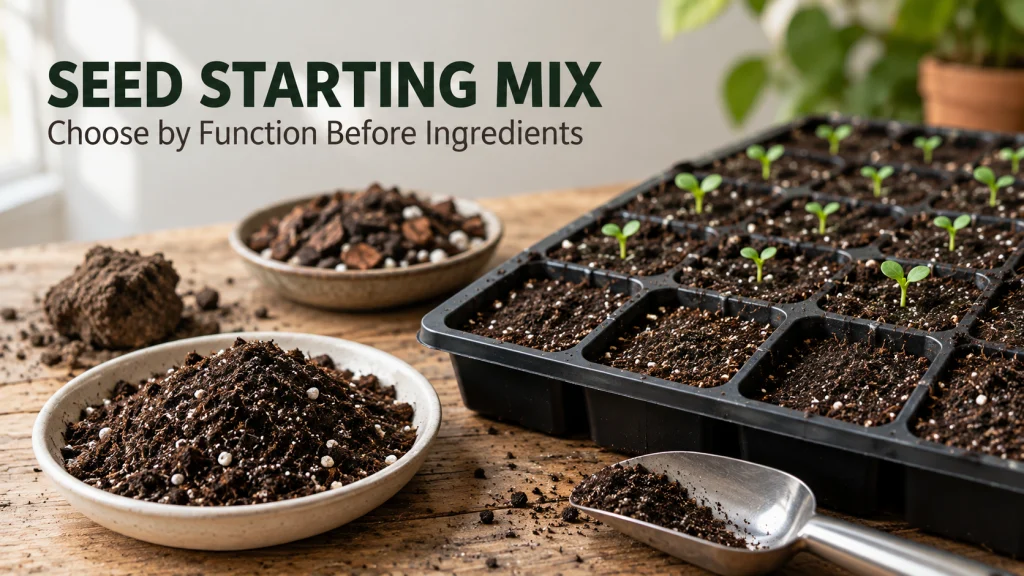
A useful seed starting mix is chosen for the work it has to do in a tray or cell: hold enough moisture for germination, drain excess water, preserve air space around new roots, and stay physically consistent enough for small seeds. Garden soil is usually a poor fit for that job in small containers because

When to start seeds indoors without starting them too early

When To Start Seeds Indoors

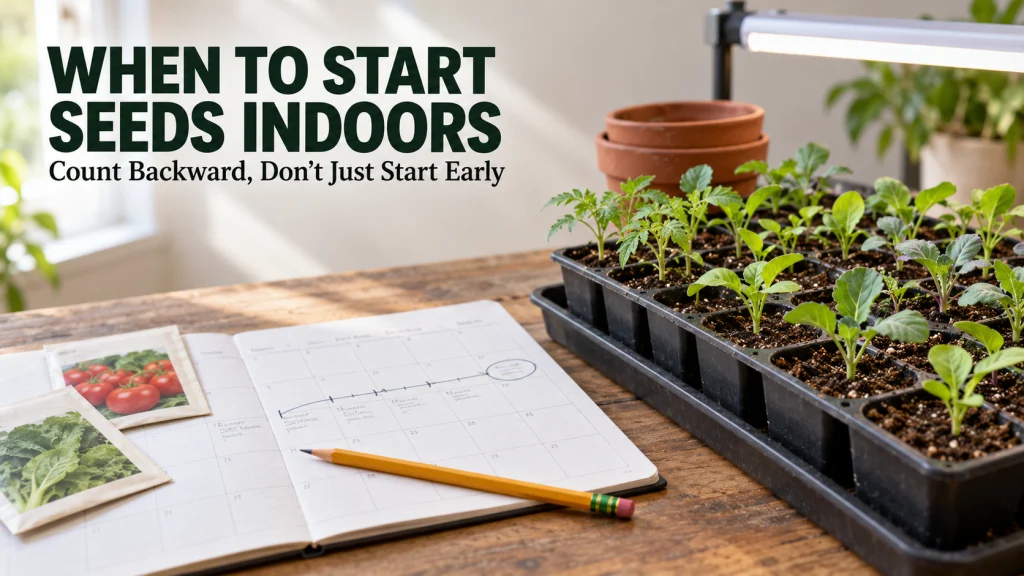
Knowing when to start seeds indoors is mostly a backward-scheduling problem, not a race to sow as early as possible. Start with the outdoor event named by your seed packet or trusted growing guidance, subtract the recommended indoor growing period, and leave room for hardening only if that time is not already included. The right

Starting seeds indoors without turning the shelf into a greenhouse

Starting Seeds Indoors

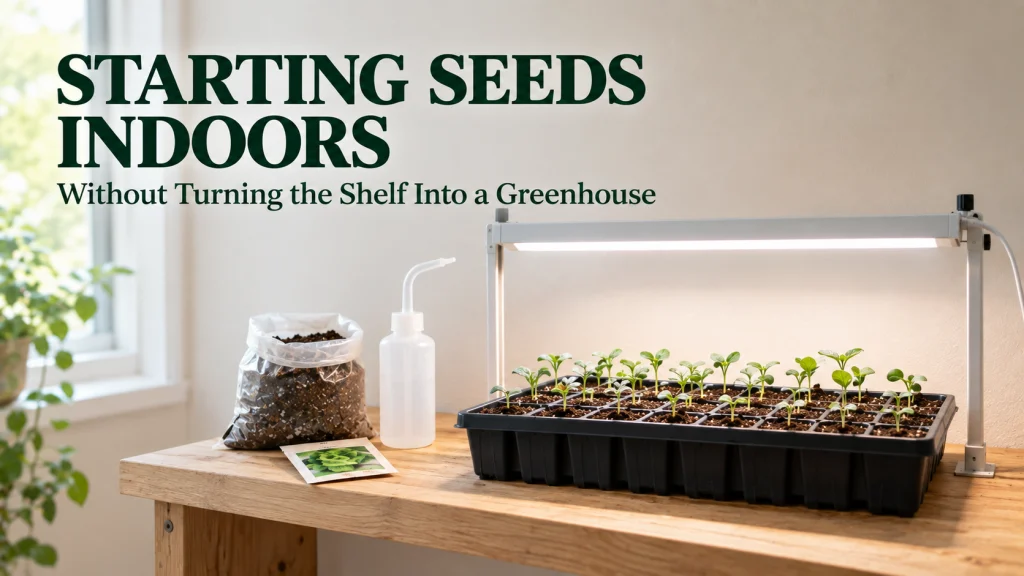
Starting seeds indoors works best when the setup is built around the crop and the room, not around a long equipment list. The essentials are a suitable seed, a clean draining container, an appropriate growing medium, even moisture, and adequate light once seedlings emerge. Extra warmth and a humidity cover can help under the right

Seed starting is a scheduling and setup problem before it is a sowing problem

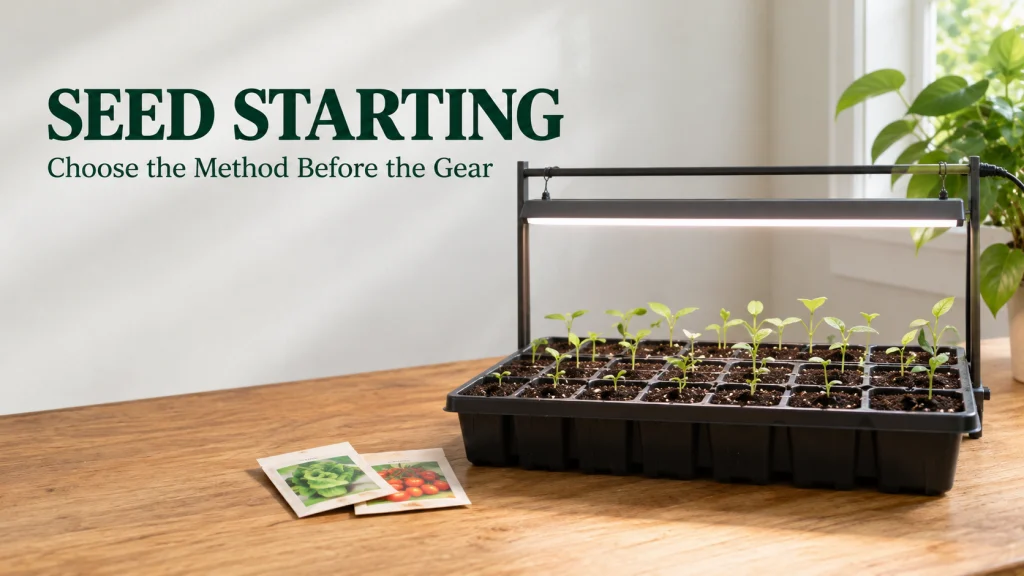
Seed Starting

Seed starting works best when the start method, timing, and room conditions are decided before trays, lights, or other equipment are purchased. The useful first choice is whether a seed should be started indoors, sown directly where it will grow, or handled through a winter sowing approach. From there, the packet, the outdoor planting window,