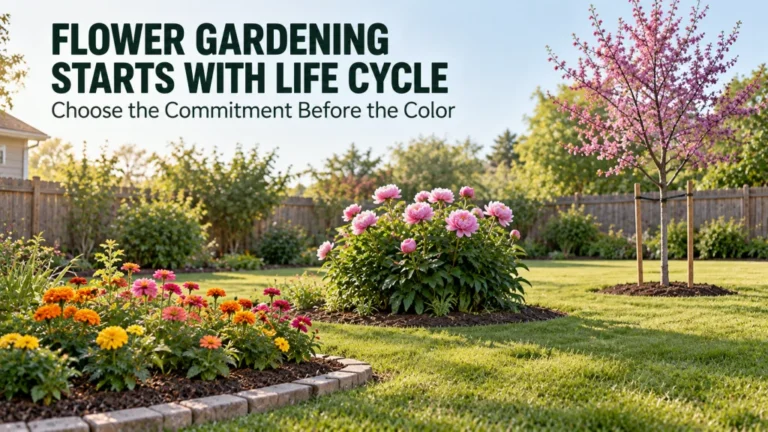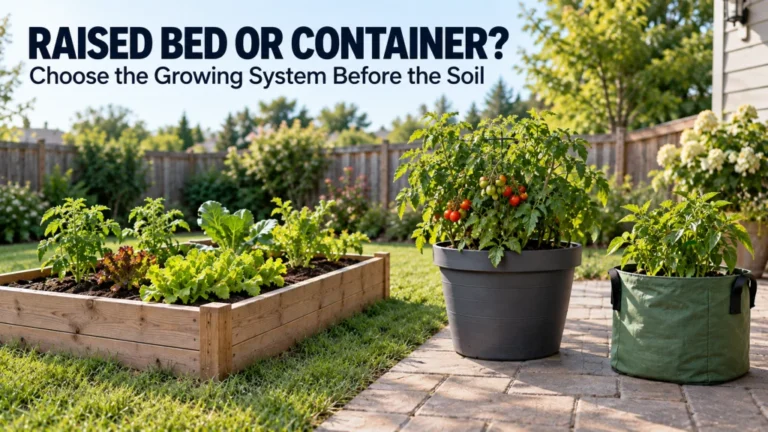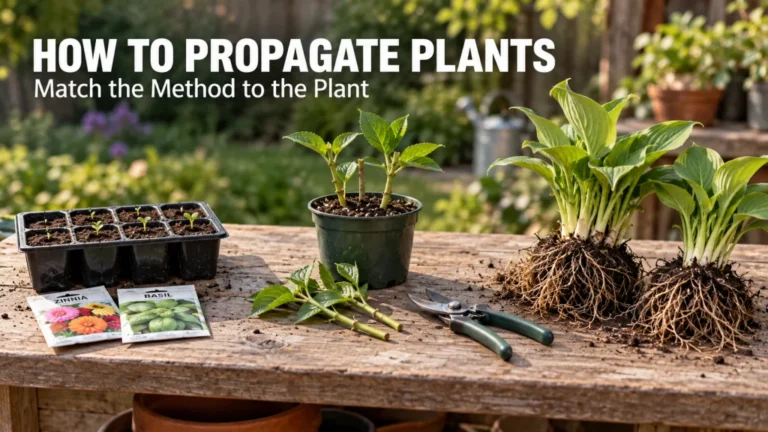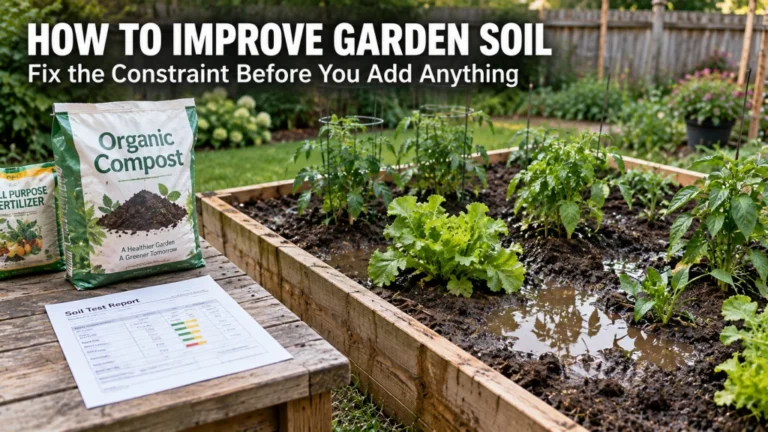
Edible gardening works better when you choose crops by commitment before choosing them by appetite. A vegetable row, tomato planting, herb patch, berry bed, grapevine, and fruit tree can all produce food, but they differ sharply in how long they occupy space, how quickly they may produce, and what kind of maintenance they create. The practical choice depends on your climate, available space, growing season, sunlight, soil, water, workload, and willingness to keep the planting in place. Start with the crop family that fits those limits, then use a crop-specific guide for the details.
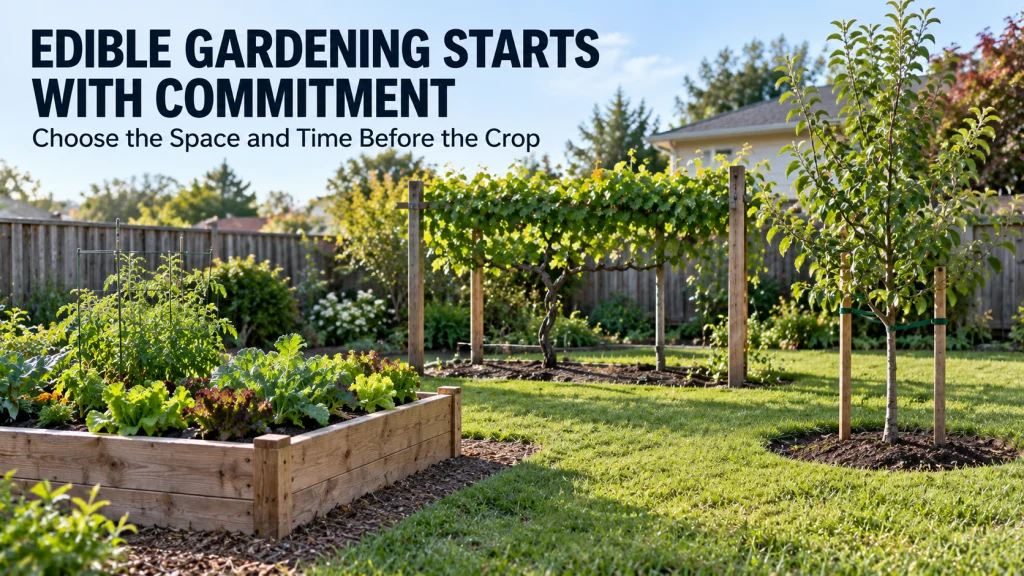
Edible crops do not make the same promise to the space
A basil plant, bean row, strawberry bed, and apple tree can all belong in edible gardening, but they do not ask the same thing from the yard. Some choices are easy to change after one season, while others can shape where you mow, walk, prune, water, and plant for years. That difference matters before flavor, novelty, or a long plant list enters the decision. If you are growing edible plants at home, first ask how long you are willing to give the crop the same piece of ground.
That question also protects you from treating every food plant as a version of a vegetable garden. A seasonal crop can let you revise spacing, variety, or even the purpose of the bed the next time you plant. A grapevine or fruit tree is harder to relocate once its root system, support, and pruning structure are established. A small fruit planting sits between those extremes, because it is perennial but may require less permanent space than a tree. The useful starting point is not which crop sounds most rewarding, but which commitment still makes sense after the first burst of enthusiasm fades.

This 25-foot tape measure has fractional markings on the blade for quick site measurements. Its self-locking retractable blade helps hold a measurement while you compare beds, paths, and planting areas. A rubber overmold adds grip while you map the working space a crop will occupy.
Check On AmazonIf you click this link and buy, we earn a commission at no additional cost to you.
Separate seasonal food crops from permanent fruit plantings
The fastest way to narrow an edible garden is to divide choices by reversibility. Many common vegetables and tender herbs can be treated as seasonal occupants, so a disappointing variety or awkward layout does not have to become a long-term property decision. Strawberries, brambles, grapes, and fruit trees are different because the planting is usually expected to remain and be managed beyond a single growing cycle. That longer stay brings advantages, but it also makes mature size, access, pruning, soil suitability, and future shade more important before planting.
Use the comparison below as a commitment check rather than a promise of harvest. Actual growth and production depend on species, cultivar, region, weather, soil, light, water, pest pressure, and care, so no row can tell you exactly when food will appear. What the table can show is how easy a choice is to reverse and what kind of maintenance may remain after the first season. That distinction is more useful than assuming every edible belongs wherever there is an empty patch of soil.
| Crop family | Typical space commitment | What usually changes the decision | How easy it is to reverse |
|---|---|---|---|
| Seasonal vegetables | Usually one growing cycle at a time | Season, crop spacing, sun, water, and rotation options | Relatively easy after the crop is removed |
| Tomatoes | Seasonal, but often needs dedicated support space | Plant habit, support method, pruning choice, airflow, and access | Easy after the season, less flexible while fully grown |
| Culinary herbs | Seasonal or perennial depending on the herb and climate | Harvest pattern, winter survival, spread, drainage, and container use | Varies widely by species |
| Small fruits | Usually several seasons in one area | Mature spread, runner or cane management, pruning, and harvest access | Moderate, but removal can disturb an established bed |
| Grapes | Long term vine plus support footprint | Trellis location, training system, pruning access, vigor, and sun | Low once the vine and support are established |
| Fruit trees | Long term woody planting | Mature size, rootstock, pollination needs, pruning, pests, and access | Low after establishment |
The useful pattern is simple: the longer a crop is expected to stay, the more carefully you should judge the site before planting. Seasonal flexibility forgives more experimentation, while permanent plantings make early site mistakes harder to undo. That does not make permanent fruit a worse choice. It only means the location needs to earn the commitment.

These reusable plastic T-type labels provide 100 markers for identifying crops around the garden. Each label measures about 2.4 x 3.9 inches, leaving room to record crop names or other planting notes. Labeling seasonal and perennial plantings separately can make long-term bed commitments easier to track.
Check On AmazonIf you click this link and buy, we earn a commission at no additional cost to you.
Use vegetables when seasonal flexibility matters most
Vegetables are often the easiest place to experiment because many common garden vegetables are planted, harvested, and cleared within a season. That makes them useful when you are still learning how sunlight moves across the yard, where soil stays wet, how much you actually enjoy weeding, or how much produce your household will use. A failed layout is annoying, but it usually does not lock the space into a permanent planting. For a deeper crop by crop route, use the vegetable gardening guide once you know vegetables fit the available space and workload.
Seasonal flexibility does not mean all vegetables are interchangeable or effortless. Warm-season and cool-season crops differ, mature plant sizes differ, and some crops occupy far more room or time than others. A compact succession of leafy crops asks something different from the garden than sprawling squash or a long-season crop, so local planting information still matters. The advantage is that you can learn from one cycle and change the next planting without having to remove a woody perennial.
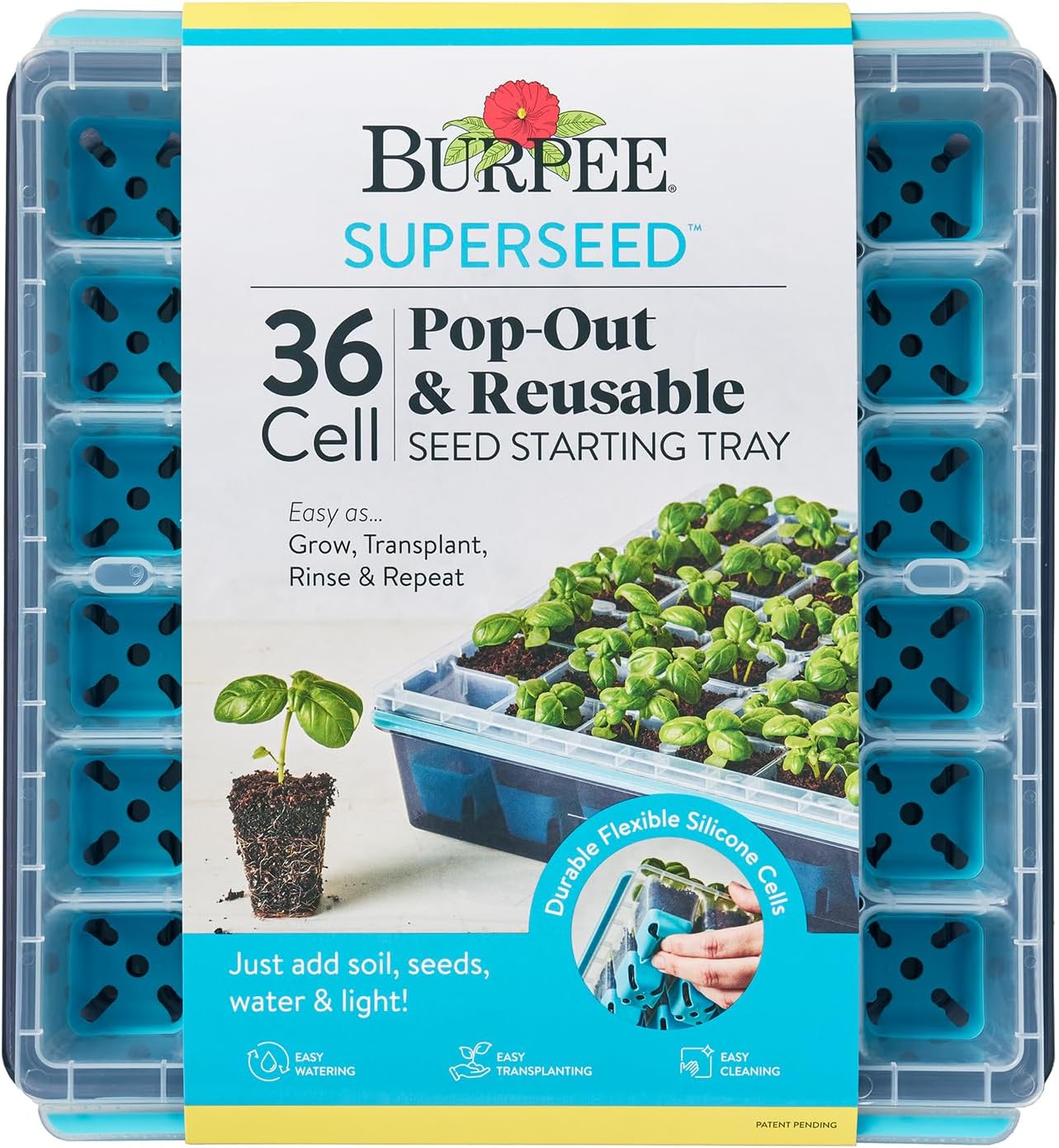
This reusable tray provides 36 cells for starting vegetable, herb, or flower seeds. Flexible silicone cells are designed to help seedlings release with less root disturbance when transplanting. The tray gives seasonal crops a contained starting setup before they move into beds or containers.
Check On AmazonIf you click this link and buy, we earn a commission at no additional cost to you.
Treat tomatoes as their own management decision when support and pruning matter
Tomatoes are seasonal, but they deserve a separate decision because the plant can quickly turn a small footprint into a support and access problem. Staking, caging, or trellising can reduce the ground area used by sprawling plants, but each method changes how easily you can reach fruit, tie stems, prune, water, and move around nearby crops. Plant habit matters too, because not every tomato grows or needs to be managed the same way. If tomatoes are the crop you actually want, the growing tomatoes guide is the better next step than applying a generic vegetable rule.
Pruning should also be treated as a management choice rather than a badge of serious gardening. Some supported plants are pruned to keep growth manageable, while other setups depend less on pruning and more on the support structure and spacing. The useful question is whether your chosen method leaves enough room for airflow, harvesting, watering, and routine inspection without turning the planting into a thicket you avoid. A tomato can be temporary in the calendar while still being demanding in the middle of the season.

This three-pack tomato support system extends up to 68 inches for tall seasonal growth. Steel-core stakes with plastic coating and adjustable snap-on clips let the support change as plants grow. The cage keeps stems and fruit supported while preserving access for routine tomato care.
Check On AmazonIf you click this link and buy, we earn a commission at no additional cost to you.
Use culinary herbs when small repeated harvests fit the routine
Culinary herbs can be a better fit than a large vegetable bed when the household mainly wants small amounts harvested often. Basil, cilantro, parsley, chives, thyme, mint, and other common herbs differ in life cycle, cold tolerance, spread, moisture preference, and how they respond to repeated cutting. That means an herb garden should not be planned as one permanent block with one care rule. Use the growing herbs guide to sort annual, biennial, and perennial habits before deciding which plants belong together.
Herbs also expose a useful commitment trap: a plant that looks small at purchase may not remain polite in the ground. Some perennial herbs can spread, while tender herbs may be replaced regularly in colder climates, so the same species can create different expectations depending on region. Containers can sometimes make a spreading plant easier to contain, but they also add watering and root space constraints. Choose the growing position around the herb’s actual habit and your harvesting routine, not around the size of the nursery pot.

This seed-starting kit provides 72 cells for herbs, vegetables, and flowers. It includes a greenhouse dome, water reservoir tray, two planting trays, and coir pellets in one setup. The covered tray gives small herb starts a defined propagation space before they move to their longer-term growing position.
Check On AmazonIf you click this link and buy, we earn a commission at no additional cost to you.
Compare small fruits by years in place and cane or crown management
Small fruits are often a middle ground between annual crops and fruit trees. Strawberries can spread by runners, raspberries and blackberries produce canes from a perennial root system, and blueberries form woody shrubs, so the maintenance pattern is not one thing called berries. These plantings usually deserve a site you are willing to keep rather than a bed you expect to redesign immediately. The growing small fruits guide helps separate those growth habits before you choose a species.
This is where access becomes as important as square footage. A berry patch that technically fits may still be inconvenient if you cannot reach the center for harvest, renewal pruning, runner control, weed removal, or inspection. Mature spread can also change aisle width and compete with neighboring plants, so measure the working space around the planting rather than only the crown at planting time. Small fruits may ask less room than tree fruit, but they still reward planning for the plant they will become.
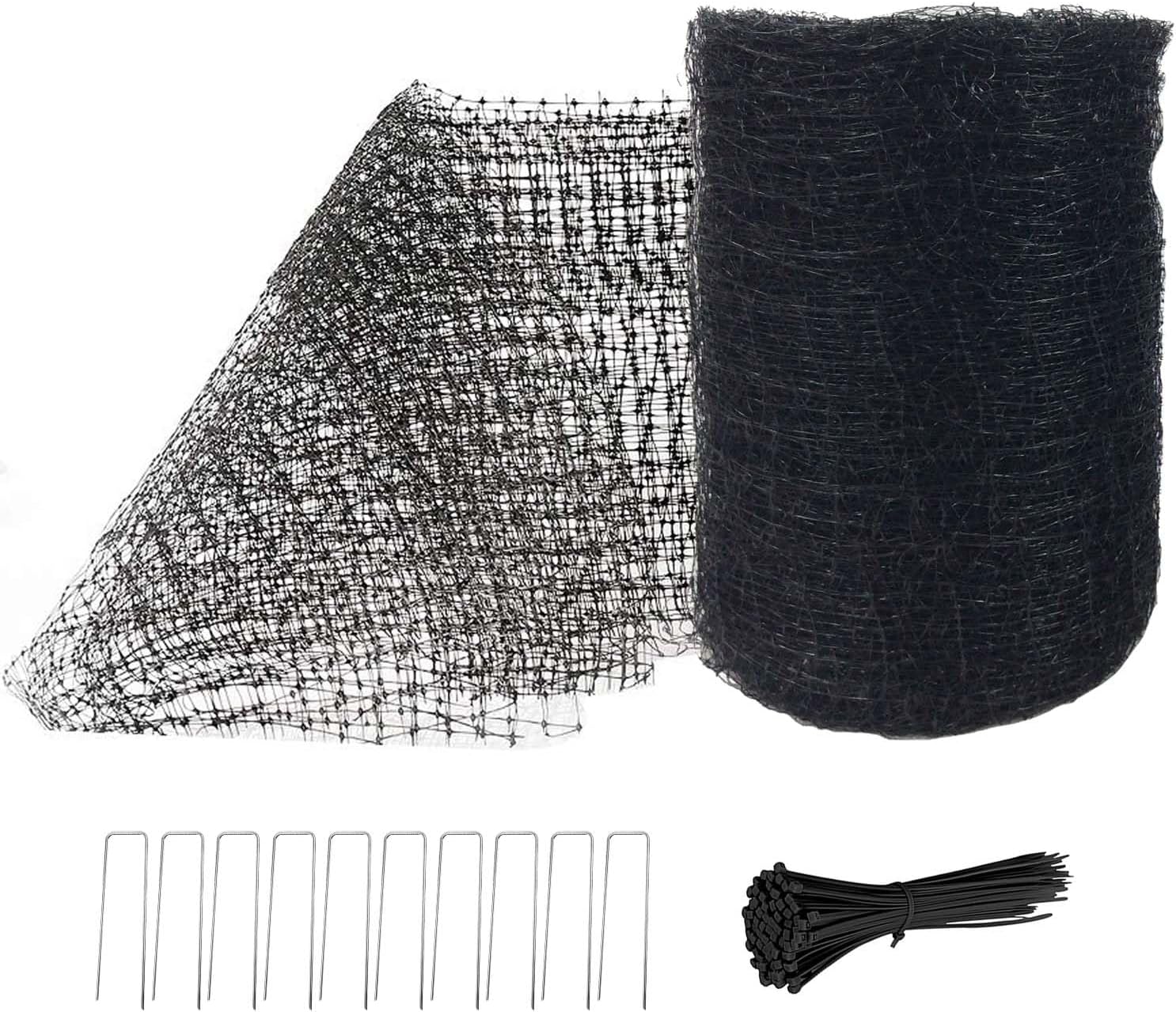
This 7 x 100-foot garden netting uses 3/4-inch mesh to help protect fruiting plants from birds and other animals. The current kit includes reinforced edging, 10 stakes, and 50 zip ties for installation. Its large coverage can be adapted around berry beds while leaving the planting accessible for harvest and maintenance.
Check On AmazonIf you click this link and buy, we earn a commission at no additional cost to you.
Treat grapes as a trellis and pruning commitment before buying a vine
A grapevine is not just a plant placed beside a fence and forgotten. Grapes are trained onto a support system, and the structure you choose affects how the vine is trained, pruned, supported, and reached for harvest. That makes the support footprint part of the crop decision from the beginning rather than an accessory to solve later. If grapes fit the property, continue with the growing grapes guide before choosing a vine or building around an assumed training method.
The commitment is partly physical and partly routine. You need enough sun and space for the vine, but you also need safe access to the support for repeated training and pruning work. A location that is visually convenient may be awkward if a gate, walkway, roof edge, or neighboring planting blocks that work zone. Grapes can be an excellent use of a planned vertical area, but the decision should include the support and the maintenance path, not only the planting hole.

This 50-foot by 1/2-inch roll provides reusable adjustable ties for plant support. The material cuts to length and wraps around itself, so ties can be repositioned as climbing plants grow. It fits the repeated tying and training work required when grape shoots are managed along a support.
Check On AmazonIf you click this link and buy, we earn a commission at no additional cost to you.
Treat fruit trees as the longest and least reversible choice
Fruit trees usually make the strongest claim on future space because the planting location has to work as the tree grows, not only when it arrives from the nursery. Mature canopy size, rootstock, sunlight, drainage, pollination requirements for the chosen cultivar, pruning access, pest pressure, and nearby structures can all affect whether the site remains workable. A tree placed too close to a path or building can become a recurring maintenance problem even if it looked well positioned when young. Use the growing fruit trees guide to evaluate those tree-specific decisions before planting.
Time to payoff also needs a different mindset from a seasonal crop. Young fruit plants often spend early growth establishing roots and structure, and recommended management may even limit early fruiting so the plant can establish properly. That makes a tree a poor choice when the only acceptable outcome is a quick harvest from a flexible space. Choose it when the location, long-term care, and future use of that part of the yard all support the commitment.
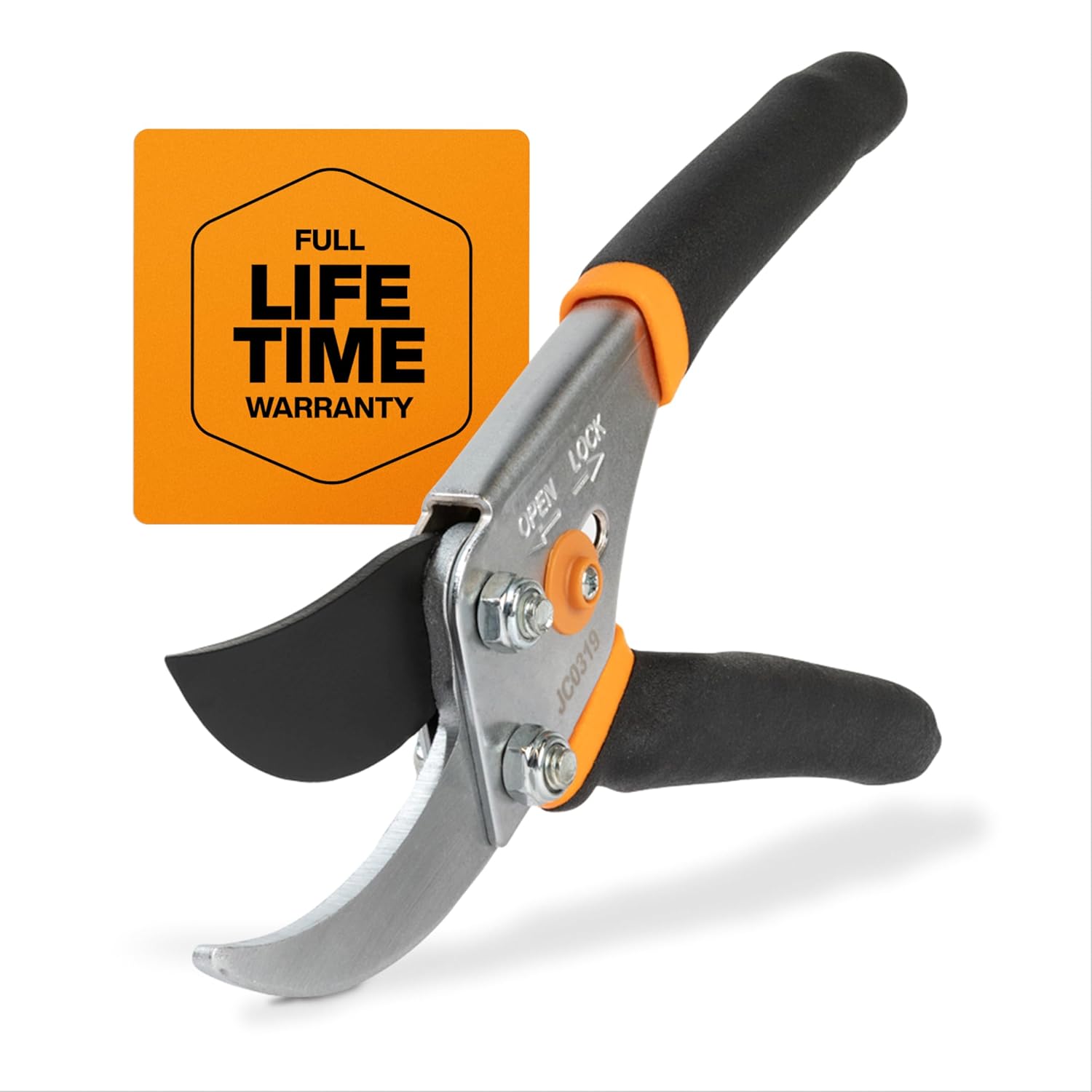
These bypass pruning shears cut stems and small branches up to 5/8 inch in diameter. Steel blades use a low-friction coating to reduce gumming and improve rust resistance, while a sap groove helps limit sticking. A non-slip grip and safety lock support controlled pruning around young and established fruit trees.
Check On AmazonIf you click this link and buy, we earn a commission at no additional cost to you.
Use the existing garden plan, frost data, and site constraints instead of rebuilding them here
Choosing an edible crop family does not replace the basic site work you have already done. Sunlight, usable soil, drainage, water access, local season length, frost risk, walking routes, and maintenance time still set the boundaries for what belongs in the garden. This page is meant to help you decide what kind of edible commitment fits inside those boundaries, not to rebuild a complete garden plan from scratch. If a crop requires conditions your site cannot supply, changing the crop is usually more practical than forcing the site to behave differently.
Keep local information attached to the decision because a national list cannot tell you whether one cultivar fits every U.S. climate. The same herb may overwinter in one region and behave as a seasonal plant in another, while fruit disease pressure, chilling needs, heat tolerance, and bloom timing can change what is realistic. Use local Extension guidance and cultivar information when those factors matter. The broad choice is about commitment, but the final plant choice still belongs to the actual place where it will grow.
- Confirm that the site provides the light and drainage required by the crop.
- Check local season and climate guidance before choosing a species or cultivar.
- Measure mature plant space plus room for harvest, pruning, and routine care.
- Decide how much watering, training, pruning, and cleanup you will realistically keep doing.
- Prefer a more reversible crop when you are still learning how the site behaves.
That checklist keeps the decision grounded in the yard rather than in a catalog photo. It also makes it easier to say no to a crop that would create a permanent maintenance problem in a temporary patch of enthusiasm. A smaller seasonal planting can teach you more than an ambitious permanent planting that is difficult to maintain. Leave room to learn before filling every available edge with food plants.

This battery-free meter uses a single probe to give an instant soil-moisture reading. Its clear dial and 304 stainless steel probe are designed for indoor or outdoor plant checks. It can help compare moisture conditions across planting areas before watering or committing a crop to a site.
Check On AmazonIf you click this link and buy, we earn a commission at no additional cost to you.
Decide what can be learned this season and what needs several years
One season can teach you a great deal about sunlight, watering effort, vegetable spacing, tomato support, herb harvest frequency, and how much garden work fits your routine. Those lessons are useful because they can change the next planting quickly. Perennial fruit questions unfold more slowly, since establishment, pruning response, mature size, and recurring pest or disease pressure become clearer over time. Do not judge every edible crop by the same timetable.
A useful sequence is to put the most reversible decisions in uncertain spaces and reserve long-term plantings for locations you understand well. That does not mean everyone should start with vegetables or earn the right to plant fruit trees later. A gardener with a suitable permanent site and a clear reason for wanting fruit can begin there, while someone with a changing rental, uncertain light, or limited maintenance time may prefer seasonal crops. The right starting point is the crop whose time horizon matches the certainty you actually have.

This acrylic rain gauge measures up to 5 inches of precipitation. Its magnifying design is intended to make the reading easier to see during routine garden checks. Recording rainfall with the same gauge over multiple seasons can help separate one-season observations from longer-term site patterns.
Check On AmazonIf you click this link and buy, we earn a commission at no additional cost to you.
Final Thoughts: choose the commitment before the crop
Edible gardening becomes easier to plan when you stop treating every food plant as the same kind of project. Seasonal vegetables preserve flexibility, tomatoes add support and access decisions, herbs vary by life cycle and spread, and perennial fruits make progressively longer claims on the same space. Those differences matter because the cost of changing your mind rises as roots, supports, pruning systems, and mature plant size become established. The better choice is the crop family whose time horizon matches the space and maintenance you can realistically give it.
Once that commitment level is clear, move into the crop-specific guidance and verify the details that can change the answer, including species, cultivar, climate fit, sunlight, soil, water, and mature size. A permanent planting is not automatically more rewarding than a seasonal one, and a reversible planting is not automatically less ambitious. The useful goal is to make today’s planting decision without creating a future maintenance problem that the site was never suited to carry. Choose the commitment first, then choose the crop that fits inside it.

This hand trowel uses a cast-aluminum head for digging and planting tasks. Its ergonomic handle is designed to improve control while working in soil. It is a practical general-purpose tool for putting a crop decision into action after the site and commitment level have been chosen.
Check On AmazonIf you click this link and buy, we earn a commission at no additional cost to you.
FAQs
🌱 What is the easiest edible crop type to change later?
Seasonal vegetables and tender herbs are usually easier to change because the planting can be cleared and redesigned after the growing cycle. The exact choice still depends on your climate, season, light, soil, and available care time.
🍅 Should tomatoes be planned separately from other vegetables?
Often, yes. Tomatoes can need substantial support, access, spacing, and sometimes pruning, so the management footprint may be larger than the planting hole suggests.
🌿 Are culinary herbs annuals or perennials?
They can be either, and some plants that are perennial in warm regions behave like seasonal crops in colder climates. Check the specific herb and your local winter conditions before giving it permanent space.
🍓 Are small fruits easier than fruit trees?
They often use less space, but they still create ongoing work such as runner control, cane management, pruning, harvest access, or soil management depending on the species. Choose by the specific fruit and site rather than assuming every berry is low maintenance.
🍇 Do grapes need a support system?
Grapevines are normally trained on a support system, and the support design affects training and pruning. Plan the structure and working access before committing the vine to a permanent location.
🌳 What should I check before planting a fruit tree?
Check mature size, rootstock, sunlight, drainage, cultivar suitability, pollination needs, pruning access, and likely pest or disease pressure for your region. A good planting spot has to remain workable as the tree grows.
References and Sources
- Virginia Cooperative Extension edible gardening: Supports the broad vegetables, herbs, and fruit framework and the distinction between small fruits and tree fruits for home gardens.
- RHS grow your own guidance: Supports choosing edible crops according to available space, climate, and the type of fruit, vegetable, or herb being grown.
- University of Maryland Extension home fruit guidance: Supports the long-term site, space, establishment, and maintenance considerations for small fruits and fruit trees.
- University of Maryland Extension tomato guidance: Supports the role of staking, caging, trellising, and pruning in tomato management.
- UGA Cooperative Extension home grape guidance: Supports treating grape support and training as part of the vine management decision.