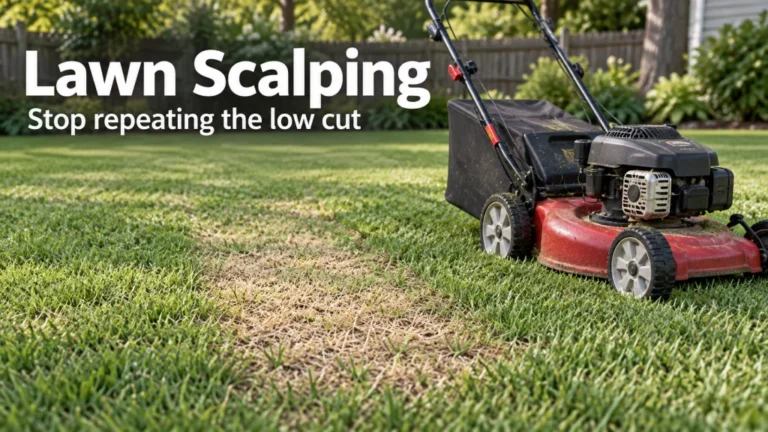
Mowing during drought should follow grass growth, not the calendar or the color of the lawn. Brown turf may be dormant, stressed, damaged, or simply uneven, so the first job is to check whether the grass is still producing enough new leaf to need cutting. When growth has paused, repeated mowing adds wheel and foot traffic without giving the lawn a useful trim. When turf is still actively growing, keep an appropriate supported height, remove only a modest amount of leaf at a time, and stop again if the grass becomes wilted or brittle.
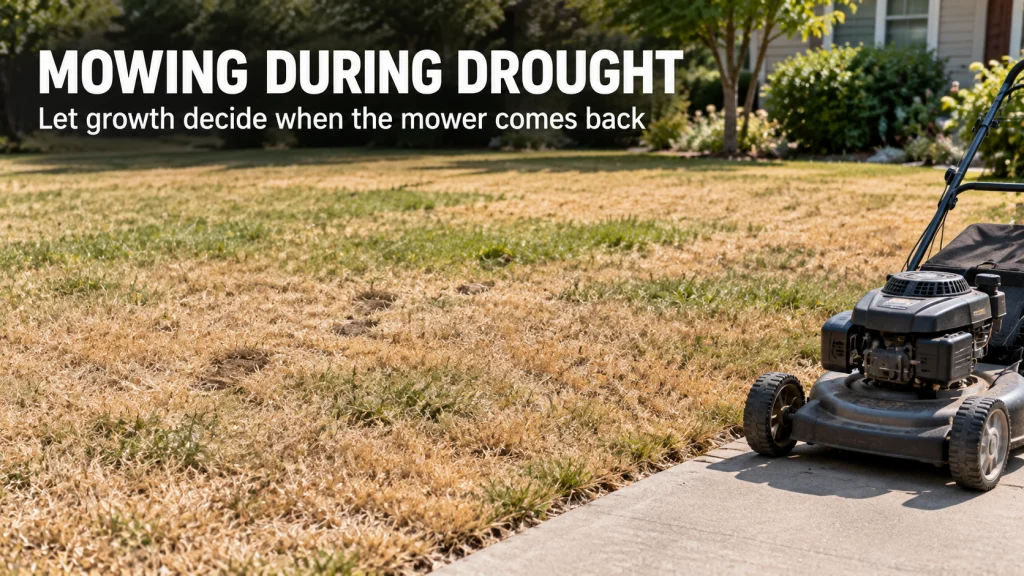
Brown does not mean overgrown
A brown lawn can look untidy even when there is almost no new leaf to remove, which is why mowing during drought should start with a growth check rather than a normal mowing schedule. Established turf can slow sharply or enter dormancy under heat and moisture stress, and the faded color often makes homeowners feel that the surface needs cosmetic correction. Cutting grass that has stopped growing does not solve the reason it looks brown. It only sends the mower, its wheels, and the operator across turf that may already be under substantial stress.
The opposite mistake is assuming that every brown patch is harmless dormancy. Localized browning can also come from uneven irrigation, compacted soil, pest injury, disease, buried debris, or other site problems, so color alone is not a diagnosis. I would treat the mower as a response to actual leaf growth, not as a tool for making drought stress look more uniform. For the normal mechanics of height, frequency, and how much leaf to remove, keep the broader lawn mowing guidance separate from the drought decision being made here.
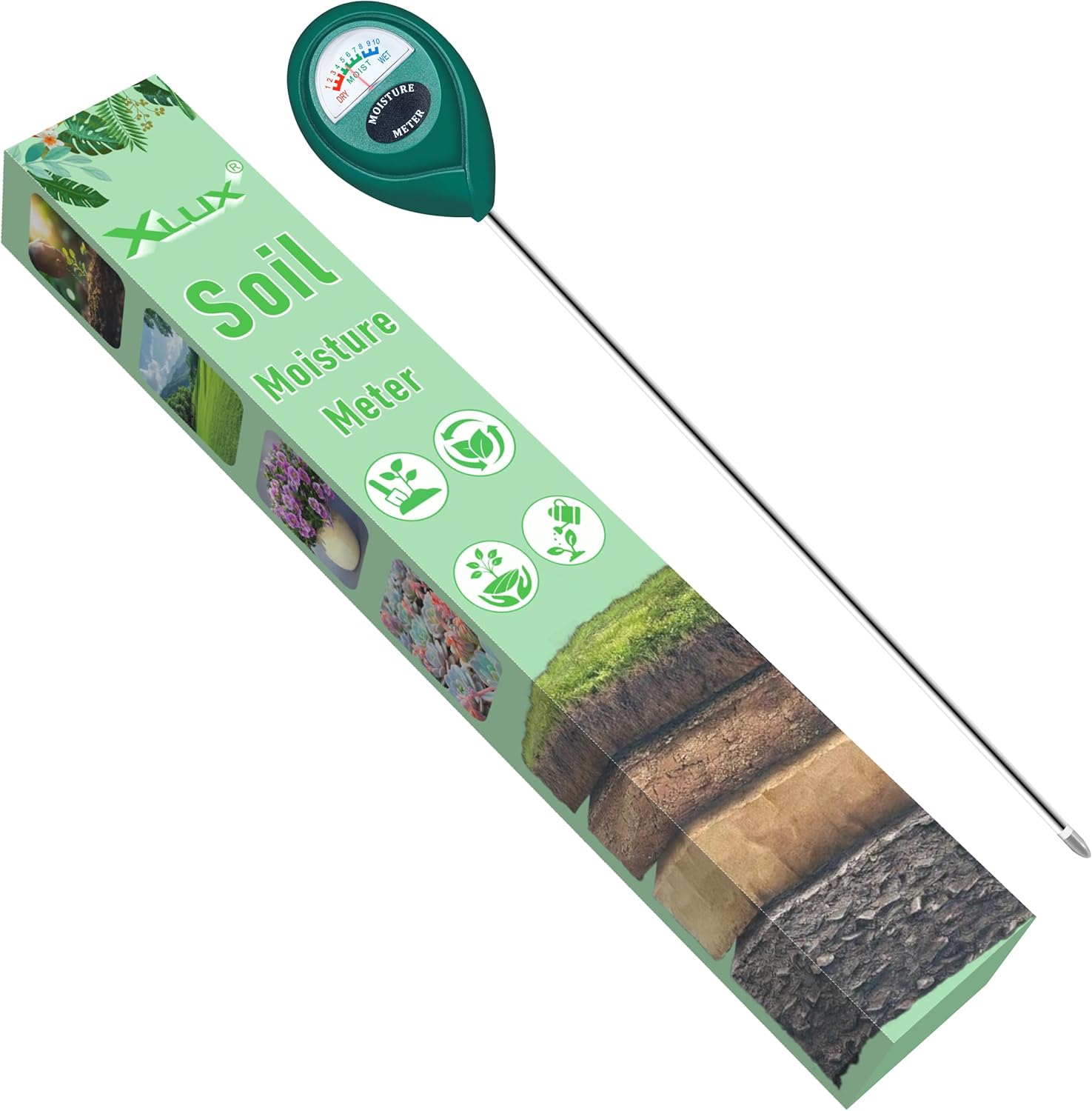
This battery-free soil moisture meter uses a long single probe to check moisture deeper in garden soil. It provides an instant dial reading and uses a 304 stainless steel probe. It can help compare moisture conditions across brown or uneven lawn areas without treating color alone as a diagnosis.
Check On AmazonIf you click this link and buy, we earn a commission at no additional cost to you.
Check whether the turf is still actively growing
Start by comparing the current leaf height with the height immediately after the last cut, but do not rely on memory alone if the lawn is patchy. Look at several representative areas, especially one sunny dry area, one shaded area, and any place that has received noticeably different moisture. Active turf will continue extending leaves even when the overall lawn looks dull or stressed. Turf that has effectively stopped growing will show little meaningful height change, and that is a strong reason to pause mowing rather than keep following a weekly routine.
Texture and recovery also help frame the decision. Drought-stressed blades may become dull blue-green or gray-green, fold or roll, and stay flattened after traffic instead of springing back quickly. Those signs tell you the plant is conserving water and losing normal turgor, not that it needs a shorter cut. Check the lawn as a living surface first, then decide whether there is enough active growth to justify mowing.
- Compare leaf extension in more than one part of the lawn.
- Look for folded, rolled, dull, or slow-recovering blades.
- Notice whether footprints or wheel tracks remain visible longer than usual.
- Separate a genuinely taller patch from a merely brown or thin patch.
- Pause if there is little new growth to remove.
This checklist is more useful than asking whether the lawn looks overdue. A dry surface can be visually rough because leaves have curled, thinned, or changed color, even when the actual canopy height has barely changed. If growth is mixed, the whole property does not have to receive the same treatment on the same day. The practical goal is to cut growing turf only where cutting still serves a turf-care purpose.
Separate dry dormant grass from tall active grass
Dormancy is a survival response in which growth pauses, but the exact response depends on turf species, climate, site conditions, and the severity of the dry period. Cool-season grasses can lose green color and suspend growth during hot, dry conditions, while warm-season grasses may still be in their normal growing season if moisture is adequate. That difference matters because a lawn can contain brown dormant areas beside greener areas that are still extending leaves. Treating both areas as if they have the same mowing need can either add unnecessary traffic to dormant turf or let active turf become excessively tall.
Use the pattern of growth as the main divider, then use color and stress symptoms as supporting evidence rather than proof. If a section remains brown and unchanged in height, mowing it for appearance has little value. If another section is green enough to keep extending leaves, it may still need a careful cut even though the property is generally dry. The table below keeps those two situations separate without pretending that appearance alone can diagnose the cause of browning.
| What you see | What it suggests | Mowing response |
|---|---|---|
| Brown or dull turf with almost no new height | Growth may be paused from drought stress or dormancy | Pause mowing and minimize traffic while you keep watching for recovery |
| Taller leaves that are still extending | The turf is still actively growing | Mow only if needed and stay within the supported height range for that grass type |
| Mixed green and brown zones | Moisture, species, shade, soil, or stress may differ across the site | Judge zones separately instead of forcing one schedule on the whole lawn |
| Distinct brown patches with an unusual pattern | Drought may not be the only cause | Do not use mowing as a diagnosis or treatment |
The most important distinction is whether the mower has useful leaf growth to remove. Dormant or nearly dormant turf usually gives you no such target, while active turf does. If the lawn has a suspicious patch pattern, solve the identification question before changing mowing frequency to chase color. That keeps this decision reversible and prevents a cosmetic mowing habit from masking a different lawn problem.
Keep a higher supported height where the turf is still growing
When dry weather slows growth but does not stop it, the answer is usually less frequent mowing at an appropriate height rather than an aggressive cut. The useful height depends on the grass species and regional guidance, so a single number does not belong on every lawn in the country. In general, drought guidance from land-grant programs favors staying toward the higher end of the recommended range for the turf being managed. More retained leaf area can shade the soil surface and avoids adding unnecessary cutting stress during a period when water is already limiting growth.
The same logic applies to how much leaf is removed in one pass. If active grass has become taller because mowing was delayed, do not compensate by dropping the deck sharply and taking off a large share at once. A conservative cut that removes no more than about one-third of the leaf blade is a widely used mowing limit, but the actual target height still needs to match the turf type. The drought adjustment is therefore not a universal mower setting; it is a decision to preserve supported leaf height while reducing unnecessary cutting frequency.

This mower deck leveling gauge is made for checking deck and blade level on standard riding and push lawn mowers. It requires no assembly and provides a simple reference when setting up the mower before a conservative cut. A level deck helps keep cutting height more consistent across the pass.
Check On AmazonIf you click this link and buy, we earn a commission at no additional cost to you.
Avoid mowing wilted or brittle turf only for appearance
Dry grass can look ragged because blades curl, fold, lose color, or lie in different directions, and that visual disorder can resemble excess height from a distance. Walk close enough to see whether the leaves are actually longer before deciding to mow. If the canopy is short but wilted, another pass with the mower has little practical benefit. Mowing dry grass just to create fresh stripes or a more even color can add stress and traffic at the exact moment the turf has the least capacity to recover from disturbance.
Brittle leaves are another stop signal because the goal of mowing is a clean reduction in actively growing leaf tissue, not repeated abrasion of dry material. If blades are crisp, footprints remain obvious, and the lawn has shown almost no extension since the previous cut, cosmetic mowing is hard to justify. I would wait for the turf to regain enough moisture and growth to make a cut useful again rather than trying to maintain a spring-style appearance through drought. That restraint is especially important where the mower would need repeated turns over the same dry areas.
Stop condition: If the turf has paused growth, stays visibly wilted, feels brittle, or holds traffic marks, do not mow simply because the calendar says it is mowing day. Resume only after the grass shows renewed growth and enough recovery to tolerate traffic.
The stop condition matters because drought care is not a contest to keep every blade the same color and height. A temporary pause can be the correct maintenance action when the plant has already paused its own growth. Continue watching the lawn for changes instead of treating one skipped cut as a permanent new schedule. Once growth returns, the mowing decision changes with it.
Limit foot and wheel traffic during severe stress
A mower does more than cut leaves. Its wheels cross the turf, the operator walks the same route, and turns concentrate pressure in small areas, so mowing can become a traffic problem even when the blade setting is reasonable. Drought-stressed grass has less capacity to rebound from that pressure, and visible wheel or footprint marks are useful evidence that the surface is not recovering normally. If the lawn has stopped growing, there is even less reason to impose that traffic simply to maintain a routine.
This does not mean every step across a dry lawn causes permanent injury, but it does mean avoidable traffic should be reduced as stress becomes more severe. Keep unnecessary carts, repeated mower passes, play, and vehicle movement off the most stressed sections when practical. Use paths and hard surfaces for routine movement around the yard instead of crossing the same dry turf repeatedly. The more clearly the lawn is wilted, dormant, or slow to spring back, the stronger the case for treating traffic reduction as part of drought care.
Resume mowing after growth returns
The signal to resume is renewed growth, not simply a single rain event or a change in color. Rehydrated turf may become more flexible before it has produced enough new leaf to need cutting, so give the lawn time to show that growth has actually restarted. Look for fresh extension across representative areas and for leaves that stand back up more normally after light foot traffic. If the turf is active again but uneven in height, plan a conservative first cut rather than trying to restore a perfect finish in one pass.
After a prolonged pause, the first mowing can reveal mixed recovery. Some zones may have resumed strongly while thin or damaged areas remain weak, and those weaker spots should not be forced into the same schedule as the rest of the lawn. Keep the cut within the normal supported height range for the turf type and avoid removing a large share of leaf tissue at once. The goal is to return to mowing because growth requires it, not because the calendar has returned to its old rhythm.

The SHARPAL 103N is a manual sharpener designed for mower blades and several other edged garden tools. Its sharpening system includes preset-angle slots plus tungsten carbide and ceramic sharpening surfaces. It is a practical mower-prep tool when growth returns and the first cut should be clean rather than ragged.
Check On AmazonIf you click this link and buy, we earn a commission at no additional cost to you.
Keep watering decisions separate from mowing decisions
A lawn can be too stressed to mow and still require a separate decision about whether irrigation is appropriate, allowed, or necessary for survival. That answer changes with turf species, whether the lawn is newly established, local water restrictions, soil conditions, and the homeowner’s goal for the lawn. Do not turn the mower decision into an automatic watering prescription. A pause in mowing simply means there is not enough healthy active growth to justify cutting right now.
Likewise, watering should not be used just to make the lawn grow enough to preserve a mowing schedule. Established turf in some regions can be allowed to enter dormancy, while newly seeded or newly sodded areas have different establishment needs and should not be treated as established lawn. If drought care extends beyond the mowing question, use the broader home lawn maintenance framework to separate irrigation, seasonal care, recovery, and renovation decisions. Keeping those decisions distinct makes it easier to respond to the lawn’s condition instead of forcing every maintenance task to continue together.

This battery-powered single-outlet hose timer lets a homeowner schedule watering from an outdoor faucet. It has an LCD screen and a built-in rain-delay function for pausing scheduled irrigation. That makes it useful for managing watering as a separate task instead of tying irrigation to the mowing calendar.
Check On AmazonIf you click this link and buy, we earn a commission at no additional cost to you.
Final Thoughts: let growth decide when the mower comes back
The practical question during dry weather is not whether the lawn looks brown enough to need attention. It is whether the turf is still producing enough healthy leaf growth to benefit from cutting. If growth has paused, leave the mower parked, reduce unnecessary traffic, and keep watching the lawn rather than cutting for appearance. If growth continues, mow conservatively at a supported height for the grass type and adjust frequency to the actual rate of growth.
Brown turf still deserves a closer look because dormancy is only one possible explanation for discoloration. Distinct patches, unusual patterns, or poor recovery can point to a different site or lawn problem that mowing will not fix. When growth resumes, return gradually to normal mowing instead of removing a large amount of leaf at once. That approach keeps the decision tied to plant condition, which is more useful than any fixed drought mowing schedule.

This zinc mower blade balancer is designed to check blade balance after sharpening. It fits a wide range of push and riding mower blades and can reveal an unbalanced or bent blade before mowing resumes. Using a balanced blade supports smoother mower operation when returning to normal cutting after a drought pause.
Check On AmazonIf you click this link and buy, we earn a commission at no additional cost to you.
FAQs
🌱 Should I mow a brown lawn during drought?
Not just because it is brown. Check whether the grass is still actively growing, because dormant or severely stressed turf may have little leaf growth to remove and may be more vulnerable to traffic.
✂️ Can I mow if some parts of the lawn are still growing?
Yes, if those areas have enough healthy active growth to justify a cut. Judge mixed zones separately and avoid forcing dormant or wilted areas into the same schedule.
👣 Why do footprints stay visible in drought-stressed grass?
Grass under moisture stress can lose the turgor that normally helps leaves spring back upright. Persistent footprints are therefore a useful stress signal and a reason to reduce unnecessary traffic.
📏 Should I lower the mower because the lawn looks uneven?
No. If active turf needs mowing, stay within the supported mowing range for that grass type and avoid removing a large share of leaf tissue at once.
💧 Should I water before mowing a drought-stressed lawn?
Do not water solely to preserve a mowing routine. Irrigation depends on grass type, establishment stage, local restrictions, soil conditions, and whether the goal is active growth or drought survival.
🍃 When should I start mowing again after drought stress?
Resume when the turf has rehydrated enough to tolerate traffic and has produced meaningful new growth. Make the first cut conservative if the lawn is uneven after a long pause.
References and Sources
- University of Maryland Extension lawn maintenance guidance: Supports growth-based mowing, drought dormancy, stress symptoms, mowing limits, and traffic considerations for established lawns.
- University of Maryland Extension lawn problem guidance: Supports the boundary that browning can have causes other than drought and that stressed turf has reduced traffic tolerance.
- University of Minnesota Extension drought lawn guidance: Supports postponing mowing and limiting mower traffic when turf is under drought and heat stress.
- UF IFAS drought lawn guidance: Supports reduced mowing frequency, species-specific mowing height, and avoiding excessive leaf removal during drought.