Summer pruning is most useful when an actively growing woody plant has a specific problem that can be corrected with a limited cut. The leaves make crowding, shade, water sprouts, suckers, and interfering shoots easier to see, but that same active canopy is also supporting the plant through heat, drought, flowering, and fruit development. The practical choice is to name the reason for pruning first, protect productive wood, and keep structural renovation for a more suitable season or a qualified arborist. Species, local disease pressure, plant condition, and the job of the branch can all change whether a summer cut is sensible.
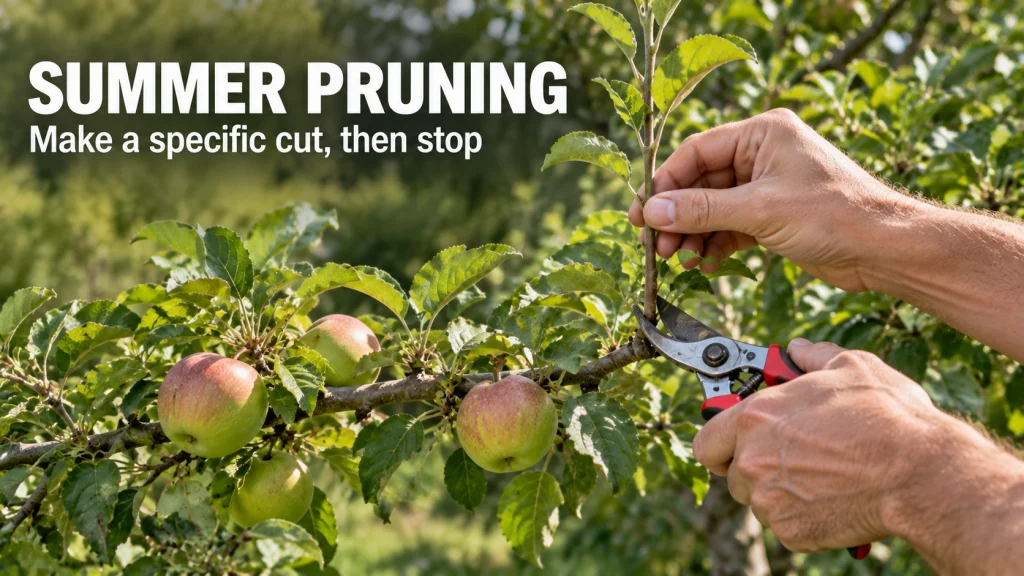
Summer shows the problem and raises the cost of overcutting
Summer pruning can be appealing because the plant is showing you exactly what its foliage is doing. A shoot that blocks a path, shades fruit, crosses into another branch, or rises straight through the canopy is much easier to judge when the plant is fully leafed out. That visibility is useful, but it can also tempt a gardener to keep cutting once the first problem is solved. Every healthy leaf removed also removes active leaf area, so a small correction and a major canopy reduction are not the same job.
I would treat summer as a season for answering a defined question, not as a second chance to redo the entire structure of a tree or shrub. If the concern is one vigorous shoot, a few unwanted suckers, or a small amount of interference, the cut can be evaluated against that purpose. If the concern is a large limb, an unstable branch, a split trunk, climbing, or work near electrical lines, the task has already moved beyond ordinary homeowner pruning. For the broader reasoning behind pruning goals and timing, the site guide to pruning plants through different conditions provides the larger decision framework.
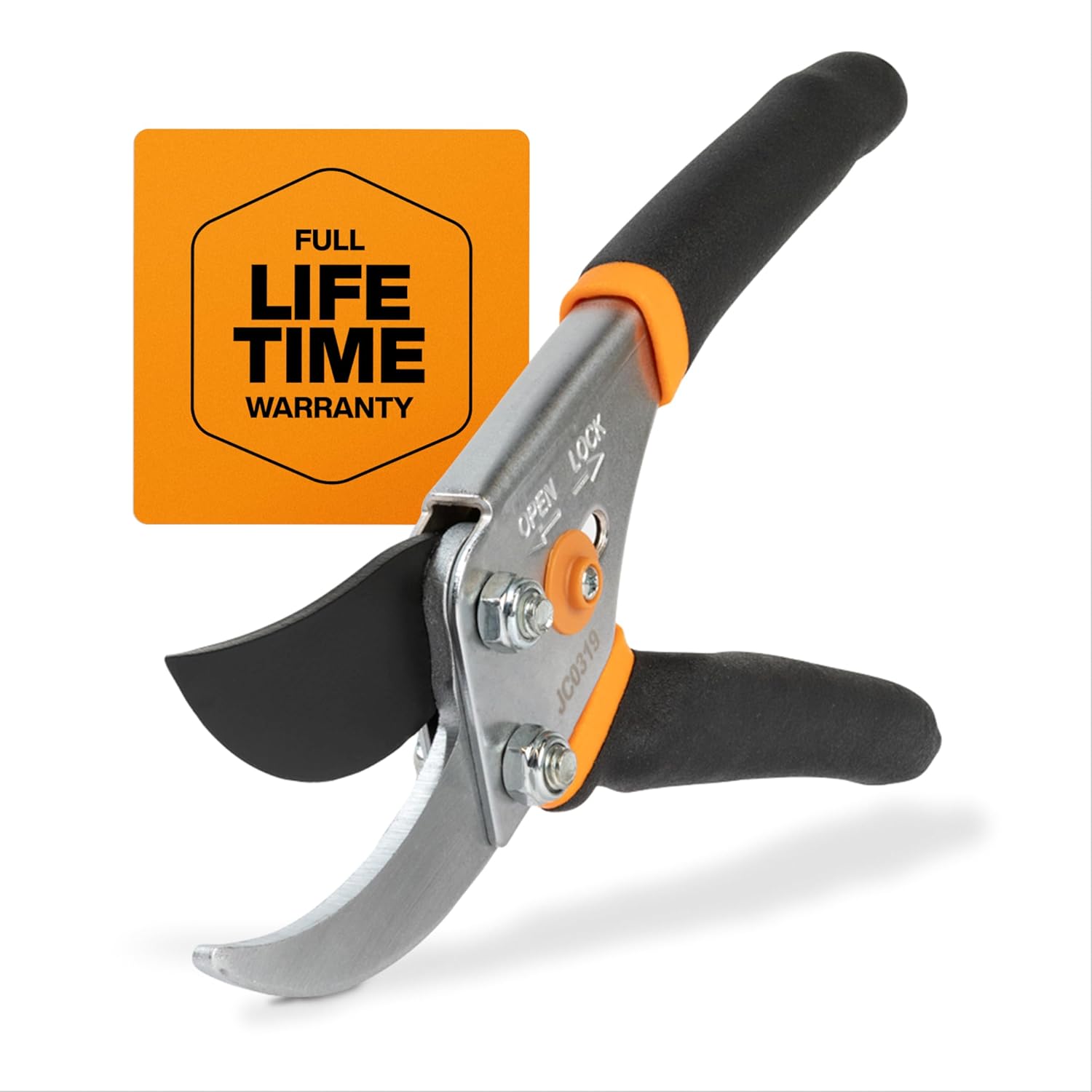
The bypass blades handle live stems and branches up to 5/8 inch thick. A low-friction blade coating and sap groove help reduce sticking during repeated cuts. The non-slip grip suits the small, selective pruning work described in this section.
Check On AmazonIf you click this link and buy, we earn a commission at no additional cost to you.
Name the active-season reason before making a cut
A useful summer cut should have a sentence behind it that explains the problem. You may be removing a water sprout that is filling the center of a small ornamental tree, a sucker that is emerging from below the graft area, or a shoot that is rubbing another branch. You may also be trying to restore a little light to fruit or reduce a modest amount of unwanted extension growth. If the reason is only that the plant looks large, stop and decide whether the real issue is size, structure, access, flowering, fruiting, or a poor fit for the site.
That distinction matters because different goals call for different timing and different amounts of pruning. Heavy cutting used simply to force a vigorous woody plant into a smaller space can stimulate more unwanted growth, especially when the underlying site mismatch remains. A small corrective cut has a clear stopping point, while an undefined size reduction can turn into repeated shearing or removal of productive branches. Before cutting, identify what must change now and what can wait until the plant is easier to evaluate with fewer leaves.
| If this is the problem | Prune now or wait? | Why |
|---|---|---|
| A few vigorous upright shoots or basal suckers | Prune now, but keep removal limited | The problem is specific and easy to stop once corrected. |
| One small shoot rubbing or crowding another | Prune now if one selective cut solves it | The branch relationship is visible while the canopy is active. |
| A healthy plant that simply feels too large | Wait and reassess the real goal | Size control can become repeated heavy pruning if the site is the real problem. |
| Large limbs, unstable wood, climbing, or electrical hazards | Do not treat this as routine pruning | The risk is structural or safety-related and calls for a qualified arborist. |
The table works as a simple prune-now-or-wait sequence, not as a universal timing rule. Start with the visible problem, then ask whether one limited cut solves it without sacrificing productive wood, adding stress, or creating a safety issue. Species, plant condition, flowering habit, fruiting stage, and local disease guidance can still override a general summer choice. If the job no longer looks like a small active-season correction after those checks, waiting is often the cleaner option.

The Corona BP 3180D uses a forged bypass design with a 1-inch cutting capacity. That format is suited to selective pruning of live stems and small branches within the tool capacity. It fits a defined cut where the gardener has already identified the exact shoot or branch to remove.
Check On AmazonIf you click this link and buy, we earn a commission at no additional cost to you.
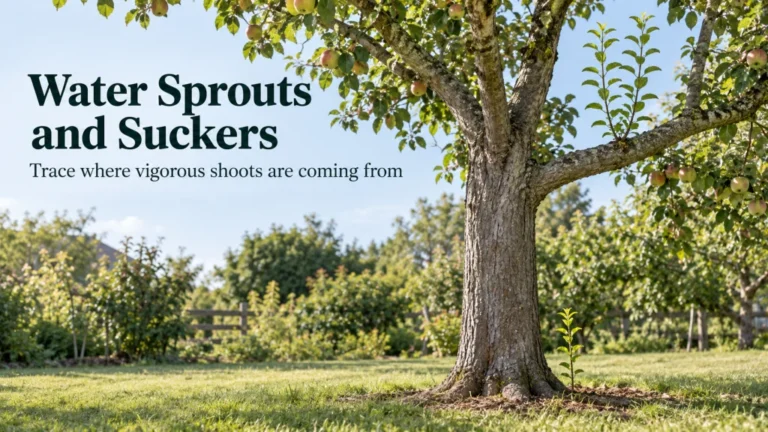
Use summer visibility to find water sprouts, suckers, and interfering shoots
Water sprouts and suckers are common reasons for limited pruning while a plant is actively growing. Water sprouts usually appear as vigorous upright shoots from branches or the trunk, while suckers arise from the base or roots and may come from below a graft union on grafted plants. The leafy canopy also makes it easier to see shoots that are crossing, rubbing, or growing directly into crowded interior space. These are visible problems with identifiable origins, so they lend themselves to selective rather than broad removal.
Do not assume that every vigorous shoot is meaningless growth. A plant that has been heavily pruned, injured, or stressed can respond with a burst of sprouts, so the shoots may be telling you something about what happened earlier. Removing the unwanted growth may tidy the canopy, but repeating severe pruning can help create the same response again. The better goal is to remove only the shoots that clearly conflict with the plant’s form or function, then consider whether stress, previous cutting, or a site issue is driving the pattern.

The GPPS-1003 uses a titanium-coated SK5 steel bypass blade and is rated for branches up to 3/4 inch. Its sap groove is designed to reduce sticking, and the handles have a non-slip grip. That combination suits selective removal of water sprouts, suckers, and interfering shoots that fall within the tool capacity.
Check On AmazonIf you click this link and buy, we earn a commission at no additional cost to you.
Protect fruiting and flowering wood that is still doing a job
A branch can look inconvenient in summer and still be carrying flowers, developing fruit, or buds that matter to the next display. Spring flowering shrubs commonly form flower buds on older wood, while other woody plants flower on current season growth, so the visible timing of bloom does not mean every species should be handled the same way. Fruit trees add another layer because leaves support fruit development and some shoots may be part of future fruiting structure. Pruning in summer should therefore start with the question of what the branch is contributing, not only where it is growing.
If flowering or fruiting is one of the reasons you keep the plant, protect that function unless there is a clear health or safety reason to intervene. A gardener trying to improve access or light can often solve the immediate problem by removing a small number of poorly placed shoots instead of reducing the entire canopy. Plant-specific guidance becomes important when the location of flower buds or fruiting wood is not obvious. When you cannot identify what wood carries the next crop or bloom, postpone nonessential pruning until you can make that distinction confidently.

The 6-inch snips use micro-tip steel blades that cut to the tip for precise work in tight spaces. A non-stick coating helps reduce jamming, while the Easy Action spring opens the blades after each cut. They suit small flower stems, buds, and other light growth where a narrow cut is preferable to broad canopy removal.
Check On AmazonIf you click this link and buy, we earn a commission at no additional cost to you.
Keep cuts limited when heat or drought is already stressing the plant
Active growth does not automatically mean the plant has extra capacity to spare. Hot conditions, dry soil, recent transplanting, root disturbance, leaf scorch, or a weak canopy can all change the cost of removing healthy foliage. A tree or shrub that is already struggling to maintain water balance is a poor candidate for an elective canopy reduction. In that situation, the immediate priority is to understand and reduce the stress rather than create a second problem with unnecessary pruning.
Small corrective removal can still be reasonable when a branch is damaged or a clearly unwanted shoot is easy to remove, but the threshold for optional cutting should be higher on a stressed plant. Do not respond to wilt, scorch, or dieback by assuming pruning is the cure, because those symptoms can have several causes. Check soil moisture, recent weather, root zone conditions, and the pattern of symptoms before deciding that foliage needs to come off. Broader garden care decisions for stressed plants should stay focused on the cause and condition rather than treating pruning as a default response.
Warning: Do not use severe summer pruning as a response to heat or drought stress. Remove only what has a clear reason to come off, and delay elective reduction when the plant is already under visible environmental stress.
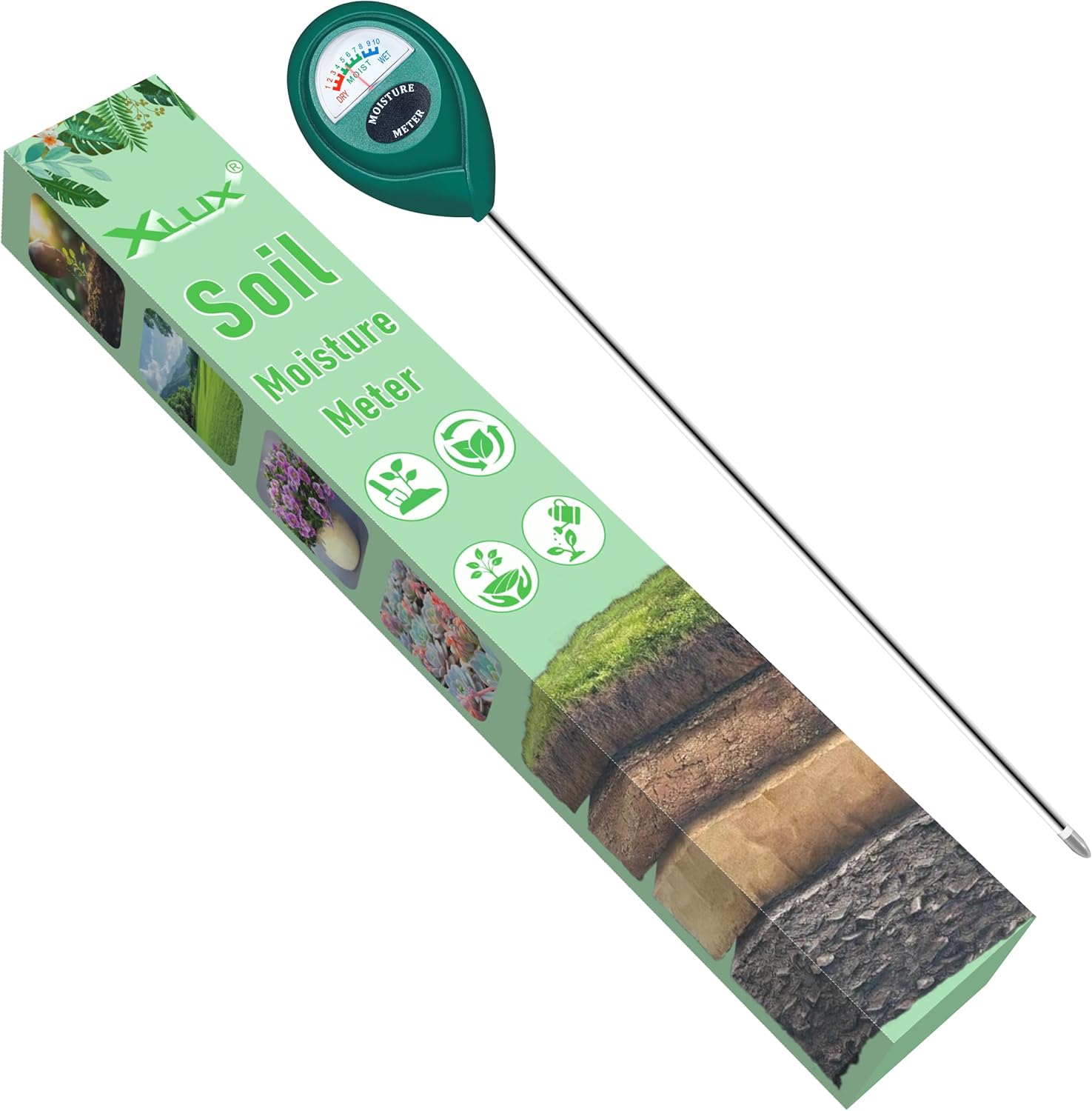
The XLUX meter uses a long single probe to read soil moisture without batteries. The listing specifies an instant-reading display and a 304 stainless steel probe for indoor or outdoor plant use. It supports the section's instruction to check soil moisture before assuming wilt, scorch, or stress should be solved by pruning.
Check On AmazonIf you click this link and buy, we earn a commission at no additional cost to you.
Avoid turning summer pruning into heavy structural renovation
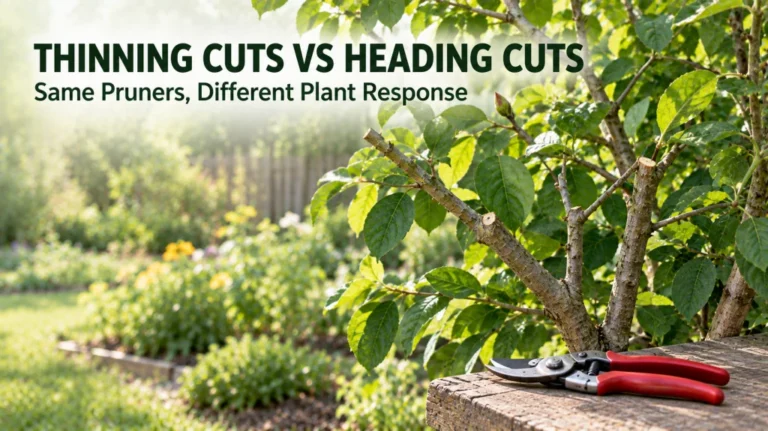
Major renovation is a different job from removing a few sprouts or correcting light interference. Large cuts remove more leaf area, expose more wood, and can change branch loading and canopy structure in ways that are harder to judge safely from the ground. Heavy pruning can also trigger vigorous regrowth, which defeats the goal when the original complaint was excessive vigor. If the plant needs wholesale reshaping, multiple large limbs removed, or correction of mature structural defects, summer visibility is not a reason to take on a bigger job.
Homeowner pruning should stay within stable footing, reachable work, and branches that can be handled without climbing or controlling heavy falling wood. Split trunks, hanging branches, large elevated limbs, and work near utilities call for a qualified arborist rather than a more ambitious pruning session. The same boundary applies when a mature tree’s structure is unclear and the consequences of a wrong cut are significant. Summer can help you identify the problem, but identification and safe correction do not always belong to the same person or season.

These utility gloves use a synthetic-leather palm with foam padding and a flexible spandex back. Touchscreen-compatible fingertips let you operate a phone without removing the gloves. They are appropriate for ordinary reachable yard handling, while the article's arborist boundary still applies to elevated, unstable, or electrical work.
Check On AmazonIf you click this link and buy, we earn a commission at no additional cost to you.
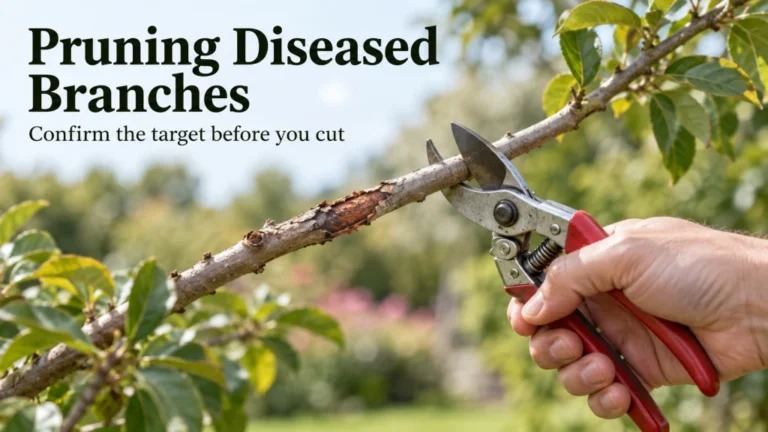
Check species-specific disease timing before cutting
Generic advice about pruning in summer can become unsafe when a species has a known disease risk associated with fresh wounds. Oaks are a familiar example because oak wilt guidance restricts pruning during higher risk periods in affected regions, but the exact guidance is regional rather than a national calendar rule. Disease organisms, insect vectors, local climate, and plant species all affect the recommendation. That is why a general statement such as “summer pruning is fine” should never override local Extension guidance for a disease-sensitive plant.
Before making a nonessential cut on a species with known regional disease concerns, check guidance for your state or local area. Do not copy a timing window from another region and assume it applies to your property, because the risk period and management recommendation can differ. If storm damage or another urgent problem forces work during a restricted period, follow the specific local guidance rather than improvising wound treatments or chemicals. The decision is not whether summer pruning is good or bad in the abstract, but whether this species can be cut safely under the conditions where it is growing.

The FELCO F5 is an 8.9-inch hand pruner with a precision bypass blade and replaceable parts. Its compact manual format supports selective pruning after species-specific timing guidance says a cut is appropriate. The tool does not replace local disease guidance, which should determine whether a nonessential cut is made in the first place.
Check On AmazonIf you click this link and buy, we earn a commission at no additional cost to you.
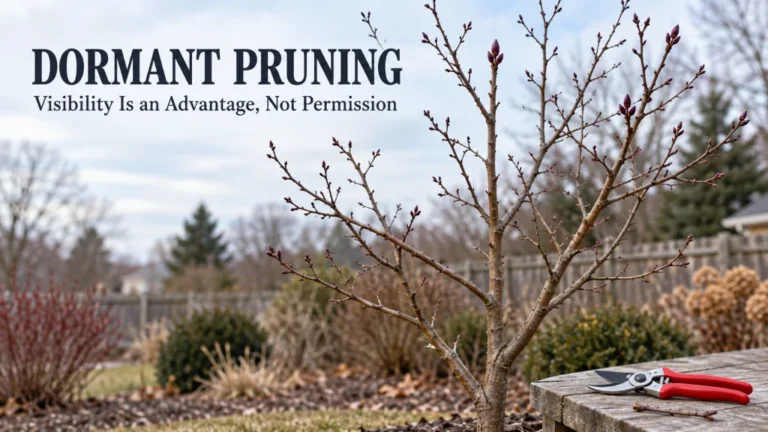
Reassess whether waiting for dormancy would give a cleaner structural decision
Leaves are excellent for showing where shade and crowding occur, but they can hide branch unions and the full architecture of a woody plant. If your real goal is structural correction rather than active-season growth control, dormancy often gives a clearer view of branch relationships and makes it easier to judge what is competing, crossing, or poorly placed. Waiting can also reduce the temptation to remove healthy leaf area simply because the canopy looks dense. The question is whether the problem needs action now or whether summer has merely made it noticeable.
A practical approach is to mark the issue mentally or with notes, solve only immediate minor conflicts, and revisit larger structural decisions when the plant is better suited to that work. Flowering habit and disease guidance still matter, so dormancy is not a universal answer for every shrub or tree. The point is to separate urgent correction from work that benefits from clearer structure and a different plant response. When waiting does not create a safety, access, or plant health problem, restraint is often part of good pruning.
- Prune now when the reason is specific, limited, and clearly visible.
- Wait when the goal is broad reshaping or structural renovation.
- Protect flowering and fruiting wood unless removal has a stronger reason.
- Delay elective pruning when heat, drought, or other stress is already evident.
- Check local disease guidance when species-specific timing may override general advice.
- Use a qualified arborist when the work involves large, elevated, unstable, or electrical hazards.
This checklist is most useful before the first cut, not after several branches are already on the ground. If more than one item points toward waiting, the job probably needs a narrower goal or a different season. If the reason for cutting remains clear after the checks, keep the work limited to that reason. Stop when the defined problem is solved.

This top-spiral notebook uses a 3 x 5-inch page format, black Polydura covers, and a universal ruled pattern. The three-pack is made for weatherproof field notes in outdoor conditions. It gives the gardener a practical way to record a branch or canopy issue and revisit the decision during dormancy.
Check On AmazonIf you click this link and buy, we earn a commission at no additional cost to you.
Final Thoughts: use summer visibility without treating it as permission
Summer makes certain pruning problems easier to see because the canopy is fully expressing its growth. That is valuable when you need to remove a few water sprouts, suckers, or interfering shoots, or when a modest correction solves a clear access or light problem. The same visibility can encourage overcutting if the goal is not defined first. Keep the reason narrow enough that you know exactly when to stop.
Before cutting, check what the branch is doing, whether the plant is stressed, whether flowers or fruit are at stake, and whether local disease guidance changes the timing. Save heavy structural renovation for a more suitable decision point, and keep hazardous tree work with a qualified arborist. Summer pruning works best as a specific response to a specific growth problem, not as a second winter pruning session. If waiting gives you better structure, lower stress, or safer conditions, waiting is part of the pruning decision.

This bypass hand pruner is rated for live stems and branches up to 1 inch in diameter. It uses a replaceable precision-ground steel blade with a low-friction, rust-resistant coating. The hand-pruner format fits the article's final rule of making a specific limited correction and stopping once that defined problem is solved.
Check On AmazonIf you click this link and buy, we earn a commission at no additional cost to you.
FAQs
🌿 Is it okay to prune trees in summer?
Limited summer pruning can be appropriate for specific problems such as unwanted sprouts or light interference. Heavy structural work is usually a different decision, and species-specific disease guidance or plant stress can make waiting the better choice.
✂️ Can I remove water sprouts during summer?
Yes, unwanted water sprouts are often suitable for selective removal while they are easy to identify. If many are appearing, also consider whether previous heavy pruning, injury, or plant stress is contributing to the response.
🌸 Will summer pruning reduce flowers?
It can if you remove wood carrying current flowers or buds for the next bloom. Check whether the species flowers on older wood or current season growth before making nonessential cuts.
🍎 Can I prune a fruit tree while it has fruit?
Small, purpose-driven cuts may be appropriate, but fruiting wood and leaf area are still doing useful work. Follow crop-specific guidance if you are trying to manage fruit production rather than simply remove a clearly unwanted shoot.
☀️ Should I prune a shrub during very hot or dry conditions?
Avoid elective heavy pruning when heat or drought is already stressing the plant. Correct urgent damage if needed, but otherwise reduce the environmental stress first and reassess the pruning job later.
🌳 When should I call an arborist instead of pruning myself?
Use a qualified arborist for large or elevated limbs, split trunks, hanging branches, unstable work, climbing, or anything near electrical lines. Those jobs involve structural and safety risks beyond routine homeowner pruning.
References and Sources
- University of Maryland Extension pruning basics: Supports selective pruning purposes, water sprout and sucker management, and homeowner safety boundaries.
- Iowa State University Extension pruning timing: Supports differences among flowering habits, general pruning timing, and disease-sensitive timing for oaks.
- University of New Hampshire Extension pruning basics: Supports the different growth responses to dormant and summer pruning and the risks of excessive removal.