Deep watering means getting moisture through the soil volume that the plant is actually using, not simply leaving a hose on for a long session. A wet surface can hide dry soil below when water is applied faster than the ground can absorb it, when coverage misses part of the root zone, or when the soil profile changes with depth. The practical check is to match application rate to infiltration, then inspect below the surface and adjust the method to the soil and plant stage. Seedlings and other shallow-rooted plants need a different moisture pattern because their usable root zone is still close to the surface.
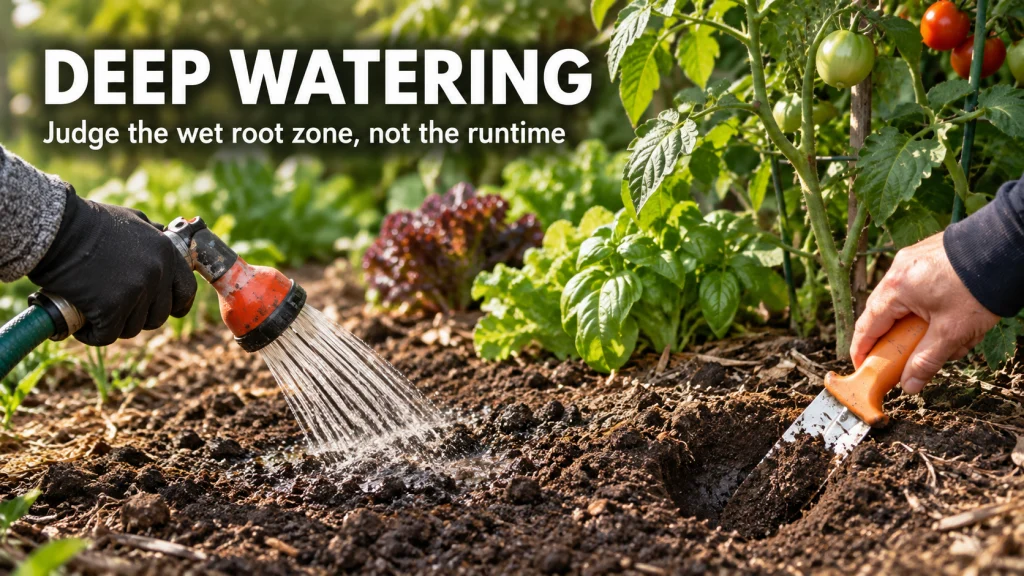
Deep watering is a soil result, not a runtime
A hose can run through a long watering session and still fail at deep watering if the root zone remains dry. Water that arrives faster than the soil can accept it may spread across the surface, collect in low spots, or run out of the bed while the upper layer looks thoroughly wet. That creates a convincing surface signal without proving that moisture moved where established roots can use it. The first question after watering is therefore not how long the faucet was open, but where the moisture actually ended up.
This distinction matters because the same runtime can produce very different results in two garden beds. Soil texture, compaction, slope, mulch, existing moisture, delivery pattern, and the size of the area being watered all affect how water moves. A slow application can improve infiltration, but slow by itself is not proof that the wetting front reached the intended soil volume. Treat the first few watering sessions as calibration, then verify the result below the surface instead of turning one successful runtime into a permanent rule.

This hose-end meter tracks water consumption and flow rate in gallons or liters. Its brass inlet and outlet are made for outdoor garden-hose watering setups. Use the readings to compare one watering application with the wetting depth you verify below the soil surface.
Check On AmazonIf you click this link and buy, we earn a commission at no additional cost to you.
Separate deep watering from frequent shallow sprinkling
Frequent light sprinkling often moistens only the upper soil layer, especially when each application stops before water can move farther down. Established plants that depend on a larger root zone may then have usable moisture concentrated near the surface while deeper soil remains comparatively dry. For established plants, deep watering means moistening the soil volume those roots are using, then letting soil moisture guide the next irrigation decision. That does not mean every plant should follow the same pattern, because plant stage and rooting depth still set the target.
The better comparison is not daily versus occasional watering as a fixed schedule. It is shallow wetting versus verified root zone wetting, with the next application based on what the soil and plant actually need. If the larger question is how often to water a home garden, frequency has to be decided from weather, soil, plant stage, and moisture rather than from the word deep alone. This keeps deep watering from becoming another calendar rule that ignores conditions under the surface.
| What you observe | What it suggests | What to check next |
|---|---|---|
| Only the surface is damp | The application may be too shallow or too brief for the intended root zone | Inspect farther down before deciding the watering was enough |
| The surface is wet and water is leaving the bed | Application may be outrunning infiltration | Reduce the delivery rate or split the application into passes |
| Moisture reaches the intended soil volume without runoff | The method is closer to the desired result | Use later soil checks to decide when another watering is actually needed |
The table is a field check, not a diagnosis of every watering problem. A wet surface can occur with several different delivery patterns, and a dry surface does not always mean the deeper soil is dry. The useful habit is to connect what you see above ground with what you find below it. That connection is what turns a generic instruction to water deeply into a repeatable garden decision.
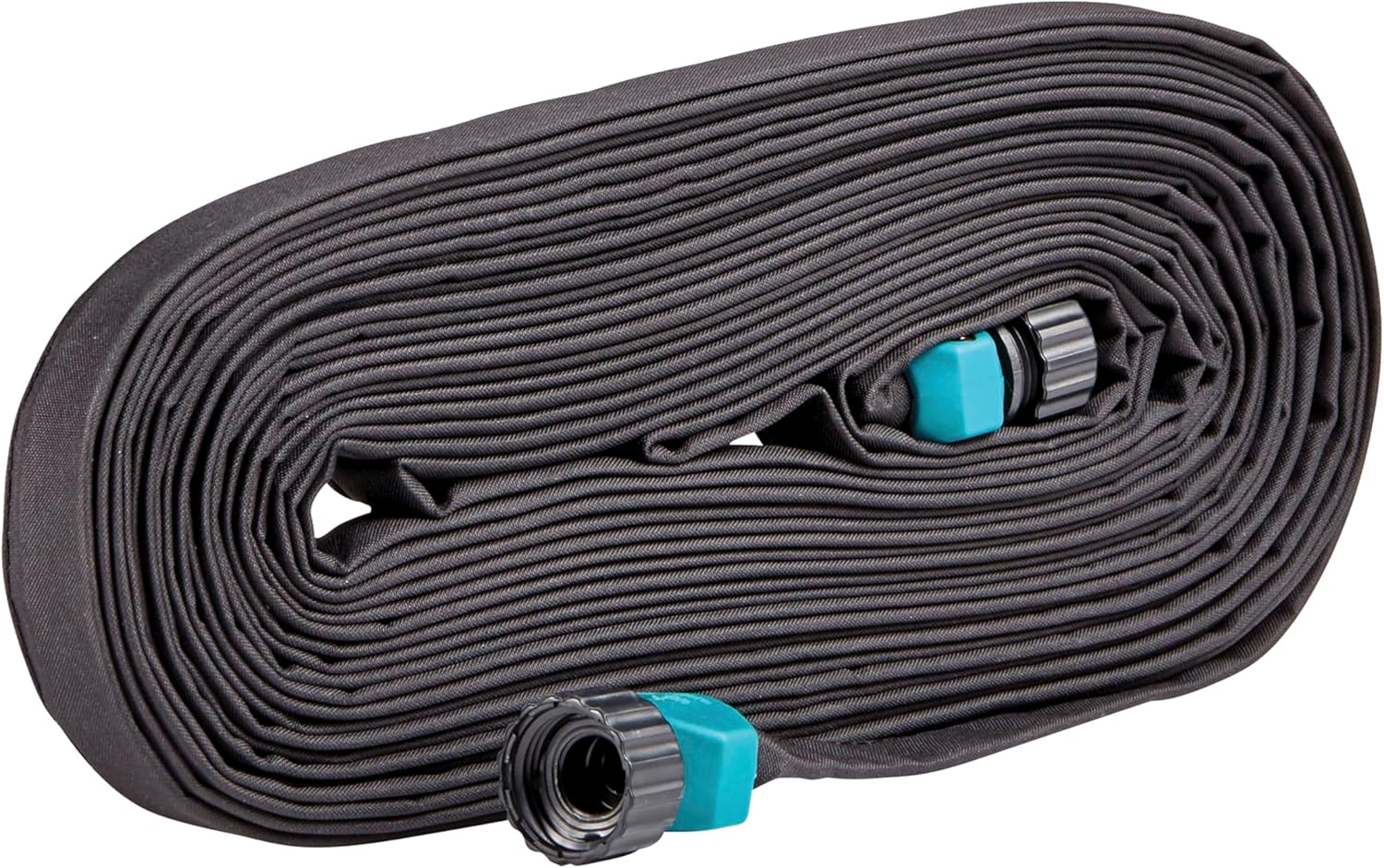
This 50-foot flat weeper hose applies water along garden beds instead of relying on brief surface sprinkling. Its flexible hose format can be routed through vegetable and flower beds to spread watering across the planted area. Pair the runtime with soil checks so the schedule follows verified root-zone wetting rather than surface appearance.
Check On AmazonIf you click this link and buy, we earn a commission at no additional cost to you.
Match application rate to infiltration so water stays in the bed
Water cannot move deeply through soil if much of it leaves the target area first. When a strong stream hits compacted soil, a slope, or a bed that is already taking water slowly, the surface can puddle or shed water sideways. Turning up the flow may make the job look faster while reducing the amount that actually enters the intended soil volume. A better approach is to apply water gently enough that the surface keeps accepting it without visible runoff.
If runoff begins before the soil below is adequately moist, stop treating continuous flow as the goal. Reduce the application rate, cover a smaller area at a time, or use repeated passes that give water a chance to infiltrate before more arrives. The simplest method that keeps water in the root zone is usually preferable to a more complicated setup that still needs constant correction. What matters is that the delivery pattern matches the soil’s ability to take in water at that moment.
- Watch the soil surface for ponding, channeling, or water moving beyond the planted area.
- Check whether the whole intended root area is receiving water rather than only one convenient spot.
- Lower the delivery rate when runoff appears before adequate wetting depth is reached.
- Use another pass when the first application wets the surface but deeper soil is still dry.
- Recheck after changing the method instead of assuming the adjustment worked.
These checks are especially useful when a bed has uneven grade, crusted soil, or areas that accept water differently. One corner can be saturated while another stays dry even though both were exposed to the same watering session. Deep watering is therefore partly a coverage problem and partly an infiltration problem. Solving only one of those problems can still leave part of the root zone without enough moisture.

This 15-inch watering wand has eight spray patterns and a thumb control for adjusting water flow. Its pivoting wand design helps direct water where the bed needs it while the user changes the delivery pattern. Lower the flow or switch patterns when runoff appears, then verify whether the soil is accepting water more effectively.
Check On AmazonIf you click this link and buy, we earn a commission at no additional cost to you.
Use a trowel or probe to inspect actual wetting depth
The most useful verification step is also one of the simplest: look below the surface after watering. Open a narrow inspection spot with a trowel where you can do so without cutting major roots, or use a soil probe that lets you feel where resistance changes. Moist soil usually feels and behaves differently from dry soil, so the transition can show whether the wetting front stopped well above the intended root zone. Do not rely on surface color alone, because the top layer can look dark while soil below it remains dry.
Check more than one point when the bed is large, the delivery pattern is uneven, or the soil varies across the space. Water from a hose, sprinkler, drip line, or soaker hose does not necessarily spread uniformly in every soil, and roots do not occupy a perfect cylinder under the plant. A single wet inspection point can therefore overstate how well the whole area was watered. The goal is reasonable coverage through the active root area, not one impressive pocket of wet soil beside an emitter or hose.
Key point: Verify the wetting result after changing flow, placement, or watering method. A runtime becomes useful only after you have connected it to an observed soil result under your own conditions. If the deeper soil is still dry, the adjustment was not enough. Change one variable at a time so the next check tells you what actually improved the wetting pattern.
Once that relationship is known, you do not need to dig around every plant after every watering. Recheck when weather changes sharply, the soil dries differently, plants develop a larger root system, or the watering setup is moved or adjusted. Think of inspection as calibration and troubleshooting rather than as a permanent chore. If the soil check stops matching what you expect, update the method before extending the runtime by habit.

This heavy-duty hand trowel is made for digging and planting, making it practical for opening a narrow soil inspection spot after watering. Its cast-aluminum head resists rust, and the ergonomic handle improves control during digging. Use the opening to compare moist and dry layers instead of treating surface color as proof of wetting depth.
Check On AmazonIf you click this link and buy, we earn a commission at no additional cost to you.
Adjust for soil texture instead of copying one runtime
Soil texture changes both how quickly water enters and how it spreads after entering. Coarser soil can accept water readily but may produce a narrower wetting pattern, while finer-textured soil can move water laterally yet become prone to surface runoff when application is too aggressive. Compaction, organic matter, layering, and prior moisture can change those patterns further. That is why a runtime copied from another garden is only a starting guess, even when the same delivery method is being used.
The practical adjustment is to observe the soil response rather than trying to memorize one formula for every bed. If the water disappears quickly but the wetting pattern stays narrow, improve coverage or reposition the delivery point before simply adding more time. If water begins moving across the surface, reduce the application rate and allow infiltration to catch up. For the broader choices among home garden watering methods, the method should fit the soil, planted area, workload, and level of control you actually need.
A layered soil profile deserves extra attention because water movement can change when it reaches a different texture or a compacted zone. The upper layer may absorb easily while movement slows below, which can create a wet band above drier soil. Raised beds can also behave differently from surrounding ground when their fill and underlying soil are not alike. A subsurface check is more reliable than assuming the entire profile behaves like the material you see at the top.
This is also why deep watering should not be sold as a single technique such as a slow trickle, a particular nozzle setting, or one irrigation style. Several methods can work when their coverage and application rate match the site. The right method is the one that reaches the intended soil volume without excessive runoff, wasted coverage, or unnecessary complexity. Verification keeps the method honest because it shows whether the root zone actually received the water.

This battery-free meter provides an instant soil-moisture reading through a single 304 stainless steel probe and a clear display. It is designed for indoor and outdoor soil checks without batteries. Use readings at several points as a quick comparison alongside physical inspection of how different parts of the bed are holding moisture.
Check On AmazonIf you click this link and buy, we earn a commission at no additional cost to you.
Give seedlings and shallow-rooted plants a different moisture pattern
Deep watering is not a reason to let the surface dry hard around newly germinated seeds or very young seedlings. Their usable root system is still close to the surface, so the upper soil layer matters more than it does for an established plant with roots exploring a larger volume. Small plants may therefore need lighter applications and more frequent moisture checks while they establish. The target should still be the active root zone, but that zone is shallower at this stage.
This exception is important because advice that works for established plants can be harmful when copied onto a seedbed. A heavy application can disturb fine soil, expose seed, move small seedlings, or leave the surface alternately saturated and dry. Gentle delivery and close observation make more sense until the root system expands and the watering pattern can shift with it. The change should follow plant development and soil moisture, not a preset date or a fixed number of watering sessions.
Shallow-rooted plants can also remain dependent on moisture closer to the surface even when mature, so deep watering should never be interpreted as chasing the greatest possible depth. The relevant depth is the soil volume the particular plant can use. Species-specific root depth belongs with plant-specific guidance, especially when a crop, ornamental, or newly planted specimen has unusual requirements. Here, the useful rule is simply to match the wetting target to the actual root zone rather than to an abstract idea of deeper being better.
That same logic helps prevent overwatering. If the active root zone is already adequately moist, applying more water only because the surface looks dry can fill soil pores and reduce the air available to roots. Check the soil where the roots are functioning before adding another application. Deep watering works best as a result-based practice, not as permission to keep adding water until the garden looks thoroughly soaked.

This 2-gallon watering can uses a removable nozzle and drip-free sprinkler head to give better control over water flow. The removable sprinkler head lets you use a distributed pattern around seedbeds and young plants. Apply lightly, then recheck moisture in the shallow active root zone.
Check On AmazonIf you click this link and buy, we earn a commission at no additional cost to you.
Final Thoughts: judge deep watering by the wet root zone, not by minutes at the faucet
The useful definition of deep watering is simple: water has reached the soil volume the plant is relying on, with acceptable coverage and without most of the application escaping as runoff. A long session, a slow trickle, or a wet surface cannot prove that result by itself. Match the delivery rate to the soil, then inspect below the surface until you understand how that bed responds. Once the wetting pattern is known, the watering routine can become simpler because it is based on evidence from the soil rather than guesswork.
Start with the smallest adjustment that solves the real problem. If water runs away, slow or split the application; if coverage is narrow, change placement; if the upper layer is wet but deeper soil is dry, keep calibrating until the intended root area is reached. Seedlings and shallow-rooted plants remain an exception because their active root zone stays closer to the surface. The final check is always the same: confirm where the moisture went, then let that result guide what you change next.
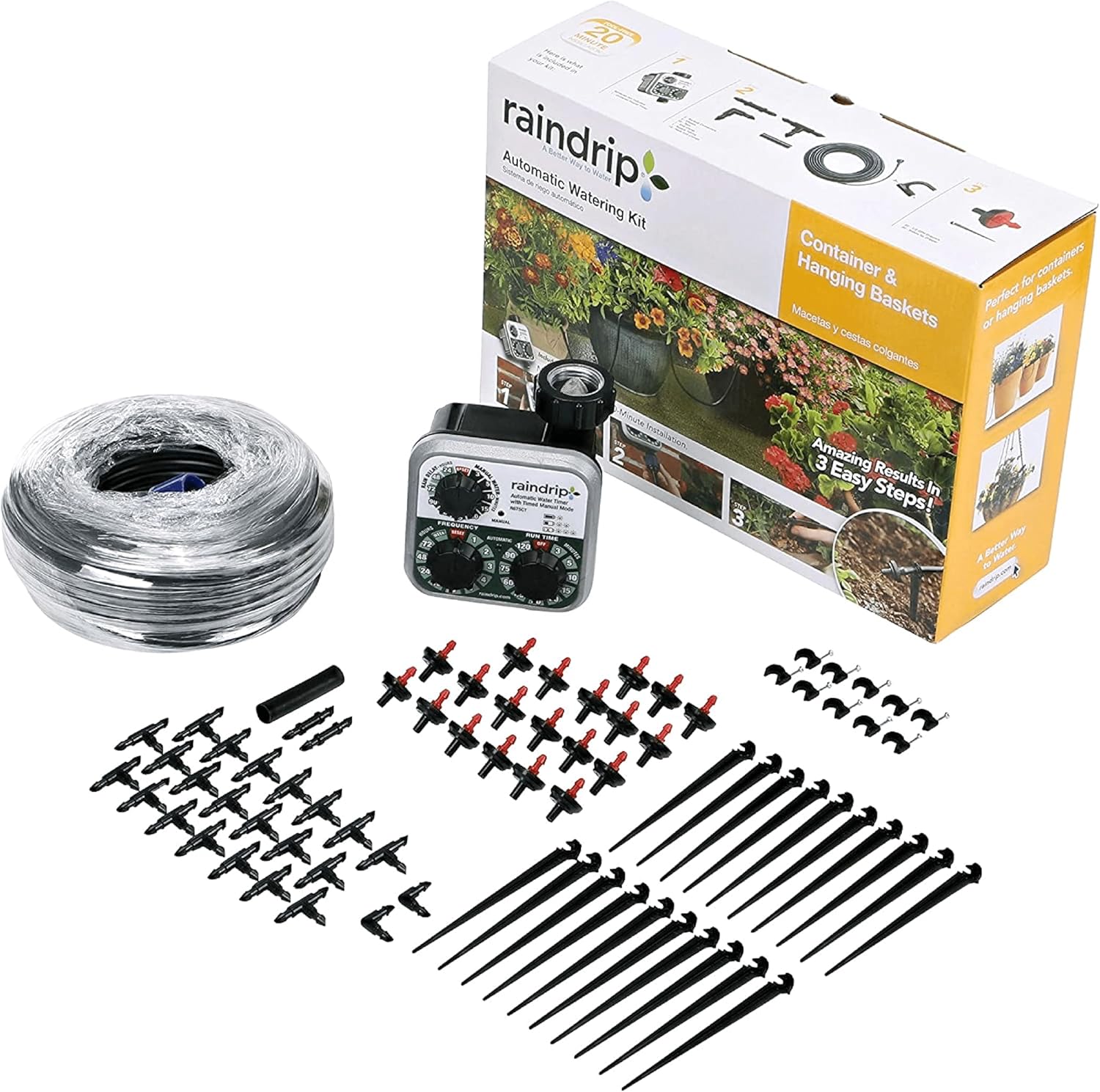
This automatic drip kit combines a water timer, 75 feet of quarter-inch supply tubing, and 20 drippers for up to 20 plants. The tubing and fittings let you customize emitter placement for containers, hanging baskets, or planter beds. Use that adjustability after soil checks show where delivery or coverage needs to change.
Check On AmazonIf you click this link and buy, we earn a commission at no additional cost to you.
FAQs
💧 What does deep watering actually mean?
It means applying water so moisture reaches the soil volume the plant is actively using rather than stopping at the surface. The target depth changes with plant type, stage, and site conditions. A long runtime alone does not prove that the target was reached. Check the soil below the surface until you know how your method behaves in that bed.
🪴 How can I tell whether I watered deeply enough?
Inspect the soil below the surface with a trowel or probe where you can avoid major roots. Look for the transition between moist and dry soil and check more than one point if coverage may be uneven. If only the upper layer is moist, adjust the application rate, placement, or number of passes. Recheck after the change instead of assuming a longer runtime fixed the problem.
🌧️ Why does water run off before the soil is wet deeply?
The application may be arriving faster than the surface can absorb it, especially on compacted, sloped, crusted, or fine-textured soil. Lower the delivery rate or apply water in separate passes so infiltration can catch up. Also make sure water is not being concentrated in one spot while the rest of the root area stays dry. The goal is infiltration and useful coverage, not simply more flow.
🌱 Should seedlings be watered deeply too?
Seedlings need moisture where their small root systems can reach it, which is usually closer to the surface than for established plants. Use gentle watering and monitor the upper soil more closely while roots are developing. Do not force an established plant watering pattern onto a new seedbed. Shift the pattern as the root system expands and the soil moisture pattern changes.
🧱 Does clay soil need a different deep watering approach?
Fine-textured or compacted soil can take in water more slowly at the surface, so a strong application may create runoff before the intended root zone is wet. Reduce the application rate and use repeated passes when needed. Check below the surface because lateral spread and vertical movement may not match what happens in coarser soil. Use the soil response to set the method rather than copying a runtime from another garden.
References and Sources
- Iowa State University Extension watering tips: Supports watering the root zone, slow and deep application, soil moisture checks, and digging to verify how far moisture has moved.
- University of California IPM irrigation guidance: Supports checking moisture in the rooting zone and using a trowel or soil probe to evaluate irrigation depth and uniformity.
- Oregon State University Extension vegetable gardening guidance: Supports the distinction between shallow frequent watering, deeper watering, runoff control, and soil dependent wetting patterns.