Garden watering frequency works better as a check-and-adjust routine than as a fixed calendar. Soil moisture, recent rainfall, soil texture, mulch, root depth, plant establishment, and current weather all change how soon a garden needs water again. A useful starting schedule should therefore tell you when to check the soil, not automatically when to turn on the water. The goal is to build a routine that responds to the root zone instead of repeating the same interval regardless of conditions.
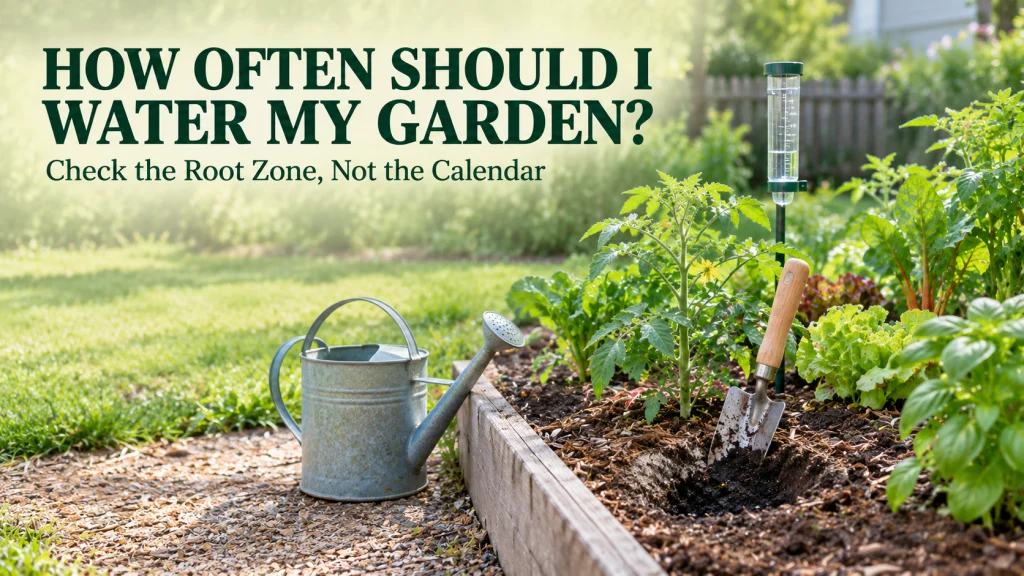
The calendar cannot see the root zone
If you are wondering how often to water your garden, start by treating any weekly schedule as a reminder to inspect conditions rather than an automatic watering order. Three gardeners can follow the same calendar while one has damp clay under mulch, another has fast-draining sandy soil, and a third just received substantial rain. The date on the calendar is identical, but the root zones are not. That is why a fixed interval can be useful as a starting prompt and still be wrong on the day you planned to water.
A better sequence is simple: check whether the soil in the active root zone is drying, account for rain that has already supplied water, then adjust for soil, mulch, plant stage, and weather. This keeps the decision tied to what plants can actually access. It also prevents a common beginner mistake, which is responding to every hot afternoon by adding another watering event even when deeper soil is still moist. If you need the broader method behind application, timing, and irrigation choices, the site guide to watering a garden well covers that larger process.
- Check soil moisture where roots are active, not only the dry-looking surface.
- Count recent rainfall as part of the water the garden has already received.
- Expect sandy or exposed soil to require more frequent checking than moisture-retentive soil under mulch.
- Give new or shallow-rooted plantings a different check interval from established, deeper-rooted plants.
- Use heat, wind, cloud cover, and the forecast to decide when to check again.
| Decision check | If yes | If no |
|---|---|---|
| Is the active root zone still moist? | Do not water yet. Move to the weather check and decide when to inspect again. | Continue to the rainfall and plant-stage checks before deciding to water. |
| Has useful rain recently reached that root zone? | Count it as water already delivered, then recheck moisture before irrigating. | Do not add imaginary rainfall credit. Keep evaluating the actual soil condition. |
| Is the planting new, shallow-rooted, container-grown, or otherwise quick to dry? | Shorten the interval to the next moisture check. | Established in-ground plants may allow a longer interval when deeper soil remains moist. |
| Are heat, wind, or strong sun likely to increase drying? | Check sooner, but still confirm root-zone moisture before watering. | Cooler, calmer, or cloudier conditions may justify a longer interval before the next check. |
| Is meaningful rain likely before the soil becomes too dry? | Delay irrigation and reassess after the weather passes. | Water when the root-zone check shows that the planting actually needs it. |
This sequence is intentionally about frequency, not gallons or minutes. The amount delivered during one irrigation event is a separate decision because a ten-minute run can mean very different amounts with different emitters, pressure, and coverage. Likewise, a plant can need a deeper application without needing a more frequent one. Keeping those decisions separate makes the routine easier to diagnose when conditions change.

Battery-free operation gives an instant analog soil-moisture reading without a separate power source. Its single 304 stainless-steel probe is designed for indoor and outdoor soil checks. Use it as a secondary moisture clue alongside a physical root-zone check rather than as an automatic watering trigger.
Check On AmazonIf you click this link and buy, we earn a commission at no additional cost to you.
Start by asking whether the soil is actually dry enough to need water
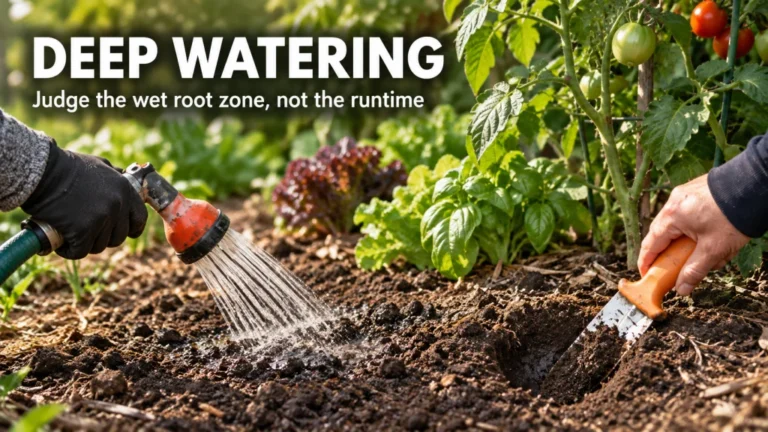
The most useful watering check happens below the surface. A bed can look dusty on top while still holding useful moisture farther down, especially after a thorough irrigation or when mulch slows evaporation. Iowa State Extension recommends checking soil moisture and watering only when needed, while Colorado State Extension similarly advises checking moisture below the surface rather than relying on appearance alone. The exact depth you inspect should make sense for the plants and their active rooting zone, so the check for a shallow new planting is not identical to the check for an established perennial.
Use your fingers, a small trowel, or a soil probe to inspect the soil without turning the process into a laboratory exercise. What matters is learning the difference between soil that is still evenly moist, soil that is beginning to dry, and soil that is dry through the zone your current plants depend on. Cheap moisture meters can be a secondary clue, but they should not replace a physical check when their reading conflicts with what the soil feels and looks like. Repeating the same simple check in the same part of the bed helps you learn how quickly that site dries after rain or irrigation.
Do not confuse a dry crust with a dry root zone. Bare soil can lose surface moisture quickly in sun and wind, while deeper layers stay moist enough that immediate irrigation would only keep the bed wetter for longer. On the other hand, a surface that looks dark after a brief sprinkle may hide dry soil underneath because the water never penetrated very far. Once you know which condition you have, garden watering frequency becomes a response to actual moisture movement rather than a guess based on color.

Fiskars Ergo Garden Trowel uses a heavy-duty cast aluminum head for digging and planting in beds and pots. The head is rust resistant, and the handle is shaped for an ergonomic grip. It gives you a simple way to open a small inspection point and feel moisture below the dry-looking surface.
Check On AmazonIf you click this link and buy, we earn a commission at no additional cost to you.
Use rainfall as water already delivered, not as a separate event
Rain is not a reason to keep the irrigation schedule unchanged. It is part of the week’s water supply, and the practical question is whether enough of that rain reached the root zone to delay the next irrigation. A brief shower may wet leaves and the soil surface without changing deeper moisture very much, while a longer soaking rain may make a scheduled watering unnecessary. Checking the soil after rain is more reliable than assuming either that all rain counts equally or that irrigation must continue because the timer says so.
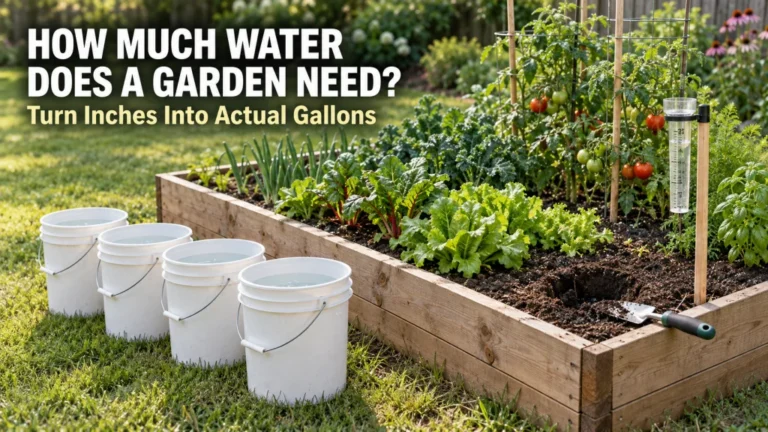
A rain gauge can make this easier because it gives you a local measurement rather than forcing you to rely on a weather app reading from somewhere else in town. Even then, the gauge is only one part of the decision. Sloped beds, compacted areas, dense foliage, overhead cover, and runoff can make the water that actually enters the soil differ from what fell from the sky. For help measuring precipitation in your own yard, see the guide to using a rain gauge for garden watering.
| Soil, rainfall, and weather condition | How to adjust the next check | What to verify before watering |
|---|---|---|
| Root zone is moist after meaningful rain | Extend the interval and check again later | Confirm that moisture remains where the active roots are, not only at the surface |
| Surface is wet after light rain but deeper soil remains dry | Keep the next check close | Verify whether rainfall penetrated far enough to replace irrigation |
| Sandy or fast-draining soil is drying quickly | Shorten the interval between moisture checks | Check the active root zone instead of applying a daily rule automatically |
| Moisture-retentive soil or mulch is keeping the root zone damp | Lengthen the interval before checking again | Make sure deeper soil is not staying saturated or poorly aerated |
| Hot, windy, sunny weather is increasing drying | Check sooner than you would in mild conditions | Confirm that the root zone has actually dried enough to need water |
| Cool, cloudy, or humid weather is slowing water loss | Allow more time before the next check | Do not repeat the previous interval if the soil is still adequately moist |
| Useful rain is likely soon and the root zone still has moisture | Delay irrigation and reassess after the weather passes | Check whether the forecasted rain actually reached the bed |
The table is a decision aid, not a national watering formula. A rain event that is useful in one bed may run off another or fail to reach a container under an eave. The point is to treat rainfall and irrigation as two ways water can enter the same root zone. Once you do that, skipping a planned irrigation after useful rain stops feeling like breaking the schedule and starts looking like following the garden.

Holdly Professional Rain Gauge has an 11-inch outer capacity with a calibrated inner measuring tube for finer rainfall readings. Its polycarbonate body is designed for outdoor exposure, and a mounting bracket is included. Local rainfall measurements help you compare what fell in your yard with the moisture that actually reached the root zone.
Check On AmazonIf you click this link and buy, we earn a commission at no additional cost to you.
Let soil texture and mulch change the interval between checks
Soil texture changes how quickly water moves and how long useful moisture remains available. Coarse, sandy soil generally holds less water and may need more frequent checking, while finer-textured soil can stay wet longer and can become poorly aerated if it is irrigated too often. That does not mean every clay soil should be watered rarely or every sandy soil should be watered daily. Compaction, organic matter, drainage, rooting depth, slope, and weather all modify what the texture alone would suggest.
Mulch changes the surface environment again by reducing evaporation and moderating soil temperature. A mulched bed may remain moist longer than nearby bare soil even when both received the same rain or irrigation. This is one reason the visual appearance of the surface is a weak trigger for watering. Check beneath the mulch and judge the soil that roots are using instead of watering because the mulch itself looks dry.
The practical adjustment is to change the interval between checks before you change the amount of water. If a sandy bed repeatedly dries sooner than your other beds, inspect it sooner after watering. If a mulched bed stays moist for longer, extend the next check rather than automatically repeating the previous interval. This approach respects site differences without turning soil type into another rigid calendar rule.

Fiskars Ergo Garden Cultivator uses heavy-duty cast aluminum tines to loosen and aerate soil in beds and pots. The tines are rust resistant, and the tool has an ergonomic handle with a hanging hole. It gives this section a practical hand tool for working the surface layer before checking how soil and moisture conditions differ below.
Check On AmazonIf you click this link and buy, we earn a commission at no additional cost to you.
Distinguish established plants from shallow-rooted or newly established material
Plant stage can change watering frequency even when two plants share the same bed. Newly transplanted material has a limited root system and depends heavily on moisture near the original root ball or young root zone, so it usually needs closer observation while roots establish. Established plants may access a larger volume of soil and can often go longer between checks when the root zone was watered thoroughly. Penn State and Purdue both emphasize that new seedlings or transplants should not be managed exactly like established, deeper-rooted plants.
Containers are another important exception because their root volume is limited and the growing medium can dry much faster than an in-ground bed. They should not be used to set the schedule for the rest of the garden, and an in-ground schedule should not be copied onto them without checking the container mix. Small containers, exposed pots, and plants with high water demand can require especially close monitoring in warm weather. That is a separate growing environment, even if the pots sit only a few feet from a mulched bed.
This article intentionally stops short of giving crop-by-crop or flower-by-flower intervals because plant-specific requirements belong with those plants. The useful general rule is to group watering checks by rooting situation: new and shallow-rooted material gets checked sooner, while established plants with access to a larger moist root zone can often be checked later. That distinction keeps a mixed garden from being forced into one watering frequency that fits almost nothing well.

Melnor 65172AMZ Relax Grip Watering Wand has a 15-inch format and eight selectable spray patterns. It includes an adaptor and is designed for handheld garden watering. The selectable output makes it useful when newly planted material and established beds need different watering approaches.
Check On AmazonIf you click this link and buy, we earn a commission at no additional cost to you.
Use the weather forecast to shorten or extend the next interval
Weather affects how quickly soil loses water, so yesterday’s successful interval is not automatically the right interval for the coming week. Hot, sunny, windy conditions can increase water loss and justify checking sooner, while cooler, cloudy, humid weather may let the soil stay moist longer. The forecast matters because frequency is partly a decision about when to inspect again, not just when to irrigate again. If conditions are changing quickly, shorten the time to the next check before you assume the garden needs more water.
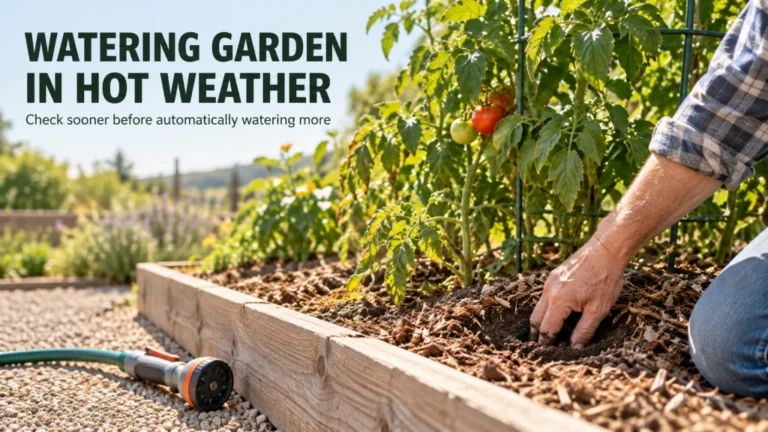
Heat is where fixed schedules often fail most visibly. A gardener may switch from every few days to daily watering simply because temperatures rise, but a deeply watered, mulched bed with established plants can behave very differently from an exposed container or a new transplant. Soil moisture remains the gate that tells you whether the hotter weather has actually shortened the interval enough to require irrigation. For a focused look at that exception, use the guide to watering a garden in hot weather.
The same logic works in the opposite direction when rain or cooler weather arrives. If a scheduled watering falls just before likely rain and the root zone still has moisture, waiting can avoid unnecessary irrigation. If strong wind and heat are forecast after a dry period, check sooner so you are not discovering a dry root zone only after plants are under stress. A forecast does not replace the soil check, but it tells you when the next check should move closer or farther away.

AcuRite Iris 01512MCB tracks outdoor temperature, humidity, wind speed and direction, and rainfall from a wireless sensor system. The indoor color display keeps those local conditions visible in one place. Those measurements add site-specific context when deciding whether the next soil check should move sooner or later.
Check On AmazonIf you click this link and buy, we earn a commission at no additional cost to you.
Translate the first week of observations into a repeatable check-and-adjust routine
You do not need a complicated log forever, but a short observation period can show how your own garden responds to water and weather. Record whether the root zone was moist or dry when you checked, whether rain occurred, what the weather was doing, and whether the bed was mulched or exposed. After several checks, patterns start to appear. You may find that one bed predictably dries sooner, that rain regularly delays irrigation, or that a mulched planting stays moist long after the surface would have tempted you to water.
Use the worksheet below as a temporary calibration tool, not another schedule you must obey. The action column should describe what you did after checking conditions, including choosing not to water. That is important because a good routine includes deliberate skips when soil moisture is still adequate. Once the pattern becomes familiar, you can simplify the routine to a few regular check points and adjust them when weather or plant stage changes.
| Observation | Root-zone moisture | Rain or irrigation since last check | Weather and site condition | Action and next check |
|---|---|---|---|---|
| Check 1 | Moist, drying, or dry | Note what reached the bed | Heat, wind, cloud, mulch, exposure | Water or wait, then choose the next check |
| Check 2 | Moist, drying, or dry | Note what reached the bed | Heat, wind, cloud, mulch, exposure | Water or wait, then choose the next check |
| Check 3 | Moist, drying, or dry | Note what reached the bed | Heat, wind, cloud, mulch, exposure | Water or wait, then choose the next check |
| Check 4 | Moist, drying, or dry | Note what reached the bed | Heat, wind, cloud, mulch, exposure | Water or wait, then choose the next check |
| Check 5 | Moist, drying, or dry | Note what reached the bed | Heat, wind, cloud, mulch, exposure | Water or wait, then choose the next check |
| Check 6 | Moist, drying, or dry | Note what reached the bed | Heat, wind, cloud, mulch, exposure | Water or wait, then choose the next check |
| Check 7 | Moist, drying, or dry | Note what reached the bed | Heat, wind, cloud, mulch, exposure | Water or wait, then choose the next check |
Once frequency is calibrated, keep it separate from the other watering questions. If you know the garden needs water but do not know how much to apply, use the guide to how much water a garden needs. If you are trying to translate that amount into irrigation runtime, see how long to water a garden. And when the problem is getting moisture farther into the root zone rather than deciding how often to check, the guide to deep watering keeps that decision separate.

Rite in the Rain 935T-3X is a three-pack of 3 x 5-inch top-spiral weatherproof notebooks with tan covers. The compact format is made for notes in outdoor conditions. It gives the one-week calibration routine a durable place to record root-zone moisture, rainfall, weather, and the next check.
Check On AmazonIf you click this link and buy, we earn a commission at no additional cost to you.
Final Thoughts: A schedule is only a starting point until the soil and weather agree
A useful watering routine is not a promise to irrigate on certain days. It is a repeatable habit of checking the root zone, counting rain that has already arrived, noticing how soil and mulch hold moisture, and adjusting for plant stage and weather. Start with a reasonable check interval, then lengthen or shorten it based on what you observe. When conditions change, recalibrate the checks first and let the soil tell you whether watering should follow.
This also makes the rest of garden watering easier to manage because frequency no longer has to carry every decision by itself. Time of day, amount, runtime, depth, hot-weather adjustments, vacation planning, and rainfall measurement can each be handled on their own terms. The result is a routine that is easier to explain and easier to correct when something changes. The useful outcome is a routine that tells you when the next watering decision is actually due.

Gilmour 857302-1001 is a full-size zinc pistol-grip hose nozzle with a threaded front. Its listed features include a concentrated stream, trigger lock, and flow control. It provides a simple manual watering option for the final reminder that frequency should stay separate from how water is actually applied.
Check On AmazonIf you click this link and buy, we earn a commission at no additional cost to you.
Explore the next garden watering decisions
Once you know how to decide whether another watering event is due, the next question is usually about timing, amount, depth, measurement, or keeping the routine working under unusual conditions. Those are related decisions, but they are not interchangeable with frequency. A garden can need water less often while still needing a thorough application when irrigation is due, and the correct runtime depends on the delivery method rather than the calendar alone. These guides separate those decisions so you can solve the specific problem without turning one rule of thumb into a universal schedule.
| Topic | What you’ll find |
|---|---|
| Best time to water a garden | How time of day affects evaporation, foliage drying, and practical watering choices. |
| How much water does a garden need | How to think about the amount delivered once you have decided watering is needed. |
| How long to water a garden | How runtime relates to output, coverage, and the depth you are trying to reach. |
| Deep watering | What deeper watering means and how to check whether moisture reached the intended root zone. |
| Watering a garden in hot weather | How heat and drying conditions change the checks without creating a blind daily-watering rule. |
| Watering a garden while on vacation | How to plan coverage when you cannot make the usual moisture checks yourself. |
| Rain gauge for garden watering | How local rainfall measurement helps you decide what irrigation still needs to supply. |
Use the guide that matches the next decision in front of you instead of trying to make one watering rule answer every question. If the soil says water is due, move to amount or runtime; if water is not yet due, keep monitoring conditions and let the interval adjust. When heat, travel, or rainfall changes the situation, use the guide dedicated to that exception rather than rewriting the entire routine. Keeping frequency separate from amount, timing, depth, and measurement makes each adjustment easier to verify in the garden.

Orbit 58910 is a two-outlet programmable digital hose watering timer with an LCD screen. It includes a built-in rain-delay function and a water-resistant design. It fits the next-step routing section because it handles runtime and scheduling after the gardener has already decided whether watering is due.
Check On AmazonIf you click this link and buy, we earn a commission at no additional cost to you.
FAQs
💧 How can I tell if my garden is dry enough to water?
Check soil moisture below the surface in the active root zone rather than judging only by a dry crust. If the soil is still evenly moist where the roots are using water, wait and check again later; if that zone is drying, watering may be due.
🌧️ Does rain count toward my garden watering schedule?
Yes, if the rain actually reaches and moistens the root zone. Use a local rain gauge and a soil check together because a light shower, runoff, or overhead cover can make measured rainfall different from the water plants actually receive.
☀️ Should I water my garden every day during hot weather?
Not automatically. Hot, windy weather can shorten the interval between checks, but established in-ground plants, new transplants, and containers can respond very differently, so check their root-zone moisture before turning heat into a daily rule.
🍂 Does mulch mean I should water less often?
Mulch often slows surface evaporation and can extend the time soil stays moist. Check underneath it before watering, because the mulch surface can look dry while the soil below still holds usable moisture.
🌱 Do newly planted flowers and vegetables need water more often?
They often need closer checking because their root systems are smaller and less established. Keep the young root zone from drying excessively, then adjust the interval as roots establish instead of keeping the early schedule forever.
🪴 Can I use the same watering frequency for containers and garden beds?
Usually not. Containers have limited soil volume and can dry much faster, especially when they are small, exposed, or in hot weather, so their moisture checks should be handled separately from in-ground beds.
References and Sources
- Iowa State garden watering frequency guidance: Supports the use of soil characteristics, weather, and plant material rather than a fixed calendar alone.
- Iowa State watering tips: Supports checking soil moisture, watering the root zone, and using mulch to conserve moisture.
- Purdue garden watering guidance: Supports deep watering, avoiding frequent shallow irrigation, and closer attention for newly established plants.
- Penn State watering guidance: Supports adjusting watering to plant stage, weather, soil, and location rather than treating daily watering as a universal rule.