Hot weather can increase water loss, but it does not make every garden automatically due for another irrigation cycle. The useful change is to check root-zone moisture sooner, then adjust frequency, delivery, and protection only where conditions show that water is being used or lost faster. In-ground beds, containers, newly established plants, wind exposure, mulch, soil, and recent rain can all change the answer. The goal is to keep usable moisture in the root zone without turning a heat response into chronic overwatering.
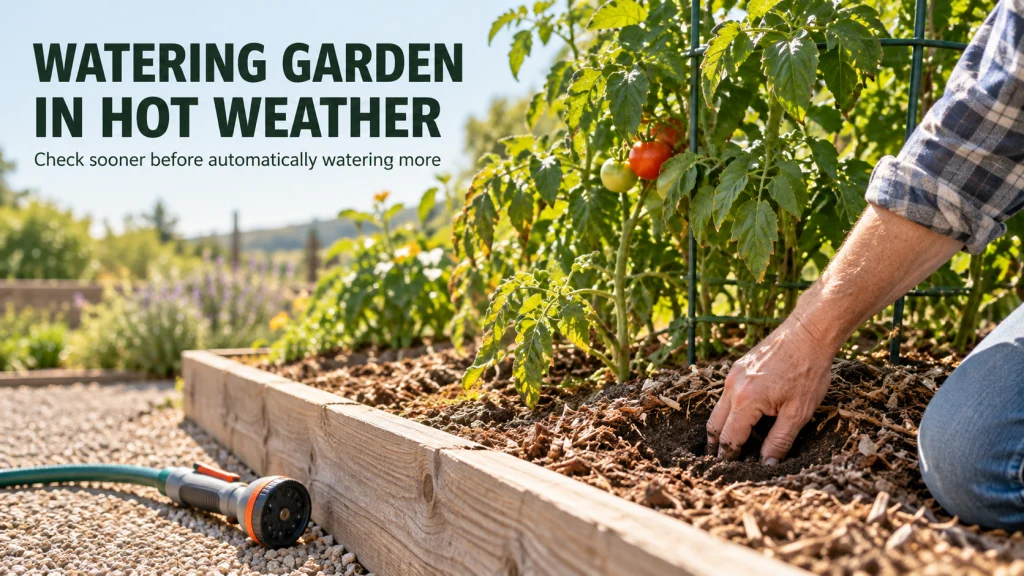
Heat changes demand, but it does not remove the need to check
A forecast near 100 degrees F can make every drooping leaf look like an emergency, but a still-moist root zone is evidence that another watering cycle may not be due yet. In hot weather, the better first move is to shorten the interval between moisture checks before changing how much water you apply. High temperatures, bright sun, low humidity, and wind can increase water loss, but soil type, rooting depth, mulch, and recent rainfall still control how much usable moisture remains. I would treat the forecast as a reason to inspect conditions sooner, not as a command to double the schedule.
The starting point is whatever has been keeping the root zone adequately moist under ordinary conditions. If that baseline is unclear, the broader guide to how often a garden should be watered explains why frequency changes with weather, soil, and plant conditions rather than following one calendar rule. During a hot spell, compare current moisture loss with that baseline and change the routine only when the garden is actually drying faster. That keeps the adjustment tied to the conditions in front of you instead of to a generic heat-wave schedule.

This battery-free soil moisture meter gives instant readings for indoor and outdoor plants. Its single 304 stainless-steel probe is designed for quick spot checks while reducing disturbance around roots. Use it to compare soil moisture before deciding whether hot weather actually calls for another watering cycle.
Check On AmazonIf you click this link and buy, we earn a commission at no additional cost to you.
Check root-zone moisture more often before increasing frequency
The soil surface can dry quickly in sun while the root zone below it still contains useful moisture. A better check reaches below the crusted or dusty top layer and compares more than one spot when a bed has mixed shade, mulch, or irrigation coverage. The exact depth that matters depends on what is growing and how deeply it is rooted, so a shallow surface check should not be treated as the whole answer. If the soil below the surface still feels adequately moist, heat alone is not a strong reason to start another cycle.
Wilting also needs context because leaves can droop during the hottest part of a day even when soil moisture is not yet exhausted. Check the soil before treating wilt as proof of drought, especially if the plant tends to recover as conditions moderate. On the other hand, dry soil around actively growing roots is a clear reason to water rather than waiting for a fixed day on the schedule. The practical shift during heat is therefore more frequent observation, not automatic watering at every observation.
| What you find | What it suggests | Next move |
|---|---|---|
| Surface dry, soil below still moist | Evaporation has dried the top faster than the root zone | Check again sooner, but do not water only for the dry surface |
| Root zone drying faster than usual | Heat, wind, exposure, or plant demand is shortening the interval | Water when needed and keep checking at the shorter interval |
| Soil stays wet for a long period | Water use may be lower than the schedule assumes | Delay the next cycle and avoid keeping the root zone saturated |
| One area dries while another stays moist | Coverage, shade, soil, or rooting conditions differ within the garden | Adjust the dry area instead of increasing water everywhere |
This approach is especially useful when a hot forecast arrives after rain or a recent deep watering. The weather may raise potential water loss while the soil still has a meaningful reserve. Watching how quickly that reserve declines tells you whether the normal interval is still adequate or whether it needs to be shortened. That distinction prevents both late watering and needless extra cycles.

This meter uses a 15-inch stainless-steel stem to reach deeper into garden soil and compost. It provides instant readings on a 0-to-10 wetness scale and is user-calibratable. The longer stem makes it useful for checking moisture below a dry surface layer before changing irrigation frequency.
Check On AmazonIf you click this link and buy, we earn a commission at no additional cost to you.
Prioritize morning delivery when practical
Morning is a useful watering window because temperatures are usually lower and wind is often lighter than later in the day, which can reduce avoidable loss while water is being applied. It also gives the root zone a chance to receive moisture before the strongest heat arrives. This is a preference, not a rule that should make a gardener leave genuinely dry plants unwatered until the next morning. If the root zone is dry and plants need water, timely irrigation matters more than waiting for a perfect clock position.
Delivery matters as much as timing because water that lands on pavement, runs off compacted soil, or blows away from the bed is not helping roots. Apply water where roots can use it, and slow the application if the soil cannot absorb the flow without puddling or runoff. The broader principles in how to water a garden efficiently are still the baseline during hot weather, including matching delivery to the root zone rather than simply extending runtime. If the current setup makes that difficult, the useful selection criteria are controllable flow, targeted placement, repeatable coverage, and the ability to adjust one area without soaking another.

This 15-inch metal watering wand provides 10 spray patterns and thumb-operated flow control. Its longer body helps direct water toward beds, containers, shrubs, and hanging plants without relying on a fixed overhead pattern. The adjustable flow and spray choices make it useful when morning watering calls for targeted delivery rather than simply extending runtime.
Check On AmazonIf you click this link and buy, we earn a commission at no additional cost to you.
Reduce evaporation and runoff before adding more water
If water is being lost before it reaches or stays in the root zone, adding more gallons can hide the delivery problem without fixing it. Mulch can reduce evaporation from exposed soil, while slower application can give dry or tight soil more time to absorb water instead of shedding it across the surface. Directing water closer to the soil also reduces the amount that wind can carry away. When choosing or adjusting a watering setup, favor control over raw output: the useful setup is the one that can place water where it is needed, reduce overspray, and match the soil’s intake rate.
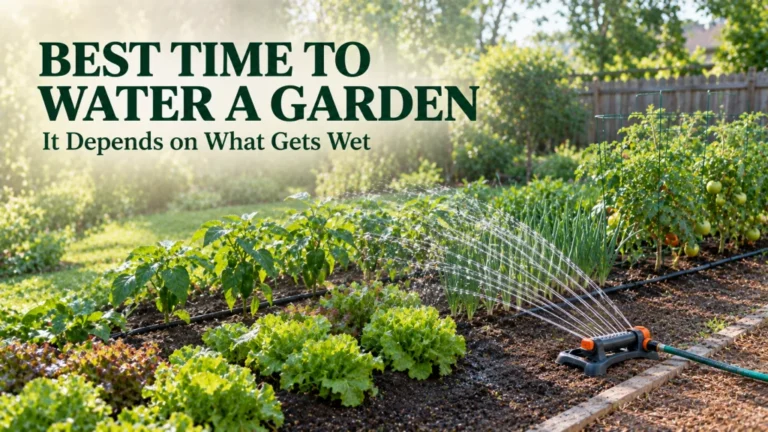
Hot, windy weather deserves extra attention because wind can increase drying and can also distort overhead irrigation patterns. A watering pattern that covered a bed acceptably in calmer conditions may leave edges or downwind areas short during a hot spell. Check the soil after watering rather than assuming that a familiar runtime produced familiar coverage. If only part of the bed is dry, the better solution is one that can isolate or retarget that zone instead of increasing water everywhere.
- Keep exposed soil covered with an appropriate mulch where it fits the planting.
- Apply water slowly enough that the soil can accept it without persistent runoff.
- Aim delivery at the soil and root zone rather than high into moving air.
- Check whether paths, bed edges, or low spots are receiving water that plants cannot use.
- Inspect coverage again when wind or a changed setup alters where water lands.
These efficiency checks should come before a larger volume adjustment, but they are not a reason to withhold water from genuinely dry soil. If the root zone is drying faster after delivery losses are corrected, the interval may need to shorten. That tells you the garden is using or losing water faster rather than simply receiving it poorly. It also keeps equipment and method choices tied to a specific problem such as runoff, drift, uneven coverage, or limited zone control.
| Condition | Normal-weather routine | Hot-weather adjustment |
|---|---|---|
| In-ground bed with moisture still present | Check at the usual interval | Check sooner, but keep the next watering tied to actual drying |
| Windy exposure | Use the usual delivery pattern if coverage is even | Recheck coverage and soil because drying and drift may increase |
| Mulched soil | Use mulch as part of normal moisture conservation | Check below the mulch rather than judging by the surface appearance |
| Runoff during irrigation | Slow the application or split the delivery | Fix the runoff first instead of assuming heat requires more flow |
The table separates four different reasons a watering routine may need attention. A garden that is still holding moisture may need no immediate change, while an exposed bed that is drying faster may need a shorter interval. Runoff and poor coverage call for better delivery control rather than more total water. Matching the response to the actual failure point is more useful than treating the forecast as the decision by itself.
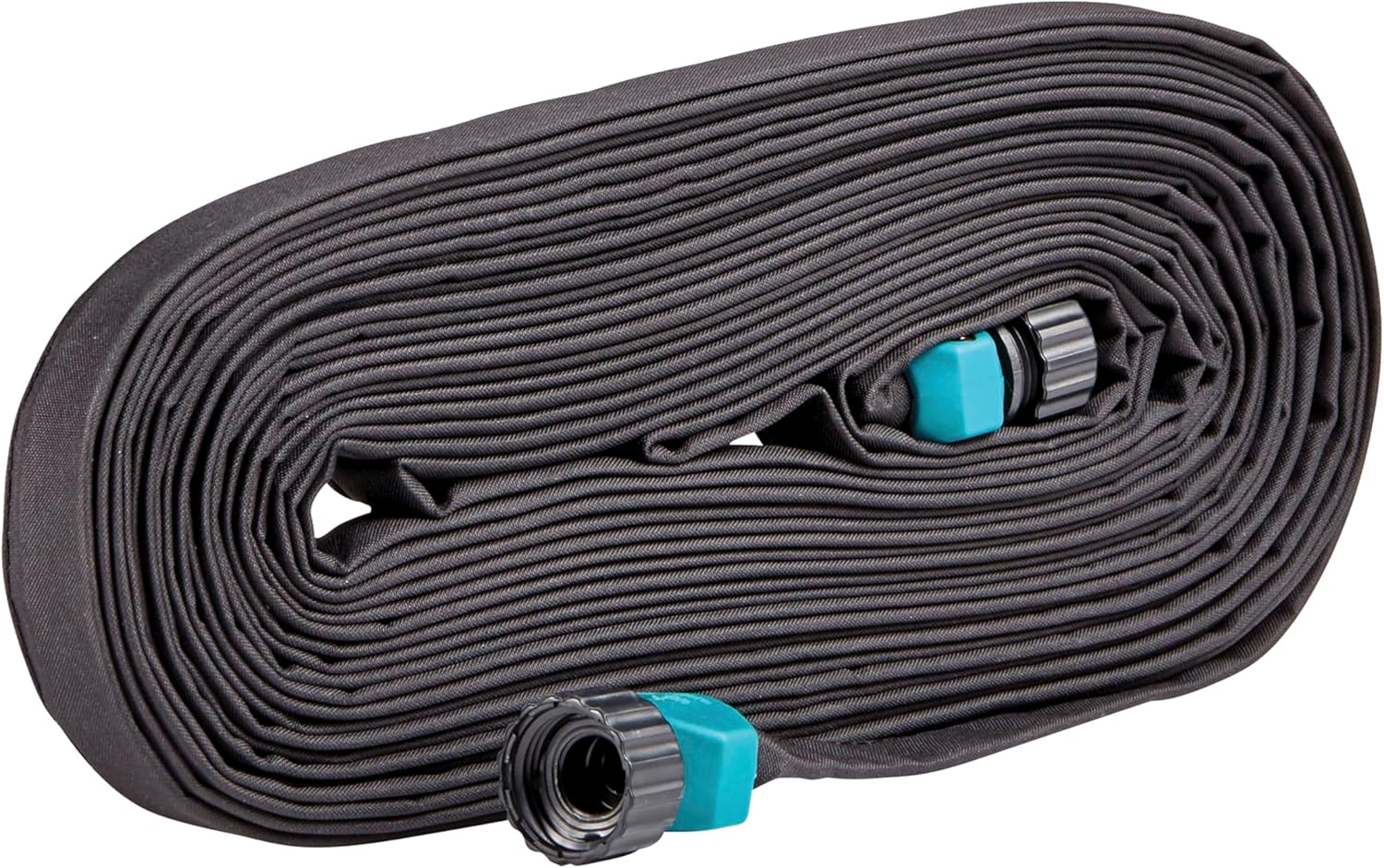
This 50-foot flat soaker hose releases water along garden beds instead of spraying it high into moving air. Its recycled-vinyl construction has a clog-resistant fabric cover, and the hose can be placed above or below ground. Slow root-zone delivery can help address runoff and uneven surface wetting before adding more total water.
Check On AmazonIf you click this link and buy, we earn a commission at no additional cost to you.
Treat containers and newly established plants as faster-changing cases
Containers can change much faster than in-ground beds because they hold a limited volume of growing mix and are exposed to heat on their sides as well as at the surface. Small pots, dark containers, hanging baskets, and sites with strong sun or wind can dry especially quickly, so they deserve more frequent checks during a hot spell. That does not mean every container should be watered on the same repeated schedule, because pot size, material, plant size, and growing mix still matter. Check the mix, confirm that drainage is working, and water thoroughly when the container actually needs it.
Newly established plants also deserve closer observation because their usable root system may still be concentrated near the original root ball instead of extending through a large volume of surrounding soil. Check both the root ball area and nearby soil because one can dry differently from the other. A bed can look generally moist while a recently planted root ball is becoming dry, or the reverse can happen after frequent spot watering. During heat, the useful change is to catch that mismatch sooner rather than watering every established plant as if it had the same limited root system.
Heat check: Start with the fastest-changing places, then move to the more buffered parts of the garden. Check containers, hanging baskets, newly planted areas, exposed bed edges, and windy locations before assuming the entire garden needs the same adjustment. Compare each area with its own recent moisture pattern rather than with the hottest part of the forecast. Water only the places that show a real need, then check again as conditions change.
Raised beds can fall somewhere between a large container and an in-ground bed depending on their depth, soil volume, contact with the ground, exposure, and irrigation setup. Some will lose moisture faster than adjacent ground, while others with generous soil volume and mulch may remain fairly stable. Treat the bed itself as the unit you are checking rather than borrowing a rule from a nearby container or lawn. That keeps the hot-weather routine tied to the actual growing space.
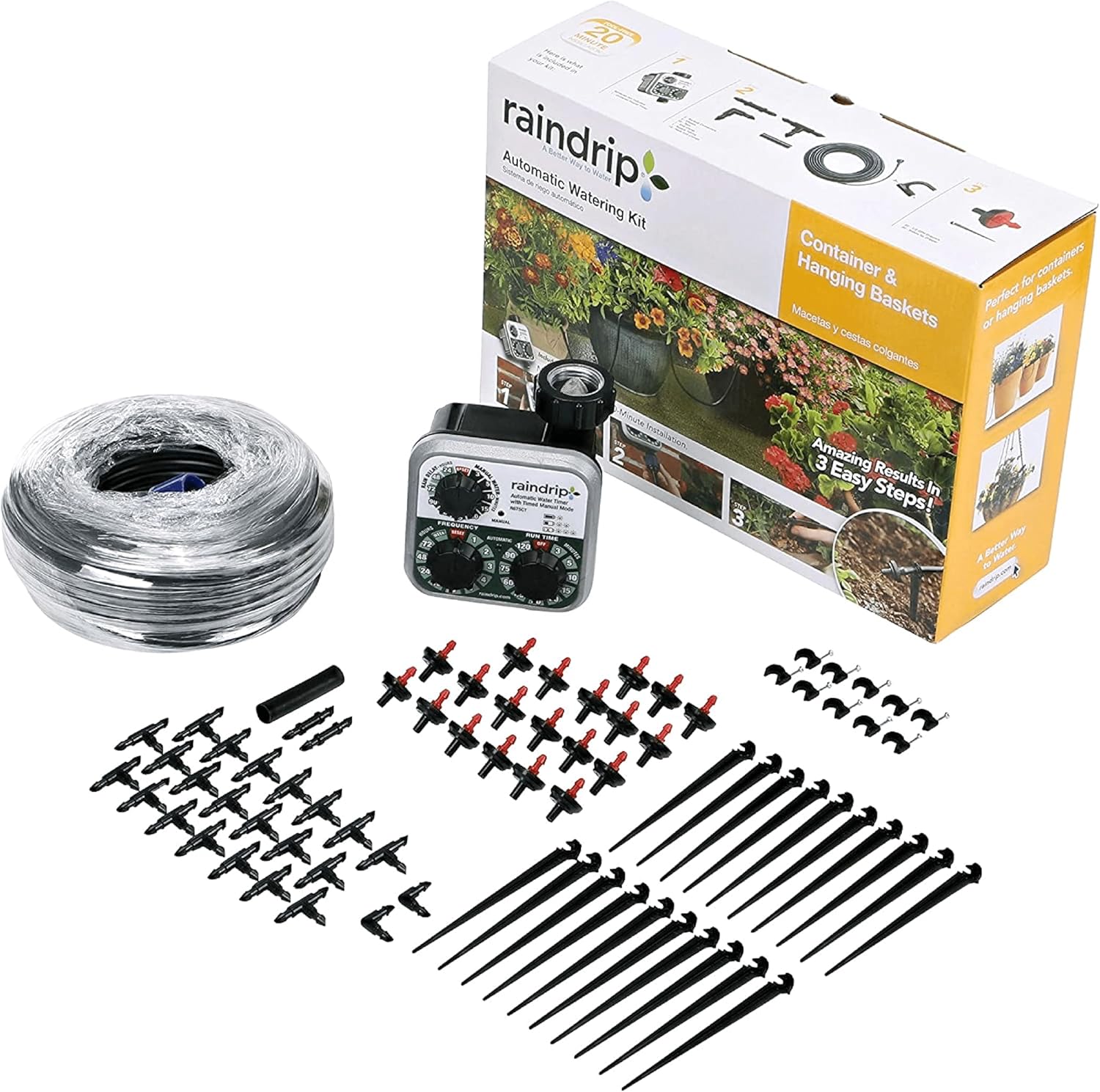
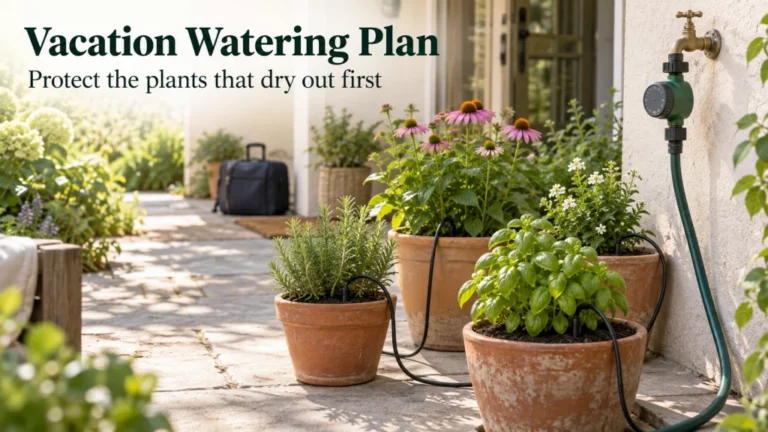
This timer-controlled drip kit is designed for containers and hanging baskets and can water up to 20 plants. It includes 75 feet of supply tubing and 20 drippers that can be positioned around individual pots or planter beds. The customizable layout makes it practical for giving fast-drying containers their own watering pattern instead of treating the whole garden alike.
Check On AmazonIf you click this link and buy, we earn a commission at no additional cost to you.
Re-check after the heat breaks instead of keeping the emergency schedule
A temporary watering adjustment can become overwatering if it stays in place after temperatures moderate, wind drops, clouds return, or rain restores soil moisture. The same evidence that justified a shorter interval should also show when that interval is no longer needed. Do not let a heat-wave routine become the new default simply because it worked through the stressful period. Return toward the normal pattern as soil drying slows and the garden regains its usual moisture rhythm.
Forecast duration matters because a brief spike and a prolonged hot, dry stretch create different management problems. During a short event, more frequent checking may be the only change an established, mulched bed needs. During a longer event, containers, exposed sites, or fast-drying soils may repeatedly show that the watering interval needs to stay shorter. Keep the schedule provisional and let each new moisture check confirm whether the previous adjustment is still justified.

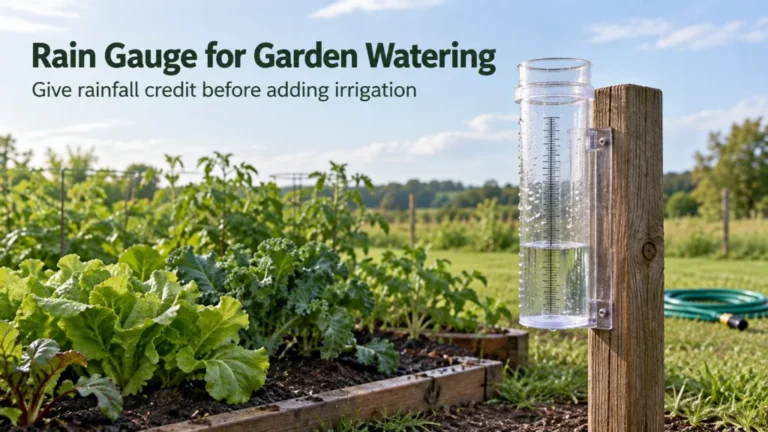
This acrylic rain gauge measures up to 5 inches of rainfall and magnifies the scale by more than 35 percent for easier reading. It can be mounted through its hang hole or staked into the ground near the garden. Tracking actual rainfall helps reassess whether a temporary hot-weather watering schedule is still needed after conditions change.
Check On AmazonIf you click this link and buy, we earn a commission at no additional cost to you.
Final Thoughts: During heat, check sooner before automatically watering more
Hot weather is a reason to pay closer attention, not a universal instruction to pour on more water. Start with the root zone, then account for wind, soil, mulch, container size, plant establishment, recent rain, and how evenly irrigation reaches the bed. If the soil is losing usable moisture faster, shorten the interval. If the real problem is runoff, drift, or uneven coverage, improve delivery instead of treating extra water as the fix.
I would make the routine easy to reverse because heat-driven changes are often temporary. Give containers and newly established plants their own checks, and choose watering methods or controls for the specific weakness you find, such as poor targeting, excessive runoff, wind drift, or an inability to manage separate zones. Then return toward the normal pattern when conditions moderate. That keeps both the watering schedule and any equipment decision tied to a real constraint rather than to heat alone.

This manifold converts one outdoor faucet into four hose connections for separate watering lines. Its rubber-coated metal body uses brass fittings, and each outlet has a built-in shut-off lever for flow control. It is useful when the garden needs separate zones rather than one blanket increase in watering across beds with different moisture conditions.
Check On AmazonIf you click this link and buy, we earn a commission at no additional cost to you.
FAQs
🌡️ Should I water every day during a heat wave?
Not automatically. Check root-zone moisture more often and water when that zone is actually drying, because soil type, mulch, wind, recent rain, and rooting depth can keep two gardens on very different schedules.
💧 Can I water in the evening if the garden is already dry?
Yes, if the root zone needs water, do not leave plants dry just to wait for morning. Morning is generally the preferred routine because conditions are often cooler and less water may be lost, but plant need still comes first.
🪴 Why do containers need checking more often in hot weather?
Containers hold less growing medium than garden soil and can heat and dry from several exposed surfaces. Pot size, material, wind, sun, plant size, and mix all affect how quickly that happens, so check the container itself before watering.
🌬️ Does wind change how often I should check the garden?
It can. Wind can increase drying and can also move sprinkler water away from its intended area, so exposed beds deserve a moisture and coverage check sooner than protected areas.
🌱 Should I water a wilted plant if the soil still feels moist?
Do not use wilt by itself as proof that more water is needed. Heat can cause temporary drooping even when moisture is still available, so check the root zone and watch whether the plant recovers as conditions moderate.
References and Sources
- Iowa State University Extension on extreme heat: Supports checking soil moisture before watering, morning delivery, closer monitoring of containers and newly planted plants, and moisture conservation during heat.
- Iowa State University Extension watering guidance: Supports root-zone watering, slow and deep application, moisture checks, mulch, and more frequent attention to containers.
- University of Minnesota Extension hot-weather gardening guidance: Supports early watering, targeted delivery near the soil, and reducing evaporation during hot conditions.
- Penn State Extension watering myths: Supports adjusting watering to weather, soil, plant type, growth stage, and location rather than using one daily schedule for every garden.