Vacation watering works best when you first identify which parts of the garden are most likely to run short of moisture, then match those areas to the simplest reliable coverage method. Containers, recent plantings, exposed beds, and other limited root zones often deserve more attention than established areas that can tolerate the expected gap. Weather, recent rain, soil, plant stage, and the way each area normally dries should shape the plan. A helper may be enough for a few vulnerable spots, while repeated unattended watering can justify a tested timer with drip or soaker delivery.
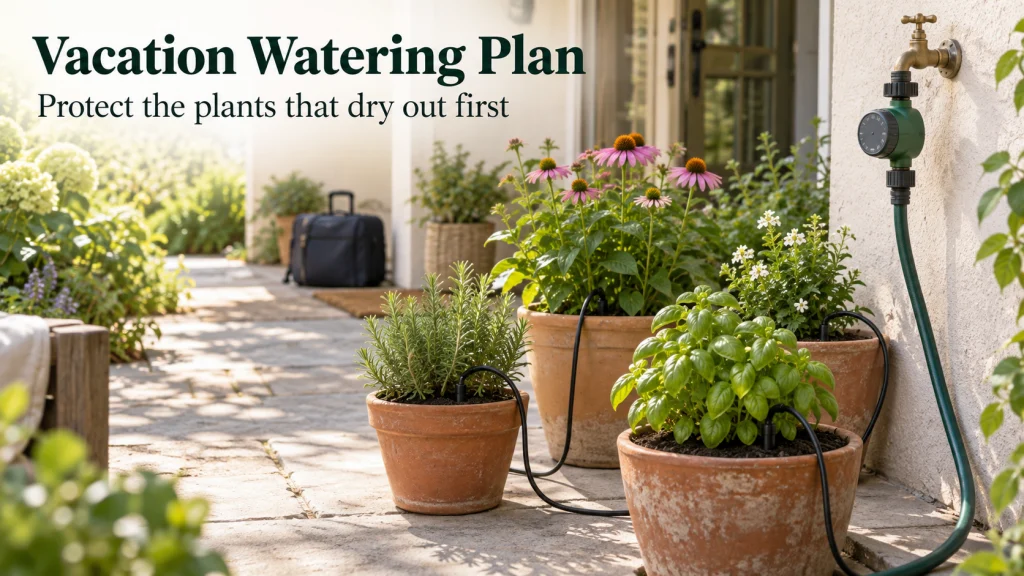
Start with the garden map, not the shopping cart
The problem with trying to water a garden while on vacation is that the whole yard rarely has the same risk. A container on a sunny patio can lose usable moisture much faster than an established perennial bed in mulched soil, while a recent transplant may still depend on a small root zone. I would start by marking the places that normally need attention first rather than assuming every bed needs automation. That keeps the plan tied to actual plant need instead of turning a short absence into an irrigation project.
Walk the garden using the same clues you use during normal care: soil moisture, exposure, root-zone size, recent establishment, mulch, and how quickly each area dries after watering. Newly planted material and containers deserve closer scrutiny because their usable root zones are more limited, while an established area may be able to coast if the soil is already moist and conditions stay moderate. If your normal routine is still unclear, the broader guide to deciding how often to water a garden explains why frequency changes with weather, soil, and plant conditions. The point here is narrower: decide what truly cannot miss the expected watering interval while you are away.
| Garden area | What raises vacation risk | Likely coverage approach |
|---|---|---|
| Containers and hanging baskets | Small soil volume, sun, wind, and rapid drying | Prioritize for helper checks or tested automated delivery |
| Recent transplants and new plantings | Limited established root zone | Give specific instructions and verify moisture before leaving |
| Established mulched beds | Risk rises mainly with dry soil, heat, or unusually exposed conditions | Check whether intervention is actually needed |
| Areas that already stay wet | Overwatering and poor drainage may be the larger concern | Avoid adding automatic cycles without evidence of need |
Use the table as a triage tool, not as a fixed watering schedule. Two areas with the same plants can behave differently when one is shaded and mulched while the other is exposed to sun and wind. Let the fastest-drying or least-established area set the level of attention the plan needs. Areas with a comfortable moisture buffer can often be left alone instead of being pulled into the same watering setup.

This battery-free soil moisture meter uses a single probe to check moisture below the soil surface. Its color-coded dial uses a 1-to-10 scale for dry, moist, and wet readings. The 304 stainless steel probe is intended for soil checks and should be removed and wiped clean after each reading.
Check On AmazonIf you click this link and buy, we earn a commission at no additional cost to you.
Use the forecast and recent rain to estimate the real gap
A vacation plan should respond to the moisture gap you are likely to face, not the length of the trip by itself. Start with the soil as it is now, then consider recent rain, expected heat, wind, cloud cover, and whether the garden is entering the absence already dry. A soaking rain that penetrated the root zone can reduce the amount of intervention needed, while a brief shower may change the surface without doing much for deeper moisture. I would treat rainfall as evidence to check the soil again, not as an automatic reason to cancel or add watering.
Plant stage matters too because a new planting with a small working root zone has less buffer than an established plant in a larger volume of soil. Soil texture and organic matter also affect how quickly usable moisture is lost, so one schedule copied across every bed can create both dry spots and wet spots. Avoid compensating for uncertainty by saturating everything before leaving, because soil that stays too wet can limit root-zone aeration and create a different problem. The goal is to leave the garden appropriately moist, then cover only the gap that conditions are likely to create.
- Check soil moisture in each priority zone rather than judging the whole garden from the surface.
- Separate recent plantings and containers from established in-ground beds.
- Use recent rain as one input, then verify whether the root zone actually received useful moisture.
- Revise the plan when the forecast shifts toward hotter, drier, windier, or wetter conditions.
- Skip unnecessary cycles in areas that already hold adequate moisture.
This is also why a fixed vacation schedule can be misleading. The same programmed cycle may be reasonable under dry conditions and excessive after meaningful rainfall. A good plan has a way to change or stop watering when conditions change. That flexibility becomes even more important when nobody is present to notice runoff, pooling, or a suddenly dry container.

This acrylic rain gauge measures up to 5 inches of rainfall. Its white scale is magnified by more than 35 percent for easier reading. The integrated hang hole and ground-stake design allow mounting on a wall or placement in the garden.
Check On AmazonIf you click this link and buy, we earn a commission at no additional cost to you.
Choose a human check when only a few high-risk areas need water
If only a few containers, recent transplants, or exposed beds are vulnerable, a helper can be simpler and more reliable than building temporary automation across the property. The helper does not need a horticulture lesson; they need a short route, clear priorities, and a way to tell whether each marked area actually needs water. I would make the instructions specific enough that the person can act without guessing, but short enough that they will actually use them. A complicated set of exceptions is a sign that the plan needs to be simplified before you leave.
Mark the plants or zones that matter most and show where the water source, hose shutoff, and normal watering point are located. Explain what counts as adequate moisture using a practical check you already trust in that bed, rather than telling someone to water everything until it looks wet. If an area should be skipped after meaningful rain, say that plainly, and make sure the helper knows which areas are intentionally not on the list. The goal is not to reproduce your entire routine; it is to prevent the highest-risk failure with the least ambiguity.
| Helper note | What to write down |
|---|---|
| Priority areas | Name or mark the containers, transplants, or beds that need checking first |
| Moisture check | Describe the simple soil check that means water is needed |
| Watering method | State where to apply water and what area should become moist |
| Skip condition | Explain when rain or already-moist soil means no watering is needed |
| Problem response | Give one contact method if there is a leak, broken fitting, or unexpected plant stress |
A helper is especially useful when visual judgment can prevent a bad automated decision. They can notice a disconnected hose, a container knocked over by wind, or soil that is already saturated. That kind of observation is difficult to replace with a simple timer. When the vulnerable area is small, human checking often keeps both setup and failure risk lower.

This 15-inch metal watering wand uses thumb flow control for on, off, and flow adjustment. Its rotating head provides 10 spray patterns, including shower and mist settings for gentler plant watering. A 3/4-inch garden hose thread and included rubber gasket connect the wand to standard garden hoses.
Check On AmazonIf you click this link and buy, we earn a commission at no additional cost to you.
Use a timer with drip or soaker delivery only when repeated unattended cycles are justified
Automation makes more sense when several separate areas need repeated watering and a helper cannot reasonably cover them. A timer can control when water flows, while drip or soaker delivery can place water near the root zone instead of spraying large areas that may not need it. Before choosing that route, compare how many zones need water, how different their moisture needs are, and how much temporary tubing, branching, programming, and testing the setup will require. I would not add automation just because it is available, because every extra connection, branch, and setting adds setup burden and another place for a vacation plan to fail.
Temporary automation is also a poor excuse for using one runtime everywhere. A container group, a vegetable bed, and an established ornamental border can respond very differently to the same amount of delivered water. A workable setup should let you separate meaningfully different watering needs, shut the system off quickly, and leave a simple manual fallback if one part stops working. For the broader principles behind root-zone watering and efficient delivery, see the guide on how to water a garden; the vacation decision is whether those controls solve a real need without creating more complexity than the trip justifies.
- Count how many separate areas actually need repeated watering before adding a timer or temporary irrigation.
- Keep zones with meaningfully different moisture needs separate instead of forcing them onto one setting.
- Favor a layout with fewer connections and branches when it can still reach the intended root zones.
- Make sure the system can be shut off quickly at the water source if a leak or other problem appears.
- Keep a simple manual fallback for the areas that matter if the automatic setup stops working.
There is a practical trade-off here. Automation can reduce dependence on someone visiting the garden, but it also adds installation, programming, testing, and backup responsibilities while removing the person who might notice changing conditions. A setup is easier to justify when several areas need repeated cycles, their watering needs can be grouped sensibly, and the system has a clear shutoff and fallback path. If one manual check can cover the necessary areas, the added hardware may solve less than it complicates.

This single-outlet hose faucet timer runs on two AA batteries and uses an LCD screen and dial for programming. It supports runtimes from 1 to 240 minutes, intervals from every 6 hours to every 7 days, and a 1-to-3-day rain delay. A manual override lets water flow without erasing the saved schedule.
Check On AmazonIf you click this link and buy, we earn a commission at no additional cost to you.
Test every connection and runtime before departure
Never make the first unattended cycle the first real test of the setup. Run the system while you are still available to watch the faucet, timer, hose joints, branches, emitters, and the soil where water is supposed to land. Look for leaks, blocked delivery points, runoff, overspray, loose fittings, and areas that remain dry even though the system appears to be operating. A timer that opens correctly is only one part of success; the water still has to reach the intended root zone at a useful rate.
After a test cycle, check the soil rather than judging performance from wet leaves or a damp surface. If water runs away before soaking in, shorten or split the application rather than simply increasing total runtime. If a container stays dry because a delivery point shifted, secure the line or simplify the arrangement before leaving. The test should end with a system you understand, not a set of settings you hope will work.
- Confirm the faucet and shutoff operate normally.
- Inspect every hose and fitting under pressure for leaks.
- Verify that each intended zone actually receives water.
- Check soil moisture after watering to confirm useful penetration.
- Remove branches or watering points that do not serve a priority area.
- Make sure a helper can identify and stop the system if something goes wrong.
Testing also exposes whether the plan is too complicated for a temporary need. If the system requires repeated adjustments just to water a few pots, a helper may be easier to manage. If a simple layout waters the intended zones evenly and can be shut down quickly, automation may be justified. The best pre-departure result is not maximum coverage; it is predictable coverage with few failure points.

This water flow meter uses brass inlet and outlet connections and an LCD screen for outdoor hose use. It provides four measurement modes for real-time flow, last-use consumption, average use, and total water use. The display can switch between gallons and liters, helping verify delivered volume during a test cycle.
Check On AmazonIf you click this link and buy, we earn a commission at no additional cost to you.
Create a failure plan for leaks, dead batteries, and unexpected heat
Vacation watering needs a backup because unattended systems can fail in more than one direction. A dead battery or closed valve can leave plants dry, while a split hose or loose connection can waste water and keep part of the garden too wet. Weather can also move outside the range you planned for, especially when a hot, windy stretch increases demand in exposed containers or recent plantings. I would decide in advance which failure matters most in each priority zone and what the simplest response should be.
A helper does not need to inspect the entire garden unless that is part of the plan. They can be asked to check one or two clearly marked areas, confirm the system is not leaking, and shut off the water if something looks wrong. If forecast conditions change sharply, the backup plan can also define whether the helper should make an extra soil check rather than automatically add water. That keeps the response tied to root-zone evidence instead of adding water simply because conditions feel uncertain from a distance.
| Possible failure | What it can cause | Simple backup |
|---|---|---|
| Timer does not open | Priority areas receive no scheduled water | Helper checks soil and waters only the marked zones |
| Connection leaks | Water is wasted and downstream flow may drop | Helper shuts off the source and uses the manual route if needed |
| Delivery point shifts or clogs | One plant or container stays dry while the system appears to run | Secure and verify delivery points during testing, then spot check the most vulnerable ones |
| Unexpected heat or wind | Exposed root zones dry faster than expected | Trigger an extra moisture check in the highest-risk areas |
| Unexpected rain | Automatic watering may become unnecessary | Pause or skip watering when soil is already adequately moist |
The failure plan should stay short enough that someone else can follow it without interpreting your whole irrigation strategy. It is also worth reducing exposure before you leave by grouping movable containers where appropriate, checking mulch coverage, and removing obvious leaks from the normal watering setup. Those small changes reduce demand without creating another machine to manage. The strongest plan is the one that still protects the most vulnerable plants when one expected cycle does not happen.
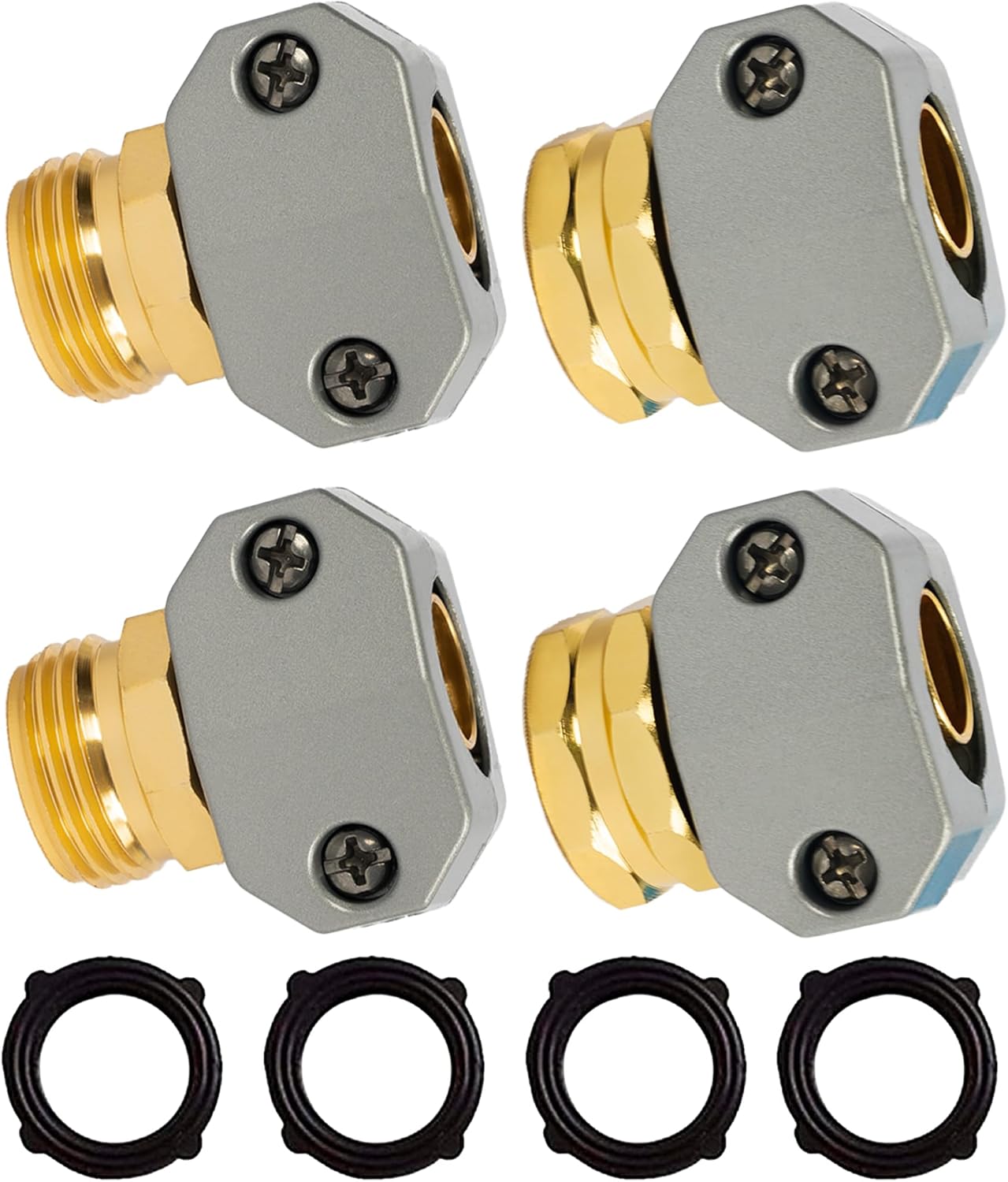
This repair kit includes two female connectors, two male connectors, four zinc-alloy clamps, and four extra hose washers. The aluminum repair ends are specified for 5/8-inch and 3/4-inch garden hoses. Stainless steel clamp screws secure the connectors when replacing damaged compatible hose ends.
Check On AmazonIf you click this link and buy, we earn a commission at no additional cost to you.
Final thoughts: Build vacation watering around the most vulnerable failure point
A reliable vacation watering plan starts by admitting that different parts of the garden have different margins for error. Identify the areas with the least moisture buffer, then decide whether the expected gap can be covered by existing soil moisture, a human check, or simple automation. Do not make the whole property follow the needs of its thirstiest container. That usually adds water, hardware, and failure points where none were needed.
Before leaving, verify soil moisture, review the weather, test any unattended system, and make the backup response easy for another person to understand. The areas with the smallest margin for error deserve the clearest fallback, while beds that can safely coast should stay out of the watering plan. This keeps both watering and equipment proportional to the actual problem. A vacation system only has to do the necessary job reliably, not prove how automated the garden can become.

This two-pack includes solid-brass shut-off valves with extended handles and four hose washers. The valves fit standard 3/4-inch GHT garden hoses and accessories. Each valve adds a manual flow-control point that can be closed at a compatible hose connection during a watering-system problem.
Check On AmazonIf you click this link and buy, we earn a commission at no additional cost to you.
FAQs
💧 Should I water everything heavily before I leave?
Not automatically. Water areas that need it based on root-zone moisture, but avoid saturating soil that is already adequately moist because excessive water can reduce root-zone aeration.
🪴 Which garden areas should I prioritize while I am away?
Start with containers, hanging baskets, recent transplants, and other small or exposed root zones that normally dry quickly. Established mulched beds may have more buffer, but soil, weather, and plant condition still determine whether they need coverage.
🌦️ Does rain in the forecast mean I can turn off vacation watering?
Rain can reduce the need for irrigation, but the useful question is whether enough water reaches the root zone. Recheck soil moisture and adjust the plan rather than assuming every shower replaces a watering cycle.
⏱️ Is a timer better than asking someone to water?
It depends on how many areas need repeated watering and how consistent their needs are. A helper is often simpler for a few high-risk spots, while tested automation can make sense when repeated unattended cycles are truly necessary.
🚿 Should I use the same runtime for every bed and container?
No. Soil volume, exposure, plant stage, delivery rate, and drainage can make the same runtime produce very different results, so verify each priority zone rather than copying one setting everywhere.
🔧 What should I test before leaving an automatic setup unattended?
Run the full system and check the faucet, timer, fittings, hoses, delivery points, runoff, and the soil after watering. Fix leaks, dry spots, unstable lines, or unnecessary branches before relying on the setup.
References and Sources
- Iowa State University Extension watering tips: Supports soil-moisture checks, root-zone watering, container vulnerability, and having someone water when a garden will be unattended.
- Iowa State University Extension watering frequency guidance: Supports adjusting watering frequency for soil, weather, and plant conditions instead of relying on one fixed schedule.
- Penn State Extension garden watering guidance: Supports checking actual soil moisture after rain and avoiding frequent shallow watering as a universal routine.