A home soil test and a laboratory test can both be useful, but they solve different levels of decision. The practical choice is to match the test to what you plan to do with the result, how much detail the decision requires, and how costly an incorrect or incomplete reading would be. Home testing can suit quick screening when the next step is easy to reverse, while a laboratory becomes more useful when pH or fertility changes require a calibrated recommendation. The goal is not to buy the most elaborate test, but to use enough testing rigor for the consequence of the decision.
Let the downstream work set the testing threshold
A five-minute home reading and a laboratory report can both be useful, but they should not carry the same amount of responsibility. If the result will only trigger another check, the cost of a rough reading is usually limited. If the result will determine how much lime, sulfur, or fertilizer goes into a bed, the standard should rise because the action is harder to undo. The more consequential the soil change, the less comfortable I would be basing it on a vague or incomplete reading.
That threshold is more useful than treating convenience as the deciding factor. A home kit can reduce delay and make a quick screen easier, while a laboratory can justify extra handling when the result needs to support a specific amendment decision. The question is not which format feels more serious, but how much evidence the next action deserves. Once that threshold is clear, the next step is to name the kind of decision the result must support.
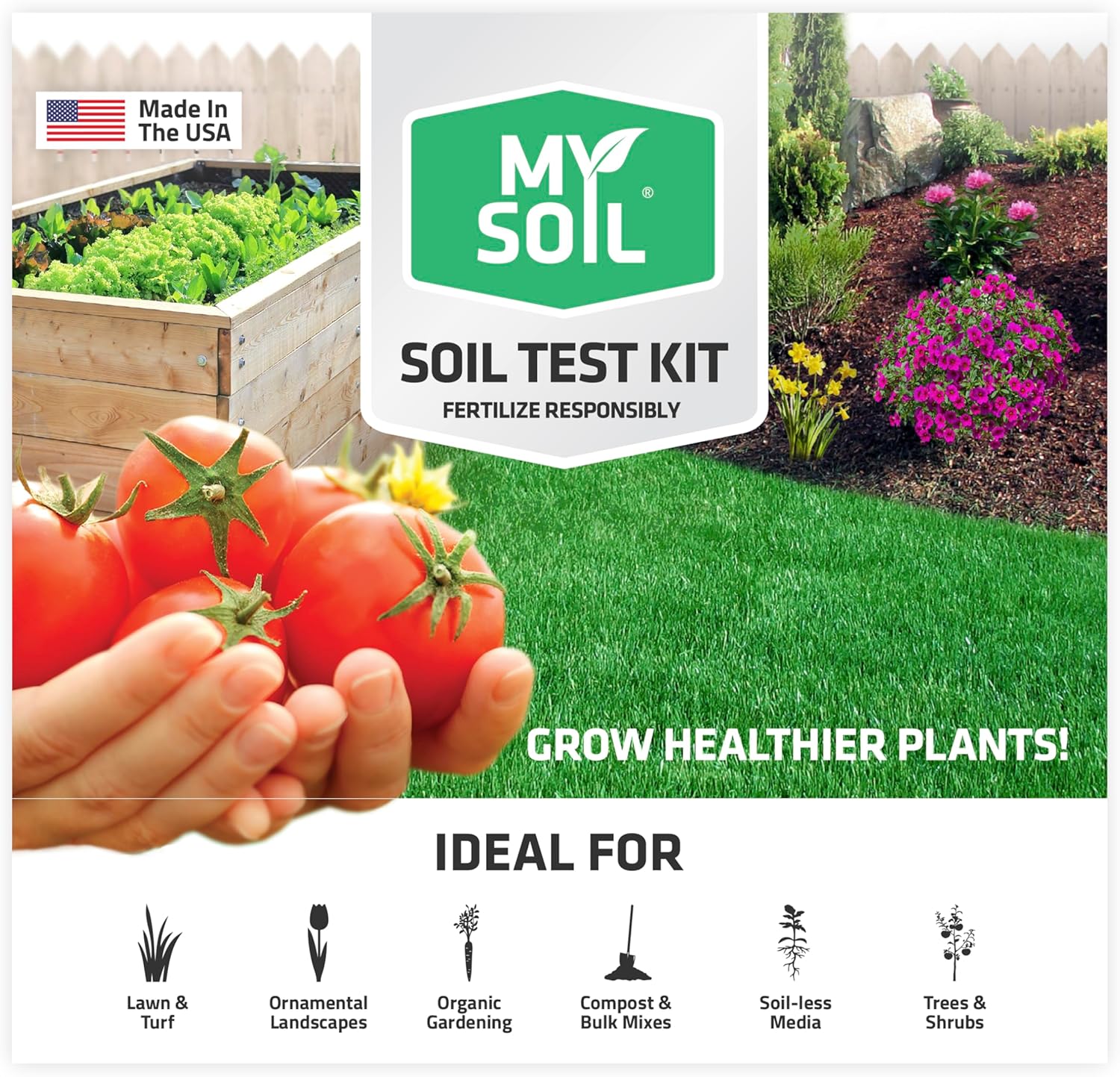
MySoil is a mail-in soil test kit that measures 13 plant-available nutrients and pH through laboratory analysis. Results include fertilizer recommendations tailored to the submitted soil and plant needs. The kit supports lawns, gardens, flowers, compost, trees, and other growing scenarios where a more detailed soil report is useful.
Check On AmazonIf you click this link and buy, we earn a commission at no additional cost to you.
Define what decision follows the result
A useful first question is whether you are screening, confirming, or prescribing an action. Screening asks whether something looks broadly different from what you expected, while a prescription asks how much of an amendment should be applied for a particular planting situation. Those are not the same job, even when both begin with a soil sample. If the result will only tell you whether further testing is worth pursuing, a simpler method may be enough.
The decision also changes with the garden area and the cost of rework. A small bed where you are simply checking a rough pH direction creates a different consequence from a larger growing area where an incorrect fertilizer or pH adjustment could mean wasted material and another round of correction. Plant type matters too because a general reading may not support a recommendation for every crop or ornamental planting. For the broader sequence of when testing belongs in soil care, use the site’s soil testing guidance for home gardens rather than treating every test as a stand-alone answer.
| Decision after testing | What the test needs to provide | Practical testing direction |
|---|---|---|
| Quick screening before taking further action | A broad, understandable signal | A home test may be sufficient if its method fits the question |
| Comparing repeated readings without changing soil aggressively | A consistent method and careful handling | Home testing can be useful as screening, not automatic prescription |
| Planning a meaningful pH adjustment | Reliable measurement plus recommendation context | A laboratory is the safer fit when the amendment amount matters |
| Planning fertilizer from nutrient results | Method-specific nutrient values and a usable recommendation | Favor a laboratory that provides interpretation for the intended planting |
The table is a routing tool, not a claim that every home test behaves the same way or every laboratory offers the same package. Check what the selected method actually measures and what the report will give you before collecting the sample. If the output stops at a broad category but your next step requires a rate or a targeted correction, the method is not complete enough for that decision. That mismatch matters more than whether the test feels convenient.

Rapitest uses a color-comparator system for at-home soil testing. The kit includes 20 tests, with five each for pH, nitrogen, phosphorus, and potash. Its repeated reagent tests support basic screening across those four soil categories before a gardener decides whether more detailed testing is needed.
Check On AmazonIf you click this link and buy, we earn a commission at no additional cost to you.
Compare the outputs, not just the testing formats
Many consumer home kits focus on soil pH and basic nutrient indicators such as nitrogen, phosphorus, and potassium, but the exact measurements and reporting style vary by kit. Some produce broad categories or color comparisons instead of numerical concentrations, which can limit how confidently you can translate the result into an amendment amount. Laboratory services can offer a wider set of measurements and use analytical methods selected for the soil and recommendation system they support. That does not mean every laboratory package includes every useful measurement, so the service still needs to be matched to the question.
The difference becomes especially important when a gardener expects the test to do more than screen. A label such as low or high can flag that a result deserves attention, but it does not automatically tell you what material to add or how much to apply. Laboratory reports may include concentrations and recommendations tied to crop or garden information, which makes the result more actionable when amendment rates matter. The practical comparison is therefore not plastic kit versus mailed sample, but broad signal versus decision-ready information.

Garden Tutor includes 100 soil pH test strips calibrated for a 3.5 to 9.0 range. The strip format is designed for lawn, garden, compost, and indoor plant soils. It gives repeated at-home pH checks without adding nutrient measurements that the product does not claim to provide.
Check On AmazonIf you click this link and buy, we earn a commission at no additional cost to you.
Check whether the method supports a calibrated recommendation
Soil nutrient numbers only become useful when the testing method and the recommendation system belong together. Different laboratory procedures can extract different amounts of plant-available nutrients, which is one reason a raw number should not be treated as a universal fertilizer instruction. A recommendation is stronger when the laboratory knows the analytical method, the planting context, and the interpretation framework used for that result. If a home test gives only a broad category, it may not supply enough information to calculate a defensible application rate.
This is also where soil test kit accuracy needs careful wording. Accuracy is not one universal percentage that applies to every consumer kit, every nutrient, every soil, and every handling method. Reagent condition, color interpretation, extraction method, soil chemistry, and user technique can all affect the usefulness of a home result. Instead of asking whether home kits are accurate in the abstract, ask whether the specific method is reliable enough for the specific decision you intend to make.

MySoil PRO Pack includes two soil test kits and one soil probe. The service analyzes nutrient and pH data and provides recommendations tailored to the submitted soil and plant needs. The two-kit format supports sending two separate samples through the same laboratory-based testing workflow.
Check On AmazonIf you click this link and buy, we earn a commission at no additional cost to you.
Weigh convenience against the consequence of being wrong
A home test has a real advantage when the burden of testing is the main obstacle and the decision is modest. You can often get a screening result without packaging a sample for a laboratory, and repeating the same procedure may help you notice whether readings are broadly consistent. That convenience has value when you are not using the result to justify a large amendment. It has less value when a wrong answer would send you into costly, unnecessary, or difficult-to-reverse soil changes.
Imagine two gardeners who both receive a result that appears to show a pH concern. One plans to use the reading only as a reason to seek a more complete test before changing the bed, while the other wants to calculate a substantial pH amendment immediately. The first gardener is using the home result as screening, which keeps the consequence of error contained. The second gardener needs a more defensible measurement and recommendation because the next action changes the soil itself.
- Use a simpler test when the result is a low-stakes screen and the next step is easy to reverse.
- Move toward laboratory testing when the result will determine a meaningful pH or fertility amendment.
- Check whether the report includes interpretation or recommendations for the planting type you actually have.
- Do not assume a broader list of measurements automatically makes a test useful if those measurements do not answer your decision.
- Pause when the planned action is expensive, difficult to undo, or based on a result you cannot interpret confidently.
That checklist keeps the comparison grounded in household consequences rather than test prestige. It also avoids paying for complexity that does not change the decision. A laboratory can be the right choice without being necessary for every small question, and a home kit can be useful without being treated as a prescription tool. The fit comes from the action that follows.

YAMRON combines soil pH, moisture, temperature, and sunlight measurements in one digital meter. A backlit LCD displays the readings from the probe and light sensor. The four measurements make it useful for quick in-garden screening when the goal is to gather several basic signals before deciding on a more consequential soil change.
Check On AmazonIf you click this link and buy, we earn a commission at no additional cost to you.
Treat repeated home readings as screening, not automatic prescription
Repeating a home test can be useful when you are checking whether a surprising result appears again under the same procedure. Consistency can tell you that the first reading was not obviously a one-off handling mistake, but repetition does not upgrade a limited method into a laboratory recommendation. If the test reports only broad categories, several similar readings are still broad categories. The next step should depend on what decision those readings are being asked to support.
This is where comparing a home soil test with laboratory testing becomes practical rather than theoretical. Keep the home method for quick screening when that is all you need, but escalate when the result starts carrying more responsibility than the method can support. If the next action involves a meaningful change in fertility or pH, use a test and interpretation process designed for that purpose. Once you know what the soil needs, the separate question is how to approach improving garden soil without overcorrecting it.
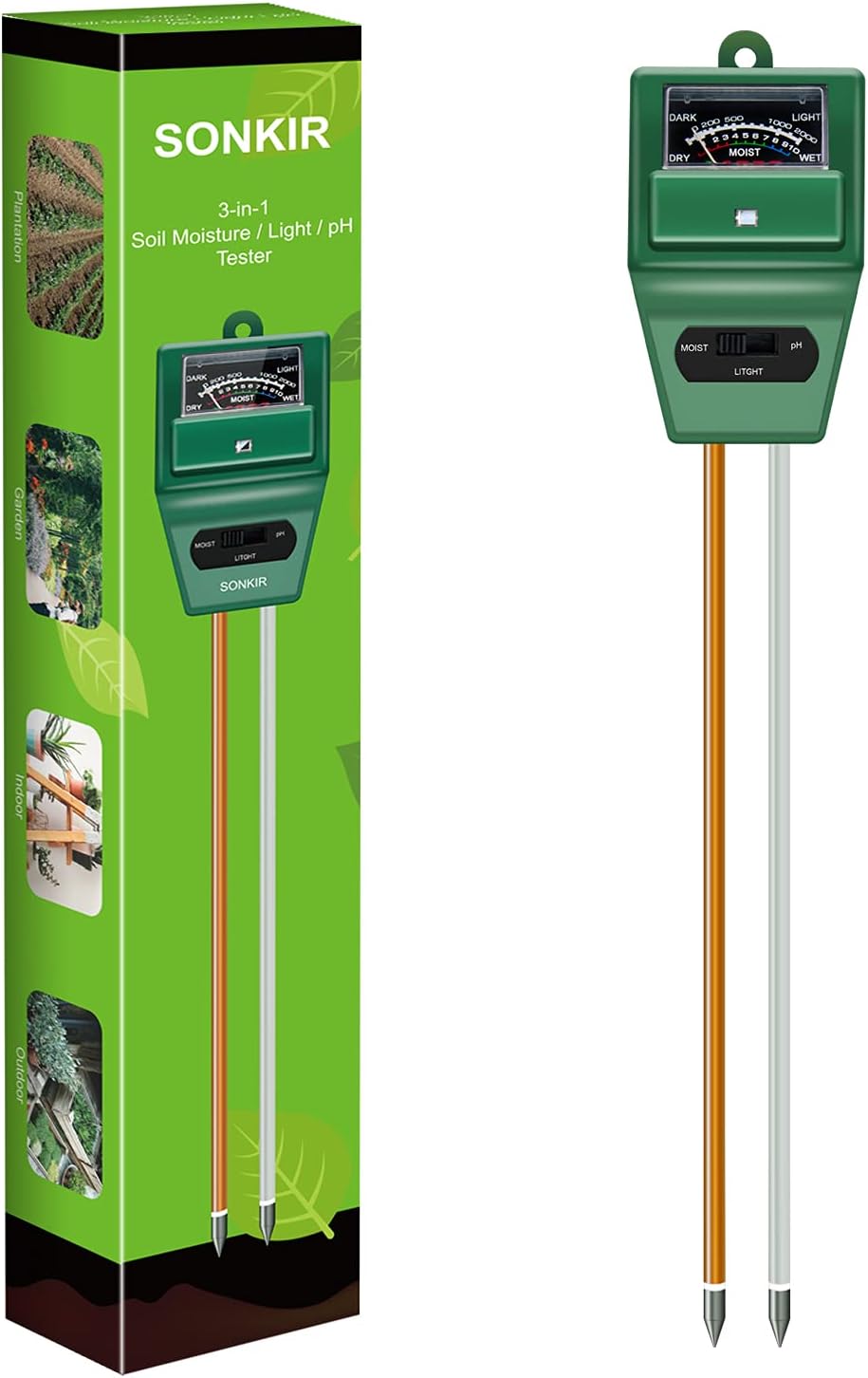
SONKIR MS02 combines soil moisture, pH, and sunlight checks in one analog meter. It requires no battery and uses a selector to switch among the three functions. The probe can support repeat spot checks when a gardener wants a consistent home-screening method rather than a laboratory nutrient recommendation.
Check On AmazonIf you click this link and buy, we earn a commission at no additional cost to you.
Use a method-selection checklist before you test
Before opening a kit or sending a sample, write down what you expect the result to help you decide. Then check whether the method measures the factor you need, whether the output is numerical or only categorical, and whether there is a recommendation framework behind the result. A test that answers a different question is not made more useful by being faster or more detailed. The method should be chosen after the decision is clear, not before.
Also check the limits of what soil chemistry can explain. Neither a home kit nor a standard laboratory fertility test automatically diagnoses drainage, compaction, root damage, light problems, irrigation errors, pests, or disease. If the garden problem begins with a plant symptom, testing may be one piece of the investigation rather than the entire diagnosis. Good testing narrows a decision; it does not turn every garden problem into a fertilizer problem.
| Check before choosing | Question to ask |
|---|---|
| Decision | What will I do differently because of this result? |
| Measurement | Does the method test the factor that decision actually depends on? |
| Output | Do I need a broad category, a numerical result, or a recommendation? |
| Consequence | How costly or difficult would it be to undo a wrong action? |
| Boundary | Could the problem come from something a soil chemistry test does not measure? |
If several answers point toward a specific amendment rate or a high-consequence correction, a laboratory is usually the better fit. If the answers point toward a simple screen with no immediate corrective action, a home method may be enough. The checklist is meant to prevent both under-testing and unnecessary testing. Use the simplest method that still supports the decision responsibly.
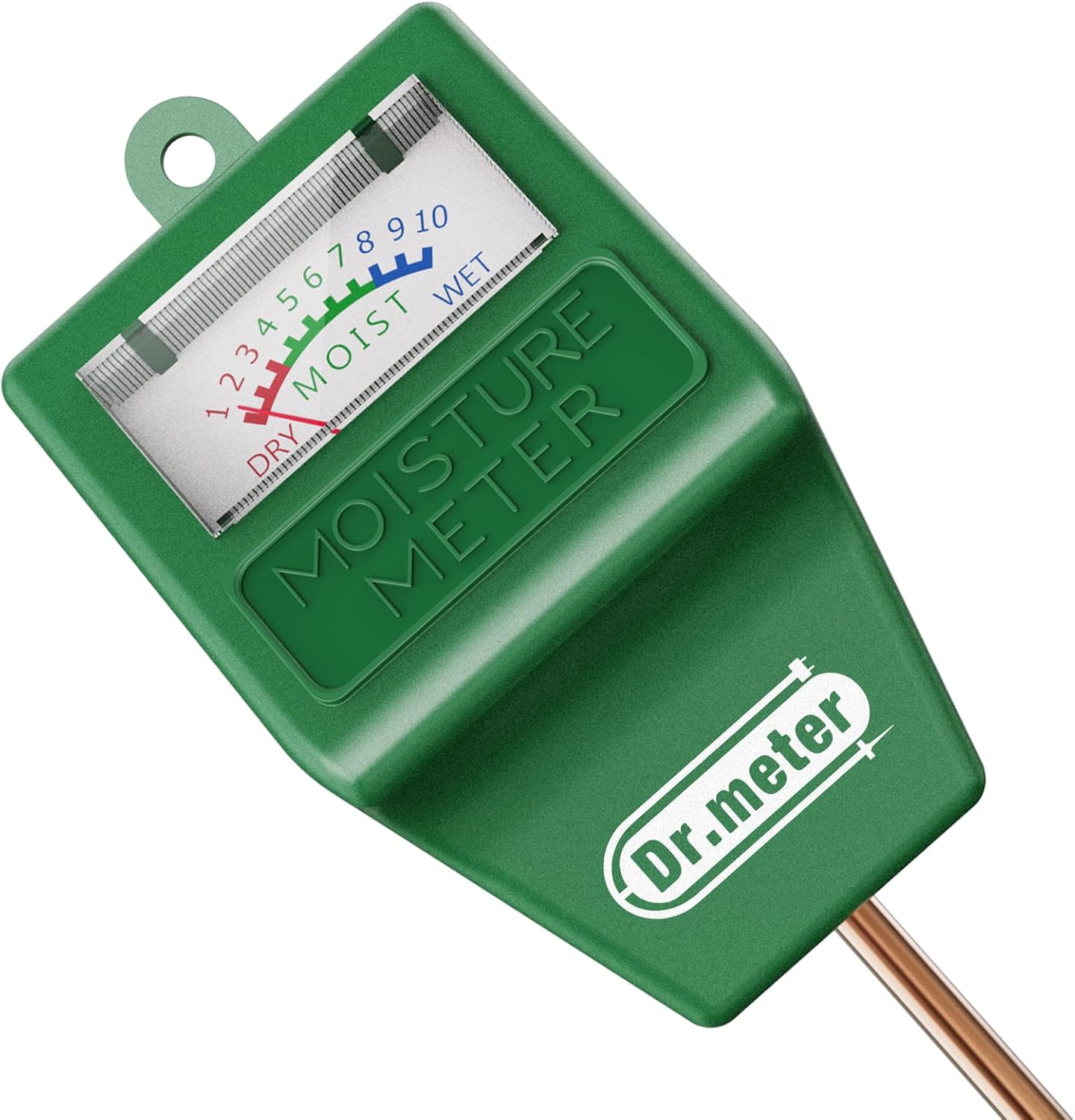
Dr.meter S10 is a soil moisture meter with an 8-inch metal stem. It uses a 1-to-10 moisture scale and requires no batteries or electricity. Because it measures moisture rather than soil fertility, it can help separate a watering question from a chemistry-testing question before a gardener changes fertilizer or pH.
Check On AmazonIf you click this link and buy, we earn a commission at no additional cost to you.
Final Thoughts: match test rigor to the cost of being wrong
The useful question is not whether a home kit or a laboratory is universally better. It is whether the method gives you enough reliable, interpretable information for the action you plan to take. Quick screening can justify a simpler test when the consequence of error is small and no major amendment follows immediately. A more consequential pH or fertility decision deserves a method that supports a clearer recommendation.
Choose the testing burden that matches the decision burden. Check what is measured, how the result is reported, and whether the method connects to an interpretation framework you can actually use. When the output is too broad for the action, do not force a prescription from it. Moving to a more complete test at that point is less about chasing precision and more about avoiding unnecessary soil changes.

This soil sampling set pairs a 12-inch stainless steel T-handle probe with two sample bags. The narrow probe is intended for collecting soil samples from lawns, houseplants, and garden areas. The included bags provide a simple way to keep collected material separated before testing or submission.
Check On AmazonIf you click this link and buy, we earn a commission at no additional cost to you.
FAQs
🧪 Are home soil test kits accurate enough for a garden?
They can be useful for broad screening, but usefulness depends on the specific test, soil, procedure, and decision. If you need a nutrient or pH recommendation that will drive a meaningful amendment, a laboratory result is generally a stronger basis.
🌱 Can I use a home soil test kit before planting?
Yes, if you only need a basic screening answer and you understand what the kit actually measures. If the result will determine a substantial fertilizer or pH correction, use a method that provides enough detail and interpretation for that action.
📋 What does a laboratory soil test give me that a home kit may not?
A laboratory can provide numerical measurements, additional soil properties, and recommendations tied to its analytical methods and the planting information you provide. The exact package varies, so confirm what the laboratory measures and whether interpretation is included.
🔁 Does repeating a home test make the result reliable enough for fertilizer decisions?
Repeated readings can help confirm that a surprising result appears consistently, but repetition does not add information the method never measured. If the decision requires a calibrated fertilizer rate, use a testing method that supports that recommendation.
🪴 Is a lab test necessary for every raised bed or container?
No. The choice should follow the decision and the consequence of being wrong, not the size of the growing space alone. A simple screen may be enough for a low-stakes question, while a consequential amendment decision can justify laboratory testing even in a small area.
References and Sources
- Montana State University Extension Soil Fertility: supports the comparison of home kit outputs, laboratory methods, qualitative ratings, and fertilizer recommendation limits.
- Oregon State University Extension Service: supports the distinction between basic home testing and laboratory analysis for detailed nutrient information and problem solving.
- Penn State Extension: supports the role of laboratory soil testing in measuring soil properties and producing lime and fertilizer recommendations for specified plantings.