Pruning diseased branches starts with confirming that the suspicious tissue is actually a pruning target, not simply cutting farther back because a branch looks unhealthy. Cankers, dieback, discoloration, storm injury, root stress, and normal seasonal changes can overlap in appearance, so the host plant and the suspected problem matter. When pruning is supported, the cut location, sanitation routine, and debris handling should follow guidance for that disease rather than a universal rule. The safest homeowner decision is sometimes to stop cutting and get a diagnosis or professional help before more living structure is removed.
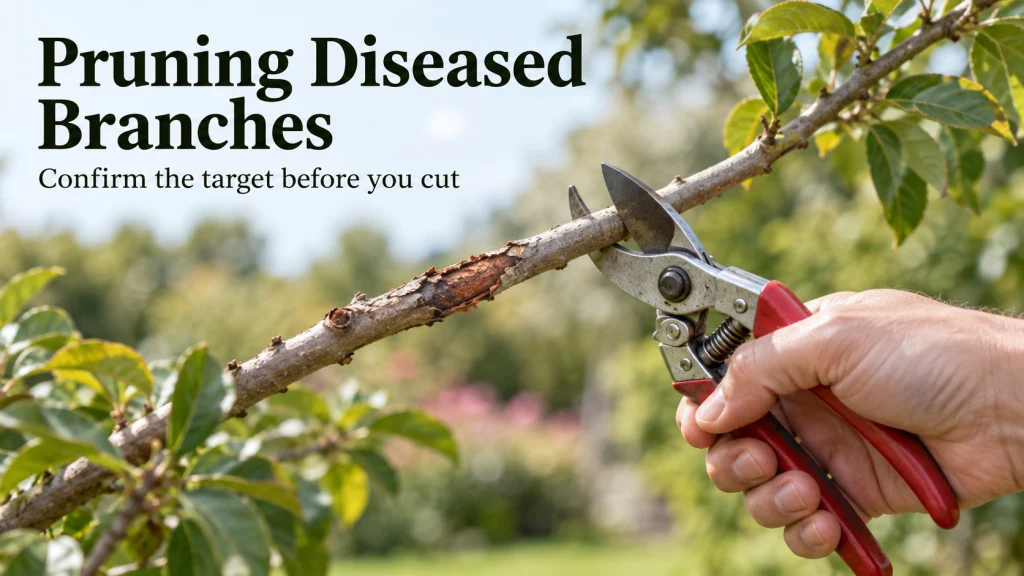
A suspicious branch is not yet a cut line
The urge to start pruning diseased branches often appears as soon as one twig turns black, a canker shows up, or a section of foliage dies back. Cutting immediately can feel cautious, but the visible symptom may not show where the actual problem begins or ends. A dead tip can follow drought stress, root injury, cold damage, mechanical damage, or a disease, and those causes do not call for the same response. I would treat the first inspection as a decision about what needs to be confirmed, not as permission to keep cutting until the wood looks different.
Start with the plant identity, the location of the damage, how quickly it appeared, and whether similar symptoms occur elsewhere on the same plant or on nearby plants. Then compare those observations with host-specific guidance from a university Extension service or another reliable horticultural source. If the evidence points to a named disease, check whether pruning is actually part of management and whether timing changes the recommendation. If the evidence still does not support a named problem, keep the task at inspection and diagnosis rather than guessing from one symptom.

This pack includes four lined field notebooks sized 3.5 x 5.5 inches. The notebooks are described as waterproof, tearproof, and weatherproof for field notes. They provide a compact place to record plant identity, symptom location, timing, and other observations before pruning decisions are made.
Check On AmazonIf you click this link and buy, we earn a commission at no additional cost to you.
Separate dead tissue, injury, and disease signs before pruning
Dead tissue tells you that a branch has failed, but it does not automatically tell you why. Look for a pattern before you interpret a symptom: a localized wound after rubbing or breakage is different from a sunken canker that expands along a stem, and both differ from scattered shoot dieback across the canopy. Also check the branch union, trunk, root flare, and surrounding soil conditions because a problem that appears in the canopy can begin elsewhere. When several unrelated plant species show stress at the same time, environmental or site factors deserve attention before an infectious cause is assumed.
A useful inspection separates what you can observe from what you are inferring. Note bark cracking, sunken areas, oozing, discolored wood, dead buds, wilted shoots, broken tissue, and the distribution of symptoms without naming a disease unless reliable guidance supports that identification. Photographs of the whole plant, the affected branch, the transition from healthy to abnormal tissue, and the surrounding site can make later comparison more useful. That record also reduces the temptation to prune repeatedly while the cause is still uncertain.
| Decision checkpoint | If yes | If no |
|---|---|---|
| Do the symptoms match a named problem in reliable host-specific guidance? | Check whether pruning is part of the recommended management. | Document the pattern and keep diagnosing before removing living tissue. |
| Does the guidance recommend pruning for that problem? | Check timing and look for a defined tissue boundary or cut-back method. | Use the recommended non-pruning response instead of cutting simply because the branch looks unhealthy. |
| Does the source give a defensible cut boundary or removal method? | Use that disease-specific instruction and normal pruning mechanics. | Do not invent a distance below the symptom. Get better diagnostic guidance before widening the cut. |
| Can the cut be made on a small branch from stable ground with the branch under control? | Make the supported cut and follow any sanitation or debris instructions tied to the disease. | Stop and escalate when the limb, access, electrical exposure, or structural condition moves beyond homeowner pruning. |
This sequence is a stop-or-proceed check, not a shortcut to diagnosis. Each yes moves the task one step closer to a defensible homeowner cut, while each no identifies information or safety conditions that need to be resolved first. It also prevents a common mistake: finding one suspicious symptom, assuming pruning is required, and then searching for a cut line after the decision has already been made. If the sequence stops at diagnosis, management choice, cut boundary, or safe access, preserve the evidence and solve that question before removing more tissue.

This set includes 100 plastic T-type plant tags sized 6 x 10 cm. The tags are designed as nursery and garden labels for marking individual plants. They can keep symptom observations tied to the correct plant while you compare patterns across the garden.
Check On AmazonIf you click this link and buy, we earn a commission at no additional cost to you.
Check whether the named disease is actually managed by pruning
Even after a disease is identified, pruning is not automatically the correct treatment. Some localized branch or twig infections can be reduced by removing affected tissue, while a systemic problem may be present beyond the visibly damaged shoot. Other diseases are influenced more by plant stress, moisture conditions, host susceptibility, or the timing of infection than by how aggressively a branch is cut. The management page for the specific disease should therefore answer the pruning question before the pruners come out.
Rose rosette disease is a useful example of the limit: University of Maryland Extension describes it as systemic and advises removal of infected roses rather than trying to prune out only the symptomatic growth. That does not make whole-plant removal the rule for every disease; it shows why the disease name changes the decision. The same logic applies when guidance says no control is needed or when pruning would create fresh wounds during a period of high infection risk. I would rather make one supported cut than turn a correct diagnosis into an unnecessary series of cuts.
Key point: The pruning question is not simply whether a branch looks sick. Confirm whether the named problem is managed by pruning, and follow the host-specific recommendation rather than carrying one disease rule over to another plant.
Once pruning is confirmed as useful, move from diagnosis to mechanics carefully. The next question is where the affected tissue ends and what kind of pruning cut the source actually describes. If the source does not provide a tissue boundary or cut-back instruction, do not invent one. A larger margin is not automatically safer when it sacrifices sound structure without evidence.

This three-pack contains 3 x 5 inch top-spiral notebooks with black covers and a universal page pattern. The notebooks use weatherproof paper for field notes in outdoor conditions. They provide a compact record for the disease name, source guidance, timing, and whether pruning is actually recommended.
Check On AmazonIf you click this link and buy, we earn a commission at no additional cost to you.
Follow source-specific cut-back guidance when a tissue boundary is given
General pruning guidance often says to remove diseased wood into healthy tissue, but that statement is not a universal measurement. The correct cut can depend on the disease, the host, the season, and whether the infection is limited to a twig, associated with a canker, or part of a larger systemic problem. Some disease pages give a defined distance or a recognizable boundary, while others use a different pruning strategy or advise against pruning during active spread. Use the instruction attached to the identified problem rather than borrowing a number from another disease.
When an entire branch is being removed back to its point of origin, preserve normal branch structure instead of making a flush cut against the trunk. University of Maryland Extension advises leaving the branch collar because that tissue helps the plant seal off the pruning wound. For ordinary pruning mechanics, branch selection, and cut placement beyond disease removal, see the site’s guide to pruning plants safely and deliberately. Disease management should decide whether the branch comes off, while sound pruning technique decides how an appropriate cut is made.
A source-specific cut also protects against the common mistake of chasing discoloration farther and farther into the plant without knowing what it represents. Wood color can vary naturally, and discoloration alone is not always a reliable marker of an active infection boundary. If the guidance tells you what healthy and affected tissue should look like, use that description and stop at the supported point. If it does not, diagnosis or professional evaluation is a better next step than widening the wound.

The FELCO F2 is a 9.25-inch bypass hand pruner with forged aluminum handles and a hardened steel cutting blade. Its listed cutting capacity is up to 1 inch, and its parts are replaceable. It fits small, controlled pruning tasks when disease-specific guidance has already defined where a cut should be made.
Check On AmazonIf you click this link and buy, we earn a commission at no additional cost to you.
Keep cuts on small accessible branches within homeowner reach
Disease does not make a hazardous pruning job safer. A small branch that can be reached from stable ground and controlled through the cut is very different from a heavy limb overhead, a branch that requires climbing, or work near electrical lines. Large or suspended limbs can shift, split, or fall unpredictably as their support changes. If the work moves beyond ordinary ground-level pruning, the safest decision is to stop before setup becomes improvised.
University of Maryland Extension specifically recommends professional help for large-tree pruning that requires climbing or work near power lines. I would apply the same boundary to split trunks, hanging branches, major storm damage, and limbs whose weight or landing path cannot be controlled from the ground. Disease management can wait for the right person and equipment when the branch itself presents a physical hazard. The goal is to remove a plant problem without creating an injury risk for the person doing the work.
Keep the larger garden context in view too. A modest diseased twig on an otherwise stable shrub may be an ordinary maintenance task, while a trunk canker on a mature tree can change both the diagnosis and the risk calculation. The site’s broader garden care guidance can help place pruning within the rest of plant maintenance rather than treating cutting as the answer to every decline symptom. When access, branch weight, or structural stability is uncertain, escalation is part of good maintenance, not a failure to finish the job yourself.

This 28-inch bypass lopper is rated for branches up to 1.5 inches thick. Its hardened precision-ground blade has a low-friction coating designed for green growth. It suits controlled ground-level pruning when the branch can be reached and managed safely.
Check On AmazonIf you click this link and buy, we earn a commission at no additional cost to you.
Sanitize tools when the disease guidance calls for it
Tool sanitation matters most when a pathogen can be moved on contaminated blades and the disease guidance specifically calls for cleaning or disinfection. Do not turn that into one universal ritual for every pruning cut, because sanitation recommendations can vary with the pathogen and the material used. First remove visible sap, soil, and plant debris, since a dirty blade is harder to disinfect effectively. Then follow the disease source and the disinfectant label rather than improvising a concentration or contact time.
University Extension guidance commonly distinguishes cleaning from disinfection and notes that tools used on infected plants can carry pathogens to healthy material. Some sources recommend disinfection between cuts for particular diseases, while others emphasize cleaning before moving to another plant or after finishing infected material. That difference is exactly why a generic “dip after every cut” rule is too broad. The better checkpoint is to identify the disease, read the sanitation instruction, clean the blade, and then use the specified method safely.
Sanitation checkpoint: Before moving from suspect tissue to healthy tissue, confirm whether the disease guidance calls for tool disinfection, remove visible debris, follow the disinfectant label, and avoid carrying contaminated sap or plant material to the next cut.
Sanitation also extends beyond the blade. Gloves, ties, collection containers, and work surfaces can pick up suspect plant material during cleanup, especially when infected debris is wet or sticky. Keep those items from carrying suspect material directly to healthy plants, and clean reusable equipment according to the guidance for the identified problem. Keep the disease-specific pruning instruction in charge, and use sanitation to support it rather than as a substitute for correct diagnosis.

This set includes one large brush and one small brush with a wiper blade. Both brushes use durable nylon bristles and soft non-slip grips for focused cleaning. They are useful for removing visible sap, soil, and plant debris before you apply any disease-specific disinfection method.
Check On AmazonIf you click this link and buy, we earn a commission at no additional cost to you.
Keep suspect debris from becoming a spread pathway
Once affected tissue is removed, do not leave it tangled in healthy foliage or scattered where it can be dragged through the garden. Place cut material in a controlled collection spot as you work so the path from the plant to cleanup stays simple. Avoid shaking, shredding, or repeatedly handling suspect branches unless the disease guidance says that practice is appropriate. The less unnecessary contact the debris has with healthy plants, tools, and work surfaces, the easier it is to keep the pruning task contained.
Disposal should also follow the recommendation for the identified problem rather than a blanket rule. Some infected material is best removed from the site, while other plant debris may be handled differently depending on the pathogen, local waste rules, and the composting system. Do not assume a home compost pile will reliably neutralize every plant pathogen, and do not burn material unless local rules allow it and the disease guidance supports that approach. When the source gives a specific disposal instruction, that instruction should override habit or convenience.
Debris handling: Keep suspect cuttings separate from healthy prunings until you know the recommended disposal method. Do not use affected branches for propagation, mulch, or casual reuse unless reliable guidance for that specific problem says it is safe.
After cleanup, inspect the work area for small cuttings, fallen leaves, and contaminated material that may have been missed. Clean tools and reusable containers as directed before they return to general garden use. Then note what was removed and where, especially if the disease may recur or progress beyond the original branch. That record becomes useful evidence at the next inspection.
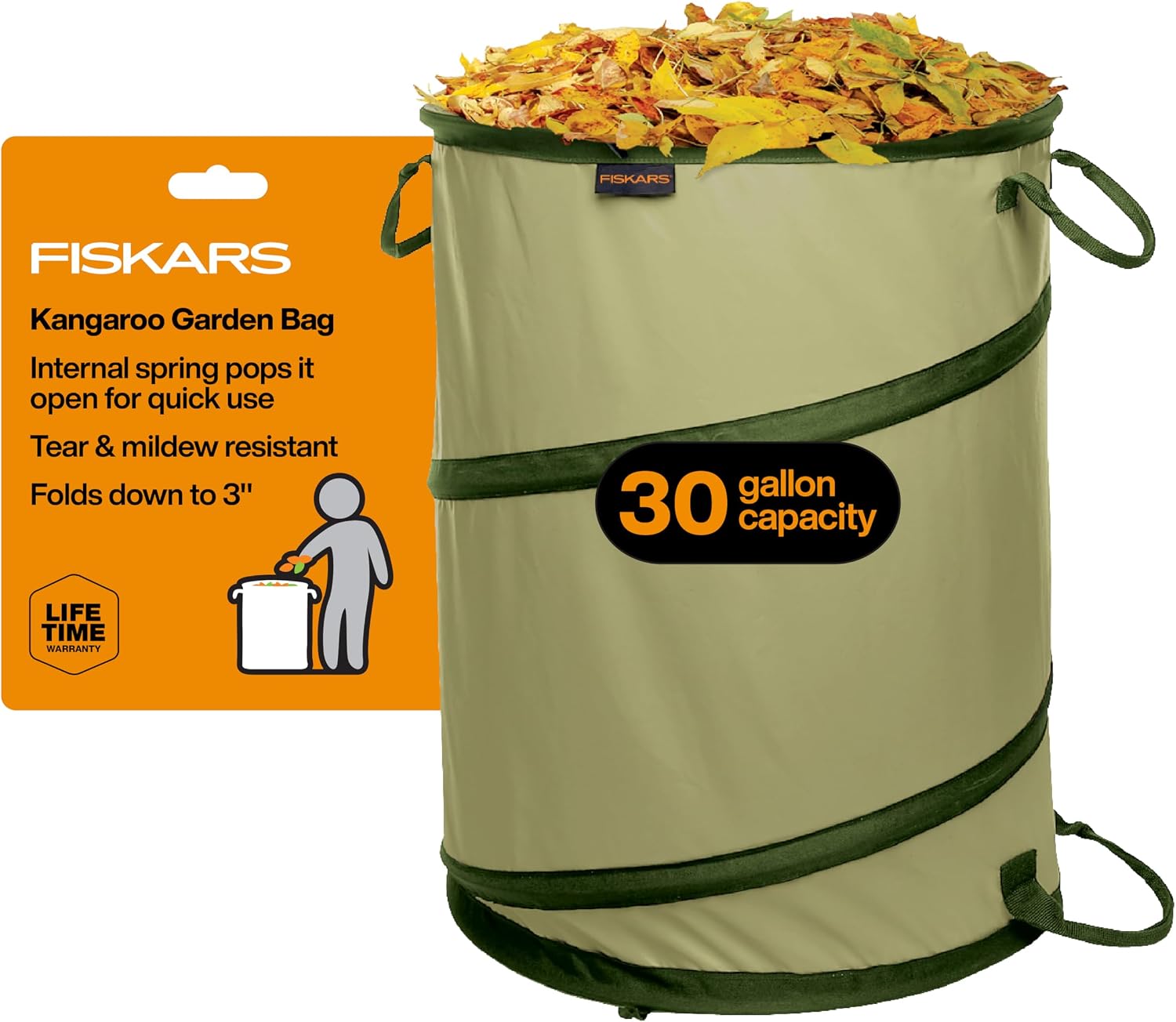
This 30-gallon garden bag springs open for collecting yard waste, branches, and weeds. Its vinyl-coated polyester body is described as tear and mildew resistant, and it folds flat to about 3 inches for storage. It gives suspect cuttings one controlled collection point while you move them through cleanup.
Check On AmazonIf you click this link and buy, we earn a commission at no additional cost to you.
Document recurring dieback when the cause is uncertain
Repeated dieback is a signal to collect better information rather than simply repeat the same pruning response. Mark which side of the plant is affected, whether symptoms begin at shoot tips or farther down the branch, and whether new growth fails in the same area after pruning. Also note irrigation changes, construction, soil disturbance, severe weather, herbicide exposure, and other site events that could affect roots or vascular tissue. Those details can separate a recurring plant-health problem from one isolated dead branch.
Photographs are most useful when they show scale and progression instead of only a close view of damaged bark. Take one image of the whole plant, one of the affected branch in context, and one closer image of the symptom boundary before removing tissue. If you prune, record the location of the cut and keep the images so you can compare future growth. A pattern that returns after apparently successful pruning deserves more diagnostic attention before additional healthy wood is sacrificed.
A local Extension office, plant diagnostic clinic, or qualified plant professional may ask for the plant species, symptom history, site conditions, and clear photos before recommending a next step. Providing that information is more useful than reporting only that the branch “looked diseased.” If a sample is requested, follow that service’s submission instructions because the useful plant part and packaging can vary by problem. Good documentation turns uncertainty into something that can be evaluated instead of repeatedly cut away.

This set includes 120 plastic nursery plant tags and a permanent marking pen. The labels are marketed as waterproof outdoor garden markers for identifying plants. They can be used to mark plants or dates while you track where recurring dieback appears over time.
Check On AmazonIf you click this link and buy, we earn a commission at no additional cost to you.
Escalate systemic disease, trunk cankers, or hazardous limbs
Stop treating the problem as a simple pruning task when symptoms suggest that the issue extends beyond one accessible branch. Trunk cankers, widespread dieback, repeated failure in several major limbs, or a confirmed systemic disease can mean that branch removal will not address the underlying problem. The same is true when decay, cracks, weak unions, or hanging wood raise concerns about structural stability. At that point, diagnosis and risk evaluation matter more than making another cut.
For a small shrub or young plant, escalation may mean sending photos or a sample to an Extension diagnostic service before deciding whether the plant should stay. For a mature tree, especially one near people, buildings, driveways, or utilities, a qualified arborist can assess both plant health and branch risk in ways that ordinary homeowner pruning cannot. Never climb into a questionable tree, work from an unstable ladder, or attempt cuts near electrical conductors. The boundary is simple: if the diagnosis is uncertain or the branch cannot be controlled safely from stable ground, stop the pruning job.
This is also where “remove more” can become the wrong instinct. A larger cut does not compensate for an uncertain diagnosis, and removing healthy structure can create new wounds while reducing the plant’s canopy. If the disease source says pruning will not eliminate the problem, follow that evidence rather than the appearance of one branch. Good pruning decisions include knowing when pruning is no longer the decision that needs to be made.
Final thoughts: confirm before you cut
When a branch looks diseased, start by identifying what is abnormal rather than deciding how much wood to remove. Confirm whether pruning is part of management for the named problem, then follow disease-specific guidance for the cut boundary, sanitation, and debris handling. Keep the work to small, controllable branches that can be reached safely from stable ground. A supported pruning decision should answer both why the branch is being removed and why that particular cut is appropriate.
If the diagnosis is uncertain, the cut boundary is not defined, or the symptoms keep returning, more pruning is not automatically a better response. Trunk involvement, systemic disease, hanging limbs, major structural damage, and work near electrical lines all move the problem beyond a routine homeowner cut. Preserve clear photos and notes when the pattern is unresolved so the next diagnosis is based on evidence rather than memory. The useful stopping point is the one where further cutting would require you to guess about either plant health or personal safety.

These bypass pruning shears have a 5/8-inch cut capacity for stems and small green branches. Precision-ground steel blades use a low-friction coating and sap groove to reduce sticking, while a non-slip grip and safety lock support control. They fit the article's final boundary of making only supported cuts on small, controllable growth.
Check On AmazonIf you click this link and buy, we earn a commission at no additional cost to you.
FAQs
✂️ How far below a diseased branch should I cut?
There is no single distance that fits every disease and host plant. Use the cut-back guidance for the identified problem, and do not invent a wider margin when the source does not provide one.
🦠 Should I disinfect pruning tools after every cut?
Only use an every-cut routine when reliable guidance for the identified disease calls for it. Clean visible debris first, then follow the disinfectant label and the disease-specific sanitation instruction.
🌿 Can I prune a branch if I am not sure it is diseased?
If the branch is clearly dead or broken, ordinary pruning guidance may still support removal. If the reason for dieback is uncertain and living tissue is involved, document the symptoms and confirm the problem before expanding the cut.
🧹 Can diseased branches go into a home compost pile?
Do not assume home composting is suitable for every infected plant. Follow disposal guidance for the identified disease and local waste rules, especially when the pathogen can persist in plant debris.
🌳 When should I call an arborist instead of pruning myself?
Get professional help when work involves climbing, large or hanging limbs, structural damage, trunk cankers on mature trees, or branches near electrical lines. An uncertain diagnosis on a high-value or mature tree is also a good reason to seek an evaluation before making major cuts.
References and sources
- University of Maryland Extension plant problem guidance: Supports symptom-first diagnosis, consideration of environmental causes, monitoring, and choosing management only after the problem is identified.
- University of Maryland Extension pruning basics: Supports planned cuts, removal of diseased wood into healthy tissue, and preserving sound pruning structure.
- University of Maryland Extension tree pruning guidance: Supports branch-collar cuts and the boundary against climbing or pruning near power lines.
- University of Minnesota Extension tool sanitation guidance: Supports cleaning visible debris and using disease-appropriate tool disinfection practices.
- University of Maryland Extension rose rosette guidance: Supports the example of a systemic disease that cannot be managed by removing only symptomatic shoots.