Pruning timing works best when the reason for the cut comes before the season. Dead or broken small wood may need prompt attention, structural pruning often fits a dormant window, and spring-flowering shrubs may lose next season’s display if they are cut at the wrong point in their bloom cycle. Disease pressure, local pest activity, plant species, recent stress, and the size or location of the branch can all change the answer. The goal is to choose a safe pruning window that fits the plant and the job rather than forcing every tree and shrub onto one calendar.
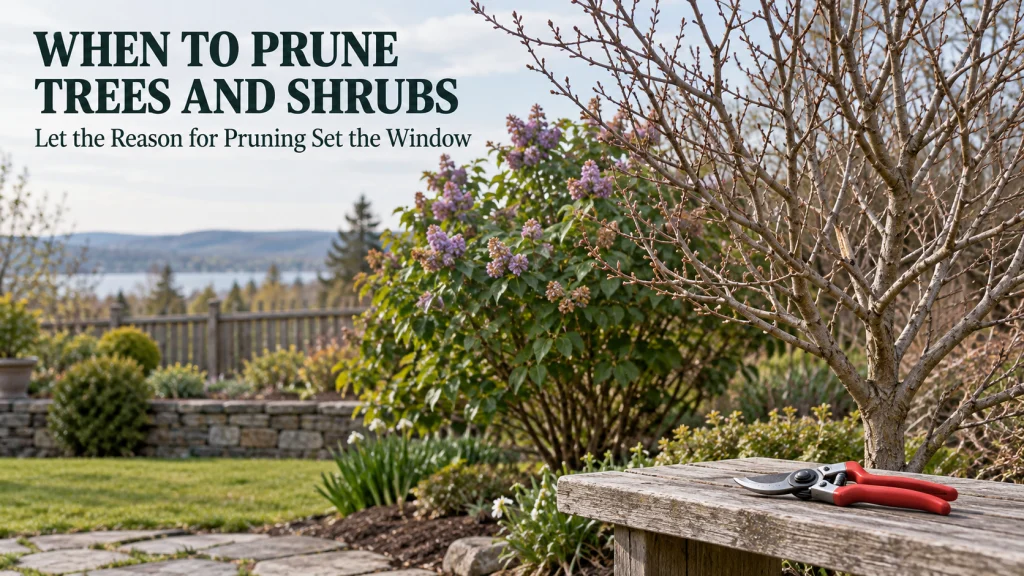
Pruning timing starts with the job
When to prune trees and shrubs is not a calendar question first. Start by asking what the cut is meant to accomplish: remove damaged wood, improve structure, preserve flowers, reduce a shrub that is pushing into a walkway, or address a branch with a suspected disease problem. Those jobs do not automatically share the same pruning time. A useful pruning decision begins with purpose, then checks plant biology, local conditions, and whether the work is still within ordinary homeowner scope.
That approach also prevents a common mistake: treating dormancy as a universal permission slip. Dormant pruning can make branch structure easier to see, but a spring-flowering shrub may already be carrying flower buds on older stems, while a disease-sensitive species may have regional timing guidance that matters more than convenience. For a wider look at how pruning decisions fit together, use the practical guide to pruning plants. If the question is part of broader seasonal upkeep rather than pruning alone, the garden care guide helps place pruning beside the other maintenance decisions that affect plant recovery.
| Reason for pruning | What to inspect first | Usual timing logic | What can change the decision |
|---|---|---|---|
| Dead or broken small wood | Whether the branch is clearly dead, broken, loose, or creating an immediate small-scale obstruction | Prompt removal can be appropriate when the cut is safe and the wood is clearly identified | Branch position, instability, electrical hazards, and disease-specific guidance |
| Structural correction | Branch spacing, rubbing limbs, competing stems, and the plant’s normal form | A dormant window often makes structure easier to evaluate | Species response, plant stress, regional disease guidance, and the amount of live growth being removed |
| Preserve spring flowers | Whether flower buds are carried on growth from the previous season | Prune after flowering when that species is normally maintained this way | Renovation needs, plant health, exact species, and cultivar |
| Manage size | Whether the plant is only slightly out of bounds or fundamentally too large for the site | Use restrained maintenance cuts in a suitable growth window | Repeated regrowth, flowering habit, heat or drought stress, and long-term site fit |
| Summer-flowering shrub maintenance | Whether flowers form on the current season’s new growth | Prune before active growth begins when species guidance supports that pattern | Exact species, winter injury, flowering habit, and regional conditions |
| Evergreen shaping or correction | Growth habit, location of live buds, and whether the plant actually needs pruning | Use species-specific timing and keep cuts within live, responsive growth | Pine versus other conifers, shrub versus tree form, winter injury, and local climate |
| Suspected disease problem | Symptoms, affected tissue, weather, species, and local disease guidance | Follow the disease-specific pruning window rather than a generic seasonal rule | Pathogen biology, insect vectors, sanitation guidance, and local Extension recommendations |
The matrix is a starting filter, not a national pruning calendar. If two reasons apply at once, use the one with the stronger biological or safety constraint. A flowering shrub with a broken branch, for example, is not the same decision as a healthy flowering shrub that only needs shaping. The next step is to separate urgent small cleanup from work that can wait for a more favorable window.

Steven Bradley’s Pruning Simplified is a 192-page Timber Press guide covering 50 popular trees and shrubs. It explains pruning tools, timing, and step-by-step plant-specific techniques. It is useful when the pruning job needs to be matched to the plant instead of a one-season rule.
Check On AmazonIf you click this link and buy, we earn a commission at no additional cost to you.
Remove dead or hazardous small wood when prompt action is appropriate
Clearly dead, broken, or hanging small branches do not always deserve to sit on the plant until a preferred pruning season arrives. Removing a modest branch that is fully within reach and easy to control can prevent rubbing, repeated tearing, or interference with a walkway. The important distinction is between a small maintenance cut and a branch whose weight, height, tension, or location creates a serious hazard. Timing flexibility does not make risky tree work safe for a homeowner.
Look at the whole branch before cutting rather than reacting to one discolored leaf or one bare twig. A branch can appear weak because of shade, recent weather stress, physical damage, or a disease issue that needs identification before more tissue is removed. If the plant was recently hit by cold, first assess what is actually dead rather than cutting every browned tip immediately; the guide to evaluating frost damage to plants explains that distinction. When the wood is clearly dead or physically broken and the cut is small and controllable, prompt cleanup can make sense without waiting for a decorative pruning window.

FELCO F2 is a 9.25-inch bypass hand pruner with forged aluminum handles and replaceable parts. Its hardened steel blade is designed for clean cuts on branches up to 1 inch thick. It fits small, controllable pruning jobs where a hand tool is more appropriate than larger cutting equipment.
Check On AmazonIf you click this link and buy, we earn a commission at no additional cost to you.
Use dormancy for structural visibility where the plant and region support it
Dormancy is often useful for structural pruning because deciduous branches are easier to read without a full canopy hiding their relationships. Crossing limbs, competing stems, narrow attachments, and crowded interior growth are easier to compare when foliage is out of the way. This makes the dormant period a practical time to make selective structural decisions on many woody plants. It is still a conditional window, not a reason to remove large amounts of live wood simply because the branches are visible.
Before making a structural cut, check whether the plant has been stressed by drought, transplanting, storm injury, or another recent problem. Also check whether the species has a disease or pest issue that changes the normal dormant pruning rule in your region. A tree that is otherwise healthy may tolerate selective structural pruning very differently from a stressed tree that needs its remaining leaf area for recovery. The best dormant pruning plan is usually restrained, purposeful, and focused on a specific structural problem rather than general thinning for the sake of activity.
- Identify the exact branch problem before choosing the cut.
- Confirm that the species does not have a more specific regional timing restriction.
- Limit the job to branches that can be controlled safely from the ground.
- Postpone optional pruning when the plant is visibly stressed and the cut is not necessary for safety.
Those checks keep dormancy in its proper role: a useful visibility and timing advantage for many plants, not a blanket instruction. If the main goal is flowering rather than structure, bloom biology becomes the more important clock. That is especially true for shrubs that form flower buds before the dormant season begins. The distinction helps prevent a structurally convenient cut from becoming an unnecessary loss of flowers.

Fiskars PowerGear2 Bypass Loppers are 25 inches long and rated for branches up to 1.75 inches in diameter. The bypass blade and long handles suit selective branch removal from a stable ground position. They are useful for structural pruning only when the branch remains small enough to control safely.
Check On AmazonIf you click this link and buy, we earn a commission at no additional cost to you.
Protect spring-flowering shrubs from late cuts that remove flower buds
Many familiar spring-flowering shrubs carry their next display on growth produced during the previous growing season. If those stems are shortened during dormancy, the gardener may be cutting away flower buds that were already in place. For healthy shrubs that only need routine shaping or thinning, pruning after flowering often protects the bloom display while leaving time for new growth and future bud development. This is why bloom timing can override the convenience of a leafless shrub.
The rule still needs a plant-specific check because flowering habit is not identical across every shrub or every cultivar. Renovation pruning is also a different job from light maintenance, and an overgrown shrub may justify sacrificing flowers to restore a workable framework. The decision should be explicit: preserve the next flower display, or prioritize structural renewal. Once that goal is clear, the pruning window becomes much easier to defend.
Key point: If a shrub flowers early in the growing season, do not assume dormant pruning is harmless to bloom. Confirm whether that plant flowers on older wood, then use species-specific guidance before making a substantial cut.
That handoff matters most with plants people often prune by appearance alone. Lilacs, forsythias, azaleas, and some hydrangeas can look ready for a winter cleanup while already carrying the structures that support the next bloom. A quick species check can save a full season of disappointment. If you cannot identify the plant or its flowering habit, lighter pruning or waiting for identification is usually a better choice than aggressive shaping.

Fiskars 6-Inch Non-Stick Pruning Snips use steel blades, an easy-action spring, and SoftGrip handles. The listing positions them for flower buds, weeds, and small plants rather than heavy woody branches. They fit light, selective cleanup around flowering growth when a full-size lopper or hedge shear would be excessive.
Check On AmazonIf you click this link and buy, we earn a commission at no additional cost to you.
Separate summer size control from dormant structural work
Summer-flowering shrubs add another reason to separate the pruning job from the season name. Many shrubs that bloom on the current season’s new growth can be pruned before active growth begins because the flowers develop on growth produced afterward. That pattern differs from spring-flowering shrubs that may already be carrying flower buds on older stems. Confirm the species and flowering habit first, especially when winter injury or regional conditions may change how much live wood should be removed.
Size control and structural pruning are not the same job, even when both involve removing live stems. A modest trim during active growth may help keep some shrubs within a walkway or maintain a form that is already close to the right size. Structural pruning asks a different question about branch arrangement, long-term framework, and future growth. Mixing those goals often leads to repeated cutting without solving why the plant keeps becoming too large or crowded.
Repeated hard trimming can also stimulate vigorous regrowth in many woody plants, which turns a size problem into a maintenance cycle. If a shrub must be cut back heavily again and again just to fit the site, the underlying issue may be mature plant size rather than pruning timing. In that situation, pruning can manage the conflict temporarily but does not change the plant’s genetic growth habit. A better long-term decision may be to accept a larger form, redesign the surrounding clearance, or eventually replace the plant with one that fits the available space.

Fiskars PowerGear2 Hedge Shears use 10-inch blades and a 23-inch overall tool length for manual hedge and shrub shaping. The PowerGear mechanism is designed to increase cutting leverage, while SoftGrip handles and shock-absorbing bumpers support controlled repetitive trimming. They fit modest size-control work better than treating every shrub as a structural pruning job.
Check On AmazonIf you click this link and buy, we earn a commission at no additional cost to you.
Delay when disease guidance or local pest biology makes timing important
Some pruning windows are shaped by disease organisms or insects that can use fresh wounds, and those risks are not identical across the country. Oaks are a good example because regional guidance may restrict pruning during periods when insects that can spread oak wilt are active. Other woody plants can also have disease-related timing recommendations that depend on local climate, weather, and pathogen activity. A national seasonal rule should never override current local guidance for a known disease risk.
If you suspect disease, identify the problem before turning pruning into the treatment. Symptoms such as dieback, discoloration, cankers, wilt, or dead tips can have more than one cause, and cutting without a diagnosis can remove useful tissue or create new wounds at a poor time. The guide to pruning diseased branches focuses on that narrower decision, including when sanitation and disease-specific instructions matter. When authoritative local guidance says to wait, waiting is part of the pruning method rather than a failure to maintain the plant.

FELCO 981 Plant Resin Remover is a hand-pump cleaner for resin residue on FELCO cutting-tool blades and counter-blades. Its formula is biodegradable and free from PTFE, silicone, and VOC solvents. Use it for residue removal, then follow any separate sanitation method required by local disease guidance.
Check On AmazonIf you click this link and buy, we earn a commission at no additional cost to you.
Check species-specific guidance before pruning roses, hydrangeas, lilacs, forsythias, or azaleas
General timing rules become less reliable when a plant group contains species or cultivars with different flowering habits. Hydrangeas are a familiar example because some types flower mainly on older stems, others on new growth, and some can do both. Roses also vary by type and growth habit, while lilacs, forsythias, and azaleas are commonly managed around their flowering cycle. The plant name is therefore part of the pruning decision, not a detail to look up after the cuts are made.
Before substantial pruning, identify the plant as narrowly as you reasonably can and then check guidance written for that species or type. If the label is gone, use flower timing, leaf arrangement, mature form, and reliable identification resources rather than guessing from one feature. Do not borrow the pruning schedule of a nearby shrub just because both flower at roughly the same time. When identification remains uncertain, small cleanup cuts are easier to justify than a major reshaping that may remove flowers or reduce recovery capacity.
Choose a pruning season first, then make every shrub in the yard fit that schedule.
Identify the plant and the reason for pruning first, then match the cut to its flowering habit, condition, and local guidance.
Evergreens also resist a single timing rule because their growth habits differ. Pines make a distinct flush of new tip growth and should not be cut back casually into older bare wood, while spruce, fir, juniper, yew, arborvitae, and other conifers respond according to different bud and shoot patterns. Many established evergreens need little pruning beyond removing dead, broken, or poorly placed growth, so the first question is often whether pruning is needed at all. When shaping is justified, match the cut to the exact evergreen type and keep it within live growth that can respond predictably.
The same logic applies when two woody plants look similar but respond differently to old wood removal. Species-specific guidance matters most when flowering, disease risk, bud placement, or regeneration behavior changes the outcome. A quick identification check keeps a broad seasonal rule from becoming a plant-specific mistake. That is more useful than adding another universal pruning date to the calendar.

David Allen Sibley’s Tree Identification Flashcards cover 100 North American trees with full-color identification details. Cards show features such as bark, leaves, twigs, buds, fruit, and flowers, along with common and Latin names. They can help narrow tree identity before the gardener checks species-specific pruning guidance.
Check On AmazonIf you click this link and buy, we earn a commission at no additional cost to you.
Stop when branch size or location exceeds homeowner work
Pruning stops being ordinary garden maintenance when a branch cannot be safely controlled from the ground or when the work involves climbing, unstable limbs, significant overhead weight, split trunks, or contact risk around electrical lines. A branch can look manageable from below and still move unpredictably once its support is cut. The seasonal window does not reduce those mechanical hazards. If the work depends on rigging, climbing, aerial equipment, or specialized removal techniques, the correct timing decision is to hand the job to a qualified arborist or appropriate utility professional.
The same boundary applies after storms, when damaged wood may be under tension or partly supported by other branches. Do not treat an urgent looking situation as permission to work beneath unstable material. Keep people away from the area, assess from a safe position, and use professional help when the branch or tree cannot be controlled predictably. Homeowner pruning should stay with small, accessible work where the branch path, footing, and cutting position remain straightforward.
Warning: Do not prune branches near power lines, climb into a tree for pruning, work beneath hanging or split limbs, or attempt to control large unstable wood. Those conditions are outside routine homeowner pruning and should be handled by a qualified professional.
That stop boundary is part of good pruning judgment, not an exception to it. The best time to prune a branch is irrelevant if the branch cannot be reached and controlled safely. Once the job is clearly within homeowner scope, the reason for pruning, plant biology, and local guidance can determine the window. If any of those checks remain uncertain, postponing an optional cut is often the more conservative choice.

3M Virtua CCS Safety Glasses have a clear anti-fog lens, removable foam gasket, and ANSI Z87-rated eye protection. The eyewear adds basic eye protection for ordinary ground-level pruning tasks. Protective glasses do not make climbing, power-line work, hanging limbs, or unstable branches appropriate for a homeowner.
Check On AmazonIf you click this link and buy, we earn a commission at no additional cost to you.
Final Thoughts: let the reason for the cut choose the window
The best time to prune trees and shrubs depends on what you are trying to change. Prompt cleanup can suit clearly dead or broken small wood, dormancy can improve structural visibility, and flowering habit may shift the preferred window entirely. Disease risk, plant identity, recent stress, and local conditions can narrow those choices further. If the branch cannot be controlled safely from the ground, timing is no longer the main decision and the work should move to a qualified professional.
Before cutting, name the job, identify the plant, and check whether flowering habit or local disease guidance changes the timing. Keep optional pruning light when the plant is stressed or identification is uncertain. Stop when branch weight, height, instability, climbing, or electrical hazards move the work beyond safe homeowner maintenance. That sequence keeps pruning practical without pretending one schedule fits every tree and shrub.
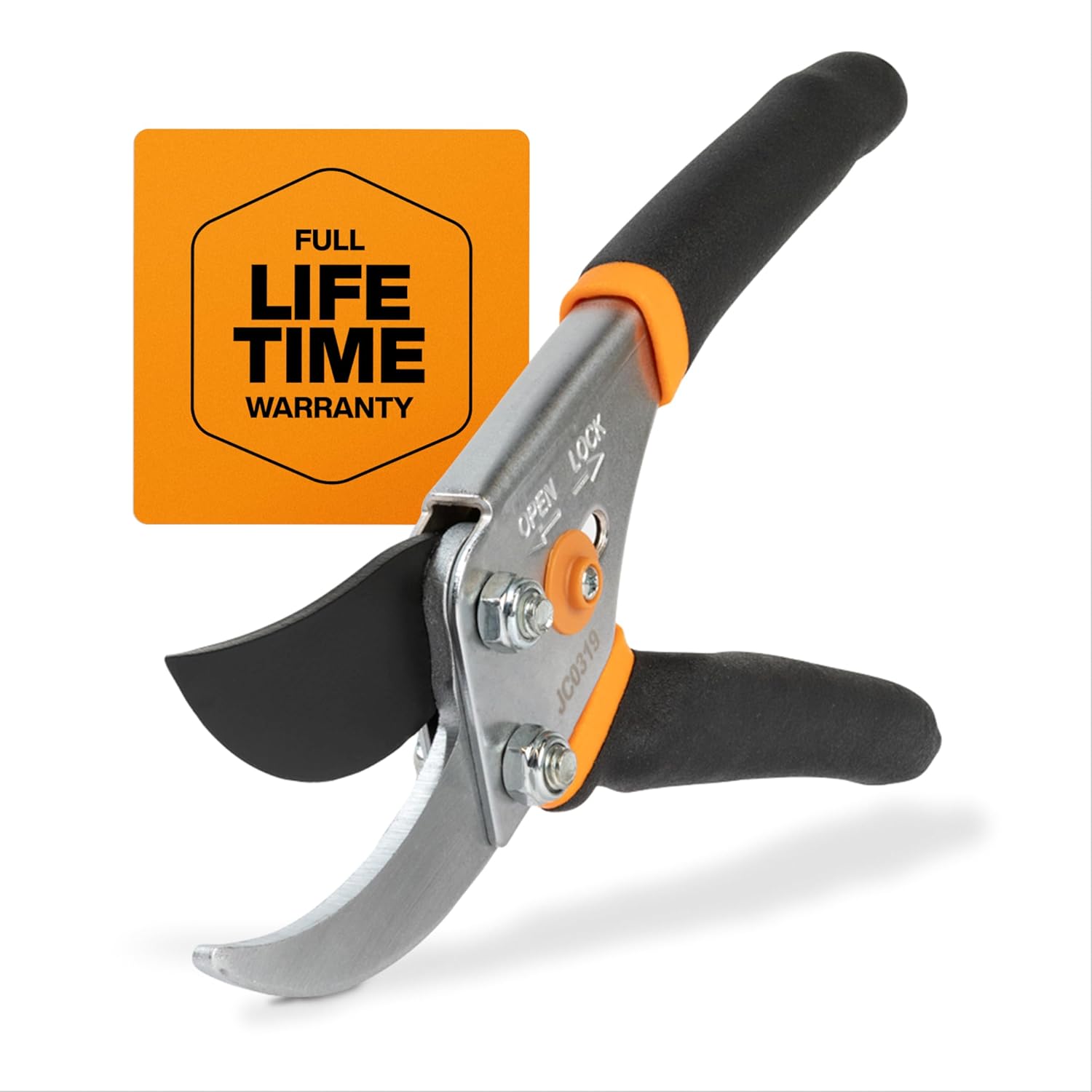
Fiskars Bypass Pruning Shears are rated for stems and small branches up to 5/8 inch. The steel bypass blades use a low-friction coating and a sap groove to reduce sticking during routine pruning. They suit the article’s final emphasis on small, accessible homeowner cuts rather than large or unstable tree work.
Check On AmazonIf you click this link and buy, we earn a commission at no additional cost to you.
FAQs
✂️ Can I prune dead branches whenever I notice them?
Clearly dead or broken small branches can often be removed when they are safe to reach and control. If disease is suspected, check disease-specific timing first because some problems change when pruning should occur.
🌸 Why did my shrub stop flowering after I pruned it?
You may have removed flower buds that formed on older stems before the plant bloomed. Identify the shrub and check whether it flowers on old wood, new growth, or both before the next substantial pruning.
🌳 Is dormancy always the best time to prune a tree?
No. Dormancy is useful for many structural pruning jobs, but species, disease risk, flowering habit, plant stress, and regional guidance can change the preferred window.
🍃 Can summer pruning keep a shrub permanently smaller?
Pruning can manage size, but it does not change the mature growth habit of a plant. If heavy trimming is repeatedly needed just to keep a shrub inside its space, the long-term problem may be plant size and site fit rather than pruning technique.
🪻 Should I prune lilacs and forsythias while they are dormant?
Routine pruning is usually timed around flowering because these shrubs commonly bloom on growth from the previous season. If the shrub needs major renewal rather than light maintenance, use species-specific guidance and accept that flower display may be reduced.
🦠 What should I do if I think a branch is diseased?
Identify the likely problem before treating pruning as the solution. Check local Extension guidance for disease-specific timing, sanitation, and disposal recommendations, especially when fresh wounds can increase risk.
⚠️ When should I call an arborist instead of pruning myself?
Use professional help when the work involves climbing, large or unstable limbs, split trunks, hanging branches, overhead hazards, or power lines. Homeowner pruning should remain limited to small, accessible branches that can be controlled safely from the ground.
References and Sources
- Iowa State University Extension pruning timing guidance: Supports the distinction between dormant pruning, spring-flowering shrubs, summer-flowering shrubs, and timing that varies by plant condition.
- University of Maryland Extension tree pruning guidance: Supports homeowner tree pruning boundaries, removal of damaged wood, structural considerations, and the need to avoid hazardous tree work.
- University of Maryland Extension shrub pruning guidance: Supports flowering habit based timing, renewal pruning distinctions, and the limits of repeated pruning as a solution for an oversized shrub.
- University of Maryland Extension hydrangea pruning guidance: Supports the need to identify hydrangea type because flower buds may develop on old wood, new wood, or both.
- University of Minnesota Extension pruning guidance: Supports dormant season pruning principles and the need to follow disease-sensitive timing for certain species.