Vigorous upright shoots do not all mean the same thing, and removing every one on sight can hide the reason they appeared. The useful first step is to trace each shoot to a branch, trunk, root, basal crown, or graft area, then look at the plant’s recent stress and structure before deciding what to cut. Small, clearly unwanted shoots are usually simpler to manage than established growth, while a well-placed shoot can sometimes serve a future replacement role. Large, elevated, unstable, storm-damaged, or utility-line tree work is outside ordinary homeowner pruning.
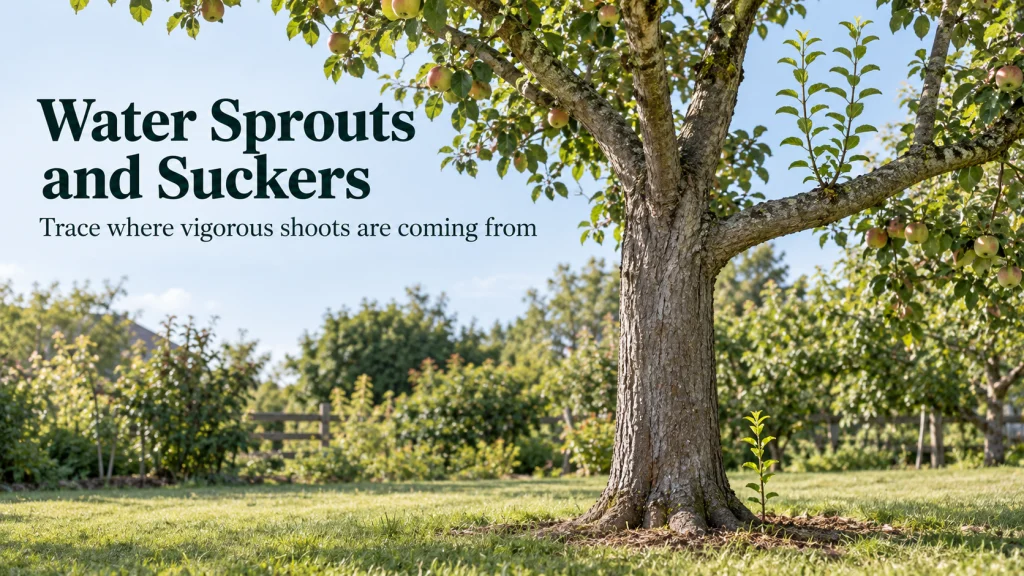
Start with the shoot that looks most urgent
Water sprouts and suckers can look like obvious pruning targets because they often grow faster and straighter than the surrounding branches. The fastest shoot on a stressed tree, however, may also be the clearest clue that the plant has been responding to pruning, injury, root disturbance, or another change. I would start by tracing where that shoot begins before deciding whether its vigor is the problem. That simple check keeps a pruning decision from turning into automatic cleanup.
This article stays with ordinary homeowner decisions about vigorous shoots on woody plants, including when to remove, keep, or investigate them. For the broader sequence of choosing cuts and preserving plant structure, use the site’s practical pruning guidance for garden plants. If the issue is part of a wider maintenance problem rather than one pruning decision, the broader garden care framework provides the next level of context. The goal here is narrower: identify origin first, then make the smallest justified decision.
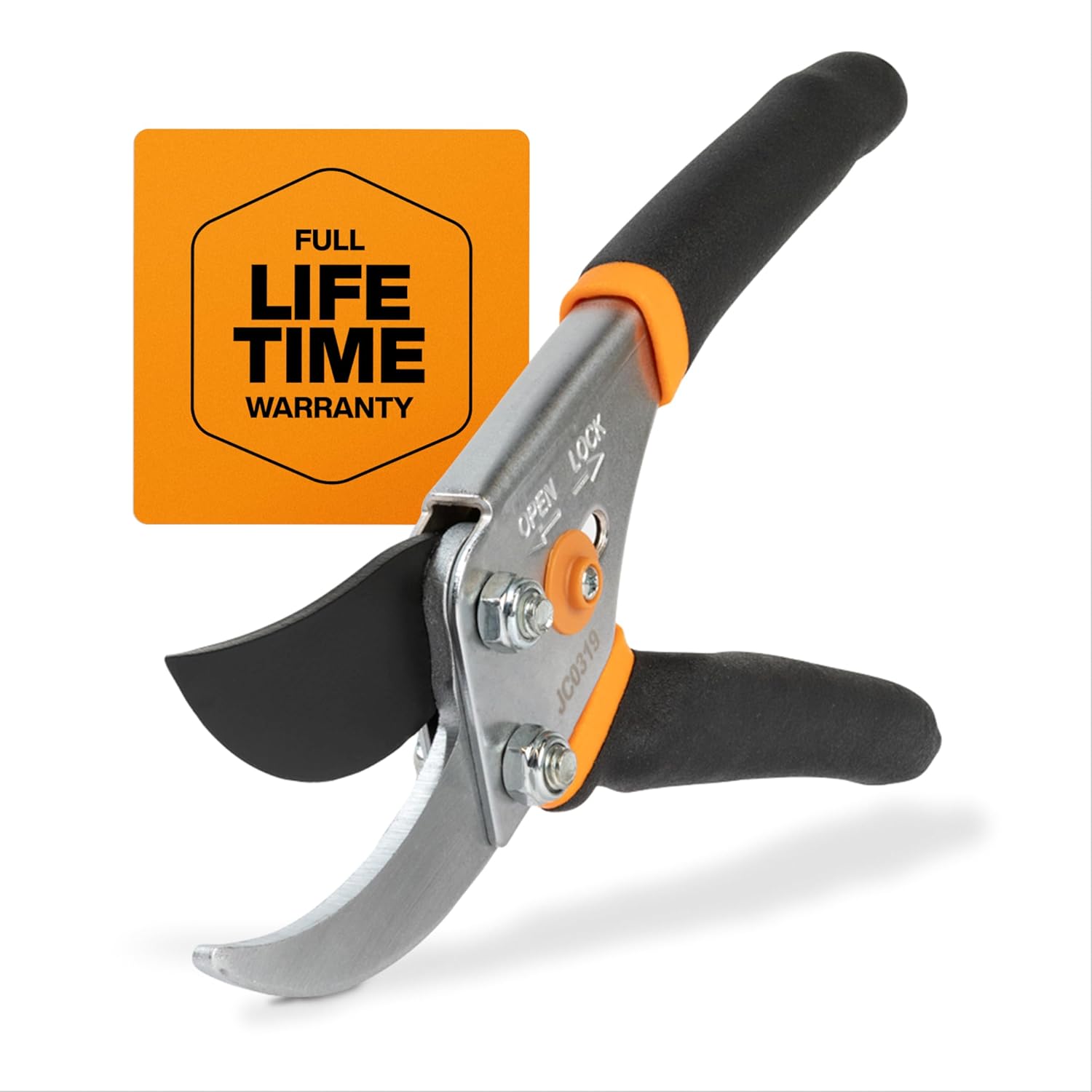
These bypass pruning shears have a 5/8-inch cut capacity for stems and small branches. A low-friction steel blade and sap groove are designed to reduce sticking while cutting. The non-slip grip gives a compact hand tool for controlled ground-level pruning of clearly unwanted shoots.
Check On AmazonIf you click this link and buy, we earn a commission at no additional cost to you.
Define water sprouts by where they arise
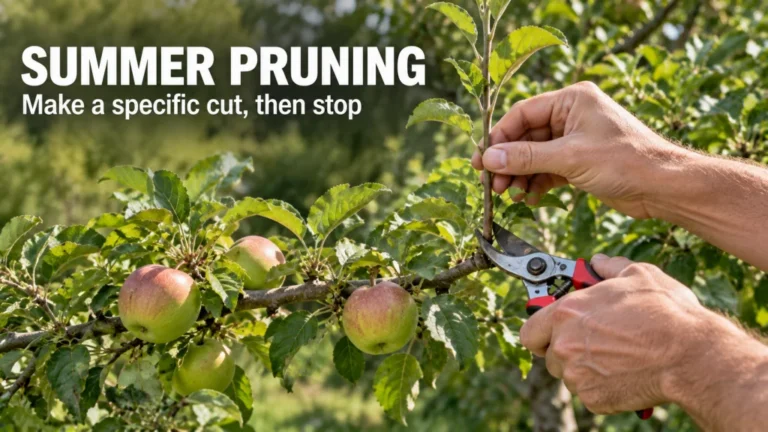
Water sprouts on trees are vigorous shoots that arise from the trunk or established branches rather than from the root system. They often grow upright and can be noticeably more vigorous than nearby lateral growth, but appearance alone is not enough for identification. A shoot leaning outward can still be a water sprout if its point of origin is on older trunk or branch tissue. Trace the shoot all the way back to that attachment before deciding what role it has.
Tree water sprouts often appear after heavy pruning, branch loss, injury, or other stress that changes the balance between the roots and the canopy. Some species also produce this kind of growth more readily than others, so a few upright shoots do not prove that the plant has a serious underlying problem. The practical question is whether the sprout is crowding sound structure, competing with a leader, emerging around damaged tissue, or occupying a useful open position. That distinction matters more than simply noticing that the shoot is growing fast.

This 8-inch GPPS-1003 bypass pruner uses a titanium-coated SK5 steel blade and a sap groove. The listing specifies a cutting capacity up to 3/4 inch for live stems and light woody pruning. It suits a traced water sprout when the shoot is small enough for ordinary ground-level hand pruning.
Check On AmazonIf you click this link and buy, we earn a commission at no additional cost to you.
Define suckers by root, rootstock, or basal origin
Tree suckers originate from roots, the base of the plant, or low trunk tissue associated with the root system or rootstock. That origin separates them from canopy water sprouts even when both types of growth are straight, leafy, and vigorous. If the shoot disappears into soil, mulch, or dense basal growth, gently expose only enough of the area to see where it connects. Do not assume a shoot beside the trunk is attached to the trunk just because that is where it becomes visible.
On a grafted woody plant, location relative to the graft union can change the decision because a shoot from rootstock tissue may not match the desired upper cultivar. A basal shoot from the desired portion of an ungrafted or own-root plant is a different structural situation from a rootstock sucker below a graft. That is why leaf shape or vigor alone should not carry the diagnosis. First identify the connection point, then use plant-specific guidance when grafting, cultivar identity, or renewal growth affects what should remain.

This hand trowel is designed for digging and planting in garden soil. Its cast-aluminum head and ergonomic grip provide control for moving small amounts of soil around a plant base. That makes it useful when a sucker disappears into soil and only enough material should be moved to confirm where it connects.
Check On AmazonIf you click this link and buy, we earn a commission at no additional cost to you.
Trace the shoot before deciding what it belongs to
Begin at the tip only long enough to follow the stem back through the canopy or basal growth, then stop at the exact place it joins older tissue. A shoot attached to a scaffold branch belongs to a different decision than one coming from a root several inches away from the trunk. A shoot emerging beside an old pruning wound also deserves more attention than a single isolated basal stem with no obvious damage nearby. Origin turns a vague label into a usable pruning decision.
Use the pattern around the shoot as a second check rather than as a substitute for tracing it. Many shoots grouped below old heading cuts suggest a different history from one well-placed upright shoot in an otherwise open crown, while repeated root suckers can point to a chronic response or a plant that naturally suckers freely. The table below is a starting point, not a diagnosis. If the origin is unclear, investigate before cutting rather than forcing the shoot into the wrong category.
| What you find | What it may mean | Practical next step |
|---|---|---|
| Upright shoot from an established branch or trunk | Water sprout, possibly related to pruning response, injury, or species habit | Check structure and recent stress before deciding whether to remove or retain it |
| Shoot emerging from a root or below the graft area | Sucker or rootstock growth | Confirm the attachment and graft relationship, then remove clearly unwanted growth at its origin |
| Many shoots near a wound or old heading cuts | Repeated response to lost canopy or damaged tissue | Address the pruning pattern or injury instead of treating each shoot as an isolated problem |
| One well-placed shoot near missing structure | Possible replacement growth | Evaluate attachment, direction, and the plant’s long-term structure before removing it |
A useful default is to separate obvious maintenance from uncertain structural work. Small unwanted shoots with a clear origin can often be handled as routine pruning, while large established shoots, damaged trunks, or questionable attachments require more caution. The more the decision affects major structure, the less useful a simple label becomes. At that point, plant condition and risk matter as much as shoot type.

This hand cultivator is designed for digging, aerating, and weeding. Its cast-aluminum tines loosen surface soil in garden beds and pots. Used gently around basal growth, it can help clear the surface enough to trace a shoot toward its attachment before any pruning decision is made.
Check On AmazonIf you click this link and buy, we earn a commission at no additional cost to you.
Check for overpruning, injury, or other stress behind excess shoots
A sudden flush of upright shoots is a reason to inspect the plant, not proof of one specific problem. Heavy pruning can stimulate vigorous regrowth, while root loss, soil compaction, drought stress, storm injury, and other damage can also be associated with sprouting. Look for what changed around the plant before the shoots appeared, including recent branch removal, construction near roots, trunk injury, or a major canopy loss. The shoot pattern is evidence to investigate, not a complete diagnosis by itself.
If the plant is declining rapidly, has widespread dieback, or shows multiple symptoms beyond sprouting, move from pruning to a broader problem check. Broader decline symptoms can help separate urgent plant decline from a simple pruning response, while more gradual changes may point to a longer-running stress pattern. Avoid responding to an uncertain stress signal with harder pruning, extra fertilizer, or another automatic treatment. First establish what the plant is responding to and whether the underlying condition can be corrected.

This battery-free meter gives an instant soil-moisture reading through a single probe. It is intended for indoor and outdoor plant soil and uses a clear analog display. In this section, it can help check whether dry soil is one part of the plant's recent stress pattern without treating the reading as a full diagnosis.
Check On AmazonIf you click this link and buy, we earn a commission at no additional cost to you.
Remove clearly unwanted small shoots with an appropriate cut
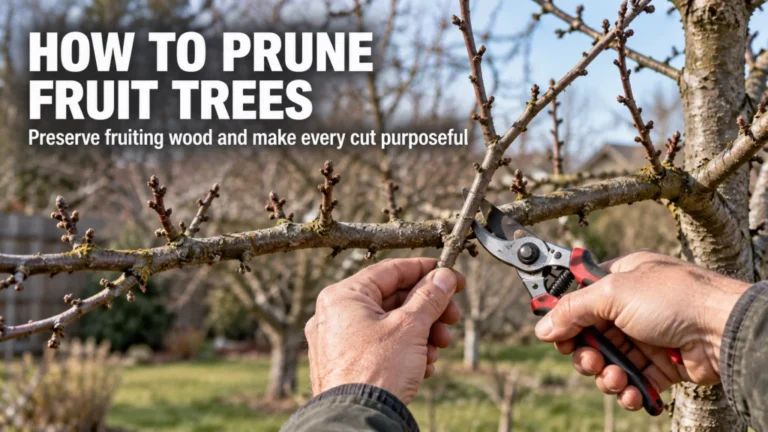
When a small shoot is clearly unwanted and its origin is easy to see, removal is usually simplest before it becomes a substantial branch. Young shoots may sometimes be rubbed or pulled away when they separate cleanly without tearing important bark, while established shoots need a controlled pruning cut. The objective is to remove the shoot at its point of origin without leaving a long stub or cutting unnecessarily into the parent stem. Use a tool sized for the shoot rather than forcing a small hand pruner through wood it cannot cut cleanly.
Do not turn a simple sucker or water sprout cleanup into elevated tree work. If reaching the shoot requires climbing, unstable ladder positioning, working beside utility lines, handling a large limb, or cutting around a split or storm-damaged trunk, stop at the homeowner boundary and use a qualified arborist. The same caution applies when the attachment is large enough that its failure could damage people or property. A correct pruning concept does not make a hazardous work position safe.
- Confirm the shoot’s origin before cutting.
- Remove only growth that has a clear reason to come out.
- Keep cuts controlled and close to the shoot’s true point of origin without damaging supporting tissue.
- Stop when access, branch size, electrical exposure, or structural damage moves the job beyond ordinary ground-level pruning.
After removal, step back and check what the plant’s structure now looks like instead of moving automatically to the next vigorous shoot. A few remaining shoots may be less disruptive than another round of heavy pruning. This is especially important when the crown has already lost substantial foliage or branches. The amount left on the plant can be as important as the amount removed.

The Felco F2 is a 9.25-inch bypass hand pruner with an aluminum body and replaceable parts. Its precision bypass blade is designed for controlled pruning cuts on live garden growth. It fits the section's advice to use a properly sized hand tool when a small unwanted shoot has a clear origin.
Check On AmazonIf you click this link and buy, we earn a commission at no additional cost to you.
Keep a well-placed shoot when it has a real replacement role
Not every water sprout has to disappear immediately. Extension guidance notes that a well-placed sprout can sometimes be trained to replace missing structure, particularly when an older branch has been lost or a declining portion of the crown leaves a useful opening. The candidate should have a sensible position, acceptable attachment, and a direction that improves rather than crowds the remaining framework. Keeping a shoot without a structural reason is different from deliberately selecting one for renewal.
If a shoot is being retained, reduce competition around it rather than trying to redesign the whole plant in one pass. Watch whether the selected shoot develops a useful angle and relationship to neighboring branches, and reconsider it if the attachment remains weak or the new growth creates another conflict. This is a conditional decision, not a rule that vigorous growth is automatically valuable. The purpose is to preserve or rebuild sound structure with the least unnecessary removal.

These garden ties come as a 50-foot by 1/2-inch cut-to-length roll. The reusable hook-and-loop material is adjustable and designed to be gentle on plants. It can support a deliberately retained replacement shoot while allowing the tie to be repositioned as growth develops.
Check On AmazonIf you click this link and buy, we earn a commission at no additional cost to you.
Keep grafted rose sucker identification separate
Grafted roses are a special case because shoots from the rootstock can differ visibly from the desired cultivar above the bud union. The general origin rule still applies, but rose identification can depend on locating the bud union and knowing whether the plant is grafted or growing on its own roots. A cane that looks more vigorous or has different foliage is a clue, not enough evidence by itself. Trace it to its source before treating it as rootstock growth.
This page does not turn rose sucker identification into a general woody-plant rule. Rose cultivar behavior, graft position, winter injury, and replacement growth can change what a basal cane means, so plant-specific care belongs with rose guidance rather than being inferred from a tree example. The same restraint is useful with other grafted ornamentals and fruit plants. When cultivar identity matters, confirm the graft relationship before removing growth that could be part of the desired plant.

These long leather gauntlet gloves are made for rose pruning and garden work. The gauntlet shape extends coverage beyond the hand toward the forearm when working around thorny canes. They suit the section's rose-specific handling context while the actual sucker decision still depends on tracing growth to the graft or rootstock.
Check On AmazonIf you click this link and buy, we earn a commission at no additional cost to you.
Address the cause when sprouting keeps returning
Repeated sprouting after repeated removal is a sign to review the whole maintenance pattern. If hard pruning keeps removing a large share of the canopy, another flush of vigorous growth can be a predictable response rather than a failure to cut closely enough. If suckers repeatedly emerge from injured roots or a damaged trunk base, pruning the visible stems does not correct that injury. The practical goal is to stop creating the condition that keeps calling for the same cleanup.
Some plants naturally sucker or produce water sprouts more readily, so correction does not always mean the growth will disappear permanently. Even then, lighter recurring maintenance can be more sensible than infrequent aggressive removal, especially when the plant is otherwise healthy and the shoots stay small. Do not use herbicide or another growth-suppressing product as a default response to uncertain sprouting because treatment can affect the parent plant and any regulated product must follow its current label. When the cause remains unclear or the tree has major structural defects, get qualified help rather than escalating the treatment.

These 6-inch pruning snips use non-stick, resin-resistant blades for small-plant trimming. Their compact scissor format is suited to light recurring maintenance rather than large branch work. That makes them a practical fit when repeated sprouts are kept small and removed as part of lighter ongoing care.
Check On AmazonIf you click this link and buy, we earn a commission at no additional cost to you.
Final thoughts: trace the shoot before you cut
The useful final check is to connect shoot origin with the plant’s structure and recent condition. Branch and trunk growth points toward a water sprout, while root, basal, or rootstock growth points toward a sucker, but neither label decides the cut by itself. Remove clearly unwanted small growth when the job is safely within homeowner scope, and avoid automatic heavy cleanup when the plant has already lost substantial canopy. A fast-growing shoot can be both a maintenance issue and information about what the plant has been through.
When one well-placed shoot could replace missing structure, give that possibility a deliberate look instead of treating vigor as a defect. When dozens of shoots return, look beyond the shoots to pruning history, injury, root conditions, or another continuing stress. The right next step may be a small cut, a season of observation, correction of the underlying condition, or professional assessment of a mature damaged tree. Origin first, cause second, and removal only when the reason is clear.

These bypass pruning shears have a 3/4-inch cut capacity. The PowerGear2 model is a hand pruner for stems and small branches within that capacity. It fits the article's final emphasis on making the smallest justified cut rather than escalating automatically to larger pruning work.
Check On AmazonIf you click this link and buy, we earn a commission at no additional cost to you.
FAQs
🌱 What is the difference between a water sprout and a sucker?
A water sprout arises from the trunk or established branches, while a sucker originates from roots, the base, or rootstock tissue. Trace the shoot to its attachment before relying on its upright shape or fast growth.
✂️ Should I remove every water sprout?
No. Clearly unwanted sprouts often should be removed, but a well-placed shoot can sometimes be retained to replace missing structure. Check the plant’s condition and the shoot’s attachment before making removal automatic.
🌳 Why did my tree produce so many upright shoots after pruning?
Heavy pruning can stimulate vigorous regrowth, and injury or other stress can also be associated with sprouting. Review how much canopy was removed and look for root, trunk, or storm damage before cutting another large share of growth.
🪴 How can I tell whether a basal shoot comes from rootstock?
Locate the graft or bud union and trace the shoot to see whether it starts below that point or directly from the root system. If you cannot identify the graft relationship confidently, use plant-specific guidance before removing the shoot.
🔁 Why do suckers keep coming back after I cut them?
Removing the visible shoot does not always remove the condition that caused or supports repeated suckering. Check for root or trunk injury, chronic stress, graft-related growth, and the plant’s natural tendency to sucker before changing your pruning approach.
⚠️ When should I call an arborist instead of pruning the shoots myself?
Use qualified help when the work involves climbing, utility lines, large limbs, unstable access, split trunks, hanging branches, storm damage, or a mature tree with structural concerns. Ground-level identification is useful, but it should not lead you into hazardous tree work.
References and Sources
- University of Maryland Extension: Supports the distinction between water sprouts and suckers, the role of pruning and stress in sprouting, and the option to train selected sprouts as replacement growth.
- University of New Hampshire Extension: Supports homeowner pruning boundaries, proper tree-pruning context, and the recommendation to avoid utility-line and mature-tree work that requires professional care.
- Illinois Extension: Supports the distinction between the desired rose cultivar and rootstock suckers on grafted roses.