Water sprouts and suckers: trace where vigorous shoots are coming from

Water Sprouts And Suckers

Vigorous upright shoots do not all mean the same thing, and removing every one on sight can hide the reason they appeared. The useful first step is to trace each shoot to a branch, trunk, root, basal crown, or graft area, then look at the plant’s recent stress and structure before deciding what to cut.
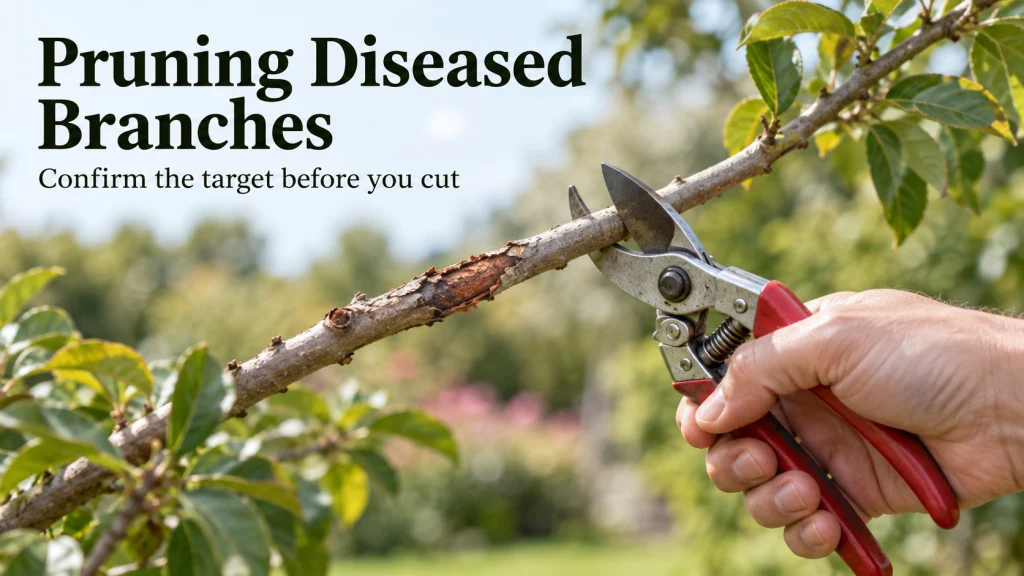

Pruning diseased branches: confirm the target before spreading the problem

Pruning Diseased Branches

Pruning diseased branches starts with confirming that the suspicious tissue is actually a pruning target, not simply cutting farther back because a branch looks unhealthy. Cankers, dieback, discoloration, storm injury, root stress, and normal seasonal changes can overlap in appearance, so the host plant and the suspected problem matter. When pruning is supported, the cut

Weeding tools should match the root, not the weed label

Weeding Tools

Weeding tools work best when the tool motion matches the weed in front of you, not when one tool is expected to handle every weed in the yard. Tiny seedlings usually call for shallow slicing, individual deep roots call for controlled extraction, and established crowns may need careful loosening or digging before they can be

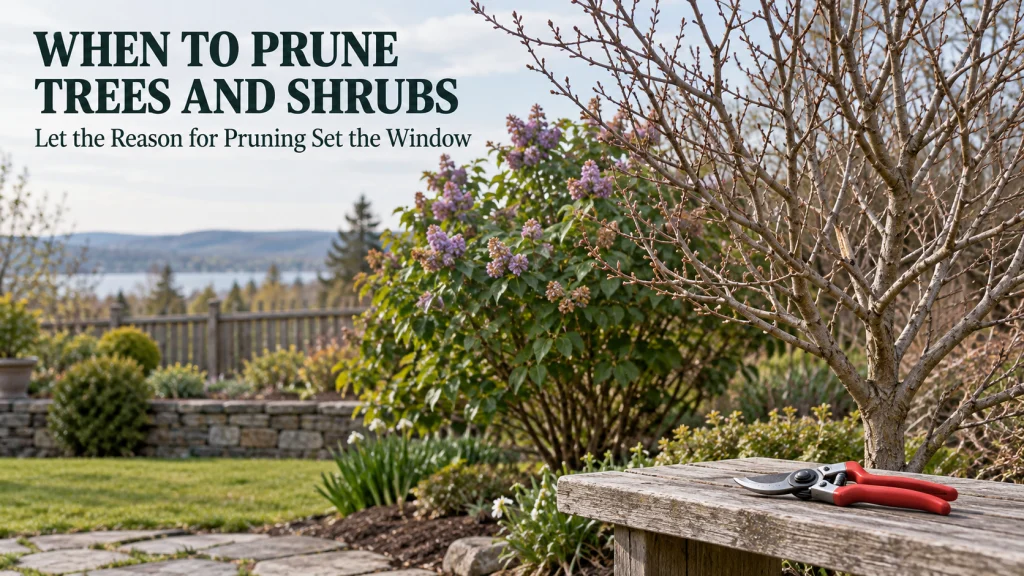
When to prune trees and shrubs: let the reason for pruning set the window

When To Prune Trees And Shrubs

Pruning timing works best when the reason for the cut comes before the season. Dead or broken small wood may need prompt attention, structural pruning often fits a dormant window, and spring-flowering shrubs may lose next season’s display if they are cut at the wrong point in their bloom cycle. Disease pressure, local pest activity,

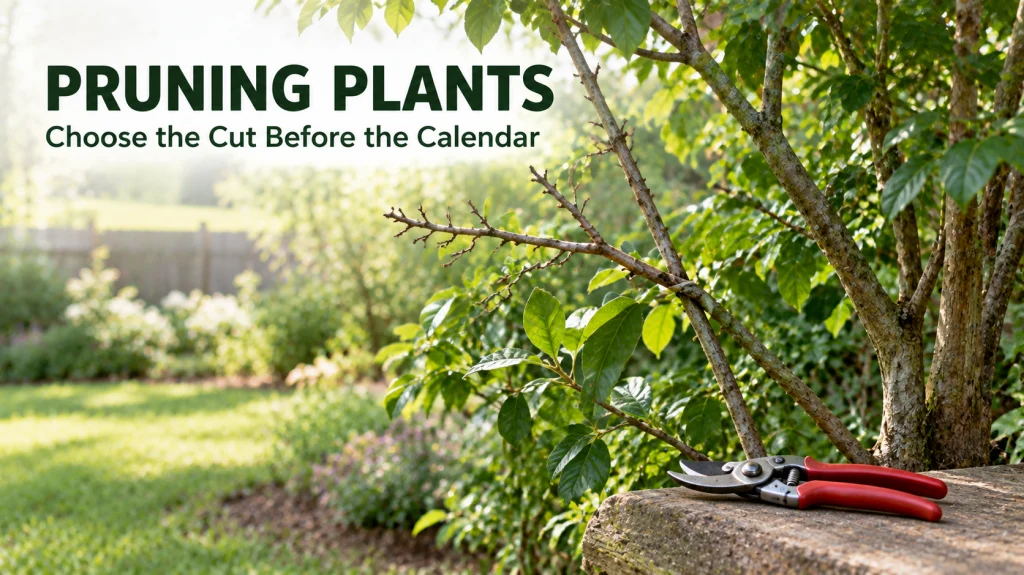
Pruning plants: choose the cut before you choose the calendar

Pruning Plants

Pruning plants is easier when you decide what the branch is doing before deciding when to cut it. A dead branch, vigorous shoot, flowering stem, and storm-broken limb can require different responses. The useful sequence is purpose first, cut type second, timing third, with disease risk and safety checked before wood is removed. That approach