Weeding tools work best when the tool motion matches the weed in front of you, not when one tool is expected to handle every weed in the yard. Tiny seedlings usually call for shallow slicing, individual deep roots call for controlled extraction, and established crowns may need careful loosening or digging before they can be lifted. Soil condition, nearby plant roots, working space, and the amount of disturbance you can accept all change the practical choice. The goal is to remove the weed with the least unnecessary soil movement and the least wasted effort.
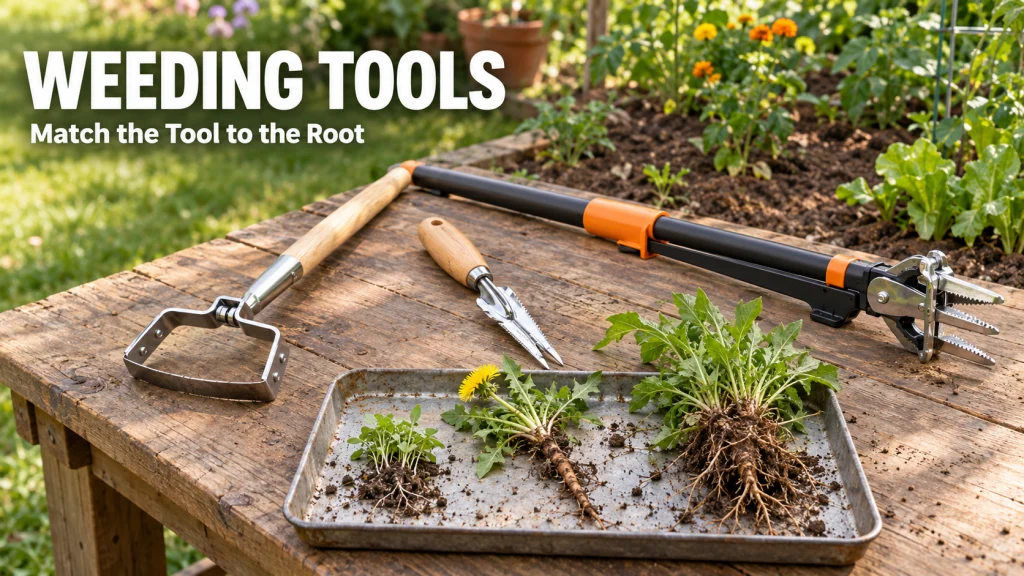
Classify weeds by stage and root form
Put a threadlike seedling, a dandelion with a distinct taproot, and a mature clumping crown beside one another and the problem with generic weeding tools becomes obvious. A shallow slicing motion can dispatch a tiny seedling with almost no soil movement, but the same motion may leave a large storage root in place. A narrow extractor can work around one individual root, yet it is painfully slow across a bed full of newly emerged annual weeds. Before reaching for a tool, look at the weed’s size, how firmly it is anchored, and what kind of underground structure you are actually trying to remove.
That first classification does not require perfect botanical identification. In many routine garden situations, you can learn enough by inspecting one representative plant, noting whether the root system is fine and shallow, dominated by one main root, or attached to a thicker crown or spreading underground structure. If the plant breaks off and leaves substantial tissue below the surface, treat that as evidence that simple surface removal may not finish the job. When the plant is unfamiliar or appears to spread from rhizomes, runners, bulbs, tubers, or other persistent structures, weed identification and control strategy become a separate question from tool selection.
| Weed situation | Useful removal motion | Tool family to consider | Typical soil disturbance |
|---|---|---|---|
| Tiny, shallow seedlings in open soil | Slice or skim just at the surface | Stirrup, scuffle, or other shallow working hoe | Low when the blade stays shallow |
| Young weed close to a desirable plant | Precise cut, lift, or hand pull | Small hand weeder or careful hand removal | Low to moderate |
| Single weed with a distinct deep root | Loosen beside the root, then lift | Narrow hand weeder or matching root extractor | Moderate and localized |
| Established crown or large anchored plant | Loosen around the crown before levering or lifting | Sturdy hand tool, fork, or appropriate digging tool | Moderate to high |
| Dense mat or plant with spreading underground parts | Identify the structure before disturbing it widely | Depends on the confirmed weed and control plan | Potentially high if cultivation spreads fragments |
A disturbance scale helps when two tools can remove the same weed but move very different amounts of soil. Use the lowest level that completes the job, especially around shallow-rooted crops, drip lines, and recent plantings. Soil moisture, compaction, blade depth, and pressure can change the result, so the scale compares motions rather than assigning a permanent score to each tool. If a tool requires much more disturbance than the target justifies, its mechanism is probably a poor fit.
| Disturbance level | What happens in the soil | Typical motion | When it fits |
|---|---|---|---|
| 1: Surface only | Only the surface layer is opened. | Skim or slice shallowly. | Fresh seedlings in open soil. |
| 2: Local loosening | A narrow pocket beside one root is opened. | Insert, loosen, and lift. | Individual roots near wanted plants. |
| 3: Focused leverage | A larger plug or crown area moves. | Set, lever, and lift. | Established weeds with room for leverage. |
| 4: Broad cultivation | A wider area of soil is stirred or turned. | Dig, rake, or chop repeatedly. | Only when broader disturbance is actually needed. |
The matrix is a starting point, not a promise that every weed with a similar top growth behaves the same underground. Moist, workable soil may let a root release cleanly, while dry, compacted soil can make the same extraction motion snap the root or demand much more leverage. Nearby crop roots also matter because a tool that is harmless in an empty path may be too aggressive beside shallow-rooted vegetables or ornamentals. If you are building a basic tool kit from scratch, the broader essential garden tools guide can help you decide which general tool families deserve space before you add specialized weeders.
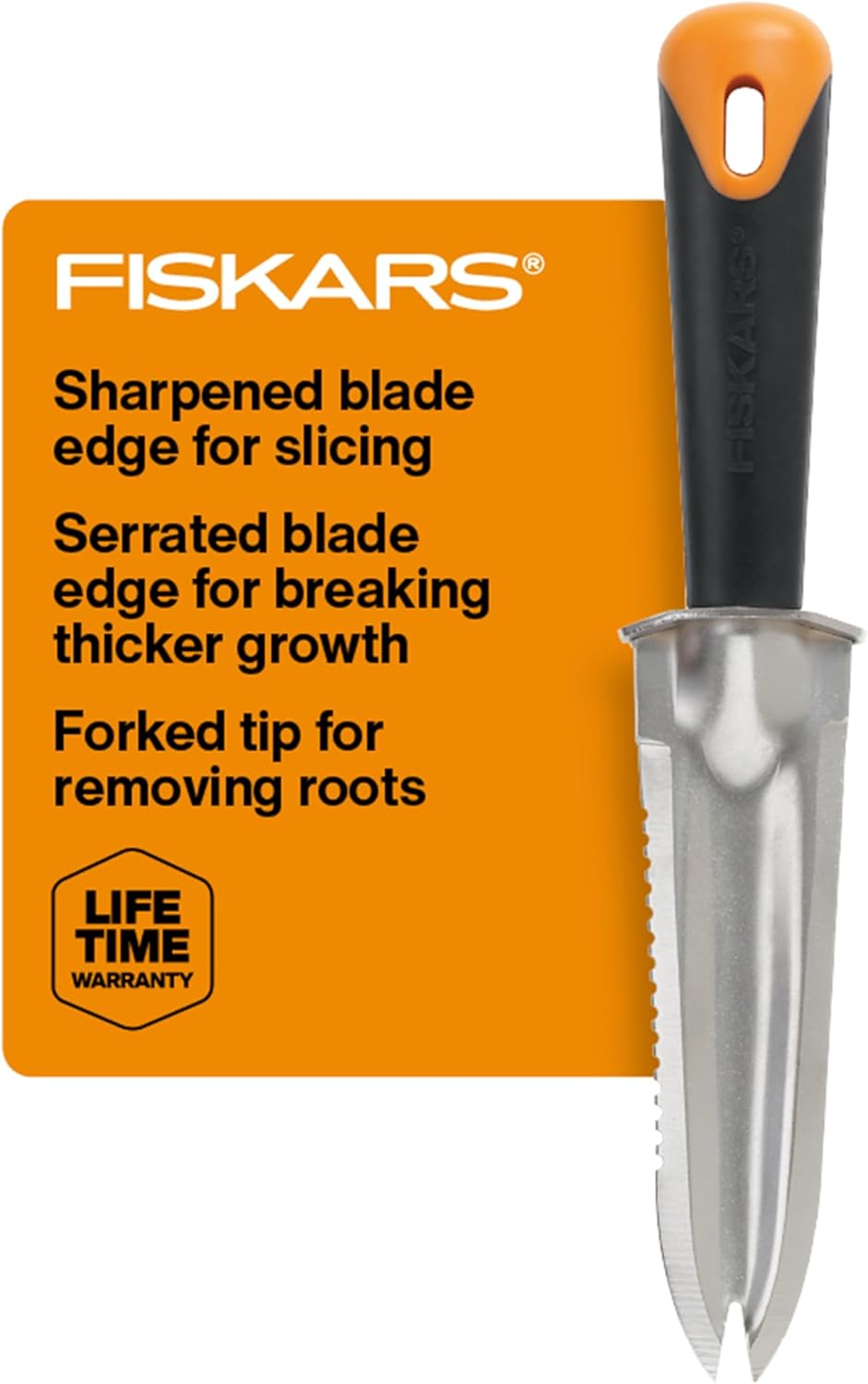
Sharpened and serrated steel edges plus a forked tip let this hand tool dig, weed, split seedlings, and remove roots in a small work zone. The plated steel head resists rust, while the SoftGrip handle improves control during close work. It fits this section as a compact tool for exposing one representative root system before deciding whether the weed calls for slicing, extraction, or broader control.
Check On AmazonIf you click this link and buy, we earn a commission at no additional cost to you.
Choose hoes by working action
A hoe is not one fixed tool with one fixed motion. Blade shape, blade angle, handle length, and the way the head meets the soil determine whether the tool slices, skims, chops, pulls, or moves soil. For weed seedlings in open beds, shallow slicing is usually the useful action because it severs or uproots small plants without turning a large volume of soil. Penn State Extension makes the same functional distinction by grouping hoe designs according to how their heads work, which is more useful than choosing by appearance alone.
Stirrup and similar push-pull hoes are built around repeated shallow passes, so they make sense when many small weeds are scattered through relatively open soil. A draw-style hoe is more deliberate and can move more soil, which may be useful for larger weeds or bed shaping but can also disturb more roots and bring buried weed seed closer to the surface. Heavy chopping action has a place when the job genuinely requires it, but it is not a better version of shallow cultivation. If the bed contains closely spaced vegetables, newly transplanted plants, or shallow roots near the surface, precision matters more than how much soil the tool can move in one stroke.
Picture the motion before comparing tool names. A slicer travels across the surface, an extractor works beside one root, a lever sets before lifting, and a cultivator rakes only as deep as needed. These paths are different enough that one head rarely performs all of them well. The reference below keeps that distinction visible without turning the article into a roundup.
| Working motion | Motion path | What the tool is trying to do | Common mismatch |
|---|---|---|---|
| Shallow slice | Move across the soil surface. | Sever small weeds with little soil movement. | Digging downward instead of slicing. |
| Draw or chop | Pull toward you or make a controlled cut. | Cut larger growth or move some soil. | Heavy strokes beside closely spaced plants. |
| Root extraction | Insert beside one root, loosen, then lift. | Release one root locally. | Snapping the root below the crown. |
| Standing leverage | Set the head, apply leverage, then release. | Lift one anchored weed from standing height. | Poor engagement in stones or hard soil. |
| Shallow rake | Pull short tines through the surface layer. | Loosen a small area and disturb seedlings. | Raking too deeply around roots. |
Handle fit changes the action as much as the head does. A tool that forces you to bend low or hold the handle at an awkward angle may cause the blade to dig instead of glide, turning a low disturbance pass into unnecessary cultivation. The right working height should let the head meet the soil at the angle the design expects while you keep the motion controlled. For a closer comparison of hoe shapes and uses, see the guide to types of garden hoes, and use the dedicated stirrup hoe guide when the main job is repeated shallow slicing in open ground.

Its hollow trapezoid steel head uses a push-pull scuffle motion for weeding and shallow soil work. The heat-treated metal head and nonslip rubber handle are designed for controlled hand use in gardens, lawns, greenhouses, and small beds. It directly illustrates the section's point that hoe geometry and working action should determine where a tool fits.
Check On AmazonIf you click this link and buy, we earn a commission at no additional cost to you.
Use hand weeders for individual roots
Hand weeders earn their place when the job is one weed at a time and the root needs more precision than a broad hoe can provide. A narrow forked or pointed working end can be placed beside a taproot, pushed into the soil, and used to loosen the root before lifting. That motion is especially useful in a planted bed where a wide blade would disturb neighboring stems or roots. The aim is not to pry as hard as possible, but to create enough space around the root that it can come out with less breakage.
Soil condition often decides whether that motion feels controlled or frustrating. In damp, workable soil, a root may release with modest loosening, while hard dry soil can hold it tightly enough that forcing a small tool only bends the tool path or snaps the root. If the weed has a broad crown rather than one clear root, work around the crown rather than repeatedly stabbing the center. When the underground structure is larger than the hand tool can loosen efficiently, switching to an appropriate digging or fork-type tool is more sensible than turning a precision weeder into a pry bar.
Hand tools also make sense when the weed sits directly beside a wanted plant and the acceptable disturbance zone is only a few inches wide. They are much less efficient when hundreds of tiny seedlings cover open soil because the gardener has to repeat the same individual motion for every plant. That is the practical dividing line between extraction and cultivation: one targets a specific root, while the other treats many small weeds across a surface. The hand weeder guide goes deeper into the common shapes used for this close work without assuming that one tip geometry fits every root.

At 13.3 inches long, this compact weeder uses a four-tooth anti-rust steel head for close-range removal. Its steel body and rubber-covered handle are intended for controlled hand work around garden beds and narrow gaps. The focused head suits the section's one-weed-at-a-time approach better than a broad hoe when space around desirable plants is limited.
Check On AmazonIf you click this link and buy, we earn a commission at no additional cost to you.
Use standing weeders only when the mechanism matches the weed
A long handle can reduce kneeling and repeated bending, but standing height by itself does not tell you whether a weeder will remove the root you care about. Some standing tools use claws, jaws, tines, or a forked head to grip or lever an individual plant, while others are simply long-handled versions of slicing or cultivating tools. Those mechanisms create different results underground even if both packages are described as weed pullers. The useful question is whether the head can reach, grip, loosen, or lever the actual root form without tearing up more surrounding soil than you want.
Individual deep-rooted weeds in open lawn or bare soil can be a reasonable match for a standing extractor when there is enough room for the head and leverage motion. The same tool may be clumsy inside a densely planted border, beside irrigation tubing, or where desirable roots occupy the same small area. Hard, stony, or compacted ground can also keep claws or tines from entering cleanly, so the leverage advantage disappears if the mechanism never reaches the root. Do not treat a foot pedal, claw count, or long handle as proof that a tool will remove every established weed intact.
Comfort still matters because a tool that keeps you upright can make repeated work more manageable, but ergonomic benefit should follow functional fit rather than replace it. Check the tool’s required stance, the amount of force needed to set the head, and whether the ejection or release step adds effort after every pull. Also look at the holes or divots left behind, especially in turf or finished beds where surface repair becomes part of the job. The stand-up weeder guide focuses on these mechanisms and the situations where standing extraction is genuinely useful.
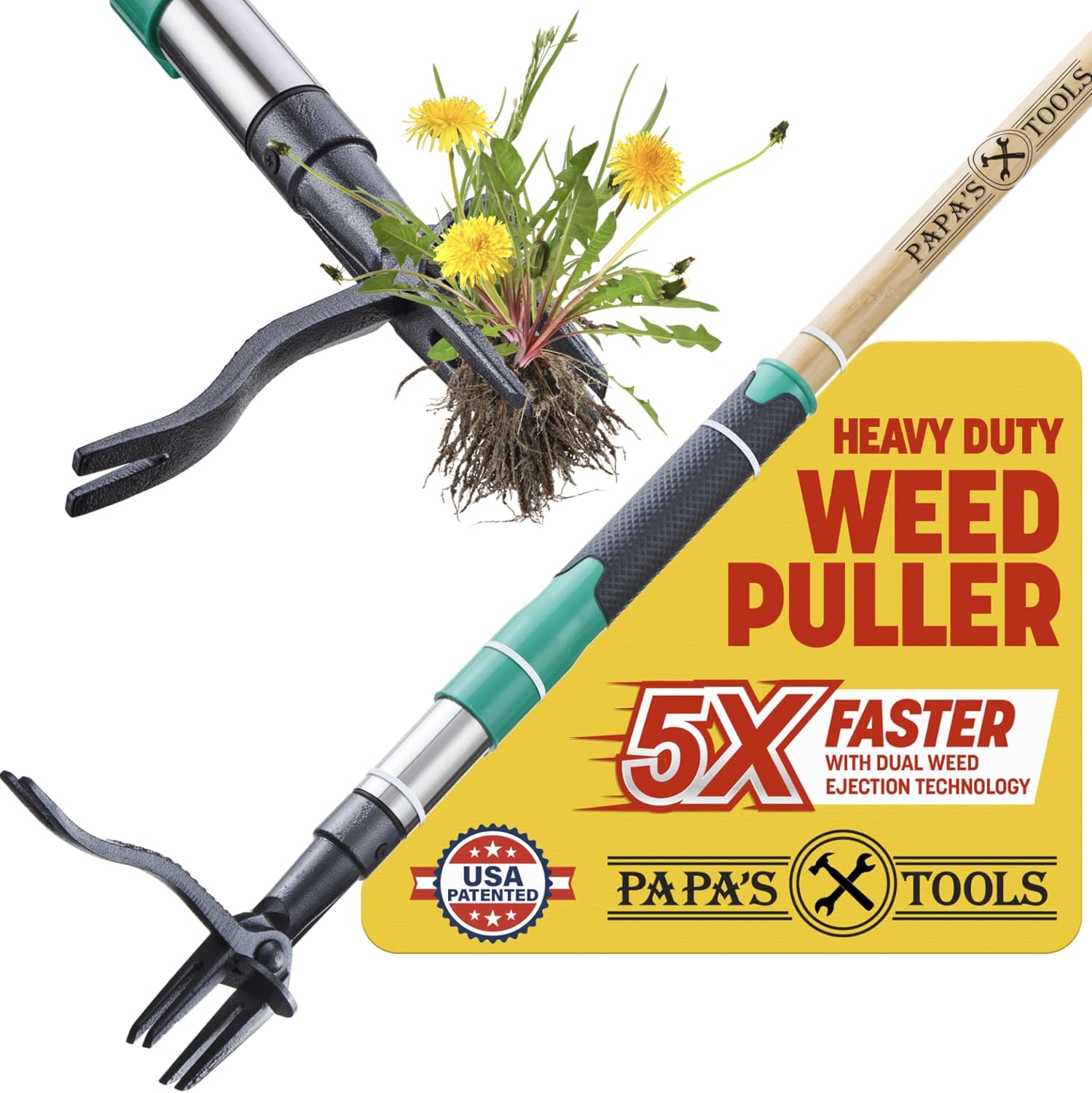
This 44-inch stand-up weeder combines a bamboo handle with a four-claw steel head for gripping weeds from standing height. Its dual eject design allows weed release by hand or foot after extraction. The mechanism matches this section's focus on reach, claw engagement, leverage, and release steps rather than assuming that any long-handled puller will suit every root or soil condition.
Check On AmazonIf you click this link and buy, we earn a commission at no additional cost to you.
Keep hand cultivators for shallow disturbance
A hand cultivator is useful when you need to loosen a small patch of surface soil, disturb young seedlings, or work between plants where a long handle is awkward. Its tines can rake through the upper layer and free small weeds, but that same action becomes more disruptive as you dig deeper or work around established roots. UC IPM cautions that careless cultivation can damage shallow rooted plants, bring buried weed seed to the surface, and spread some perennial weeds through underground fragments. That is why a cultivator should be treated as a shallow disturbance tool, not as a universal root remover.
The best fit is usually a small, visible work zone where you can see both the weeds and the desirable plants you are working around. Keep the tines shallow when the target is newly emerged growth, and stop if you begin pulling up large roots or repeatedly snagging underground runners that you have not identified. In compacted soil, a cultivator can help loosen the surface before hand removal, but digging harder is not automatically better. More disturbance means more chance of damaging wanted roots, moving dormant seed upward, or breaking a spreading perennial into pieces that remain in the bed.
That distinction is easy to miss because a cultivator looks capable of grabbing almost anything within reach of its tines. The question is whether loosening the surface is the job or whether complete extraction of a specific root is the job. If you are choosing between tool families for the same patch, the hand cultivator guide explains where shallow loosening fits, while the comparison of a garden hoe or cultivator helps separate broad surface work from close hand work.

The CobraHead uses a curved tempered-steel blade for weeding, digging, edging, and cultivating in a compact hand-tool format. Its recycled-plastic handle is designed for right- or left-hand use. Because the single curved blade works a small soil area at a time, it fits this section's emphasis on controlled localized disturbance rather than deep broad cultivation.
Check On AmazonIf you click this link and buy, we earn a commission at no additional cost to you.
Separate tool choice from weed diagnosis and control strategy
Choosing the right motion is only one part of weed management. A tool can remove what is visible today without answering why the weed keeps returning, whether it spreads by seed or underground structures, or whether cultivation will make the problem worse. Annual seedlings, taprooted perennials, creeping plants, and weeds with bulbs, tubers, or rhizomes can respond very differently after the top growth is removed. If repeated cutting seems to produce the same patch again and again, stop treating the issue as a shopping problem and identify what is surviving below the surface.
This boundary matters most when the plant spreads vegetatively. UC IPM notes that cultivation can propagate some perennial weeds when underground structures are chopped and moved, so aggressive soil stirring is not automatically a more thorough solution. Similarly, a mature plant that has already formed a large crown may need more complete digging than the tool used for fresh seedlings. The tool page should help you select a mechanical action, but weed identification, prevention, mulching, herbicide decisions, and long-term control belong to a broader garden problem assessment.
Sometimes the simplest option is correct. If a young weed comes out cleanly by hand, another specialized tool adds storage without improving the job. If tiny seedlings cover an open bed, one shallow hoe may replace several narrow weeders. A compact kit built around distinct motions usually makes more sense than several tools that solve the same easy case.
- Use shallow slicing for many small seedlings in open soil.
- Use localized extraction for one distinct root near desirable plants.
- Use standing leverage only when the head can engage the root form and the site allows the motion.
- Use cultivator tines for shallow loosening, not automatic deep digging.
- Pause and identify the plant before widespread cultivation if underground spreading structures may be present.
Use that list as a motion check before adding anything to the shed. If two tools perform nearly the same action, the second one may not solve a new problem. A useful addition should reduce disturbance, reach a root your current tool cannot handle, improve access, or make repeated work easier without sacrificing control. That keeps the decision grounded in the garden rather than in the number of tool shapes available.

This University of Chicago Press reference organizes more than 500 North American weed species by plant family and includes images with identification keys. It covers weeds across growth stages and provides species information including seed viability and germination requirements. It supports the section's boundary between choosing a removal tool and first identifying a weed whose underground structures or life cycle may change the control strategy.
Check On AmazonIf you click this link and buy, we earn a commission at no additional cost to you.
Final thoughts: match the removal motion to the root before adding another weeder
The most useful weeding setup is not the largest collection of tools. It is a small set of distinct working motions that cover the weed stages and root forms you actually encounter. Shallow hoes handle many fresh seedlings efficiently, hand weeders give you precision around individual roots, standing extractors can reduce bending when their mechanism fits the target, and cultivators belong where controlled surface loosening is the real job. The less overlap between tools, the easier it is to know which one to reach for.
Before buying anything new, inspect the weed, the soil, the surrounding plants, and the space your hands or handle need to move. Choose the least disruptive motion that can reasonably remove the target, then check whether your current kit already provides it. If a weed keeps returning despite apparently successful removal, shift attention from tool selection to identification and control strategy. That is the point where understanding what survives underground matters more than owning another weeder.

The Bucketeer fits most 5-gallon buckets and adds 30 pockets plus three interior loops for longer tools. Its bucket-based layout keeps a small working kit together without requiring another specialized weeding mechanism. That makes it a practical match for the final section's recommendation to maintain a compact set of distinct tools instead of collecting overlapping weeders.
Check On AmazonIf you click this link and buy, we earn a commission at no additional cost to you.
Explore related weeding tool topics
Once you know the motion you need, the next decision is narrower. Open rows call for different tools than a single root beside a perennial or a small patch between plants. The guides below separate those jobs so you can compare geometry without falling back on a generic roundup. Use the topic that matches the work in front of you, not as a checklist of tools to own.
The links also clarify overlapping tool names. Hoes differ by working action, hand weeders by how they approach one root, and cultivators by how they disturb a small soil area. Standing weeders add mechanism and leverage to that comparison. Moving from the job to the mechanism keeps the choice practical and reduces duplicate tools.
| Topic | What you’ll find |
|---|---|
| Types of garden hoes | How common hoe shapes change the cutting, pulling, chopping, and soil moving action. |
| Stirrup hoe | Where repeated push pull slicing fits and where a loop style blade becomes the wrong motion. |
| Hand weeder | How narrow hand tools approach individual roots and tight planted spaces. |
| Stand up weeder | How standing extraction mechanisms differ and what site conditions affect their usefulness. |
| Hand cultivator | When shallow loosening and small area cultivation are a better fit than extraction. |
| Garden hoe or cultivator | A direct comparison for deciding between broader surface work and close hand work. |
Start with the weed stage, root form, and acceptable disturbance, then use the guide that matches the motion you are considering. If two options still overlap, compare working width, access, posture, and how much soil each one moves. Storage and maintenance matter only after a tool solves a repeated job that your current kit handles poorly. That keeps this section focused on choosing the next useful comparison rather than repeating the broader case against duplicate tools.

The Corona AC 8300 uses a tungsten-carbide sharpening edge for touch-ups on garden and outdoor cutting tools. Its compact body and slip-resistant handle are designed for portable, controlled sharpening. It fits the related-topics section because maintenance becomes relevant after a useful tool earns a place in the kit, helping existing cutting tools stay serviceable instead of adding another overlapping tool.
Check On AmazonIf you click this link and buy, we earn a commission at no additional cost to you.
FAQs
Weeding tool questions get easier once you separate weed size and root form from the tool name. One hoe, puller, or hand tool rarely covers every motion well. Soil moisture, compaction, and close planting also change how easily a root can be reached and released. The questions below focus on those practical differences rather than a universal winner.
If the weed is uncertain, identify it before aggressive cultivation across a large patch. Some plants can regrow from underground structures or spread through careless disturbance. For ordinary seedlings and isolated roots, you can usually choose a manual action without turning the task into a full diagnostic project. Keep the work shallow unless the root form clearly requires deeper loosening.
🌱 What tool is best for very small weeds?
A shallow working hoe is usually efficient when many tiny seedlings are scattered through open soil. Keep the blade near the surface so you remove the weeds without unnecessarily disturbing crop roots or bringing up more buried seed.
🌿 Is it better to pull weeds or use a hoe?
Pulling or localized extraction makes sense for individual weeds whose roots need to come out intact. A hoe is faster for many small seedlings in open soil, especially when the goal is shallow cutting rather than deep root removal.
🪴 What should I use for a deep taproot?
Use a narrow tool that can loosen soil beside the root before you lift it. Workable soil helps, while hard compacted soil may require more careful loosening so the root does not simply snap below the surface.
🧤 Are stand-up weeders better for your back?
They can reduce kneeling and repeated bending when the mechanism actually fits the weed and the soil lets the head engage properly. A long handle is not enough by itself, so also consider the force, stance, leverage motion, and divot left after extraction.
🌾 Can a hand cultivator remove established weeds?
It can loosen soil around some larger weeds, but its main strength is shallow disturbance in a small area. Deep or aggressive cultivation can damage nearby roots and may spread some weeds with persistent underground structures.
💧 Is weeding easier when the soil is wet?
Slightly damp, workable soil often releases roots more easily than hard dry soil. Avoid working soil that is so wet that it smears, compacts, or turns a precise extraction into unnecessary bed disturbance.
References and sources
The key technical claims here concern shallow cultivation, root removal, disturbance risk, and hoe action. Those distinctions can change whether a tool helps or creates extra work. They need stronger support than shopping copy. Product-specific marketing was not used as evidence.
The sources below support those decisions directly. UC IPM covers hand weeding, cultivation, root removal, and disturbance risk. University of Minnesota Extension supports light hoeing around garden plants. Penn State Extension explains how hoe design affects working action.
- UC IPM handweeding and cultivation: Supports shallow cultivation, root removal, and cautions about root damage or spreading some perennial weeds.
- University of Minnesota Extension weed control guidance: Supports light hoeing for seedlings and avoiding deep scraping around garden plants.
- Penn State Extension garden tool guidance: Supports choosing hoes by function, geometry, handle fit, and working motion.