A vegetable garden should be sized around the work you can repeat, the crops you actually want to grow, and the access space needed to care for them. A modest first garden can be more productive and easier to learn from than a larger plot that becomes difficult to weed, water, support, and harvest. Crop footprint matters because sprawling squash, melons, corn, and unsupported cucumbers consume space very differently from greens, herbs, roots, and trellised crops. The most useful starting size is therefore not the largest patch your yard can hold, but the smallest layout that meets your crop goals without creating a maintenance burden you already know you will avoid.
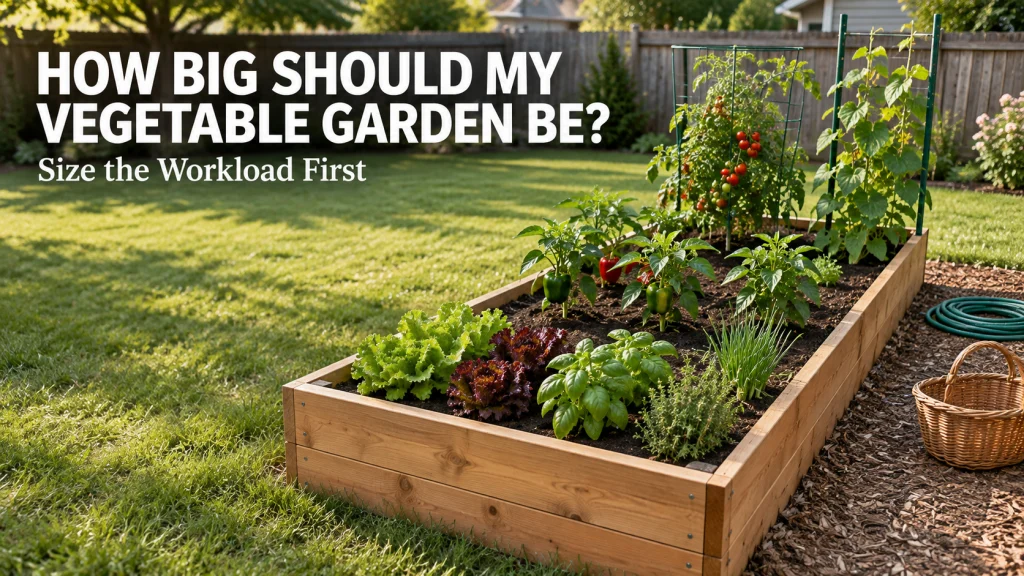
A 500-square-foot patch is not automatically a 500-square-foot garden
When deciding how big your vegetable garden should be, the easiest answer is to measure the open ground and use all of it. That answer is also how a first garden can quietly become a midsummer obligation. A 500-square-foot sunny patch may be physically available, but every planted section still has to be watered, weeded, checked, supported, harvested, and eventually cleaned up. Available land tells you what can fit, not what you will want to maintain repeatedly.
University Extension guidance is much more cautious than the common idea that every household needs a fixed amount of garden area. The useful question is whether the garden matches your available resources and the crops you plan to grow, then whether every part remains reachable for routine care. That is why I would size the first layout from the crop list and the maintenance pattern, then leave unused ground available for later expansion. A smaller plan is not a lack of ambition when it gives you enough room to learn how your actual garden behaves.

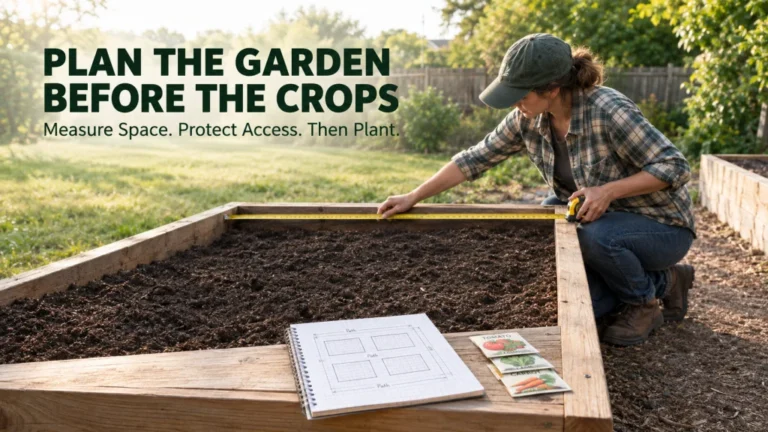
This 25-foot tape measure has a double-sided nylon-reinforced blade, a double hook, and a metal belt clip. The 25-foot reach is useful for checking bed lengths, plot widths, and the total footprint available in a yard. Use those measurements to compare the land that can fit a garden with the smaller area you actually plan to maintain.
Check On AmazonIf you click this link and buy, we earn a commission at no additional cost to you.
Start with maintenance capacity, not available land
Garden size becomes easier to judge when you stop treating square footage as the first input. Begin by listing the repeat jobs the space will create: watering during dry weather, checking for weeds and pest damage, tying or training supported crops, harvesting before produce gets overmature, and clearing spent plants. A larger footprint increases the number of places where those jobs can accumulate at once. If your plan only works when every task happens perfectly, the plan is already too fragile.
Think about the garden on the least convenient part of the season, not only on planting day. Heat, travel, family responsibilities, rain, and a sudden flush of weeds can all turn a manageable layout into a backlog. This is also where broader garden planning decisions matter, because location, water access, sunlight, paths, and the shape of the site can reduce or increase the work attached to the same planted area. A compact garden near water may be easier to maintain than a larger patch that looks better on paper but sits farther from the house and hose.
| Workload check | What to write down | What it may change |
|---|---|---|
| Watering | How easily every planting area can be reached with your normal watering method | Whether one large plot is practical |
| Weeding | How much bare soil and path edge you expect to manage | How much total ground to open at first |
| Harvesting | Which crops need frequent picking and whether you can reach them easily | Bed width, path placement, and crop position |
| Support and training | Which crops need stakes, cages, or trellises | How tightly the crop list can fit |
| Cleanup | How much plant material and spent crop residue the layout will create | Whether expansion is worth the extra end-of-season work |
Use the worksheet as a filter rather than a scoring system. If one line exposes a recurring job you already struggle to keep up with, reduce the planted area or simplify the crop list before you break ground. If the jobs look straightforward because water, access, and crop placement are convenient, the same area becomes more realistic. Size is useful only when it describes a garden you can keep functioning.

This 17.5-by-11-inch kneeling pad uses supportive foam and is made for gardening and other kneeling tasks. Its surface is described as dirt and water resistant. Keeping it beside the beds can make recurring weeding, tying, and harvest checks easier on the knees.
Check On AmazonIf you click this link and buy, we earn a commission at no additional cost to you.
Use a small starter range as a reference point, not a rule
University of Maryland Extension describes 25 to 50 square feet as a good starter range and emphasizes matching the garden to the resources available for planting, maintenance, and harvest. That is useful as a reality check, especially when a first plan has already grown into several long rows. It should not be treated as a target that every beginner must hit exactly. A gardener growing a few compact crops can start smaller, while someone with an easy site, simple crop list, and reliable access may reasonably choose more.
The value of a starter range is that it gives enthusiasm a practical reference point before extra space turns into recurring work. A 4-by-8-foot bed, for example, provides 32 square feet of planting area and is large enough to reveal how your soil, watering routine, weed pressure, sun exposure, and crop choices behave together. You can learn a lot from that footprint without committing the entire yard. If you are still working through the basics of starting a garden from the ground up, keeping the first planting area deliberately limited leaves room to fix the system before you expand it.
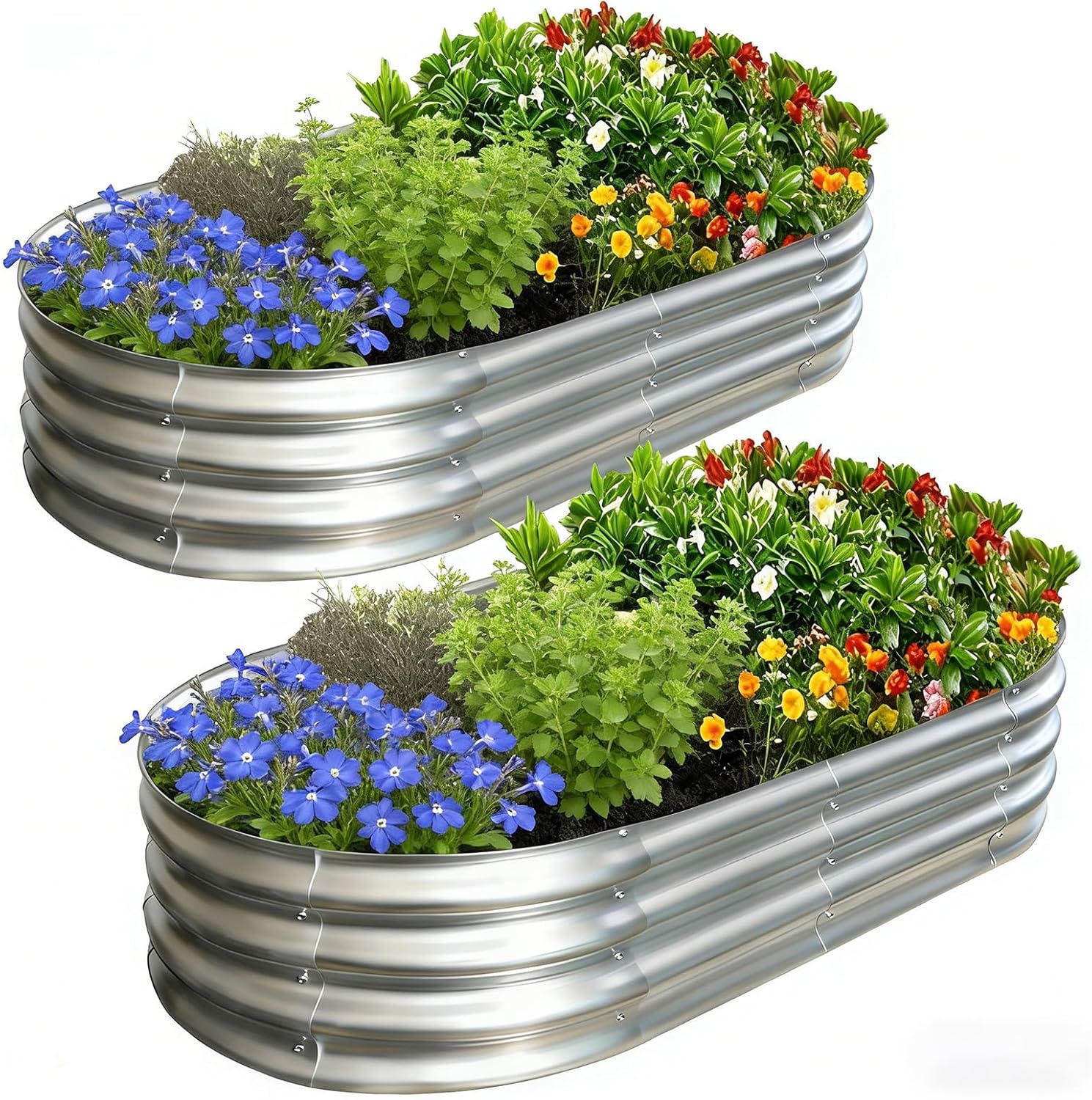
This two-pack includes 4-by-2-by-1-foot galvanized steel raised beds. Each bed uses an open-base design and treated edges, and the kit includes hardware for assembly. The defined footprint gives a beginner a controlled area for testing crop choices, watering, weeding, and access before expanding.
Check On AmazonIf you click this link and buy, we earn a commission at no additional cost to you.
Let crop footprint change the size estimate
Two gardens with the same square footage can support very different crop lists. Lettuce, radishes, carrots, herbs, and bush beans can use space relatively efficiently, while vining squash, pumpkins, melons, and some cucumber varieties with sprawling growth habits can claim a much wider footprint. Tomatoes and climbing crops may save ground space when properly supported, but they still need enough spacing, light, air movement, and working room to remain manageable. That is why Wisconsin Extension recommends planning size around what you want to grow and how large those crops become rather than simply filling a preset rectangle.
Write the crop list before you finalize the garden outline. Give the largest crops their realistic mature footprint first, then fit smaller crops around the remaining usable space instead of doing the reverse. If a sprawling crop would consume a large share of your first garden, decide whether you truly want that crop enough to accept the maintenance and space cost. A smaller garden full of crops you regularly eat can be a better fit than a larger garden built around plants that happen to look impressive on a seed rack.
- Compact use of space: leafy greens, radishes, many herbs, roots, and bush types can help keep a starter footprint controlled.
- Moderate space demand: peppers, eggplants, supported tomatoes, and trellised cucumbers need planned spacing and access but do not have to dominate the plot.
- Large footprint: pumpkins, winter squash, melons, and some corn plantings can expand the size requirement quickly.
This is also why a crop plan and a vegetable garden layout should be worked out together. The square footage only becomes meaningful after you know what occupies it, how the plants are spaced, and whether you can still reach the soil and harvest areas. A crop that climbs, sprawls, or needs frequent picking changes the working layout even when the bed dimensions stay fixed. Crop choice can raise or lower the practical size requirement without changing anything else about your yard.
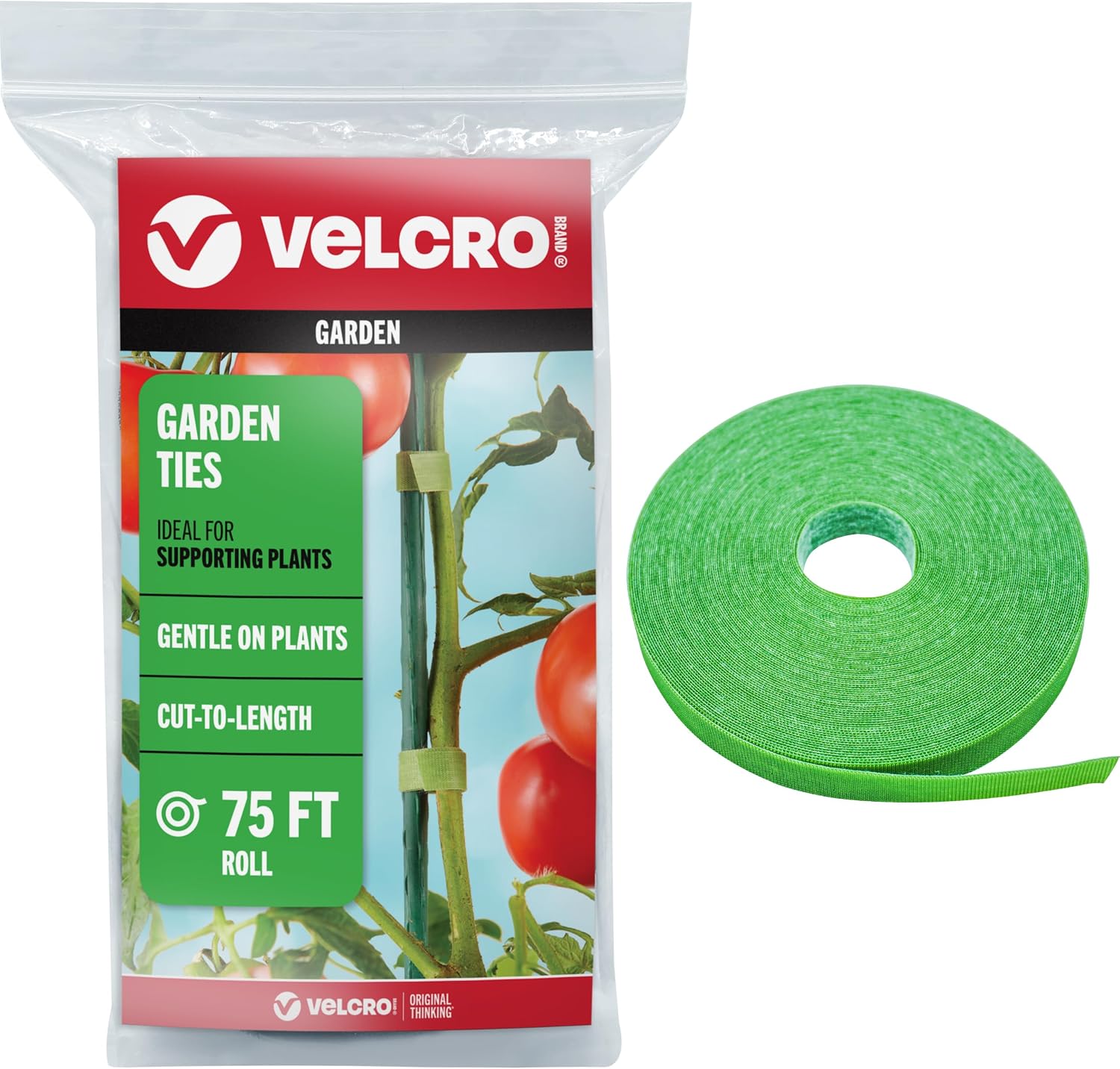
This 75-foot by 1/2-inch roll wraps around itself to secure plants to stakes and supports. The soft side is designed not to scratch plants, and the ties can be repositioned as growth changes. It is useful for training supported crops upward when vertical growth is part of the space plan.
Check On AmazonIf you click this link and buy, we earn a commission at no additional cost to you.
Add path and access space before calling the plan finished
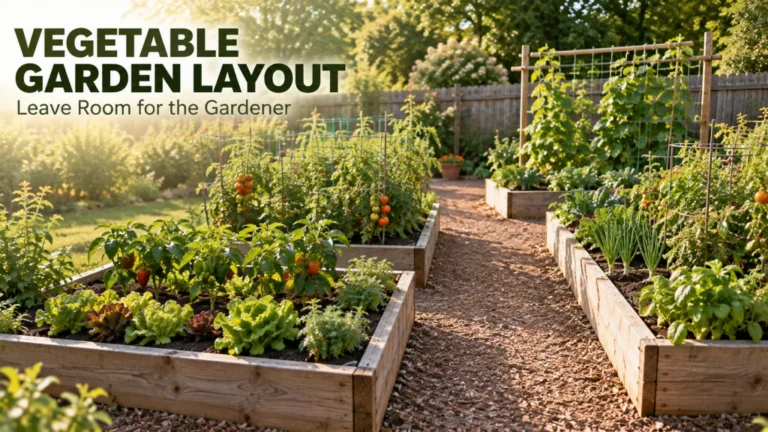
Planting area is not the same as total garden footprint. A bed may hold the vegetables, but you also need room to stand, turn, carry a harvest container, pull weeds, move a hose, and reach the center without stepping on cultivated soil. University of Maryland Extension specifically recommends making every part of the garden accessible and accounting for paths and equipment movement. Leaving that space out of the first sketch makes the final garden feel larger and tighter than the paper plan suggested.
Access is especially important when several beds sit side by side. Four beds may look compact when you total only their planting area, but the paths between them can add a meaningful amount of ground to the overall layout. Those paths are not wasted space because they are what make routine work possible without compacting the growing area. If the yard is constrained, it is better to reduce one bed or shorten a row than to remove the access that lets you care for everything else.
| Plan on paper | What happens in the garden | Better sizing response |
|---|---|---|
| Every square foot is planted | There is nowhere to stand or move a hose | Reserve access before adding crops |
| Beds are wide because they hold more plants | The center becomes difficult to weed or harvest | Use reachable bed dimensions and accept less planted area |
| Paths are treated as leftover gaps | Movement becomes awkward once plants fill out | Plan paths as functional space from the start |
Measure the whole working garden after paths are included, not before. That final footprint tells you how much yard the project actually occupies and whether the route around it still works. It also prevents the common mistake of expanding beds until the only remaining access is a narrow strip along the edge. Good access keeps a small garden useful and a larger garden maintainable.

The WG050 combines wheelbarrow and dolly functions in an 8-in-1 garden cart. Its two-wheel design is rated to lift loads up to 200 pounds. It can help move soil, tools, and harvest containers through the access space you reserve around beds.
Check On AmazonIf you click this link and buy, we earn a commission at no additional cost to you.
Decide whether one plot or several smaller plots are easier to manage
One rectangle is simple to measure, but it is not always the easiest garden to use. Several smaller plots can separate crops with different space needs, put frequently harvested herbs or greens closer to the kitchen, or use sunny pockets that would otherwise be ignored. Nebraska Extension notes that vegetables can be grown in more than one location and that a small garden near the house can make maintenance and harvesting easier. Splitting the garden can therefore reduce walking for frequent tasks even when the total planted area stays similar.
The trade-off is that several plots create more edges, more path transitions, and sometimes more complicated watering. If each small area needs a separate hose move or different setup, a divided garden can feel more demanding than one central bed. Compare the route you will actually walk, the location of water, and how often each crop needs attention before choosing the shape. The best layout is the one that makes repeated care simpler, not the one that produces the neatest rectangle on graph paper.

This heavy-duty brass Y splitter converts one garden tap into two hose outlets. It has two valves and comes with two extra rubber washers. For gardens divided into several plots, it can reduce repeated hose changes when two watering routes share the same water source.
Check On AmazonIf you click this link and buy, we earn a commission at no additional cost to you.
Use per-person rules only when the goal is food quantity
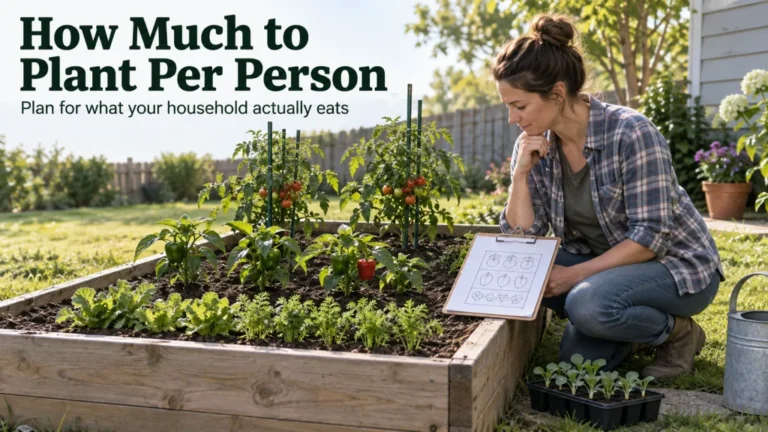
Per-person garden formulas can be useful when your goal is to estimate how much growing area might support a particular amount of fresh eating or preserving. They are much less useful when the real question is how large a first garden should be. Household size does not tell you whether anyone wants squash, whether you eat salad greens daily, whether you preserve tomatoes, or whether the site has enough sun for the crops on your list. A single square-foot figure per person hides the choices that actually drive space demand.
Treat those formulas as rough planning estimates, not promises. Yield changes with crop, cultivar, weather, planting density, succession planting, soil, light, water, pest pressure, and the quality of ongoing care. A household that wants a few fresh vegetables for summer meals needs a different plan from one trying to preserve a substantial amount of produce. If food quantity becomes the main goal, build the estimate crop by crop and keep the maintenance burden visible instead of assuming a larger number automatically means a more useful garden.

This digital kitchen scale measures in grams and ounces with an 11-pound capacity. Its tare function lets you subtract the weight of a bowl or harvest container, and the platform is 304 stainless steel. Weighing actual harvests gives you crop-by-crop quantity records instead of relying only on a fixed square-foot-per-person rule.
Check On AmazonIf you click this link and buy, we earn a commission at no additional cost to you.
Build an expansion trigger from how the first season actually went
Expansion should be earned by the garden you already maintain. If you kept up with watering and weeds, harvested most crops before they were lost, still had space to move comfortably, and repeatedly wished you had more room for crops you genuinely use, adding another bed or extending the plot makes sense. If the existing space was already difficult to manage, more square footage will usually multiply the same problems. The useful evidence comes from the tasks that repeated, not from how empty the rest of the yard looks.
A simple expansion trigger can keep the decision practical. Add space only when you can name what the new area will grow, what recurring work it adds, how it will be watered, and why the current garden cannot meet that goal. If you cannot answer those questions, keep the existing footprint and improve the layout, crop mix, or access first. The point is not to keep the garden permanently small, but to let growth follow a system that has already proved manageable.
| Starter garden | What you observe | Expanded garden decision |
|---|---|---|
| One compact bed with a focused crop list | Care stayed manageable and harvest matched what you wanted to eat | Add space only for specific additional crops or more quantity |
| One compact bed with recurring weed or watering backlog | The current footprint already exceeds the routine you can maintain | Do not expand yet; simplify care and access first |
| Small bed dominated by one sprawling crop | Useful crops were crowded out by footprint rather than total lack of land | Change crop placement, support, or location before increasing everything |
This starter-versus-expanded comparison keeps growth tied to a clear reason. It also gives you permission to stop expanding when the existing garden already delivers the harvest and experience you want. A garden is not unfinished just because there is unused lawn beside it. Unused space can be a buffer for future choices rather than a problem to solve.

This hardcover garden journal is designed for five years of planning and recordkeeping. It includes a planting calendar and plant logs for tracking seasons, plants, and progress. Recording workload, crop performance, and recurring problems gives you concrete notes to review before deciding whether the next season needs more growing space.
Check On AmazonIf you click this link and buy, we earn a commission at no additional cost to you.
Know when containers or raised beds solve the space problem better
Sometimes the problem is not total square footage but where usable growing space exists. Containers can place herbs, greens, peppers, or other suitable crops on a patio, deck, balcony, or near a convenient doorway, while raised beds can define a manageable growing area where an in-ground plot is awkward. University of Maryland Extension includes containers, raised beds, and in-ground gardens as legitimate home vegetable garden formats rather than treating one as the default. The right choice depends on sunlight, water access, soil conditions, crop needs, mobility, and how much recurring care the setup creates.
Neither format makes workload disappear. Containers have limited soil volume and may need closer watering attention in hot conditions, while raised beds still require soil, access, watering, weeding, and crop management. Use them when they solve a specific site or access constraint, not because they are assumed to be easier in every garden. If a few containers near the house meet your actual crop goals, there is no reason to open a larger in-ground plot just because the yard can hold one.

This set includes five 5-gallon grow bags made from 300G thickened nonwoven fabric. Each fabric pot has reinforced handles and is designed to drain excess water. The containers let you add defined growing space on a patio, deck, or other suitable sunny area without opening another in-ground plot.
Check On AmazonIf you click this link and buy, we earn a commission at no additional cost to you.
Final Thoughts: size the garden to the work you will repeat
The right vegetable garden size is a working decision, not a universal square-foot target. Start with the crops you want, map their real footprint, reserve access, and judge whether the watering, weeding, support, harvest, and cleanup still feel realistic when those jobs repeat. A small starter range is useful as a guardrail, but your site and crop choices determine whether you should be below it, within it, or ready to expand beyond it. The yard sets the physical limit, while your maintenance capacity sets the practical one.
If you are choosing between two sizes, I would choose the smaller footprint unless the larger one has a clear crop purpose and an equally clear maintenance plan. You can expand a garden that works much more easily than you can enjoy a large garden that has become a backlog. Keep unused ground available, watch what the first planting teaches you, and let the next increase in size solve a specific need. That produces a garden sized for real use rather than maximum occupancy.

This set includes two metal-mesh harvest baskets in different sizes with foldable wooden handles. The larger basket measures 15.7 by 9.5 by 7.2 inches, while the smaller one measures 9.8 by 9.8 by 7 inches. Keeping a harvest container ready supports the repeated picking routine that should factor into how much garden space you choose to maintain.
Check On AmazonIf you click this link and buy, we earn a commission at no additional cost to you.
FAQs
🌱 What is a good vegetable garden size for a beginner?
A modest starter garden is usually easier to learn from than a large first plot. University of Maryland Extension gives 25 to 50 square feet as a useful starter range, but your crop list, water access, site, and maintenance capacity should decide the final size.
📏 Is 100 square feet enough for a vegetable garden?
It can be enough for a useful home garden, but the result depends heavily on what you grow and how the space is laid out. Compact crops and vertical support can make that area work very differently from a plan dominated by sprawling vines.
🥕 How large should a vegetable garden be for one person?
There is no single reliable size based only on household count. Decide first whether the goal is a few fresh crops, a broader seasonal harvest, or food for preserving, then size the garden around those crops and the work required to maintain them.
🧺 Should I include paths when calculating vegetable garden size?
Yes, if you are calculating the total footprint the garden will occupy. Keep planting area and access area separate on the plan so paths do not disappear from the estimate and leave you with beds that are difficult to reach.
🌿 Is one large garden better than several small beds?
Not always. Several small beds can improve access or place frequently harvested crops closer to the house, while one plot may simplify watering and reduce extra edges, so compare the actual maintenance route before choosing.
🪴 Can containers replace part of an in-ground vegetable garden?
Yes, when suitable crops, sunlight, container volume, and watering needs line up with the site. Containers can solve a location or access problem, but they still create recurring watering and maintenance work.
References and Sources
- University of Maryland Extension vegetable garden planning: Supports the starter size range, matching garden size to available resources, crop footprint planning, and access considerations.
- Wisconsin Horticulture beginning vegetable garden basics: Supports starting small, sizing around the crops selected, and accounting for mature plant spacing.
- Nebraska Extension vegetable gardening for beginners: Supports keeping a garden manageable, considering large crop footprints, and using more than one growing location when useful.