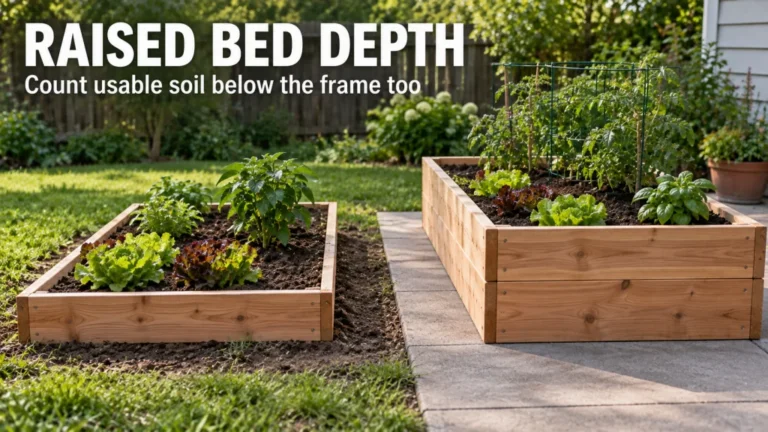
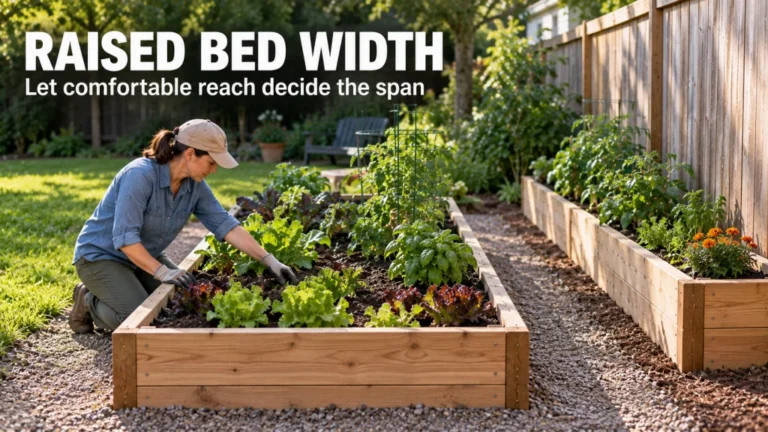
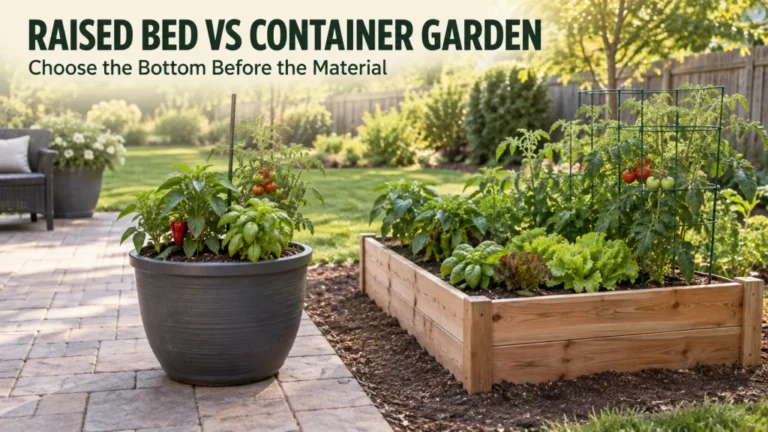
A raised bed soil order should start with the space you actually plan to fill, not the size printed on a kit or the outside dimensions of the frame. Measure the usable inside length and width, decide the intended fill depth, then calculate cubic feet before converting to cubic yards or bag counts. Freeboard, wall thickness, existing material in the bed, and irregular shapes can all change the quantity enough to matter when the order gets large. The goal is a defensible volume estimate, while soil recipe and fertility decisions stay separate.
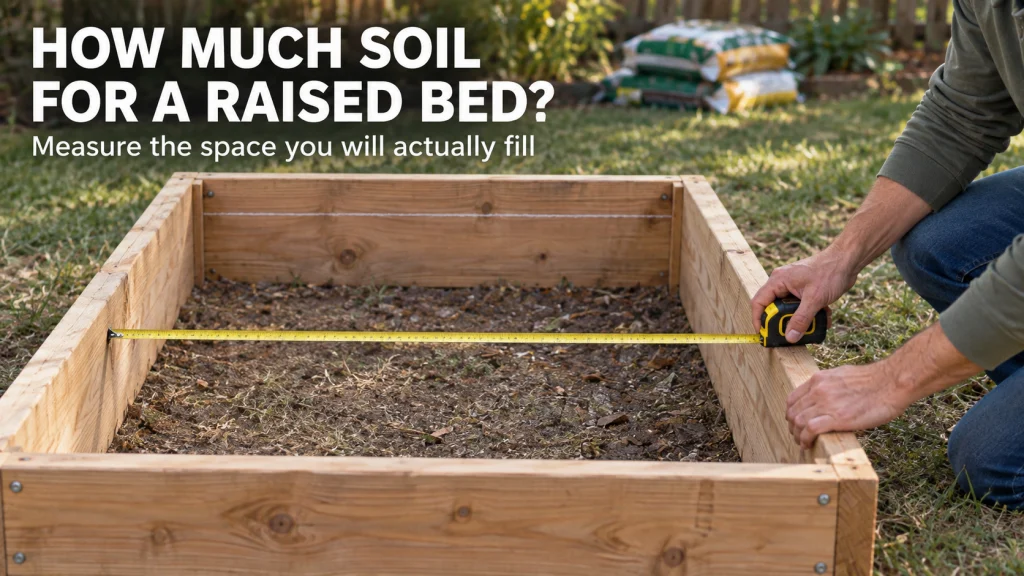
Measure the space you will actually fill
A bed described as 4 by 8 feet does not automatically create one fixed soil order. Suppose the label says 4 by 8, but the measured inside footprint is 3.75 by 7.75 feet and the walls are 11 inches high. Filling that usable space to the full 11-inch height takes about 26.6 cubic feet, while leaving 1.5 inches of freeboard and filling to 9.5 inches takes about 23.0 cubic feet. With 2-cubic-foot bags, those two plans become 14 bags versus 12 bags before any separate contingency, even though the nominal bed label never changed.
That comparison is why the order should begin with inside length, inside width, and the fill line you actually intend to use. Wall thickness can reduce the footprint, while freeboard can reduce depth, and both differences are multiplied across the whole bed. If the bed dimensions are still being decided, settle the broader raised bed gardening setup before ordering material. Once those three usable measurements are known, the calculation becomes simple enough to check by hand and specific enough to support a real purchase.

This 25-foot tape measure uses an automatic blade lock, nylon-coated blade, and impact-resistant case. The self-locking blade is useful for checking the inside length and width of a raised bed while keeping a measurement visible. Stud markings every 16 inches are also printed on the blade.
Check On AmazonIf you click this link and buy, we earn a commission at no additional cost to you.
Calculate rectangular volume in cubic feet
For a rectangular bed, multiply inside length by inside width by fill depth, with all three measurements expressed in feet. If the depth is measured in inches, divide that number by 12 before multiplying. A bed with an inside length of 7.75 feet, an inside width of 3.75 feet, and a planned fill depth of 9.5 inches needs about 23.0 cubic feet. That answer is more useful for purchasing than starting from a nominal 4 by 8 label and assuming the walls and fill line do not matter.
Keep the calculation visible instead of treating a calculator result as a black box. If a number looks surprisingly large or small, checking the three inputs usually reveals whether inches and feet were mixed or an outside dimension slipped into the formula. I would also write the measured dimensions beside the result so the order can be checked again before payment or delivery. That small record matters if the bed changes, a second bed is added, or the fill line is revised.
Formula: cubic feet = inside length in feet x inside width in feet x fill depth in feet. If fill depth is in inches, divide the depth by 12 first.
The formula estimates geometric volume, not what the fill should be made from. That distinction keeps a quantity problem from quietly turning into a soil recipe recommendation. It also makes later conversions easier because cubic feet can be translated directly into bulk volume or divided by the package volume printed on a bag. Do the geometry first, then make the purchasing conversion that matches how the material is sold.

This calculator works with feet, inches, fractions, yards, metric dimensions, area, and volume. Its built-in unit conversion lets you keep raised-bed dimensions in practical building units while checking cubic-foot calculations. It includes a protective case, pocket reference guide, and two batteries.
Check On AmazonIf you click this link and buy, we earn a commission at no additional cost to you.
Adjust for unfilled top space before ordering
Wall height and fill depth are different measurements when you plan to leave space below the rim. That unfilled top space is often useful for keeping mulch, irrigation water, or loose material from sitting level with the top edge. Iowa State Extension notes that raised beds may leave 1 to 2 inches of space for mulch, which is a good example of why wall height should not automatically become the soil depth in the calculation. The exact amount you leave open is a design choice, so measure the intended soil line instead of copying a generic allowance.
Consider a frame with an 11-inch wall height. Filling to 9.5 inches uses less material than filling the entire 11 inches, even though the bed itself has not changed. Across a large footprint, that difference can remove several cubic feet from the order. I would decide the final fill line first, then calculate from that depth once, rather than calculating the full wall volume and trying to subtract an estimated amount later.

This Fiskars hand trowel is designed for digging and turning soil, with an oversized head and ergonomic handle. Its lightweight FiberComp design helps with small soil adjustments after the intended fill depth has been measured. A hang hole provides simple storage between bed-filling tasks.
Check On AmazonIf you click this link and buy, we earn a commission at no additional cost to you.
Handle modular or irregular shapes without false precision
An L-shaped, stepped, or modular bed does not need a complicated calculator if it can be divided into simple rectangles. Measure each rectangular section using its own inside length, inside width, and planned fill depth, calculate the cubic feet for each part, then add the results. This works especially well for beds assembled from several straight modules because each section can be checked independently. It also makes an error easier to find than one large estimate based on the longest overall length and width.
For curves or shapes that are difficult to measure cleanly, the honest answer may be a range rather than a decimal that looks exact. Use the best practical measurements you can take, note where the boundary is uncertain, and avoid pretending that a rough tape measurement supports precision to the hundredth of a cubic foot. If two sections overlap in your mental sketch, make sure that shared area is not counted twice. The goal is a purchasing estimate that reflects the real bed, not a mathematically tidy number built from uncertain dimensions.

This open-reel tape measure uses a 100-foot by 1/2-inch fiberglass blade. Its long reach is useful for measuring separate rectangular sections of modular or irregular raised beds before their volumes are added together. The tape also includes a double-coated blade, shock-absorbing rubber bumpers, a versatile end hook, and a marking stake.
Check On AmazonIf you click this link and buy, we earn a commission at no additional cost to you.
Convert cubic feet to cubic yards only when it helps
Bagged material is commonly labeled by volume, while bulk landscape material is often sold by the cubic yard. One cubic yard equals 27 cubic feet, so divide the cubic foot total by 27 when you need a bulk quantity. A 23.0 cubic foot estimate is about 0.85 cubic yard before any project-specific contingency is considered. Keeping both numbers on the worksheet lets you compare purchasing formats without recalculating the bed itself.
Do not round too early. If you round the bed dimensions, then round the cubic feet, then round the cubic yard conversion, the final order can drift farther from the original measurements than expected. Keep one reasonable decimal place through the calculation, then round only when the seller’s ordering increment requires it. Also confirm how a local supplier sells and delivers material, because the geometry tells you the volume you need but not the supplier’s minimum order or delivery rules.

This project calculator accepts feet, inches, fractions, decimals, yards, and meters, including square areas and cubic volumes. A conversion key changes measurements among standard Imperial and metric dimensions, which is useful when carrying a cubic-foot result into another purchase unit. Dedicated project keys can also estimate material quantities and costs.
Check On AmazonIf you click this link and buy, we earn a commission at no additional cost to you.
Convert the final volume using the exact bag size
A bag count is only as good as the package volume used in the division. Read the cubic foot volume on the exact bag you plan to buy, then divide the bed’s required cubic feet by that number and round up to a whole bag. Do not assume that every bag in the same aisle contains the same volume, and do not use the bag’s physical dimensions as a substitute for the printed volume. The package volume is the purchasing unit that belongs in the calculation.
The worksheet below uses a 23.0 cubic foot bed requirement to compare bagged and bulk purchasing from the same measured volume. It is not a recommendation for any particular product, package size, or supplier increment. Bagged material requires division by the exact package volume, while bulk material requires division by 27 to convert cubic feet to cubic yards. Putting both routes in one worksheet makes the purchasing choice visible without changing the underlying bed calculation.
| Purchase format | Calculation for 23.0 cubic feet | Quantity before seller-specific rounding |
|---|---|---|
| 0.75-cubic-foot bags | 23.0 divided by 0.75 = 30.67 | 31 whole bags |
| 1.0-cubic-foot bags | 23.0 divided by 1.0 = 23.0 | 23 whole bags |
| 1.5-cubic-foot bags | 23.0 divided by 1.5 = 15.33 | 16 whole bags |
| 2.0-cubic-foot bags | 23.0 divided by 2.0 = 11.5 | 12 whole bags |
| Bulk by cubic yard | 23.0 divided by 27 = 0.85 | 0.85 cubic yard |
For multiple identical beds, multiply the per-bed volume by the number of beds before converting to the purchase unit. For different beds, calculate each bed separately and add the cubic foot totals so a measurement mistake stays easy to trace. If the exact bag volume changes, redo only the bag division; if a bulk supplier sells in fixed increments, round the 0.85-cubic-yard requirement only after confirming that increment. The bed volume itself stays the same as long as the dimensions and fill depth stay the same.

This desktop calculator has a large eight-digit display and supports general-purpose arithmetic. Its basic division functions are enough to divide a raised-bed volume by the exact cubic-foot size printed on a bag. Memory, percent, tax, and currency functions are also available for everyday calculations.
Check On AmazonIf you click this link and buy, we earn a commission at no additional cost to you.
Add a contingency only for a reason you can name
A contingency can be sensible, but it should not be an automatic percentage pasted onto every order. Add extra volume when you know the measurements are approximate, the bed has small voids or shape changes that were difficult to capture, or you want a limited reserve for topping the bed after filling. If the measurements are precise and the material can be purchased one bag at a time, rounding up to the next whole bag may already provide enough cushion. The important part is knowing what uncertainty the extra material is meant to cover.
I would separate the calculated requirement from the contingency on the worksheet. For example, write 23.0 cubic feet as the measured need, then list any extra amount on a second line with a reason beside it. That prevents the safety margin from becoming invisible and makes later adjustments easier if the bed is remeasured. It also keeps a modest buffer from quietly turning into a much larger and more expensive order.
- Use a small buffer for rough measurements or minor irregularities that cannot be measured cleanly.
- Do not add extra volume to compensate for an unknown soil recipe or an unverified assumption about settling.
- For bags, round the final division up to a whole package before deciding whether any additional reserve is useful.
- For bulk orders, confirm the supplier’s ordering increment before rounding the cubic yard figure.
Once the reason for the contingency is explicit, the final quantity is easier to defend and easier to revise. If you cannot explain why the extra material is there, leave it out of the first calculation. The measured volume should remain the baseline. Any buffer belongs on top of that baseline, not inside it.

Each 3 x 5 top-spiral notebook uses weatherproof paper and contains 100 pages across 50 sheets. The compact format is useful for recording the measured soil requirement separately from any contingency and its reason. This listing is a three-pack with black covers and a universal page pattern.
Check On AmazonIf you click this link and buy, we earn a commission at no additional cost to you.
Keep soil quantity separate from soil composition
Volume math answers how much material fits in the planned space, not whether that material should be topsoil, compost, a soilless mix, or some combination. Those choices depend on the growing setup, existing soil, drainage, crop needs, and other horticultural conditions. Mixing recipe advice into the volume calculation creates a second decision before the first one is finished. It can also make a calculator appear more precise than the evidence supports when the right mixture varies by site.
Finish the quantity worksheet first, then move to the separate question of what should fill that volume. For broader decisions about raised beds, containers, and how the growing space changes the setup, use the raised beds and container gardening guide. If a soil recommendation depends on a test result, local conditions, or a specific amendment, follow that evidence rather than changing the geometry. The cubic feet do not change just because the recipe does.

This mail-in soil test kit provides laboratory analysis of pH and 13 plant-available nutrient levels, including nitrogen. The results are paired with recommendations tailored to soil and plant needs. It fits the separate soil-composition step after the raised-bed volume has already been calculated.
Check On AmazonIf you click this link and buy, we earn a commission at no additional cost to you.
Final thoughts: calculate volume first, recipe second
The cleanest raised bed soil estimate starts with three measured inputs: usable inside length, usable inside width, and intended fill depth. Calculate cubic feet from those numbers, split unusual shapes into measurable sections, and only then convert the total into cubic yards or the exact bag size you will purchase. Keep any contingency visible and tied to a specific uncertainty instead of burying it in the math. That sequence keeps the purchase tied to the physical space rather than to a generic bed label.
Before ordering, check the written dimensions against the bed one last time and confirm the purchasing unit on the bag or bulk quote. If either the fill line or package volume changes, revise only the affected step instead of rebuilding the whole estimate from memory. Once the quantity is settled, move on to soil composition as a separate gardening decision. Volume first and recipe second is the simplest way to avoid paying for an error that started with the wrong measurement.

This 6-foot folding ruler has engraved measurements on both sides and edges with 1/16-inch graduations. Positive locking joints and stainless steel spring hinges help hold the ruler through repeated measurement checks. Its glass-fiber-reinforced construction is resistant to weather, abrasion, and most chemicals.
Check On AmazonIf you click this link and buy, we earn a commission at no additional cost to you.
FAQs
📏 How much soil does a 4 by 8 raised bed need?
If the usable inside dimensions are exactly 4 feet by 8 feet and the fill depth is 12 inches, the bed holds 32 cubic feet, or about 1.19 cubic yards. Use the actual inside dimensions and planned fill depth if the frame walls or freeboard reduce that space.
🌱 Should I use the wall height as the soil depth?
Only if you truly plan to fill the bed to that height. If you are leaving space below the rim for mulch, watering, or easier handling, use the intended soil fill depth instead.
🧮 How do I calculate how many bags I need?
Divide the required cubic feet by the cubic foot volume printed on the exact bag, then round up to a whole bag. Recalculate if the package size changes, because bag count is not a fixed property of the bed.
🚚 When should I convert the answer to cubic yards?
Convert to cubic yards when you are comparing or ordering bulk material. Divide cubic feet by 27, then confirm the supplier’s ordering increment and delivery requirements before rounding the final order.
🪴 How do I calculate a top-up for a bed that already has soil?
Measure only the empty depth you intend to refill, not the full bed height. Multiply that top-up depth by the current inside length and width, then convert the resulting cubic feet into the purchasing unit you need.
References and sources
- Iowa State University Extension: Supports calculating raised bed soil volume from bed dimensions and notes leaving space at the top for mulch.
- University of Maryland Extension: Supports the distinction between raised bed structure, site conditions, and the soil volume available within the bed.