Annual flower gardening works better when plant choice starts with site, season, mature habit, and recurring care instead of flower color alone. A plant that looks perfect on a garden center bench can struggle if its preferred temperature range, light exposure, moisture pattern, or maintenance needs do not match the bed at home. The useful first step is to sort the planting by those constraints, then move to the narrower question that still needs an answer. This page gives you that routing framework without turning annuals into one national calendar or one universal care routine.
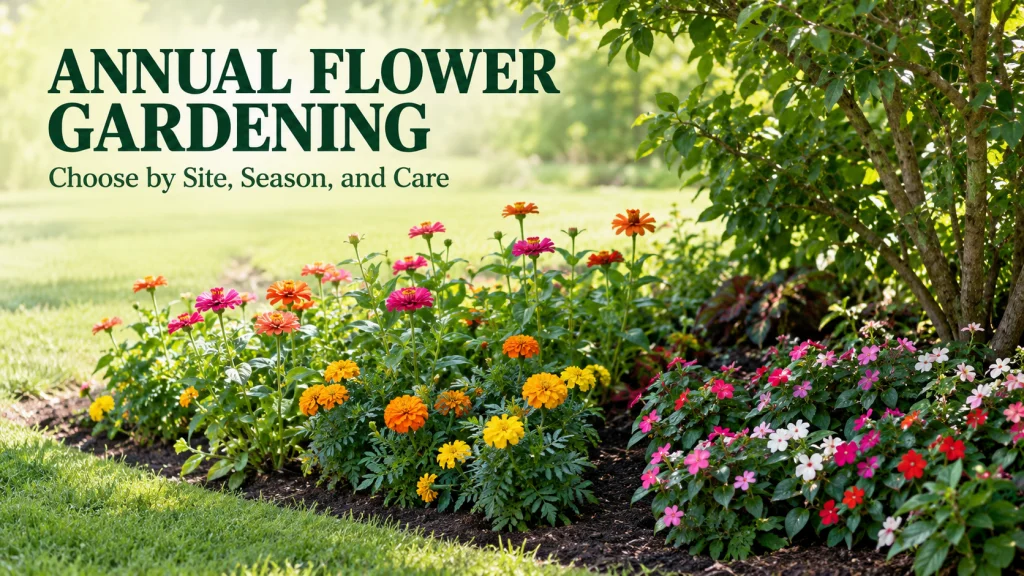
Start with the season before you choose the flower
A flat of annuals can look equally ready at the garden center even when the plants belong in very different weather. Annual flower gardening gets much easier when you treat temperature response as a fit question, not as an afterthought after planting. Cool-season annuals can perform well when spring or fall conditions favor them, while warm-season choices are better matched to settled summer weather. That difference matters before color, flower shape, or a sale sign enters the decision.
The same logic applies to light and moisture. A bright bed with long, hot afternoon exposure is not the same growing site as a porch edge with filtered light, and a well-drained bed that dries quickly is not the same as a spot that stays moist after irrigation. Choosing by appearance first often pushes the gardener into extra watering, repeated replacement, or constant grooming later. Choosing by site and season first narrows the field to plants that have a reasonable chance of fitting the conditions already present.

This analog soil thermometer uses a stainless steel 4-inch stem and measures 20 to 180 degrees F. Its dial marks minimum, maximum, and optimal ranges for seed germination and planting. It gives the gardener a direct temperature check before matching annuals to seasonal conditions.
Check On AmazonIf you click this link and buy, we earn a commission at no additional cost to you.
Use this page to identify the decision you still need to make
This page is meant to help you sort annual flower choices before you drop into plant-level instructions. The core question is not simply which annual is attractive, but which annual system fits the place you want to fill. That means resolving the major constraints first: light, seasonal temperature, moisture, mature size, bloom habit, and the amount of recurring care you are willing to provide. Once those are clear, a narrower guide can answer the remaining question without forcing unrelated advice into the same planting.
That boundary is useful because several gardening jobs can look connected while actually belonging to different decisions. Starting annuals from seed is a propagation process, container construction and drainage are growing-space questions, and a plant that suddenly turns leggy, sparse, floppy, spotted, or otherwise unhealthy needs symptom-led troubleshooting. This page does not try to replace those topics with a few generic tips. Its job is to help you recognize which annual-flower choice is unresolved and send that question in the right direction.
- If direct sun is the main constraint, start with annuals suited to that exposure, then separate ordinary sun tolerance from true summer heat tolerance.
- If limited light is the main constraint, narrow the choice to annuals that fit the actual shade pattern before comparing bloom color or size.
- If temperature is the main constraint, decide whether the display is meant for cooler weather or established summer conditions before choosing a plant.
- If water availability is the main constraint, check drainage and establishment needs before treating drought tolerance as the deciding trait.
- If site fit is already settled, use mature habit, bloom duration, deadheading, pinching, self-seeding, and browsing pressure to choose the next route.
- If the plant is already declining or showing unusual symptoms, stop using a selection or grooming guide and move to symptom-led troubleshooting instead.
If two plants meet the same visual goal but one fits the site with less intervention, that difference should carry more weight than a small preference in color. The point is not to avoid maintenance entirely, because annual displays always involve some care. It is to avoid choosing a plant whose normal needs fight the site every week. That is the distinction that turns a shopping list into a workable garden decision.

This set includes 300 white 4-inch plastic plant labels and a marker pen. The labels are listed as waterproof for outdoor seedlings and garden plants. They provide a simple way to identify shortlisted annuals after the main site and care decisions have been sorted.
Check On AmazonIf you click this link and buy, we earn a commission at no additional cost to you.
Match light, heat, and moisture before comparing plant names
Light labels are a starting point, but the lived conditions of the bed matter more than the label in isolation. A full-sun location can also be hot, reflective, and quick to dry, while another sunny bed may have cooler mornings and soil that holds moisture longer. Shade can be open and bright or dense and dry under tree roots, which creates a different problem than simply receiving fewer hours of direct sun. Treating all sunny or shaded sites as equivalent can lead to the wrong plant even when the basic light category seems correct.
Moisture needs deserve the same separation. Drought-tolerant annuals still need water while establishing, and a plant that tolerates dry periods is not automatically suited to every hot site or every soil. Cool-season annuals also should not be treated as weak plants merely because they fade when sustained heat arrives. Their useful season can simply be different from that of summer performers, so the first choice is often whether you are planting for a cool window, a warm window, or a transition between the two.
| Condition to check | What changes the choice | What to decide next |
|---|---|---|
| Strong direct sun | Duration, afternoon heat, reflected heat, and soil drying rate | Whether you need a full-sun choice that also handles heat or lower moisture |
| Partial or filtered shade | How bright the site stays and whether nearby roots compete for water | Whether a shade-tolerant annual fits without sacrificing the moisture pattern it needs |
| Cool spring or fall weather | Species temperature preference and local weather | Whether a cool-season annual is the intended display rather than a summer plant planted too early |
| Hot summer conditions | Heat exposure, water access, drainage, and establishment | Whether heat tolerance, drought tolerance, or both actually matter at this site |
| Limited watering capacity | Soil texture, mulch, rainfall, root establishment, and plant type | Whether the planting can fit the available watering routine without chronic stress |
Use the matrix as a filter, not as a plant list. If the site fails a plant’s basic fit on light or seasonal temperature, extra maintenance rarely makes that mismatch disappear. If the site fits, then mature habit and recurring care become the next useful comparison. That order keeps the decision grounded in conditions you can actually observe at home.
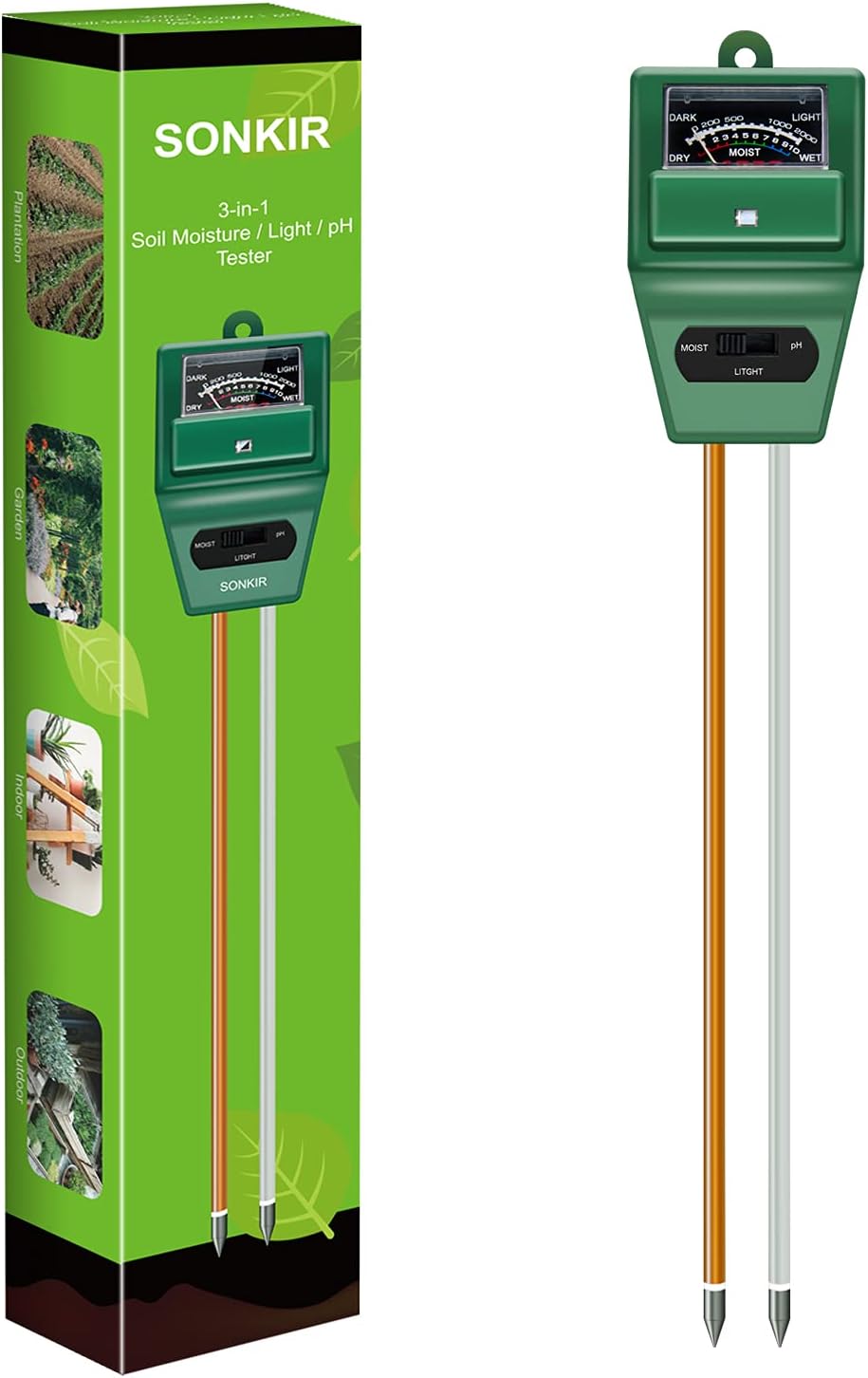
The SONKIR MS02 checks soil moisture, light, and pH in one garden tool. Amazon lists the green variant for garden, lawn, farm, indoor, and outdoor plant care. Those readings support the section’s check of light and moisture before annual names are compared.
Check On AmazonIf you click this link and buy, we earn a commission at no additional cost to you.
Separate mature habit from the question of whether a plant returns
Annuals are often discussed as if they form one tidy group, but their mature shapes can be very different. Some stay low and mounded, some spread, some grow upright, and others become tall enough to change the visual balance of a bed. A small transplant tells you little about the space it will occupy later, so spacing and placement should be based on mature habit rather than the size of the plant on purchase day. That prevents a compact-looking planting from becoming crowded, shaded, or visually lopsided as the season develops.
Permanence is a separate issue. True annuals complete their life cycle within a growing season, while some plants sold or used as annuals may be perennial in climates where winter conditions allow them to survive. Self-seeding can also make an annual appear to return, even though the original plant did not persist. If you want a predictable one-season display, a plant’s reseeding behavior matters because the next season may bring volunteers in places you did not plan to keep them.
The practical decision is therefore two-part: ask what shape the plant develops, then ask what happens after flowering and seed set. A spreading annual may need room even if it lives only one season, while a self-seeding type can create more editing work later if you prefer a controlled bed. Neither trait is automatically good or bad. They only become useful once they match the space and the level of change you are comfortable managing.

This selected variant includes 20 natural bamboo plant stakes in an 18-inch size. The listing also includes green ties for securing plants to the stakes. The stakes suit upright annuals that need light support after mature habit and spacing have been considered.
Check On AmazonIf you click this link and buy, we earn a commission at no additional cost to you.
Choose the maintenance pattern you can repeat
Annual flower care is not one chore repeated across every species. Some plants benefit from removing spent flowers to encourage continued bloom or keep the planting tidy, while some modern annuals are relatively self-cleaning and need little or no routine deadheading. Pinching can also have a different purpose from deadheading because it is used to influence branching and shape rather than simply remove old blooms. Before choosing a plant, decide whether you want a display that accepts regular grooming or one that can stay presentable with lighter intervention.
Watering should also be treated as a condition-based routine rather than a fixed calendar. Soil texture, rainfall, root establishment, heat, exposure, and plant type all change how quickly the root zone dries. Deep watering that actually moistens the root zone is more useful than repeatedly wetting only the surface, but even that principle still requires checking the soil and weather rather than obeying one schedule. The right annual for a bed is partly the one whose normal moisture demand fits the way that bed behaves.
Maintenance becomes a design constraint when the planting is large. Deadheading a few plants near the front door is a different workload from grooming a long border every week, just as hand-watering a small bed differs from keeping a broad, fast-drying area evenly supplied. If repeated care sounds unrealistic at the scale you are planning, change the plant mix or reduce the area before planting. That adjustment is usually easier than trying to rescue an overcommitted routine later.

This kit uses a 50-foot Flexzilla garden hose with quick-connect couplers and attachments. The hose is listed as lightweight, easy to coil, and resistant to kinking under pressure. It fits beds where recurring watering is part of the maintenance routine.
Check On AmazonIf you click this link and buy, we earn a commission at no additional cost to you.
Route plant selection by the constraint that matters most
Once the site is clear, use the strongest constraint to narrow the next question. If the bed receives intense sun, the useful question is not simply which annuals are colorful, but which choices fit that exposure and the heat or drying pattern that comes with it. If the bed is shaded, the next step is to identify annuals that can flower or provide ornamental foliage under that light level. If summer heat is the limiting condition, heat response deserves its own decision instead of being folded into a generic full-sun list.
Moisture can create another route. A site with limited irrigation access may justify looking at drought-tolerant annuals, but only after allowing for establishment and confirming that the soil drains well enough for the plants you are considering. If the display is meant for cooler weather, the route changes again because a cool-season planting is built around a different temperature window. In each case, the child question should be specific enough that the answer can respond to a real condition rather than repeat a long mixed list.

The Luster Leaf 1875 SunCalc is designed to classify garden light as full sun, partial sun, partial shade, or full shade. It is a dedicated sunlight calculator for garden sites. That makes it useful when light exposure is the strongest constraint guiding the next annual-selection route.
Check On AmazonIf you click this link and buy, we earn a commission at no additional cost to you.
Keep grooming choices separate from plant selection
Deadheading and pinching are easy to lump together because both involve removing plant material, but they solve different problems. Deadheading removes spent flowers and can improve appearance, reduce seed formation, or encourage additional bloom in annuals that respond to it. Pinching removes soft growing tips to encourage branching or manage shape in plants that benefit from that treatment. A plant can need one, both, or neither, so the first step is to identify the purpose before reaching for pruners.
That distinction matters because unnecessary grooming adds work without necessarily improving the plant. Some annuals are self-cleaning, and repeated deadheading may offer little practical benefit beyond occasional tidying. Other plants are grown partly for reseeding, in which case removing every spent flower conflicts with the goal because seed needs to mature. The maintenance plan should therefore match the bloom habit and the gardener’s intent rather than follow a blanket rule.
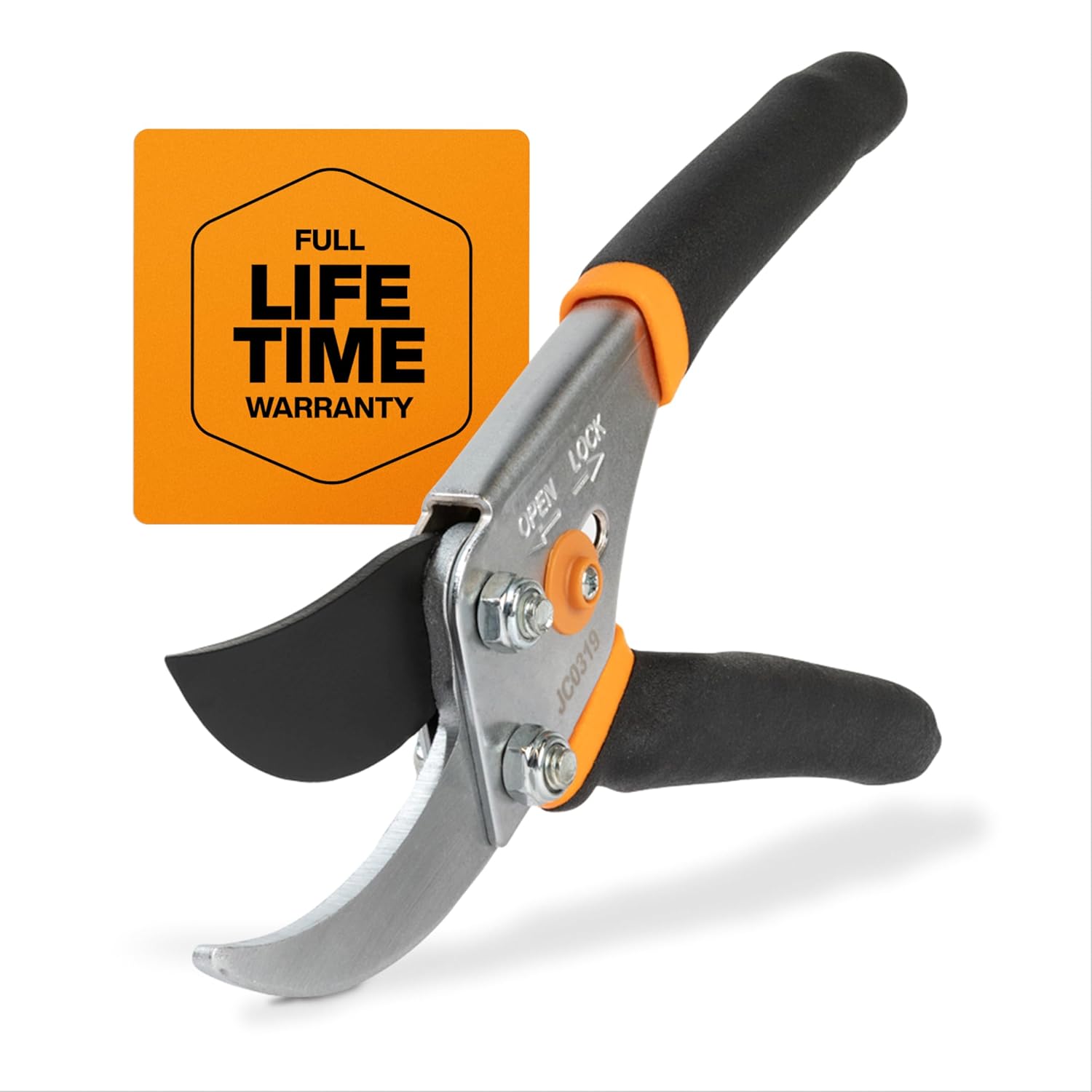
These Fiskars bypass pruning shears have a 5/8-inch cut capacity for stems and small branches. The steel blades use a low-friction coating, and the tool includes a self-cleaning sap groove and non-slip grip. It fits deadheading and other light grooming tasks when the annual being grown actually benefits from cutting.
Check On AmazonIf you click this link and buy, we earn a commission at no additional cost to you.
Keep propagation, soil systems, and plant problems in their own lanes
Annual flowers often touch several other gardening systems, but this page should not collapse them into one oversized guide. Seed starting involves germination conditions, indoor light, timing, and transplant readiness that deserve propagation-specific instructions. Containers add their own questions about volume, drainage, potting mix, watering frequency, and root-zone behavior. A planting bed can also have a soil problem that should be evaluated as a soil problem instead of blamed on the fact that the plants are annuals.
Symptom-led problems need the same discipline. Leggy growth can be associated with several different conditions, sparse bloom can have more than one cause, and a floppy plant may be responding to habit, light, weather, support, or stress. The symptom is evidence that a closer check is needed, not a diagnosis by itself. Avoid jumping from a visual symptom to fertilizer, extra water, pruning, or replacement until the likely causes have been narrowed.
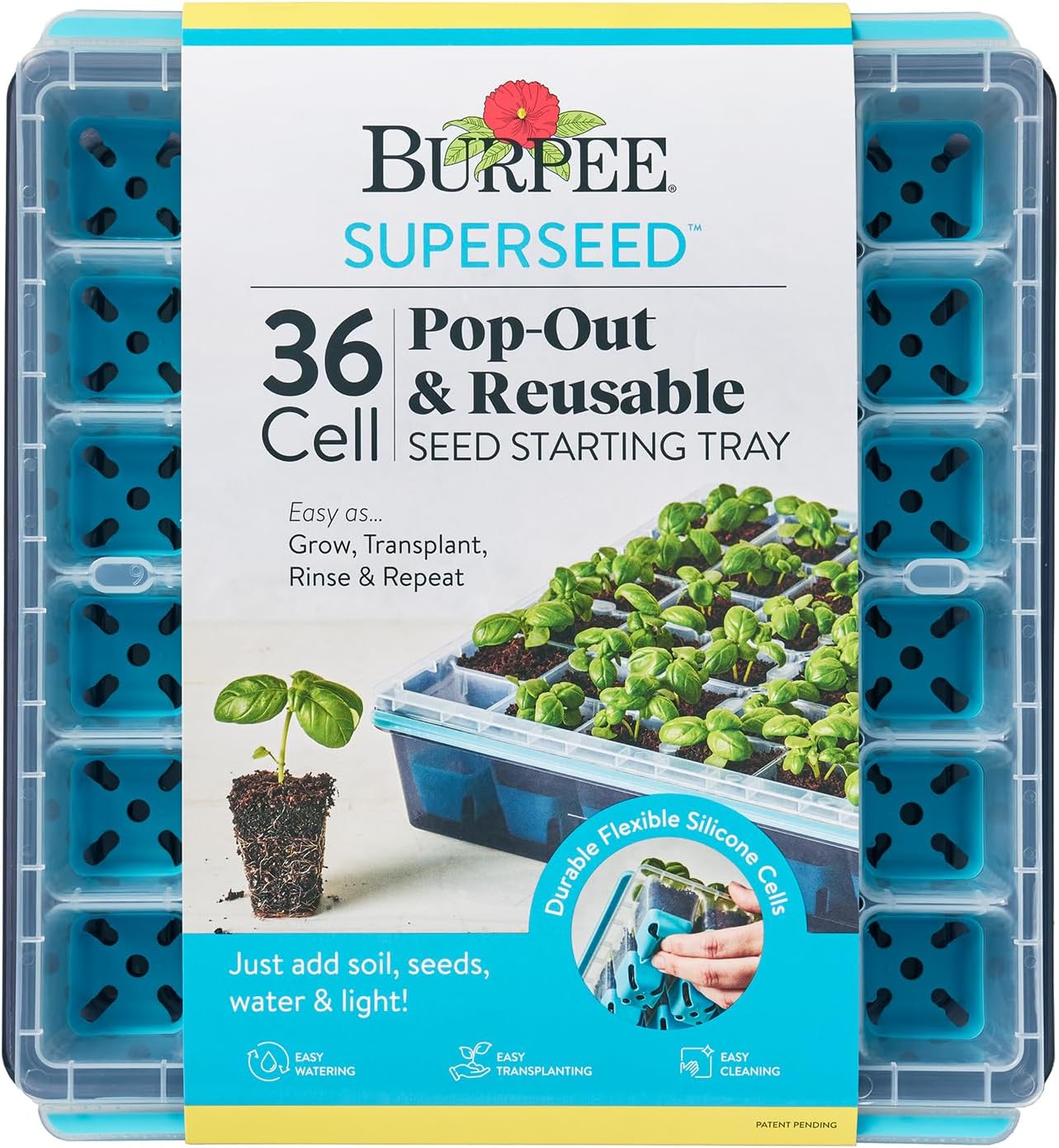
The Burpee SuperSeed tray has 36 reusable cells for starting seedlings indoors. Its flexible silicone cells pop seedlings out for transplanting, while molded corner slots improve drainage and soil aeration. It belongs in the propagation lane of the article rather than being treated as a general annual-selection tool.
Check On AmazonIf you click this link and buy, we earn a commission at no additional cost to you.
Run the final choice through workload and fit
Before buying or planting, picture the routine the bed will require once the plants are full size. Check how often you will realistically water, whether you will deadhead or pinch, how easy the bed is to reach, and whether reseeding is welcome. Also consider whether the display depends on replacing cool-season plants with warm-season plants or accepting a quieter period as weather changes. A planting that fits your available time is more reliable than one that only works with ideal weekly attention.
Then compare that workload with the benefit you actually want. If the goal is a strong block of seasonal color near an entrance, regular grooming may be worth it because the planting is small and highly visible. If the goal is a broad background bed, lower-maintenance annuals or a smaller annual component may make more sense. The same plant can be a good choice in one location and an avoidable burden in another because access and scale change the cost of care.

The KVR product combines a garden kneeler and foldable seat in one frame. Its listing includes a thickened, widened soft pad and two tool pouches. The seat-and-kneeler format is relevant when bed access and repeated maintenance are part of the workload check.
Check On AmazonIf you click this link and buy, we earn a commission at no additional cost to you.
Final Thoughts: use the plant system before the plant list
Annuals are most useful when you stop treating them as interchangeable blocks of color. Start with the site and season, then check mature habit, moisture, grooming, reseeding, and the amount of care you can repeat. Once those conditions are clear, the plant list gets shorter and the remaining choice becomes easier to defend. The next step is to use the specific guide that matches the constraint you have not yet resolved.
You do not need a universal annual care calendar to make a good choice. You need a planting that fits the light, weather, soil behavior, access, and maintenance reality of your own garden. If the plant fits those conditions, fine differences in color and bloom form can become the enjoyable part of the decision instead of a distraction from basic suitability. That is a more dependable way to build seasonal color without turning every mismatch into extra work.

The Fiskars Ergo Garden Trowel is a hand tool for digging and planting in beds and pots. Its cast-aluminum head is rust resistant, and the handle uses an ergonomic comfort grip with a hang hole. It is a compact planting tool for use after site, season, habit, and maintenance needs have been resolved.
Check On AmazonIf you click this link and buy, we earn a commission at no additional cost to you.
Explore the annual flower guides that match your next decision
If you are still deciding where annuals fit within a broader ornamental planting, start with the flower gardening guide and then return to the constraint that matters here. The links below separate the annual-flower questions by exposure, seasonal stress, bloom habit, grooming, reseeding, and browsing pressure. Use the one that matches the decision you still need to make, rather than opening several lists and trying to reconcile different assumptions. That keeps the next step specific to the bed you are actually planning.
The table also prevents a common mistake: using a plant-selection list to answer a maintenance question, or using a maintenance guide to compensate for the wrong site. Each guide has a narrower job than this page. Pick the route that matches your strongest remaining constraint, then verify the individual plant before planting. If the constraint changes, return here and choose a different route rather than forcing the first choice to work.
| Topic | What you’ll find |
|---|---|
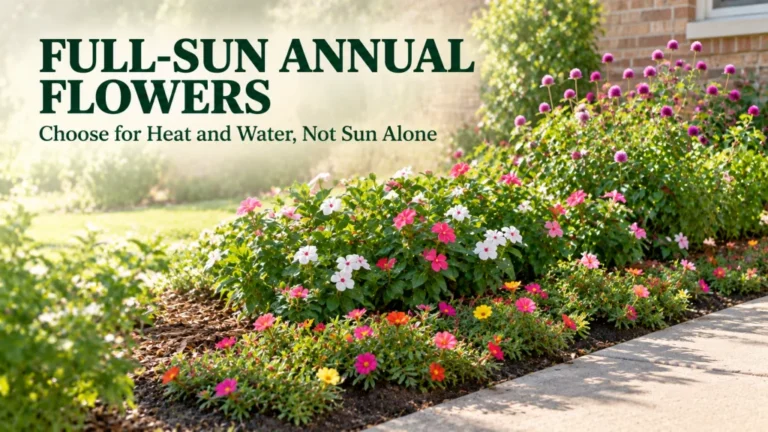
| Full sun annuals | Annual choices for bright sites, with attention to exposure rather than color alone. |
| Annuals for shade | Ways to narrow annual choices when direct sun is limited or filtered. |
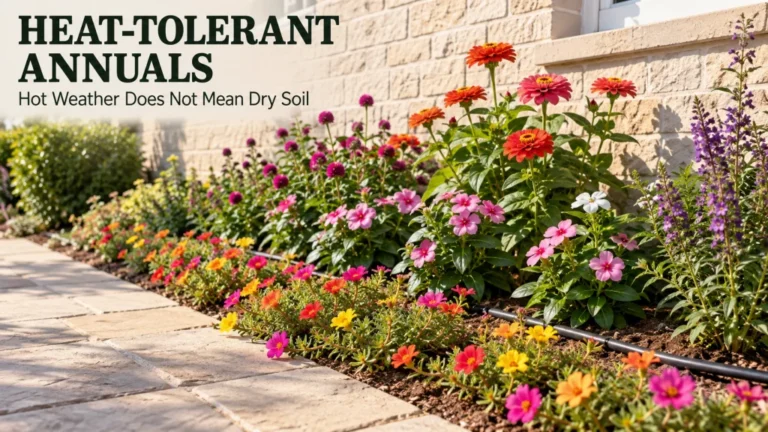
| Heat tolerant annuals | Plant-selection guidance for sites where sustained summer heat is a major constraint. |
| Drought tolerant annuals | Annuals suited to lower-moisture conditions after establishment, with fit and watering limits in view. |
| Cool season annuals | Annual choices intended for cooler planting windows instead of peak summer heat. |
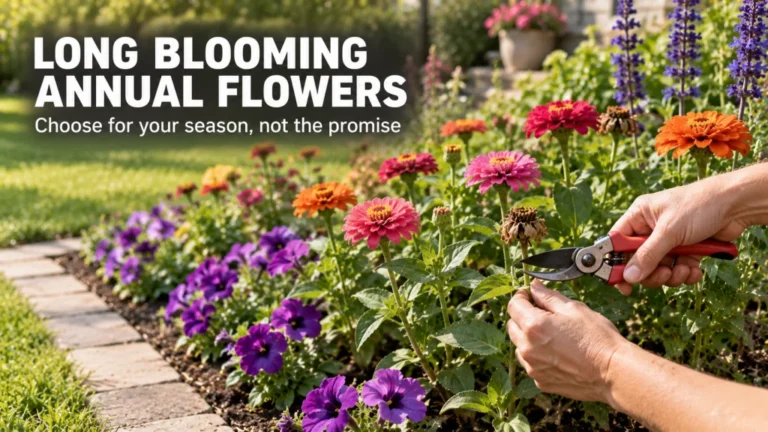
| Long blooming annual flowers | How to compare annuals when bloom duration is the unresolved priority after site fit. |
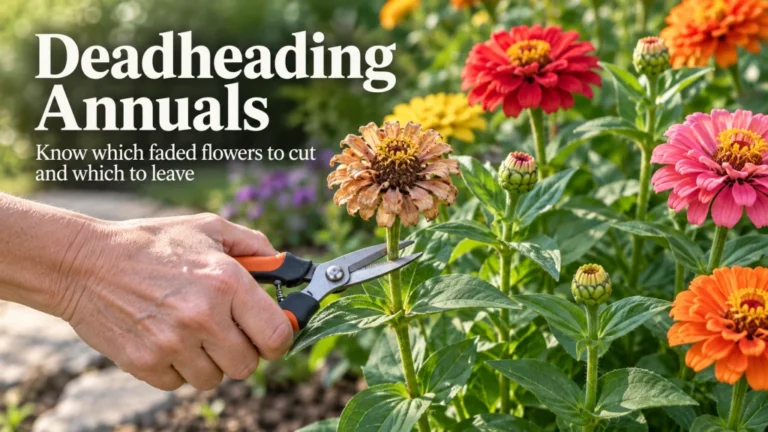
| Deadheading annuals | When removing spent flowers helps and when a plant may not need routine deadheading. |
| Pinching annuals | How pinching differs from deadheading and when shaping or branching is the real goal. |
| Self seeding annuals | What to consider when volunteers are welcome, unwanted, or part of the planting plan. |
| Deer resistant annuals | How to approach annual selection when browsing pressure is part of the site constraint. |
If more than one route applies, resolve the hardest site constraint first. Light, temperature, and moisture usually shape the basic fit before bloom length or grooming preferences become useful tie breakers. After that, maintenance and reseeding can help you choose between otherwise suitable plants. The result should be a short, condition-matched set of options rather than one giant annual list.

This K-Brands set includes 1.6-by-16-inch and 3.5-by-16-inch planting auger bits. The listing specifies compatibility with a 3/8-inch hex drive. The two sizes provide planting-hole options once the gardener has followed the appropriate annual guide and verified the plant and site.
Check On AmazonIf you click this link and buy, we earn a commission at no additional cost to you.
FAQs
These questions cover the points that most often change an annual planting decision after the site has been assessed. The answers stay broad because individual species and local conditions can shift the result. Use them to identify the next check rather than to override a plant label or species-specific recommendation. If the answer changes with light, weather, soil, or growing space, those conditions should stay part of the decision.
The most useful sequence is still site first, plant behavior second, and maintenance third. A familiar annual can be a poor fit when it is placed in the wrong exposure or expected to perform outside its preferred season. A lower-maintenance choice can also become demanding if the bed dries faster than expected or if reseeding is unwanted. Treat each answer below as a practical filter, then verify the plant you are actually considering.
🌞 Do annual flowers need full sun?
No. Some annuals perform well in full sun, while others fit partial shade or shade better. Match the plant to the actual light exposure of the site, including hot afternoon sun or dry shade conditions that can change how demanding the location is.
🌡️ Can I plant the same annuals in spring and summer?
Not always. Cool-season annuals are selected for cooler conditions, while warm-season annuals generally perform better after summer weather has settled. Use local conditions and the plant’s temperature preference rather than one national planting calendar.
💧 Are drought tolerant annuals maintenance free?
No. Drought-tolerant annuals still need adequate water while roots establish, and their performance also depends on drainage, soil, heat, and species. Drought tolerance reduces one constraint after establishment, but it does not remove normal garden care.
✂️ Do I need to deadhead every annual flower?
No. Some annuals benefit from deadheading, while others are relatively self-cleaning or may be allowed to set seed intentionally. Check the species and your goal before making deadheading a routine job.
🌱 Will annual flowers come back next season?
True annuals complete their life cycle within one growing season, so the original plant does not return as a perennial does. Some annuals self-seed, which can produce new seedlings later and create the appearance that the plant came back.
🪴 Can I use the same annual flower advice for containers and garden beds?
Use the plant’s light and temperature needs in both places, but do not assume the growing system behaves the same way. Containers can dry faster and have different root-zone limits, so container setup and watering need their own checks.
References and Sources
These sources support the horticultural distinctions used in the article, including seasonal response, moisture needs, and grooming behavior. They are included because those facts affect the planting decisions described above. The list is intentionally limited to sources that directly support the guidance. It is not a general reading list or a collection of unrelated gardening links.
Plant behavior can still vary by species, cultivar, climate, weather, and site conditions. That is why the article uses these references as evidence anchors rather than as a universal calendar. When a narrower plant guide gives species-specific instructions, those details should take priority over broad annual-flower patterns. The links below are the sources used for the factual boundaries on this page.
- UConn Home and Garden Education Center annuals guide: Supports the distinctions among sun and shade choices, cool and warm season annuals, watering, deadheading, pinching, and self-seeding behavior.
- Iowa State University Extension cool season annuals guide: Supports the seasonal distinction between annuals suited to cooler weather and plants that perform better in summer conditions.
- Iowa State University Extension drought tolerant annuals guide: Supports the need for establishment watering even when an annual is selected for better tolerance of dry conditions.
- Iowa State University Extension deadheading guide: Supports the role of deadheading for some annuals and the fact that some annuals are self-cleaning.