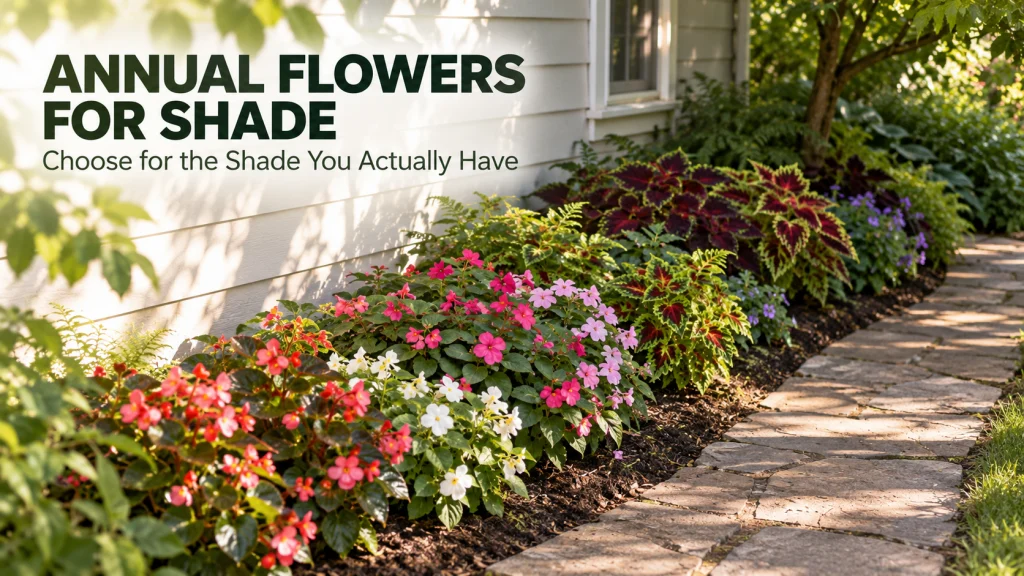
Annual flowers for shade are easier to choose when you separate the bed into a practical light category before looking at plant names. Part shade still includes useful direct sun, bright shade may have little direct sun but strong filtered or reflected light, full shade has more limited direct exposure, and deep shade has low overall light as well. Those categories are working descriptions rather than universal measurements, so the exact plant guidance still matters. As light drops, the flowering shortlist usually narrows and foliage can become a more reliable part of the display.
Define the site before building a list of annual flowers for shade
Choosing annuals for shade starts with classifying the bed rather than treating shade as one condition. Part shade is the clearest working category because Iowa State describes it as four to six hours of direct sun, while bright shade can have little direct sun but still receive strong filtered or reflected light. Full shade means the plant must be documented for substantially less direct exposure, and deep shade adds another constraint because the overall light level is low rather than merely protected from direct sun. Watch both direct sun and ambient brightness so a bright north-facing bed is not treated the same as a dark corner under a dense canopy.
Each category changes the buying decision. Part shade keeps the widest flowering shortlist because more light reaches the plant, while bright shade favors annuals that remain useful with filtered light and may reward foliage as much as flowers. Full shade should push you toward plants specifically documented for shade, and deep shade should make you conservative about flower expectations instead of assuming a part-shade label will stretch far enough. Because horticultural references do not use every shade term identically, use the category to narrow the list and the exact plant label or reliable plant guidance to make the final call.

This handheld meter measures illuminance up to 200,000 lux and also displays ambient temperature. Its four-digit color LCD gives a direct reading for comparing brighter and dimmer garden positions. Use it to document relative light differences before deciding whether a bed behaves more like part shade, bright shade, or a darker site.
Check On AmazonIf you click this link and buy, we earn a commission at no additional cost to you.
Set the light, moisture, climate, and mature-space filters first
Once the light category is clear, moisture becomes the next useful filter. Shade beside a building can stay relatively cool and evenly moist, while shade beneath a dense canopy may come with root competition and a surface that dries faster than expected. A container in the same light can behave differently again because its smaller soil volume changes how quickly water is lost. Record whether the root zone stays evenly moist, dries quickly, or remains wet long enough to limit otherwise suitable plants.
Climate and mature space then decide whether a plant that passes the light test actually belongs in the bed. A low edging plant, a mounding filler, and a taller background annual can share similar light tolerance but create very different results when mature. Heat and humidity can also change plant performance and disease pressure even when the light level looks appropriate. Use light to define the candidate pool, then use moisture, climate, and mature habit to decide which candidates deserve further comparison.

This battery-free meter gives an instant soil-moisture reading through a single 304 stainless steel probe. Its clear display is designed for indoor and outdoor plant checks. Use it as a quick moisture filter when shade, containers, or tree-root competition make the root zone behave differently than the light level suggests.
Check On AmazonIf you click this link and buy, we earn a commission at no additional cost to you.
Remove candidates that fit the label but not the actual site
Elimination should now be specific to the light category you identified. A part-shade plant should not be promoted into a deep-shade choice simply because both settings are called shady, and a plant listed for sun to part shade should be treated cautiously as usable light falls. Some annuals tolerate reduced light yet respond with fewer flowers or a more open habit, so a survival claim does not answer a flower-first question. Remove candidates whose documented light range does not match the bed before comparing color or price.
Use moisture as the second elimination test rather than reopening the entire site-fit discussion. A plant that prefers steady moisture is a poor match for a dry, root-filled bed unless you accept the added watering, while a plant that dislikes persistently wet soil should not be forced into slow drainage. Mature spread can eliminate another candidate if it would crowd the bed or block airflow. By the end of this step, every remaining plant should pass the basic light, moisture, and space tests without needing a seasonal rescue plan.
Choose a plant because a sign says “shade” and assume any dark corner will produce the same result.
Match the exact plant to observed light, moisture, mature space, and the amount of seasonal care you are willing to provide.
This elimination step should leave a smaller group with one important advantage: every candidate already fits the non-negotiable conditions. That means the next comparison can focus on what the plant contributes rather than whether it can merely endure the site. Flowering role, foliage value, height, and seasonal appearance now become useful distinctions instead of distractions. A shorter list also makes exact cultivar checking easier when you are standing in front of real plants rather than browsing generic names.

This 25-foot tape measure has fraction markings, a retractable blade, and a self-locking design. It gives a simple way to check bed width and available planting space before choosing mature plant sizes. Measuring the actual site helps remove candidates whose spread would crowd the bed or walkway.
Check On AmazonIf you click this link and buy, we earn a commission at no additional cost to you.
Compare the traits that matter specifically for shade annual selection
With the light mismatches removed, compare what each plant contributes to that specific shade category. Impatiens, begonias, lobelia, browallia, and wishbone flower are documented for at least some shaded conditions, while coleus and caladium are often chosen primarily for foliage value. That distinction matters more as light decreases because a flower-first plan has fewer dependable choices in darker sites. A foliage plant can therefore be the stronger design choice even when the original shopping idea was simply to find more flowers.
Habit, expected height, moisture preference, and placement still separate plants within the same light group. The exact species or cultivar needs checking because familiar common names can include plants with different size, disease notes, or light behavior. Treat the table as a sequence from brighter to darker shade rather than four interchangeable plant lists. Its purpose is to show how the consequence changes as usable light drops.
| Site pattern | Candidates to verify | What to check before buying | Reason to skip |
|---|---|---|---|
| Part shade with several hours of direct sun | Wax begonia, wishbone flower, browallia, lobelia | Exact light range, mature spread, moisture preference, heat response | The plant needs more direct sun than this part-shade window provides |
| Bright shade with strong filtered or reflected light | Impatiens, coleus, wishbone flower, appropriate begonias | Whether the exact plant is documented for shade, plus flower versus foliage role | The plant only tolerates reduced light but needs more sun for the display you want |
| Full shade with limited direct exposure | Impatiens, lobelia, browallia, tuberous begonia, wishbone flower | Full-shade documentation, moisture needs, disease notes, mature habit | The plant is only documented for part shade or its flowering drops too far in lower light |
| Deep shade with low overall light | Only plants specifically documented for very shady conditions; consider foliage-first choices | Whether the site is bright enough for the expected bloom level, plus moisture and airflow | You are relying on a generic shade label to promise strong flowering in a genuinely dark site |
The table is most useful when you move down it only as far as your site allows. A plant that looks promising in part shade does not automatically remain promising in full shade, and deep shade should trigger the strictest verification. Carry a few candidates that match the correct light branch into the nursery, then compare actual cultivars and sizes from that smaller pool. That turns the classification into a buying decision instead of leaving it as another set of shade labels.

These plastic T-type plant labels measure 6 x 10 cm and come in a 100-piece pack. They give each candidate a physical identifier when several annuals or cultivars are being compared. Keeping names attached to plants makes it easier to verify light range, mature habit, moisture needs, and cultivar-specific notes.
Check On AmazonIf you click this link and buy, we earn a commission at no additional cost to you.
Separate establishment needs from long-term tolerance and maintenance
A plant described as shade tolerant still needs a successful establishment period. Newly planted annuals have limited root systems, so their moisture needs can be less forgiving than those of a plant that has settled into the bed. A site that will eventually be manageable may still require closer attention after planting, especially in containers or fast-drying soil. Do not use a mature plant’s tolerance label as an excuse to ignore early watering and root-zone conditions.
Once roots are established, the question changes from helping a new transplant settle in to maintaining the conditions the plant already prefers. A plant that fits the site’s normal moisture pattern should need fewer corrective watering decisions than one planted at the edge of its tolerance. That difference is especially useful in shade because a cool-looking bed can still dry quickly when tree roots or containers compete for water. Judge long-term tolerance by the recurring conditions of the site, not by how the plant looked during its first stretch after planting.

This 15-inch metal watering wand provides 10 spray patterns and thumb-operated flow control. The long nozzle helps direct water around newly planted annuals without relying on a single fixed spray. It is useful during establishment, when small root systems may need closer moisture attention than settled plants.
Check On AmazonIf you click this link and buy, we earn a commission at no additional cost to you.
Check bloom window, mature habit, and recurring grooming before buying
Shade annual selection is stronger when you picture the bed later in the season rather than only on planting day. A compact plant may fill an edge neatly, while a taller or more open plant can disappear visually if it is placed behind dense foliage. Some plants are valuable because their leaves carry the display even when flowering is modest. Others earn their space mainly through flowers and need enough usable light to keep that strength visible.
Grooming is a separate question from establishment and should be judged by what keeps the display attractive later in the season. Extension guidance notes that some annuals benefit from removing spent flowers, while others need little extra care to remain presentable. That can matter in a flower-first border where declining bloom is more noticeable than it would be in a foliage-led planting. Compare that seasonal appearance and grooming pattern before choosing between two plants that otherwise fit the same light category.
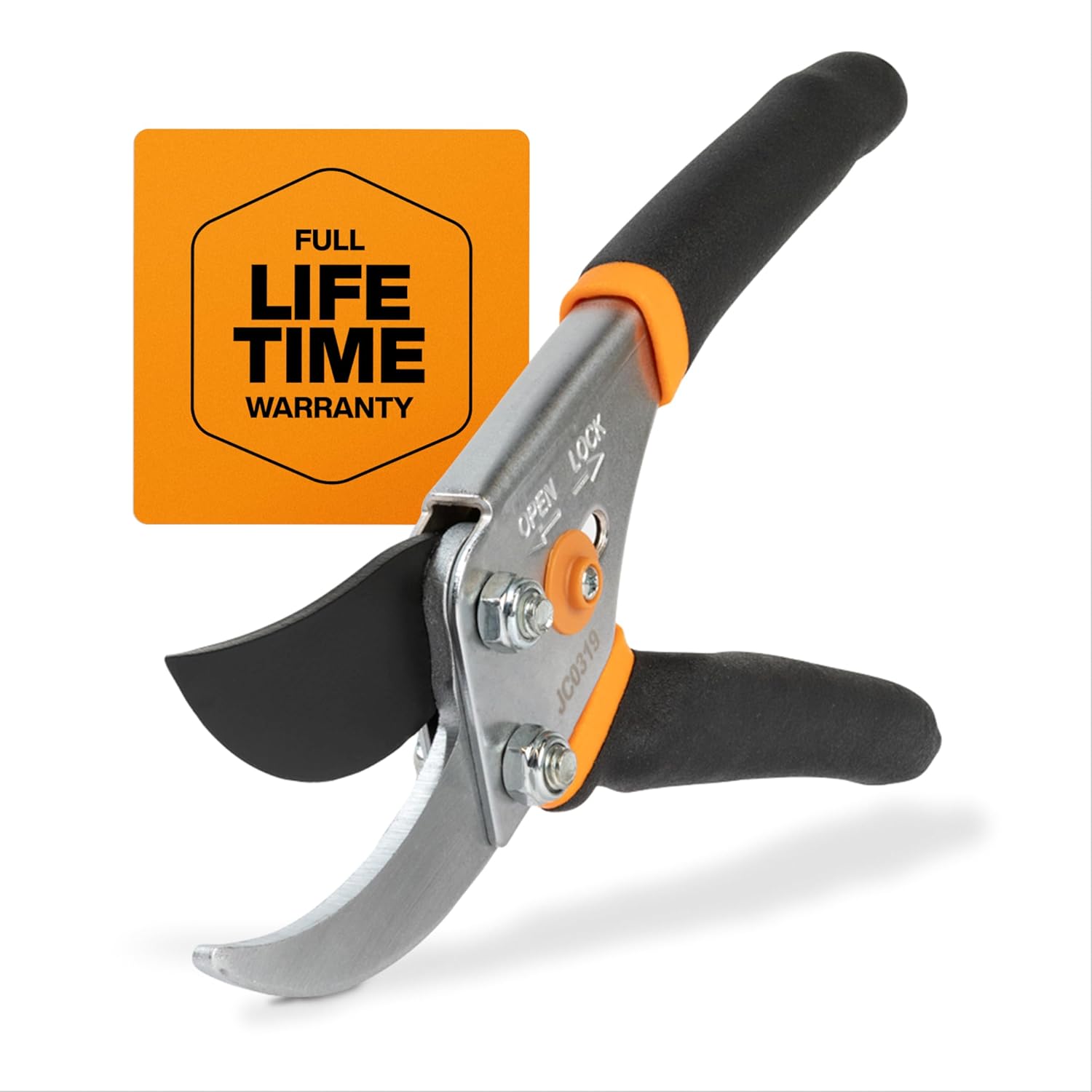
These bypass pruning shears have a 5/8-inch cut capacity, steel blades, and a self-cleaning sap groove. A non-slip grip supports controlled stem and branch cuts. For this section, the tool is relevant to recurring grooming such as removing spent growth or tidying annuals when the specific plant benefits from it.
Check On AmazonIf you click this link and buy, we earn a commission at no additional cost to you.
Treat resistance and low-maintenance labels as conditional, not guarantees
Plant labels often compress a complicated growing situation into a few words. Terms such as shade tolerant, easy care, disease resistant, or low maintenance can be useful screening clues, but none of them cancels site conditions. A resistant cultivar can still be stressed by poor airflow, incorrect moisture, or an unsuitable light level. A low-maintenance plant can still create work if it is placed where it constantly needs watering, trimming, or replacement.
This is especially important with familiar shade annuals because a common plant name can cover multiple species or cultivars with different behavior. Verify the exact type when disease history, mature size, flower performance, or light tolerance matters to your decision. Avoid turning one favorable trait into a blanket promise about the whole plant. The better question is whether that trait solves a constraint in your bed without creating a larger one somewhere else.

This 144-page garden logbook includes plant log pages for tracking each plant through the growing season. It also provides space to note successes, problems, and general gardening information. Recording exact varieties and site results helps test whether broad resistance or low-maintenance labels match what actually happens in a specific bed.
Check On AmazonIf you click this link and buy, we earn a commission at no additional cost to you.
Use broader annual flower guidance when the decision moves beyond shade
This page is most useful when the central problem is choosing annuals for a shaded site. If you are still deciding how annual flowers fit into the season, bed layout, maintenance plan, or overall ornamental planting, the broader annual flower gardening guidance gives that wider context. If the question expands beyond annuals into other flowering plant groups and longer-term bed planning, use the flower gardening guide for the larger decision. Keeping those questions separate prevents a shade shortlist from turning into an unfocused general garden plan.
Light can also change within the same yard, which is why one plant list rarely belongs everywhere. A bed that proves to receive much more direct sun than expected should be compared with full sun annuals rather than forcing shade-tolerant choices into a brighter exposure. If the site is defined less by low light and more by prolonged summer heat, the practical next step is to compare heat tolerant annuals. Use the site condition that most strongly limits performance to decide which guidance should lead.
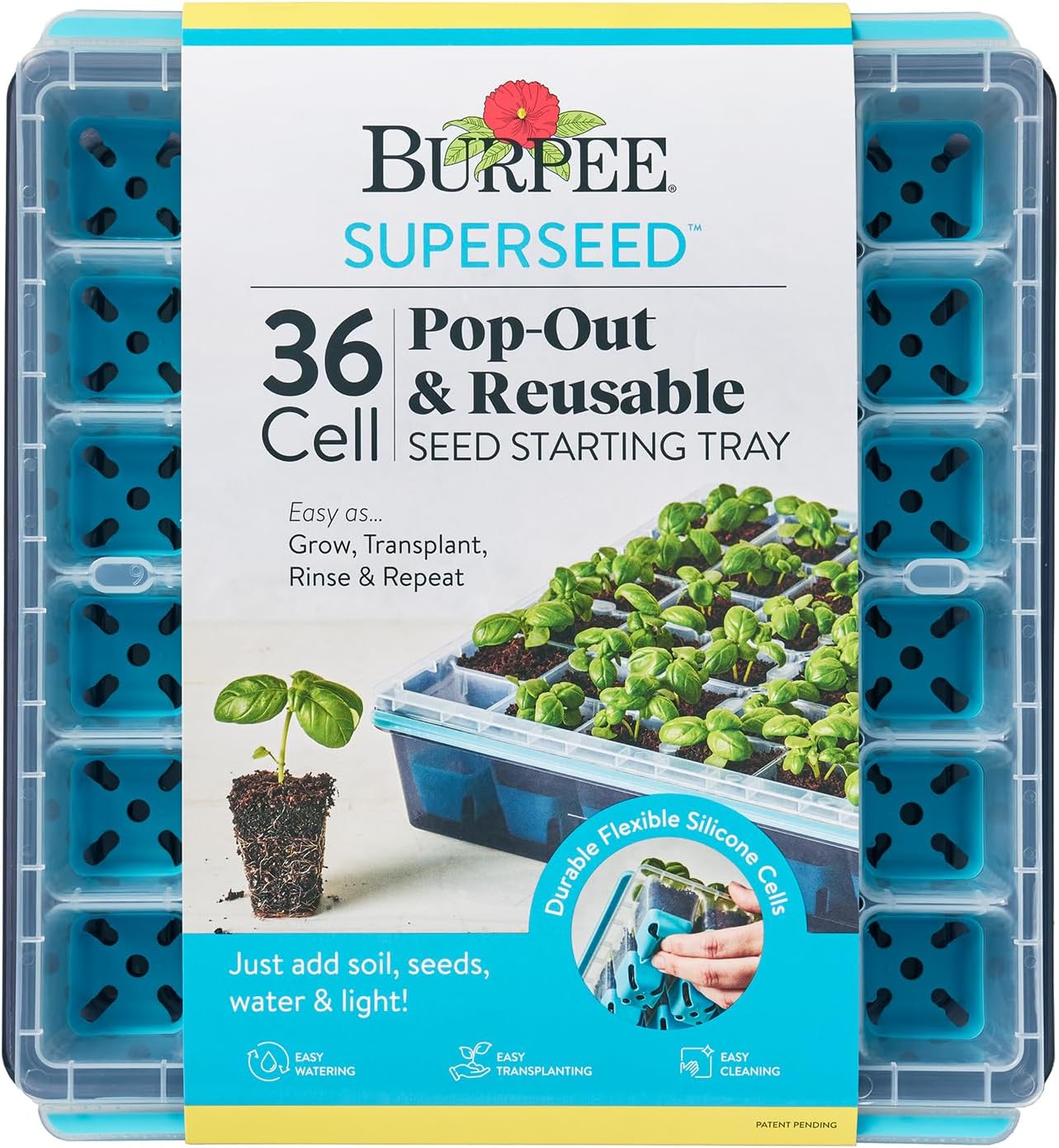
This reusable 36-cell tray uses flexible silicone cells that release seedlings for transplanting. It is designed for starting vegetable, flower, and herb seeds indoors. It fits broader annual-flower planning when the decision moves from choosing a shaded bed to starting and organizing plants before they enter the garden.
Check On AmazonIf you click this link and buy, we earn a commission at no additional cost to you.
Work through one shaded-bed decision before making the final shortlist
Imagine a narrow bed beside the east side of a house that receives a useful stretch of direct morning sun and bright indirect light afterward. That puts it closer to the part-shade branch than to full or deep shade, while the soil holds moisture reasonably well without staying soggy. The goal is dependable flower color near a walkway rather than a tall background or foliage-only display. That classification immediately supports compact flowering candidates documented for part shade and removes plants that need either stronger sun or a much darker, moisture-dependent setting.
Now use the secondary filters instead of classifying the site again. Limited grooming favors plants that stay presentable without constant cleanup, and the narrow bed favors a controlled mature habit that will not spill heavily into the walkway. Wax begonia, wishbone flower, browallia, or an appropriate impatiens type could remain on the list, but the exact cultivar still needs a label check for light range, mature size, and moisture. The example shows the intended sequence: classify the light once, eliminate mismatches, then use care and habit to choose among the plants that remain.

This garden trowel uses a rust-resistant cast aluminum head and an ergonomic comfort-grip handle. It is designed for digging and planting in yard beds and pots. In the worked example, it is a practical transplanting tool once compact shade annuals have passed the light, moisture, and mature-space filters.
Check On AmazonIf you click this link and buy, we earn a commission at no additional cost to you.
Build the final shortlist from the strongest constraints first
At the buying stage, do not reopen every possibility that the earlier filters removed. Bring forward only plants from the light branch that matches the bed, then compare the exact tags for moisture, mature habit, and any disease or maintenance note that matters in your region. If a candidate conflicts with one of those non-negotiable conditions, put it back rather than inventing a care routine to compensate. Color, texture, and price should break ties between suitable plants, not rescue unsuitable ones.
The final shortlist should be small enough to verify plant by plant. Read the exact label or dependable plant guidance for the cultivar in front of you, especially when a common name covers several types. If two candidates fit the same conditions, choose the appearance and care pattern you prefer instead of searching for a universal winner. A good shortlist is finished when every remaining plant has a clear reason to fit, not when you have collected the maximum number of names.
- Confirm whether the bed is part shade, bright shade, full shade, or deep shade.
- Keep only plants documented for that light branch.
- Check moisture, mature size, climate fit, and disease notes on the exact plant.
- Decide whether the display needs flowers first or can rely more heavily on foliage.
- Use grooming and recurring care as tie-breakers between otherwise suitable choices.
If a candidate clears all five checks, you can compare it on aesthetics without losing the practical logic behind the choice. If it needs an exception at the light or moisture stage, remove it before small differences in color or price become persuasive. That makes the final purchase easier to explain and easier to adjust if the site behaves differently than expected. The process ends with a verified choice, not another generic list of plants labeled for shade.

These black Sharpie permanent markers have fine tips and come in a 12-count pack. The listing describes quick-drying, fade-resistant ink for surfaces including plastic, paper, wood, and metal. Pairing a marker with plant labels makes the final shortlist easier to keep tied to exact plant names while you compare candidates.
Check On AmazonIf you click this link and buy, we earn a commission at no additional cost to you.
Final thoughts: choose for the shade you actually have
Good shade planting starts with classification, not shopping. Observe how much useful direct or filtered light the bed receives, then bring moisture, climate, mature space, and maintenance into the same decision. A plant that tolerates shade is not automatically a plant that will flower strongly in every dim location. Matching the exact plant to the exact site gives you a much better chance of getting the display you expected.
Keep the shortlist conditional and verify the exact type before planting. If the bed turns out brighter, hotter, drier, wetter, or more crowded than your first impression suggested, change the plant choice rather than forcing the original plan. That flexibility is a strength, not a failure of planning. The most useful annual is the one whose normal behavior already fits the site and the workload you are willing to maintain.

These large coffee-grey leather work gloves use cowhide with a soft lining and a firm-grip design. The listing includes gardening among their intended uses. They fit the final section as general hand protection for planting and routine care after the site-matched annuals have been chosen.
Check On AmazonIf you click this link and buy, we earn a commission at no additional cost to you.
FAQs
Questions about shade annuals usually come back to the same distinction: how much light the site really receives and what the gardener expects the plant to do there. A plant can tolerate reduced light without producing the same number of flowers it would in a brighter exposure. Moisture, heat, cultivar, and mature habit can change the result again. The answers below are short on purpose, but each one should be read through those site conditions.
Use the FAQ as a final screening check rather than a substitute for the plant label. If your site falls near the edge of a plant’s stated light range, favor the more conservative interpretation instead of assuming the plant will adapt. When a plant group includes many cultivars, verify the exact one you are buying. That small step is usually more useful than adding another generic name to the list.
🌤️ How much sun counts as part shade?
Many Extension references describe part shade as roughly four to six hours of direct sun, but definitions can vary. Observe the actual bed and check how the specific plant source defines its light range before treating the label as exact.
🌸 Can annual flowers bloom in full shade?
Some annuals can flower in shady sites, but bloom level depends on the plant and how little direct light the bed receives. In very low light, a plant may survive yet flower less, so choose from plants specifically documented for shade rather than assuming any part-shade annual will perform the same.
🍃 Are coleus and caladium good choices if I want flowers?
They are usually chosen mainly for foliage impact rather than a flower-heavy display. If flowers are the main goal, compare them with shade annuals valued specifically for bloom before deciding.
💧 Do shade annuals need less water?
Not automatically. Shade can reduce evaporation, but soil type, containers, tree-root competition, heat, and the plant’s own moisture preference still control how quickly the root zone dries.
🪴 Can I grow shade annuals in containers?
Yes, if the container provides suitable light, drainage, root space, and moisture for the exact plant. Containers can dry faster than in-ground beds, so do not assume a shady position removes the need to check the potting mix.
✂️ Do shade annuals need deadheading?
It depends on the plant and cultivar. Some annuals benefit from removing spent flowers, while others remain attractive with little grooming, so include maintenance habit in the buying decision.
References and Sources
Shade terms are useful only when they lead to a more precise plant choice. The sources below support the distinctions used here for part shade, plants documented for part-to-full shade, annual care, and the possibility of reduced flowering when a sun-preferring annual is grown with less light. They do not make every shade label interchangeable or guarantee the same performance in every climate. The exact plant and the actual bed still control the final decision.
Plant lists also vary because species, cultivar, moisture, heat, and site conditions change what performs well. That is why the article uses the sources to define boundaries and verify examples rather than to build the longest possible list. Full shade and deep shade deserve extra caution because general references may use those terms differently or group them together. When the light description on a specific plant is narrower than the broad category used here, follow the more specific guidance.
- Iowa State University Extension annuals for shade: supports examples of annuals used in shady sites and distinctions between flowering and foliage-focused choices.
- Iowa State University Extension part-shade annuals: supports the part-shade light range and the point that some plants may flower less or grow more openly with reduced sun.
- UMass Extension annuals for shade: supports shade and part-shade plant examples plus moisture considerations used in the comparison framework.
- Illinois Extension caring for annuals: supports the article’s establishment, watering, and grooming considerations for annual flowers.