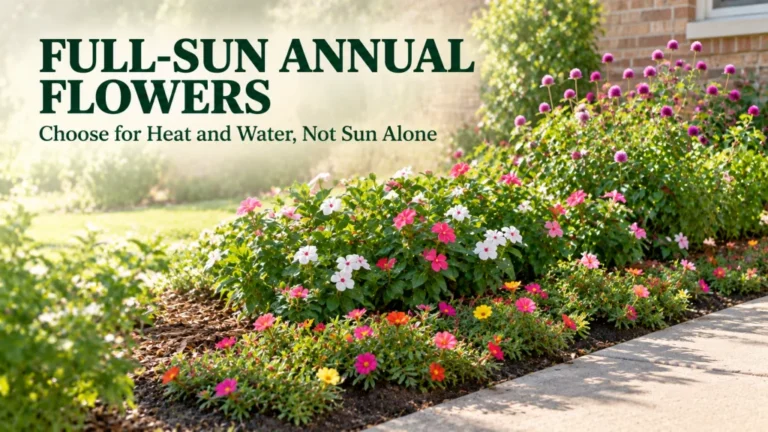
Heat tolerant annuals are useful when summer warmth becomes the main reason a flower bed loses momentum, but heat tolerance is not the same as drought tolerance. The right shortlist starts with the actual site, especially sun intensity, soil drainage, available moisture, local summer conditions, mature plant habit, and the amount of grooming you want to repeat. Warm-season choices such as annual vinca, zinnia, angelonia, celosia, portulaca, pentas, and gomphrena can fit different hot-weather situations, but their water and maintenance needs are not interchangeable. Choose by the strongest site constraint first, then verify the species or cultivar on the plant tag and with regional guidance before buying.
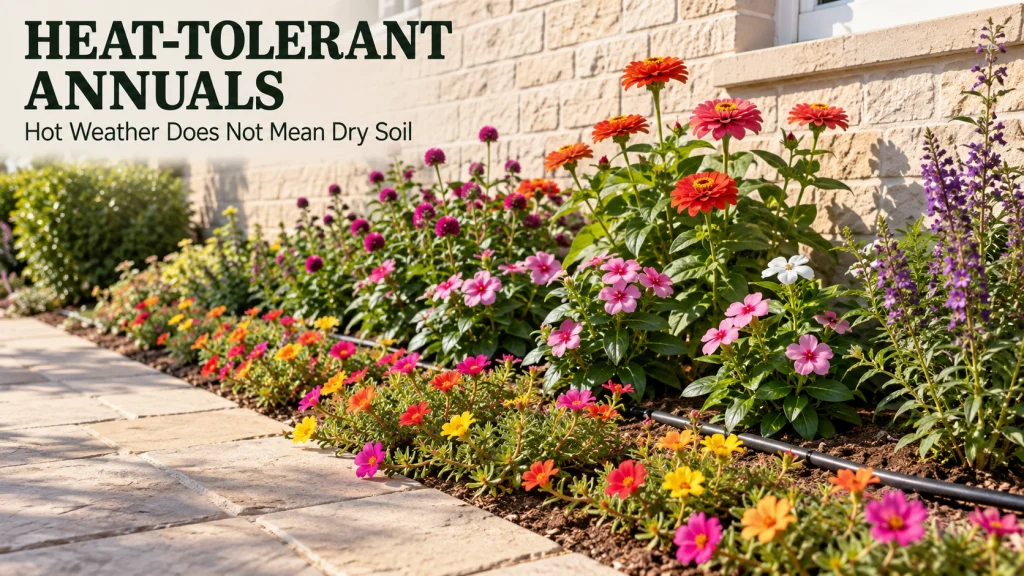
Define the site before comparing summer annuals
A flat of zinnias and a flat of annual vinca can both look like sensible choices for a west-facing bed heading into the hottest part of summer. If the bed stays reliably moist, both may remain in consideration, but a site that regularly dries between waterings changes the comparison because heat tolerance and dry-soil tolerance are not identical traits. The same two plants can also fill very different amounts of space depending on the exact type, so the nursery display alone does not settle the choice. Heat-tolerant annuals make more sense when the actual summer exposure and moisture pattern lead the decision.
Start by naming the use case before naming plants. Decide whether the flowers are filling an exposed bed, edging a walkway, spilling from a container, replacing cool-season color, or carrying a mixed border through the hottest part of the growing season. Then note how long direct sun reaches the site, whether the strongest sun arrives later in the day, how quickly the root zone dries, and whether irrigation is dependable. This keeps the decision tied to the place where the plant has to perform instead of turning the article into a list of flowers that happen to tolerate warmth somewhere.

Measures temperature, soil moisture, pH, and sunlight intensity in one handheld meter. A backlit LCD displays the readings for outdoor plant checks. Use the separate readings to compare actual site conditions before narrowing a hot-weather annual list.
Check On AmazonIf you click this link and buy, we earn a commission at no additional cost to you.
Set the non-negotiable light, moisture, climate, and mature-space filters
Heat is only one filter, and it should not erase the others. A plant that handles high temperatures can still be a poor fit if the bed stays wet, the container dries too quickly, the site gets less light than the plant needs, or the mature habit blocks a path. Virginia Tech guidance on annuals emphasizes looking at temperature together with light, soil, drainage, and water movement, which is the practical frame to use here. Treat those conditions as a package rather than asking heat tolerance to compensate for a bad site match.
Light deserves a closer look because “full sun” does not describe every sunny site equally well. Strong afternoon exposure beside masonry, pavement, or a reflective wall can create a more demanding planting position than gentler sun in an open bed, while a site that loses direct light early may call for a different candidate set. If shade is the dominant constraint rather than heat, move the decision to plants selected for annuals that fit lower-light sites instead of forcing a sun-loving plant into the wrong exposure. Also check mature width and growth form on the tag so the plant fits the space after it fills out, not only while it is still compact on the nursery bench.

This 25-foot tape measure has fractional markings printed on the blade. Its retractable blade uses a self-locking design, and the case has a rubber overmold for grip. Use it to check bed width, path clearance, and the mature-space allowance listed for an annual before planting.
Check On AmazonIf you click this link and buy, we earn a commission at no additional cost to you.
Remove candidates that fit the label but not the actual site
A “heat tolerant” label is a useful screening clue, not permission to ignore moisture, drainage, or regional behavior. UConn notes that warm-season annuals such as zinnias, tithonias, portulacas, and morning glories like summer heat while still needing adequate water, which is exactly why heat and drought should not be collapsed into one trait. A plant can remain productive in hot weather and still need a root zone that does not repeatedly dry beyond what it tolerates. Read the rest of the tag before the heat claim becomes the whole decision.
Use the same caution with broad marketing words such as “tough,” “easy,” or “low maintenance.” Those words do not tell you whether the plant needs deadheading, whether the soil must drain quickly, whether a container will need frequent watering, or whether a tender plant is being used as an annual in your region. If a candidate creates a conflict with one of those non-negotiable conditions, remove it even if its heat tolerance sounds ideal. A shorter list of plants that actually fit the site is more useful than a long list that transfers the work to watering, grooming, or replacement later.
Choosing a flower because the tag says it tolerates heat, then assuming it also tolerates dry soil, reflected heat, poor drainage, and low light.
Use heat tolerance as one filter, then verify light, moisture, drainage, mature habit, and maintenance needs for the exact species or cultivar.
The practical check is simple: a candidate stays on the list only when its heat behavior and its ordinary growing requirements can both be met. If those requirements conflict with the site, the label is not wrong, but the plant is wrong for that location. This is especially important in containers, where a heat-tolerant flower may face a much smaller moisture reserve than the same plant in an in-ground bed. Site fit comes before the appealing label.

This single-probe meter gives an instant soil-moisture reading without batteries. XLUX specifies a 304 stainless steel probe and a clear analog display for indoor or outdoor use. It helps check whether a root zone is actually staying wet or drying between waterings before a heat-tolerant label drives the decision.
Check On AmazonIf you click this link and buy, we earn a commission at no additional cost to you.
Compare the traits that matter specifically in hot weather
Once poor site matches are gone, compare the remaining plants by moisture fit, mature habit, and recurring grooming rather than by flower color first. Extension guidance does not treat every warm-season annual the same: Clemson separates plants suited to hot, dry locations from heat performers that do better with additional soil moisture, while UConn notes that warm-season annuals still need adequate water. That distinction is useful because the name of a plant group can hide meaningful differences among species and cultivars. The table below turns those differences into practical reasons to keep or remove a candidate.
These are screening profiles, not promises for every cultivar or region. Zinnia is a good example of why that boundary matters: UGA describes garden zinnias as strong performers in hot, sunny conditions that need ample moisture to thrive, while Iowa State includes zinnia among annuals that can tolerate dry conditions after establishment. Rather than forcing those sources into one universal rule, verify the exact type you are considering and use the local moisture pattern as part of the decision. The same caution applies to mature size and grooming because breeding can change habit substantially within a familiar flower name.
| Flower type | Moisture fit | Habit and grooming | Main reason to choose | Reason to skip |
|---|---|---|---|---|
| Annual vinca | Strong candidate for hot sites that may become dry after establishment, provided drainage is good. | Erect to low-spreading forms are available, and annual vinca is relatively self-cleaning. | Useful when summer heat, intermittent dryness, and lower grooming demand all matter. | Skip a poorly drained or persistently wet position, and do not treat all mature sizes as interchangeable. |
| Zinnia | Handles hot sun, but moisture guidance varies by type and source, so do not assume every zinnia is a dry-site plant. | Habit ranges from compact to tall forms, and removing faded flowers can help extend display. | Useful when you want a broad choice of heights and flower forms in a sunny summer bed. | Skip an unverified type when irrigation is unreliable and drought performance is a major requirement. |
| Angelonia | Fits full sun and average moisture, with horticultural sources also recognizing good performance in hot or drier conditions once established. | Typically upright and branching, giving a more vertical role than a low edging plant, with relatively little maintenance once established. | Useful for an upright accent or middle layer where heat is the main seasonal problem. | Skip it when the position requires a low spreading edge or when cool early-season conditions are still the dominant constraint. |
| Celosia | Handles summer heat, but moisture guidance can differ by type and condition; good drainage remains important. | Plume, spike, and crested forms can differ sharply in height and shape, so cultivar size matters. | Useful when strong flower texture and an upright summer accent fit the planting. | Skip a wet site or a cultivar whose mature habit has not been checked against the available space. |
| Portulaca | One of the clearest fits for hot, sunny, dry, well-drained positions after establishment. | Low and spreading, commonly used near edges or as a groundcover, and relatively self-cleaning. | Useful where reflected heat, a low profile, and limited moisture are all part of the site. | Skip persistently wet or poorly drained soil, or a position that needs meaningful vertical height. |
| Pentas | Performs in heat and can handle some dry conditions, but regular watering with drainage between waterings is still a sensible fit. | Generally forms a medium-height, dense to spreading plant, with cultivar height varying enough to check the label. | Useful when a fuller middle layer is needed rather than a very low edging plant. | Skip a cramped position or poorly drained site, and verify mature dimensions before using it along a narrow path. |
| Gomphrena | Well suited to full sun and can be drought tolerant after establishment when drainage is good. | Usually upright to rounded and relatively low maintenance, but cultivar size can range widely. | Useful when heat, occasional dryness, and a structured upright flower form all fit the bed. | Skip wet soil or any placement where the mature height and spread of the exact cultivar have not been checked. |
The useful pattern is not that one of these seven flowers wins every hot site. Portulaca becomes more compelling when a low, dry edge is the problem, while angelonia makes more sense when the same bed needs vertical structure and available moisture is less restrictive. Annual vinca can reduce grooming pressure in a hot bed, while a zinnia choice deserves a closer look at type and moisture expectations before it is treated as equally drought ready. Comparing plants this way turns a heat-tolerance list into a shortlist built around the conditions that can actually eliminate a candidate.

The pack includes 100 plastic T-type plant labels, each measuring 6 x 10 cm. The label format gives each trial plant or cultivar its own identifier in a crowded annual bed. Marking candidates separately makes it easier to compare moisture fit, habit, and grooming without confusing similar plants.
Check On AmazonIf you click this link and buy, we earn a commission at no additional cost to you.
Separate establishment needs from long-term tolerance and maintenance
A newly planted annual and an established plant should not be judged by the same water expectations. Iowa State’s guidance on drought-tolerant annuals specifically notes that plants still need water while establishing a root system, even when they can require less irrigation after establishment. This matters because a new transplant can fail before its useful tolerance becomes relevant. Buying a drought-tolerant or heat-tolerant plant does not eliminate the establishment phase.
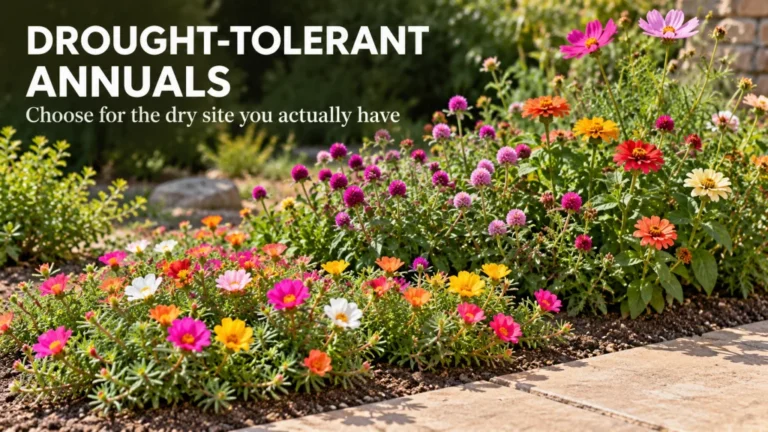
After establishment, the distinction becomes clearer: heat tolerance describes performance under high temperature, while drought tolerance concerns the plant’s ability to handle limited moisture. The two traits can overlap, but neither guarantees the other, and containers often need more frequent moisture checks because their root zones are smaller and exposed on more sides. If reduced watering is a primary goal, compare plants using guidance focused specifically on annuals suited to drier conditions instead of assuming every summer performer belongs on that list. That handoff keeps this page focused on heat without pretending water demand is irrelevant.

This 2-gallon watering can is made for indoor and outdoor plants. It has a removable nozzle and a drip-free sprinkler head for controlled flow. That control is useful when newly transplanted annuals need establishment watering before their longer-term heat or drought tolerance matters.
Check On AmazonIf you click this link and buy, we earn a commission at no additional cost to you.
Check bloom window, mature habit, and recurring grooming before buying
A plant can tolerate heat and still be the wrong seasonal choice if its strongest display does not line up with the period you need to cover. Cool-season annuals often decline when sustained summer warmth arrives, while warm-season annuals are selected because they are better suited to that part of the season. That does not mean every warm-season plant flowers continuously without care or that every plant starts strongly under cool conditions. Match the plant’s seasonal behavior to the gap you are actually trying to fill.
Recurring grooming is another selection trait, not an afterthought. Some annuals benefit from regular removal of faded flowers or occasional trimming, while others are relatively self-cleaning, and exact behavior can vary by species and cultivar. If you are choosing color for a bed you only inspect occasionally, a plant that needs repeated grooming may create more work than its heat tolerance saves. A plant with a slightly less dramatic nursery display can be the better fit when its mature habit and maintenance rhythm match the way you actually care for the garden.

These 6-inch pruning snips use steel micro-tip blades with a non-stick coating. An Easy Action spring reopens the blades after each cut, and SoftGrip handles support controlled trimming. They fit recurring flower grooming such as removing spent blooms or making small cuts around dense annual growth.
Check On AmazonIf you click this link and buy, we earn a commission at no additional cost to you.
Treat resistance and low-maintenance labels as conditional, not guarantees
Words such as “resistant,” “heat loving,” and “low maintenance” need context before they become useful garden information. Resistance usually refers to a particular stress, pest, or disease and may differ among cultivars, while low maintenance may simply mean fewer grooming tasks under suitable growing conditions. Neither phrase means a plant can ignore poor drainage, severe moisture stress, the wrong light exposure, or a regional problem it is not adapted to handle. Read the claim narrowly and verify what it actually refers to.
The same restraint applies to expectations about bloom and repeat flowering. Heat tolerance can improve the odds that a plant remains useful when temperatures rise, but it does not guarantee uninterrupted flowers through every weather pattern or care mistake. If a tag makes a broad claim that matters to your decision, check the exact cultivar information and local Extension guidance rather than extending the claim beyond what is documented. This keeps a practical selection from becoming a promise the plant was never designed to make.

This pack contains four black fine-point permanent markers. Sharpie specifies ink that is quick-drying and fade resistant against wet and dry outdoor elements, with tips designed for surfaces including plastic. Pair them with plant tags to record exact cultivar names or narrow label claims that need later verification.
Check On AmazonIf you click this link and buy, we earn a commission at no additional cost to you.
Use broader annual flower guidance when heat is only one part of the decision
Heat may be the problem that brought you to the plant bench, but it is not always the decision that should control the entire planting. If you still need to sort annual types, seasonal roles, basic siting, and care expectations, the broader annual flower gardening guidance gives that decision more room than a heat-focused shortlist can. Use this page when high summer temperature is the main filter and use the broader guidance when you are still deciding what role annuals should play. That separation keeps a specific heat problem from expanding into an all-purpose annual flower guide.
The same principle applies at the larger ornamental-garden level. If the real question is how annuals fit with perennials, bulbs, shrubs, seasonal color, or the rest of a residential planting, move outward to the site’s flower gardening guidance rather than asking a heat-tolerance list to answer everything. A focused article should solve the narrow decision well and hand off the broader decisions when they become dominant. That is more useful than repeating generic flower advice inside every plant-selection page.

This gardening kneeling pad measures 17.5 x 11 inches and uses supportive foam cushioning. The surface is described as dirt and water resistant for outdoor use. It is a practical general-care tool when the decision expands from one heat problem to routine planting, grooming, and other flower-bed work.
Check On AmazonIf you click this link and buy, we earn a commission at no additional cost to you.
Build the final shortlist from the strongest constraints first
Suppose a homeowner has a west-facing front bed that receives strong later-day sun, drains reasonably well, and can be watered consistently, but there is little appetite for weekly deadheading. Heat tolerance matters, yet drought tolerance is not the first filter because dependable moisture is available. The shortlist should favor plants documented for hot, sunny conditions, then remove candidates that demand a mature size or grooming pattern that does not fit the bed. A compact, self-cleaning or lower-grooming candidate may beat a more familiar flower even when both handle heat.
Now change one condition: the same bed is at a property that may go longer between waterings. The shortlist should change because moisture reliability has become a stronger constraint, and plants with documented dry-condition tolerance after establishment deserve more weight. That is the useful meaning of “it depends”: not indecision, but a clear explanation of which condition changed the answer. Build the list in this order and the final choice becomes easier to verify at the plant tag rather than harder to defend after planting.
- Start with the actual summer exposure, including strong afternoon sun and nearby heat-reflecting surfaces.
- Confirm whether the root zone stays moist, drains freely, or regularly becomes dry between waterings.
- Remove plants whose light, drainage, mature habit, or maintenance needs conflict with the site.
- Separate heat tolerance from drought tolerance and verify both when both constraints matter.
- Check the exact species or cultivar for mature size, seasonal behavior, and recurring grooming before buying.
The shortest useful list is the one that leaves only plants you can realistically support. A longer list can feel more comprehensive while hiding the decisions that matter most. When the strongest constraints are handled first, you can compare color and flower form last without letting appearance override site fit. That order is less exciting than impulse buying, but it produces a planting plan that makes more sense once summer becomes difficult.

This one-outlet hose timer is battery powered and uses an LCD screen for programming. It includes a built-in rain delay and is listed as water resistant. It can make a dependable watering schedule easier to maintain when moisture reliability is one of the strongest filters in the final annual shortlist.
Check On AmazonIf you click this link and buy, we earn a commission at no additional cost to you.
Final thoughts: choose for hot weather without assuming dry weather
Heat tolerant annuals earn their place when high temperature is the stress you need the planting to handle, but the label does not erase the rest of the garden. Light, moisture, drainage, region, mature size, and maintenance still decide whether a particular plant belongs in a particular bed. Use heat tolerance to narrow the field, then use those site conditions to finish the choice. The result should be a shortlist you can explain from the ground up, not a collection of plants that share one attractive label.
Before buying, verify the condition that drove the shortlist, especially moisture pattern, mature size, and recurring maintenance. If dependable watering is the weak point, shift the decision toward documented drought tolerance rather than stretching the meaning of heat tolerance. If shade, space, or maintenance is the stronger constraint, let that condition lead instead. The practical goal is not to find the toughest flower in the abstract, but the annual that fits the hottest part of your real garden without creating a new problem somewhere else.

This hose-faucet timer uses a battery-free clockwork shutoff with an easy-grip dial. The watering duration is adjustable from 15 to 120 minutes, and the unit includes a manual bypass. It gives a simple way to limit watering time when the final plant choice depends on how consistently the site can be supplied with moisture.
Check On AmazonIf you click this link and buy, we earn a commission at no additional cost to you.
FAQs
☀️ What annual flowers do well in hot full sun?
Annual vinca, angelonia, celosia, zinnia, portulaca, pentas, and gomphrena are among the warm-season choices worth checking for hot, sunny sites. Verify the exact species or cultivar for your region, moisture conditions, mature size, and maintenance needs before treating any one of them as a fit.
💧 Are heat tolerant annuals also drought tolerant?
Not automatically. Some plants tolerate both heat and dry conditions, while others perform well in heat only when they receive adequate moisture, so verify drought tolerance separately when water availability is part of the problem.
🌱 Do heat tolerant annuals need extra water after planting?
New transplants still need enough moisture to establish roots, including plants that may become more tolerant of dry conditions later. Check the root zone rather than assuming a heat or drought label eliminates establishment watering.
🪴 Are containers harder on heat tolerant annual flowers?
They can be because containers hold a smaller root-zone moisture reserve and can heat from multiple sides. Match the plant to the container’s sun exposure and drainage, then monitor moisture based on the actual potting mix, container size, weather, and plant demand.
🌸 Do I need to deadhead heat tolerant annuals?
That depends on the species and cultivar. Some annuals benefit from repeated removal of spent flowers or occasional trimming, while others are relatively self-cleaning, so include grooming needs in the buying decision rather than assuming heat tolerance means low maintenance.
🏡 Should I choose a heat tolerant annual just because my yard is in a hot region?
Use the conditions of the specific planting site, not the region alone. A shaded bed, irrigated container, exposed curbside strip, and west-facing wall can create very different light, moisture, and heat conditions within the same yard.
References and sources
- Virginia Tech annual flower guidance: Supports site evaluation using temperature, light, soil, drainage, water, and seasonal annual behavior.
- UConn annuals guidance: Supports the distinction between cool-season and warm-season annuals and notes that warm-season types still need adequate water.
- Iowa State drought tolerant annuals: Supports separating drought tolerance from establishment watering needs and identifies annuals documented for dry conditions.
- Clemson growing annuals guidance: Supports hot-weather annual selection while showing that heat-tolerant plants can still differ in moisture needs.
- UMass annuals for sun: Supports heat-season plant selection, label checking, average-moisture guidance, and grooming considerations.
- UMass summer snapdragon profile: Supports angelonia’s upright habit, hot-summer fit, and relatively low maintenance after establishment.
- NC State pentas profile: Supports pentas habit, drainage, moisture, and mature-size considerations.
- NC State globe amaranth profile: Supports gomphrena’s sun, heat, drought, drainage, and habit considerations.