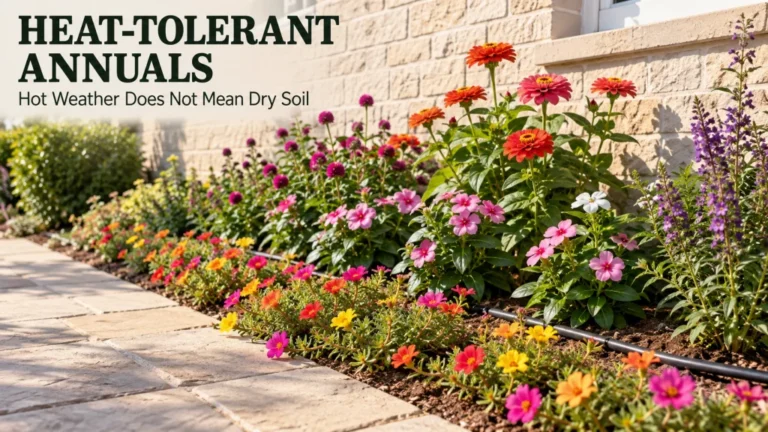
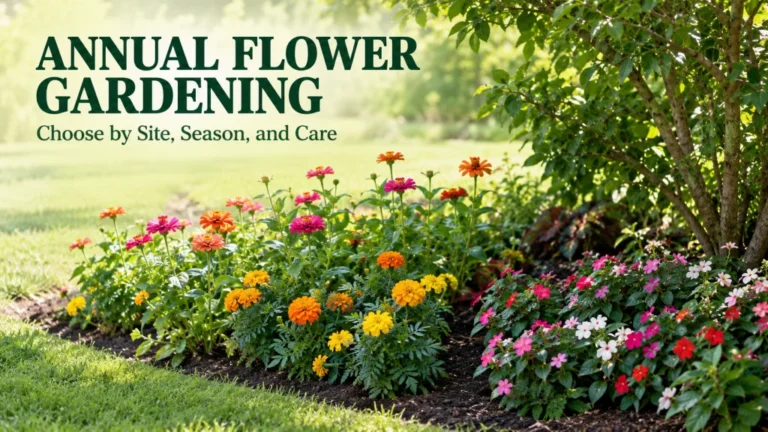
Drought tolerant annuals can reduce supplemental watering after they are established, but the label does not mean a new transplant can be ignored. The useful shortlist starts with the actual site: sun exposure, drainage, climate, available space, and how much establishment care you can provide. Plants such as rose moss, globe amaranth, gazania, spider flower, annual vinca, cosmos, celosia, and zinnia can fit dry conditions, but their mature habit and maintenance needs are not interchangeable. Choose the plant that fits the site first, then build a realistic water plan for the establishment period and the dry spells that follow.
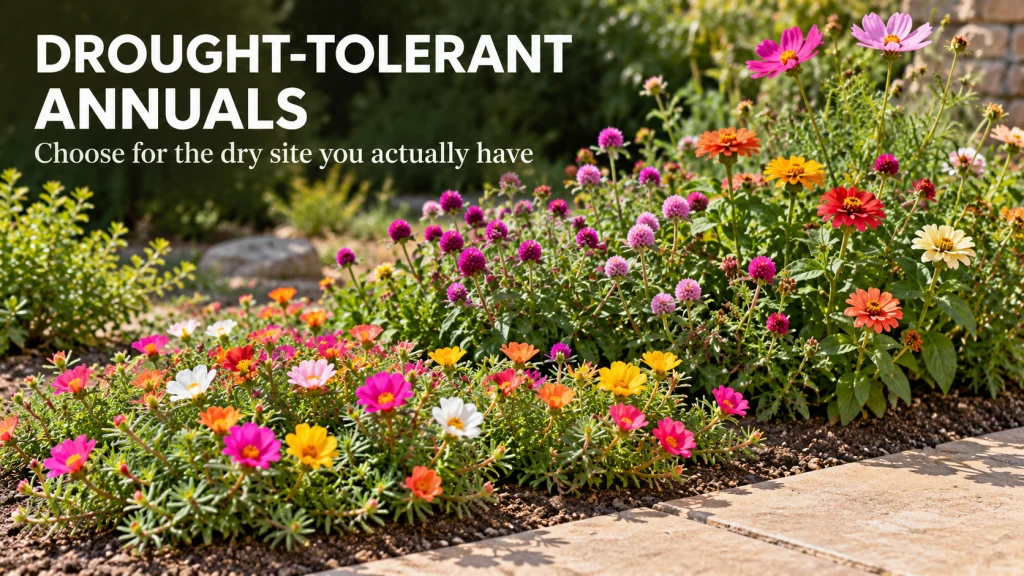
Define the site before building a drought tolerant annual flowers list
Drought tolerant annuals are easy to misuse when the label becomes a reason to skip careful establishment. A newly planted annual has a limited root system, so dry soil immediately around that root ball can stop establishment before the plant ever shows what it can tolerate later. The practical cost is a thin planting, stalled growth, or replacement plants even though the species itself may handle dry weather well once rooted. Start by separating two questions: whether the plant fits a dry site, and whether you can keep it adequately moist while it establishes.
The site should narrow the list before flower color does. Note how much direct sun reaches the bed, whether water drains promptly or lingers after irrigation or rain, how exposed the area is to wind and reflected heat, and how much room the mature plant can occupy. A hot strip beside pavement is not the same site as a bright bed that receives some afternoon protection, even if both feel dry to the touch by the end of the day. When those conditions are clear, the phrase drought tolerant becomes a useful filter instead of a blanket promise.

The 25-foot tape uses a 1-inch acrylic-coated steel blade for straightforward bed and spacing measurements. A manual lock holds the blade at the needed length while you compare available width and plant spread. Its compact hand-tool format makes it practical for checking borders, paths, and planting zones before choosing annuals.
Check On AmazonIf you click this link and buy, we earn a commission at no additional cost to you.
Set the light, moisture, climate, and mature space filters first
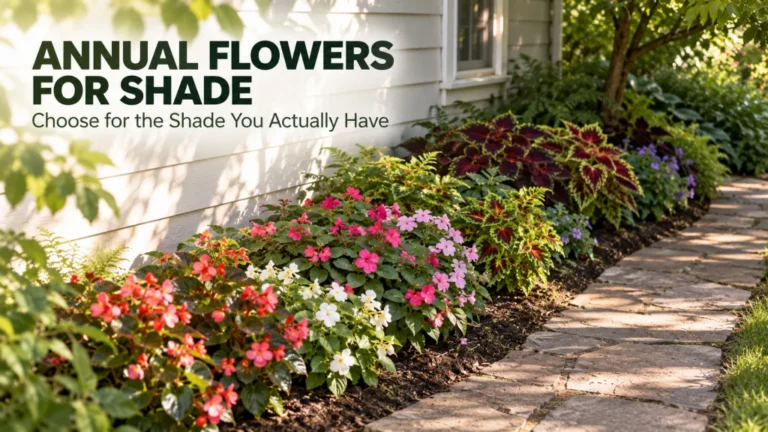
Light is a non-negotiable filter because many annuals commonly recommended for dry conditions perform best in full sun. A plant that tolerates dry soil but receives too little light may stretch, flower poorly, or simply fail to look like the plant you expected. Drainage matters just as much. A species that handles dry periods is not automatically suited to a low spot where roots stay wet after every storm or irrigation cycle.
Climate and mature size finish the first pass. An annual sold across the country may behave differently in a cool coastal summer, a humid southeastern garden, and an interior site with intense heat, so the exact species or cultivar label still matters. Mature height and spread also determine whether a plant belongs at the front of a border, in the middle of a mixed bed, or as a taller background accent. If the label or reputable plant description cannot confirm the light requirement and expected habit for the exact plant in front of you, keep it off the shortlist until those basics are clear.
- Do this: match sun exposure, drainage, mature size, and local growing conditions before comparing flower color.
- Skip this: buying any annual marked drought tolerant and assuming the same care plan will fit every site.
That simple screen removes plants for reasons that drought tolerance cannot fix. It also keeps the decision focused on plant fit rather than trying to compensate later with more water, more fertilizer, or constant grooming. A candidate that fails a major site filter does not become a better choice because its flowers are attractive. Once a candidate survives these filters, it is worth comparing its dry site traits in more detail.

This battery-free meter uses a single soil probe to give an immediate moisture reading at the root zone. The clear dial helps distinguish dry, moist, and wet conditions without relying only on the soil surface. It is intended for indoor or outdoor soil checks and can support more deliberate watering decisions during establishment.
Check On AmazonIf you click this link and buy, we earn a commission at no additional cost to you.
Remove candidates that fit the label but not the actual site
A drought label should never overrule an obvious site mismatch. Rose moss is a useful example because its low, succulent habit can suit a sunny, well-drained edge, but that same growth form may disappear visually behind taller border plants. Spider flower offers more height and can tolerate dry, hot conditions, yet its scale and form make it a very different choice for a narrow front edge. Globe amaranth, gazania, annual vinca, cosmos, celosia, and zinnia also belong on many dry-site lists, but the right one depends on the space and the role you need the plant to fill.
Think in terms of elimination rather than collecting as many names as possible. If the bed is narrow, remove plants whose mature spread or height will crowd a walkway or hide smaller neighbors. If the site stays wet after rain, remove plants that depend on sharp drainage even if their heat tolerance looks attractive. If you need a low front edge, remove tall branching candidates before you compare color, price, or flower form. A shorter list built around the site is more useful than a longer list built around a marketing label.

The NJP650 uses a 7.25-inch stainless steel blade with both straight and serrated edges. Its wood handle and multipurpose blade are suited to small digging, weeding, and planting tasks in garden beds. That makes it useful when an annual needs to be repositioned or a planting spot needs quick preparation after a site mismatch is identified.
Check On AmazonIf you click this link and buy, we earn a commission at no additional cost to you.
Compare the traits that matter for dry site selection
Once the obvious mismatches are gone, compare what each candidate contributes to the planting rather than treating drought tolerance as the finish line. Habit, exposure, drainage, mature size, and recurring cleanup can change whether a plant works in a particular bed. The same common name may also cover cultivars with noticeably different height or spread, so the label on the exact plant still matters. Use the table as a screening tool, then verify the cultivar before buying.
| Site or design need | Candidates worth verifying | What to confirm before buying |
|---|---|---|
| Very low edging in full sun with quick drainage | Rose moss | Low spreading habit, mature width, full-sun exposure, and whether the planting area drains freely |
| Low to medium color for an open sunny edge | Gazania | Exact mature size, local climate fit, drainage, and whether the flower habit matches the visual role you want |
| Rounded flower form in a sunny mid-border position | Globe amaranth | Cultivar height and spread, spacing, heat exposure, and the amount of cutting or cleanup you expect to do |
| Compact to medium planting in a warm exposed bed | Annual vinca | Warm-season fit, drainage, cultivar size, and whether the site avoids persistently wet soil |
| Upright texture where flower form matters as much as color | Celosia | Flower form, mature height, spacing, site heat, and the exact cultivar’s moisture needs |
| Airy taller growth where there is room behind shorter plants | Cosmos | Mature height and width, wind exposure, access for grooming, and whether the bed has enough room for the habit |
| Tall background accent in a broad sunny bed | Spider flower | Final height and spread, spacing, access around neighboring plants, and whether the scale fits the bed |
| Flexible color choice where cultivar size can be matched to the space | Zinnia | Exact cultivar height and spread, spacing, flower form, grooming preference, and local site fit |
A worked example makes the filter clearer. Imagine a full-sun bed beside a driveway during the hottest part of the local growing season, with quick drainage, reflected heat, limited width, and a gardener who can give new transplants close attention at first but wants less routine watering later. Rose moss can move forward because its low habit matches the edge, while spider flower can be removed because the bed is too narrow for a tall background plant. Globe amaranth or a compact zinnia can stay on the list if the exact cultivar fits the available height, width, and grooming workload. The result is a smaller comparison built around the bed rather than a longer list of names.
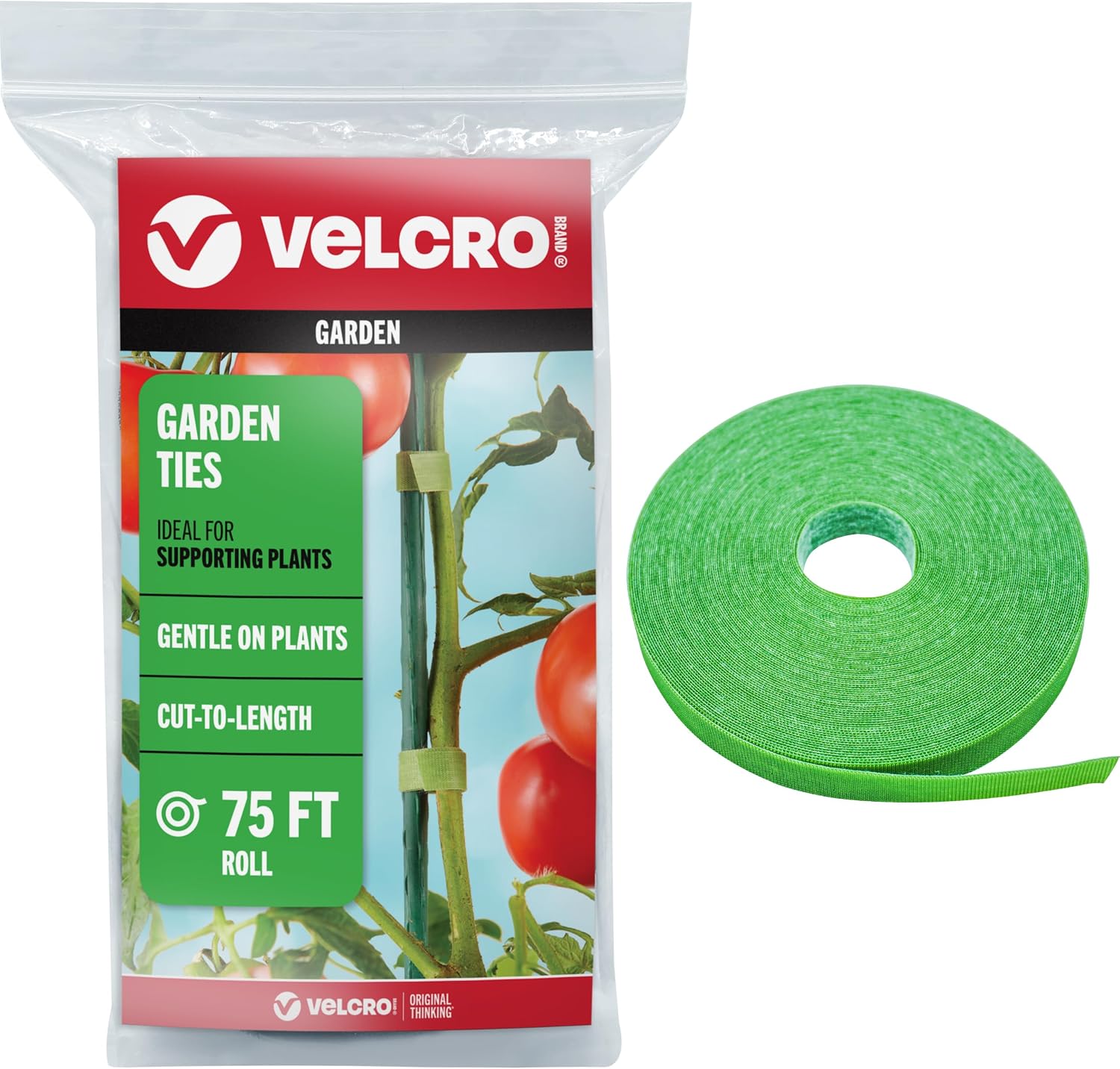
This 75-foot roll is 1/2 inch wide and can be cut to the length needed around individual stems or supports. The reusable hook-and-loop material is adjustable as plants grow, and its soft side is designed to be gentle on plants. It is useful for staking or training taller flowers when habit, wind exposure, and mature size affect the bed plan.
Check On AmazonIf you click this link and buy, we earn a commission at no additional cost to you.
Separate establishment water from the long-term water plan
This distinction is the center of the decision. University Extension guidance on drought tolerant annuals repeatedly notes that new plants still need water while roots establish, even when the mature plant can tolerate dry conditions. That means the first part of the water plan should respond to the root zone, recent weather, soil drainage, and the condition of the transplant rather than to a generic promise printed on a tag. The goal is not to keep the bed constantly wet, but to prevent the young root system from drying out before it expands into the surrounding soil.
After establishment, the plan can become less frequent if the chosen species, soil, and weather allow it. Watch the soil and plant rather than watering by habit, and adjust when extended dry weather or unusual heat increases demand. Deep enough watering to moisten the active root zone is more useful than repeatedly wetting only the surface, but the correct interval still depends on soil texture, rainfall, exposure, and plant type. Drought tolerance gives you a wider margin after establishment; it does not remove the need to observe the bed.

This 30-inch watering wand delivers a gentle full-flow shower for garden watering. A one-touch thumb valve gives direct control over water flow as you move from plant to plant. The aluminum wand helps reach the root area of new transplants without requiring a fixed watering schedule.
Check On AmazonIf you click this link and buy, we earn a commission at no additional cost to you.
Check bloom habit, mature size, and recurring grooming before buying
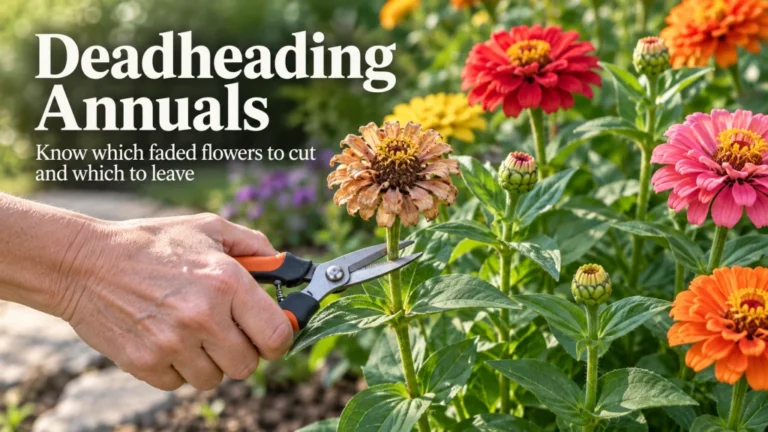
A plant can be a strong dry-site fit and still create more work than you want. Some annuals benefit from deadheading to maintain appearance or encourage continued flowering, while others are commonly grown with less spent-flower cleanup. Taller plants may need more room or occasional support, and sprawling plants can cover nearby edges or smaller companions. Those differences matter when the point of the planting is not just survival, but reliable color with a workload you can actually maintain.
Bloom timing also changes the value of a plant in a particular bed. A gardener who wants color during the hottest part of the season may choose differently from someone trying to carry a mixed border through cooler conditions. Exact cultivar descriptions are especially useful here because mature height, spread, flower form, and grooming needs can vary within a familiar plant name. Treat those traits as part of drought selection rather than as decorative details to check after purchase.

These 6-inch pruning snips use precision micro-tip blades with a nonstick coating for small, controlled cuts. The SoftGrip handle and spring action are designed for repeated trimming work. They suit deadheading and light grooming of annual flowers when recurring cleanup is part of the maintenance plan.
Check On AmazonIf you click this link and buy, we earn a commission at no additional cost to you.
Treat resistant and low maintenance claims as conditional, not guarantees
Retail tags and plant lists sometimes use phrases such as drought resistant annual flowers or low maintenance annuals as if they describe a fixed level of performance. They do not. A plant documented for dry conditions in one setting may respond differently in heavy soil, a confined container, partial shade, reflected heat, or a climate with different summer humidity. The useful question is not whether the label is true in the abstract, but which growing conditions and plant traits make the description relevant to your site.
The same caution applies to bloom and maintenance claims. Drought tolerance does not guarantee continuous flowers, eliminate grooming, or make mature size unimportant. If limited sun, restricted width, wind exposure, or a specific height matters more than water use, let that stronger constraint control the choice. That keeps a useful label in perspective and makes it less likely that you will buy a plant that solves one problem while creating another.

This hand cultivator uses heavy-duty cast aluminum tines for digging, loosening soil, aerating, and weeding. Its rust-resistant head and ergonomic handle are designed for routine garden-bed work. It is a practical maintenance tool when a low-maintenance label still leaves real soil and weed care to handle.
Check On AmazonIf you click this link and buy, we earn a commission at no additional cost to you.
Use broader flower guidance when drought is not the only decision
A dry-site shortlist is only one part of choosing annual color. If you are still deciding how annuals fit the season, bed role, mature habit, and recurring care, use the broader annual flower gardening guidance before narrowing the list by drought tolerance. That broader decision helps separate a water constraint from other reasons a plant may or may not fit. It also prevents a dry-site label from becoming the only feature you compare.
If the decision is wider than annuals and you are comparing different kinds of ornamental flowers for the same space, the flower gardening framework is the better starting point. A bed that needs repeat color, a permanent planting, or a different seasonal role may not be best served by annuals at all. Keep the drought question in its proper place: it helps choose among plants that already fit the larger garden goal. That keeps the final shortlist small, practical, and tied to the site instead of to a single appealing trait.

This 27 x 27-inch repotting mat is made from waterproof polyethylene and folds for storage between planting jobs. The square mat is reusable, quick-drying, and easy to clean after transplanting or repotting. It provides a contained work surface for flower-care tasks when the broader garden decision extends beyond dry-site annual selection.
Check On AmazonIf you click this link and buy, we earn a commission at no additional cost to you.
Build the final shortlist from the strongest constraints first
Start the final pass with the condition that is hardest to change. In a hot, exposed bed with fast drainage, dry-site performance and full-sun fit may lead the ranking. In a narrow border, mature width can become the stronger limit, while a gardener with little time for cleanup may rank recurring grooming just as highly as water use. Put those constraints in order, then remove every candidate that fails one of the top requirements.
Only after that should you compare color, flower form, and other preferences. Verify the exact plant label or reliable description for mature habit, spacing, exposure, and moisture needs instead of relying on a genus name alone. If two candidates both fit, choose the one whose size and maintenance pattern better match the way you actually use the space. That constraint-first method is more dependable than trying to identify the single toughest annual on a generic list.

This set includes 100 plastic T-type plant labels measuring 6 x 10 cm. The broad label face gives space to keep plant names or cultivar notes with the plants in the bed. It is useful for maintaining an exact shortlist when height, spread, exposure, and moisture requirements need to stay tied to the correct plant.
Check On AmazonIf you click this link and buy, we earn a commission at no additional cost to you.
Final thoughts: choose for the dry site you actually have
Drought tolerance is most useful as one site-fit trait among several. The strongest choice is an annual that matches your sun, drainage, climate, available space, and maintenance tolerance, with a realistic plan for getting a new planting established. A plant that fails one of those basic filters will not become a better fit simply because it appears on a drought list. The goal is not to collect the most drought labels, but to choose a plant whose whole habit fits the bed.
Before buying, verify the exact type and remove any candidate that fails a major site constraint. After planting, use soil condition, weather, and plant response to guide adjustments rather than assuming one care schedule fits every dry-site annual. Keep the shortlist small enough that you can compare the differences that actually matter, especially size, exposure, drainage, and recurring work. That gives a dry home garden a better chance of staying attractive without turning lower water use into a new set of maintenance problems.

This kneeling pad measures 17.5 x 11 x 1.5 inches and uses soft NBR foam for cushioning. Its large surface is designed for gardening and other tasks performed close to the ground. It can make planting, checking soil, and routine bed maintenance more comfortable after the final annual selection is made.
Check On AmazonIf you click this link and buy, we earn a commission at no additional cost to you.
Frequently asked questions
💧 Do drought tolerant annuals need water after planting?
Yes. Newly planted annuals need enough moisture to establish roots in the surrounding soil, even when the mature plant tolerates dry conditions. After establishment, adjust watering to rainfall, soil, exposure, and the specific plant rather than assuming no supplemental water is ever needed.
☀️ Are drought tolerant annual flowers always best in full sun?
Many commonly recommended dry-site annuals perform best in full sun, but the exact species or cultivar still needs to match your exposure. Check the plant label or a reliable horticultural description instead of treating drought tolerance as a substitute for a light requirement.
🪴 Can I use drought tolerant annuals in containers?
You can, but container soil can lose moisture faster than an in-ground bed because the root zone is smaller and more exposed. Drought tolerance may provide some margin after establishment, but container size, material, sun, wind, and the exact plant still determine how often you need to check moisture.
🌼 Which annuals are commonly listed for dry conditions?
Extension sources commonly include plants such as rose moss, gazania, globe amaranth, annual vinca, spider flower, cosmos, celosia, marigold, and zinnia. Use that list as a starting point, then verify the exact plant’s light, drainage, mature size, and local fit before buying.
🌱 Does drought resistant mean low maintenance?
Not necessarily. A plant may tolerate dry conditions and still need establishment watering, deadheading, support, spacing, or other routine care. Compare recurring maintenance separately from drought tolerance so the plant fits both the site and your workload.
References and sources
- Iowa State University Extension and Outreach: Supports the establishment exception and identifies annuals documented to perform well in dry conditions.
- University of Illinois Extension: Supports annual watering, deadheading, mulching, and maintenance guidance used to frame recurring workload.
- University of Connecticut Home Garden Education Center: Supports the distinction between drought tolerance and the water needed for plants to become established.