Deadheading annuals is useful when removing spent flowers helps a plant keep flowering, prevents unwanted seed set, or simply keeps the planting tidy. It is not a universal chore because some annuals are self-cleaning, some cultivars continue flowering without regular cleanup, and some plants are more useful when selected seed heads remain. The practical decision starts with the exact plant or cultivar, its current growth, and what you want from the bed for the rest of the season. The sections below show how to decide whether to cut, where to cut, and when leaving a faded flower alone is the better choice.
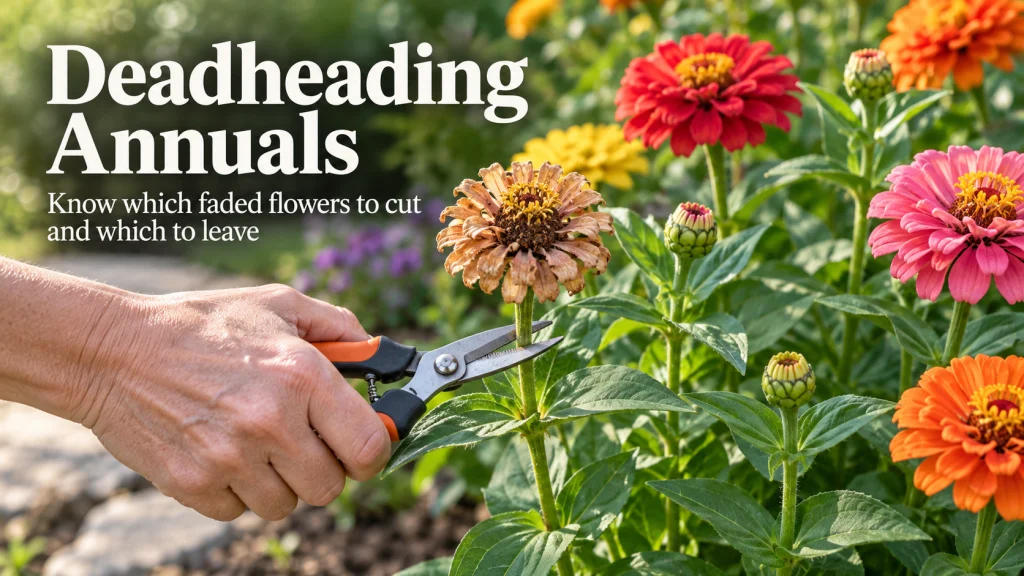
Two flowers in one bed can need opposite treatment
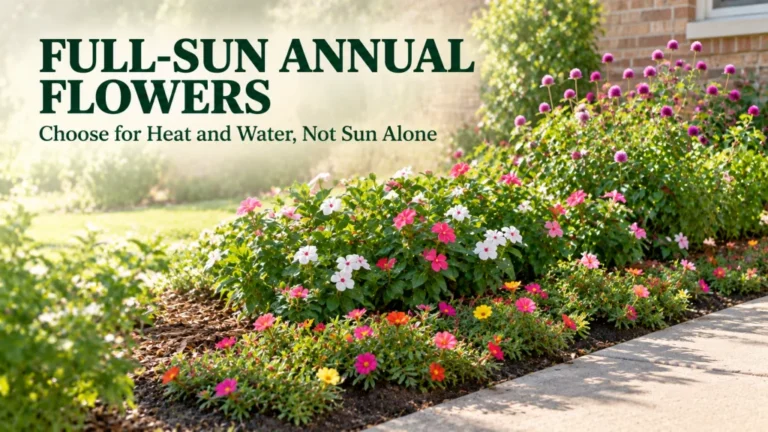
Deadheading annuals makes the most sense when you stop treating every faded flower as the same maintenance problem. A zinnia and a petunia cultivar labeled as self-cleaning can share a sunny bed, yet the zinnia may benefit from having spent blooms removed while the petunia can shed old flowers without the same routine. The difference is not how untidy the plants look for one afternoon, but how each plant handles fading flowers and seed production. I would check the plant label or cultivar information before turning deadheading into a weekly rule.
That same check keeps the job tied to the rest of the garden rather than to a generic cleanup schedule. Site conditions, heat, plant vigor, and the amount of active budding can all change whether another round of flower removal is worth the effort. For broader decisions about siting, selecting, and maintaining these plants, the annual flower gardening guide gives the larger care context. If the question extends beyond annuals, the flower gardening guide covers the wider ornamental-garden framework.

This set includes 100 blank T-type plant labels sized 2.4 by 3.9 inches. The PVC labels are water resistant and can be written on with a permanent marker or pencil. They provide a simple way to keep plant names and cultivar notes visible beside flowers in beds and containers.
Check On AmazonIf you click this link and buy, we earn a commission at no additional cost to you.
Decide what deadheading is supposed to accomplish on this plant
Deadheading is the removal of a spent flower, but the useful decision is why you are removing it. On many annuals, cutting off faded blooms before seed develops can shift the plant away from seed production and may support continued flowering when growing conditions are still favorable. On other plants, the main benefit is appearance because the plant would continue flowering without much help. If neither continued bloom nor tidier growth matters to you, there may be no reason to make the cut.
Start with the plant’s behavior, then match that behavior to your goal for the bed. A gardener who wants the longest practical display may make a different choice from someone who wants seed to mature, wants birds to use seed heads, or simply wants a lower-maintenance planting. The exact species and cultivar matter because modern selections can behave differently from older forms sold under the same common plant name. That is why a label that says self-cleaning or sterile can be more useful than a broad rule about the whole flower group.
| What you see | What to verify | Practical choice |
|---|---|---|
| Faded bloom with healthy buds nearby | The plant normally responds to deadheading and conditions still support growth | Remove the spent flower without taking unnecessary foliage |
| Old petals drop cleanly on their own | The cultivar is documented as self-cleaning | Skip routine deadheading unless appearance calls for light cleanup |
| Seed head is forming on a plant you want to reseed | The plant can self-sow in your region and the seedlings are welcome | Leave selected heads to mature |
| Flower is brown along with declining foliage | Heat, water, disease, or another stress may be involved | Do not treat deadheading as the whole diagnosis |
The table is a filter, not a promise that one action will create more flowers. Continued bloom still depends on the plant’s genetics, season, light, moisture, and overall condition. A plant that is exhausted or moving out of its normal bloom period may not respond the way a vigorous plant does earlier in active growth. Use deadheading as one maintenance choice inside those conditions, not as a guaranteed bloom switch.

The Corona Long Straight Snip uses narrow, straight tempered-steel blades for detailed cutting. Its pointed blades are suited to fine pruning, thinning, and deadheading on delicate flowers and other small plant material. The lightweight body and non-slip handles support controlled cuts during routine flower maintenance.
Check On AmazonIf you click this link and buy, we earn a commission at no additional cost to you.
Identify self-cleaning, repeat-blooming, and seed-producing exceptions
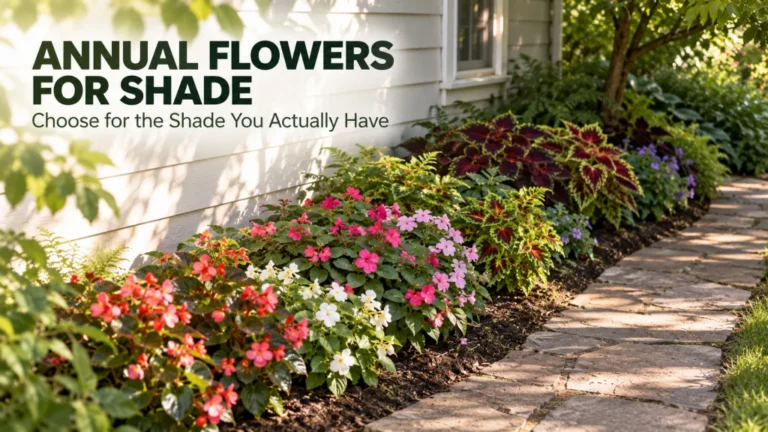
Self-cleaning annuals drop or release old flowers without needing the gardener to remove each spent bloom. Illinois Extension lists examples such as begonias, impatiens, vinca, and some petunias, while Iowa State notes that many petunias and several other annuals can fall into this group. The cultivar still matters because a common name such as petunia covers selections with different habits. When a tag or breeder description identifies the exact plant as self-cleaning, routine snipping may add workload without changing the display very much.
If low maintenance is part of the buying decision, read beyond the common plant name before choosing a flat or transplant. Useful tag or cultivar details include whether spent flowers shed cleanly, whether the plant is described as self-cleaning, its mature habit, and whether continued bloom normally depends on regular removal of old flowers. Those details tell you more about recurring workload than a broad label such as annual color. I would favor a documented self-cleaning selection when the site already has enough routine maintenance and constant grooming would be easy to neglect.
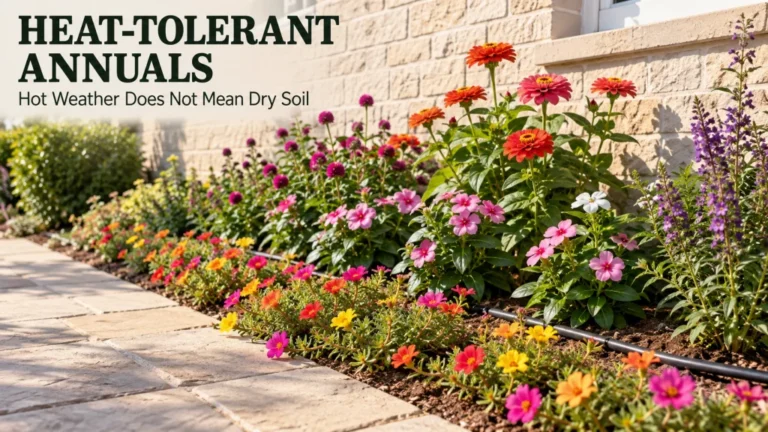
Repeat-blooming plants are a different category because a plant can continue producing flowers and still benefit from removal of spent blooms. Zinnias, marigolds, cosmos, pansies, snapdragons, and geraniums are commonly listed by Extension sources among annuals that can respond to deadheading. That does not mean every plant needs the same schedule or the same amount of stem removed. Look for active buds, healthy foliage, and the normal bloom habit of the exact plant before deciding that every faded flower must come off immediately.
Seed-producing exceptions run in the other direction because the fading flower may be doing exactly what you want. If you are saving seed or encouraging a suitable self-sowing annual to return, removing every head defeats that goal. UConn Extension specifically notes that some self-seeding annuals can be allowed to form seed toward the end of their useful flowering period. The cleanest approach is often selective: keep deadheading part of the plant for color while allowing a controlled number of healthy heads to mature where seedlings will be welcome.

This hardcover garden journal is designed to track planting details, plant logs, seasons, and progress over multiple years. It includes a planting calendar and dedicated planning space for garden records. Those notes can help keep cultivar identity and maintenance observations together when annual flowers differ in self-cleaning, repeat-blooming, or seed-producing behavior.
Check On AmazonIf you click this link and buy, we earn a commission at no additional cost to you.
Find the spent flower without turning the cut into structural pruning
A spent flower is past its useful bloom stage and is beginning to fade, collapse, dry, or form a seed structure. Before cutting, trace that flower down to the first healthy leaf, bud, side shoot, or other logical growing point on the stem. Iowa State recommends removing faded flowers just above a healthy set of leaves or buds rather than leaving a long bare stub. This keeps the job focused on flower removal instead of accidentally converting it into a larger shaping cut.
Also make sure you are looking at a spent bloom rather than a developing bud. On compact plants with many stems, buds and fading flowers can sit close together, so working too quickly can remove the next round of flowers along with the old one. Small, soft stems may be easy to pinch with clean fingers, while tougher stems are easier to handle with clean, sharp snips or pruners. The tool matters less than making a controlled cut that removes the finished flower without crushing healthy growth.
- Follow the flower down: locate the first healthy leaf, bud, or side shoot before cutting.
- Protect nearby buds: move foliage aside so the next developing flower is visible.
- Keep the cut limited: remove only the amount of stem that serves the deadheading goal.
- Reassess crowded growth: if the whole plant is leggy or overgrown, that is a different maintenance decision.
That last distinction prevents deadheading from absorbing work that belongs to pinching or cutting back. Pinching usually removes a growing tip to change branching and plant shape, while deadheading removes a flower that has already finished. If the plant is tall, loose, or losing its compact habit, use the separate guidance on pinching annuals before making a deeper cut. The names sound similar in casual garden conversation, but the plant response and the purpose of the cut are not the same.
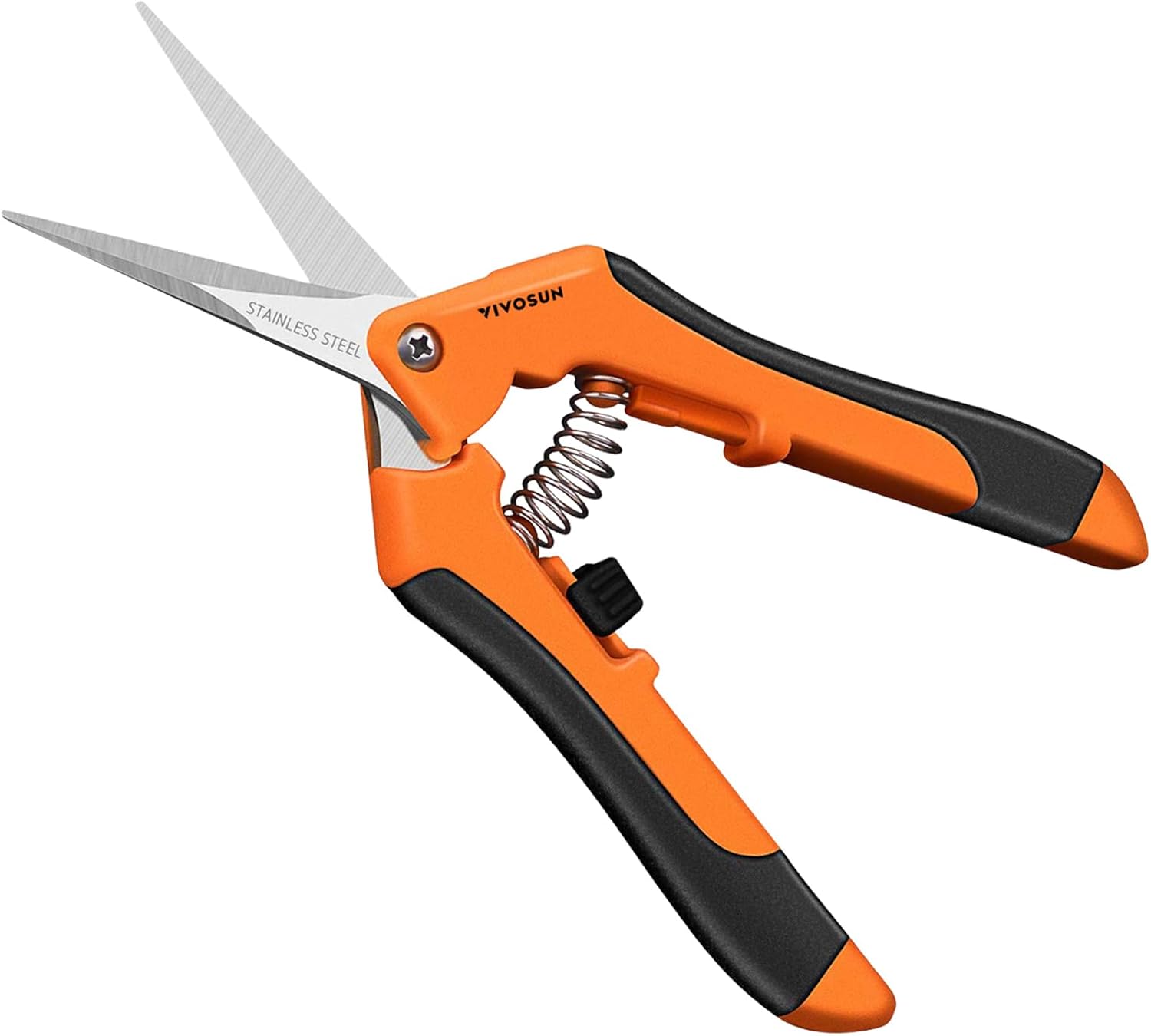
These 6.5-inch snips use straight stainless steel blades designed for deadheading, trimming, and shaping. The micro-tip format helps reach a selected stem while avoiding nearby healthy growth. A sideways locking mechanism keeps the blades closed when the tool is not in use.
Check On AmazonIf you click this link and buy, we earn a commission at no additional cost to you.
Choose how much stem to remove based on vigor and bloom habit
Cut depth should reflect what the plant can afford to lose, not simply the size of the faded flower. A compact, vigorous annual with dense growth can usually tolerate routine grooming better than a small plant that is heat-stressed, sparse, or slow to replace foliage. Extra green stem is not a bonus just because you already have the snips in hand. I would keep the cut conservative unless the plant’s habit clearly shows that a broader reset is the real job.
Bloom arrangement also changes how much removal makes sense. On a stem carrying several flowers or buds, preserve the parts that are still productive rather than shortening the whole stem for one finished bloom. If an entire flowering stalk is finished, more of that stalk may come away without affecting unopened flowers elsewhere. The aim is to match removal to the plant’s current vigor and flowering pattern, not to make every stem end at the same height.
| Do this | Skip this |
|---|---|
| Use a lighter touch on sparse, heat-stressed, or slow-growing plants. | Do not remove extra green stem merely to make every cut look uniform. |
| Preserve unopened flowers and productive portions of multi-bloom stems. | Do not sacrifice active buds just to remove one faded bloom. |
| Reserve broader shortening for plants whose habit actually calls for a separate cutback decision. | Do not use routine deadheading as a substitute for reshaping an overgrown plant. |
This distinction is especially useful in mixed containers and beds where plants with different habits grow within arm’s reach. A dense marigold may tolerate frequent light cleanup, while a stretched snapdragon stem with several developing buds deserves a more selective approach. A weak plant may be better served by minimal removal while you assess the condition affecting its growth. Thinking in terms of vigor and bloom arrangement keeps this step separate from the earlier question of where the basic deadheading cut belongs.
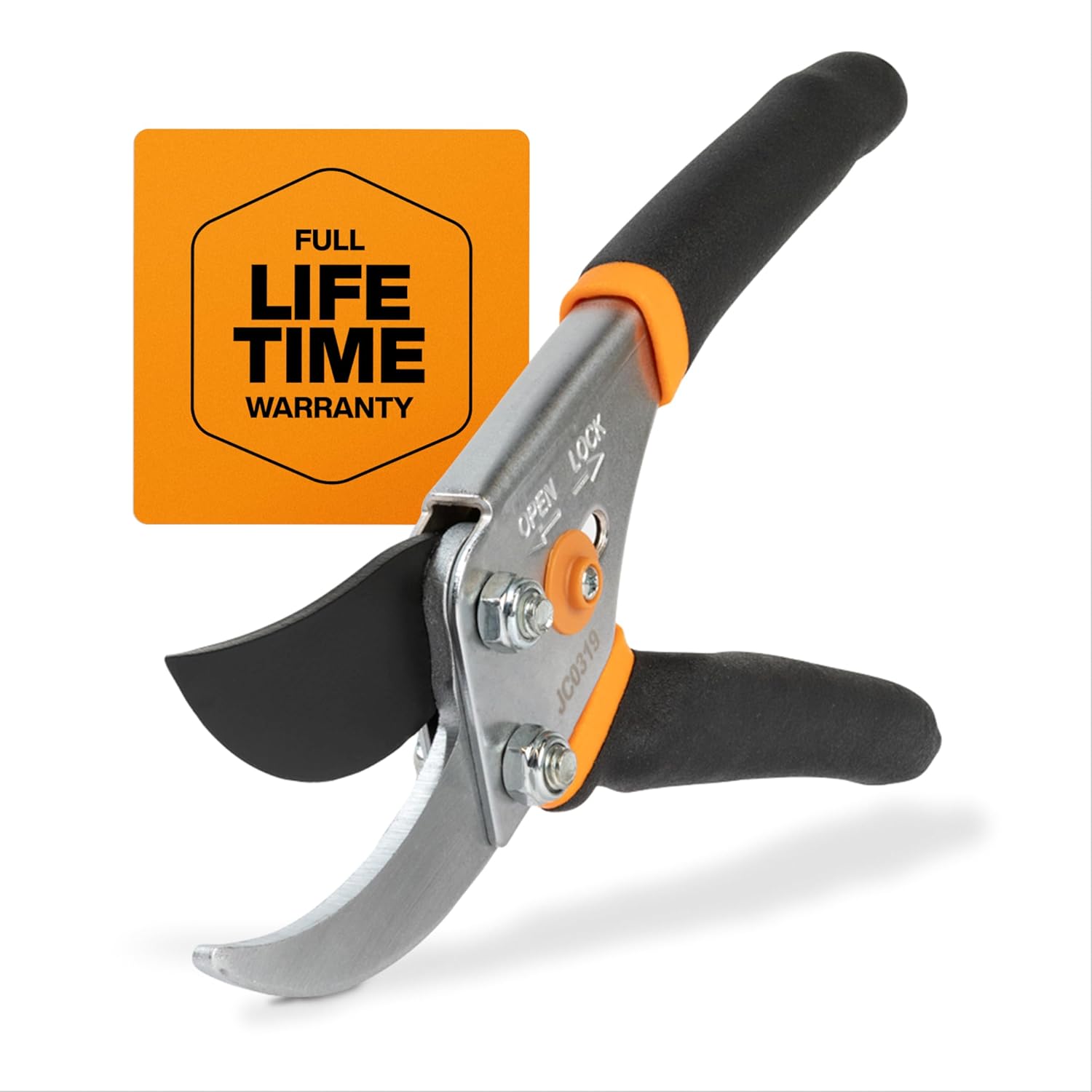
These bypass pruning shears are designed for live green growth and stems up to 5/8 inch in diameter. Precision-ground steel blades use a low-friction coating, while a sap groove helps reduce sticking during cuts. The non-slip handle and safety lock support controlled stem removal when a cut needs to stay deliberate rather than excessive.
Check On AmazonIf you click this link and buy, we earn a commission at no additional cost to you.
Know when leaving seed heads or allowing seed set is the better goal
Deadheading prevents or delays seed development, so it is the wrong action when seed is part of the garden plan. Calendula, bachelor buttons, celosia, nicotiana, and other suitable annuals can be allowed to mature seed when you want a chance of volunteer seedlings. Whether those seedlings return depends on the plant, local winter conditions, the seedbed, and how heavily the area is mulched or disturbed. Seedlings from hybrids may also differ from the parent plant, so self-sowing should be treated as a possibility rather than a promise of an identical replacement.
Seed heads can also have value even when you do not care about volunteer plants. Purdue Extension notes that some dried flowers provide food for wildlife, which gives a faded flower a purpose beyond appearance. You do not need to leave every stem standing to get that benefit, especially in a small formal bed where some cleanup matters. A practical compromise is to keep the front edge tidy while leaving selected healthy seed heads in less visually sensitive parts of the planting.
Only leave seed structures that are healthy enough to serve the goal you chose. A slimy, collapsing, or clearly diseased flower head is not the same thing as a dry, maturing seed head. If a plant is known to self-sow aggressively in your garden, allowing every head to mature can create more thinning work later. The decision is therefore not deadhead versus neglect, but flower production versus seed, wildlife, appearance, and future workload.

This pack includes 100 small kraft envelopes sized 2.25 by 3.5 inches. The envelopes are intended for storing seeds and other small items, and their paper surface can be written on or labeled. They are useful when selected annual seed heads are allowed to mature for saving instead of being deadheaded.
Check On AmazonIf you click this link and buy, we earn a commission at no additional cost to you.
Stop deadheading when the season has a better use for the flowers
There is no single calendar point when every annual should stop being deadheaded. A vigorous plant with healthy foliage and many unopened buds may still have a useful flowering period ahead, while a nearby plant may already be slowing down and putting energy into seed. Temperature, day length, plant type, and the remaining growing conditions all influence that shift. I would read the plant first and the calendar second, especially in regions where the same annual can perform very differently.
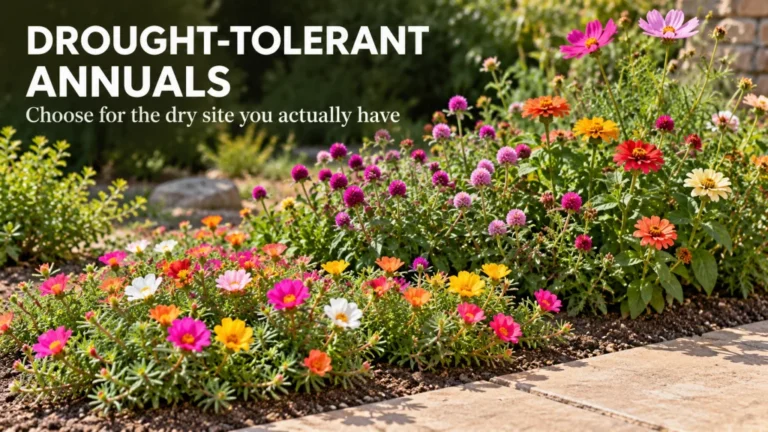
Consider a sunny border where zinnias are still producing strong buds while open-pollinated calendula is being kept partly for self-sowing. The zinnias can continue to receive selective deadheading if the plants remain healthy, while several calendula heads can be left to mature rather than being removed. In the same bed, a self-cleaning petunia cultivar may need little more than occasional tidying even though flowers are fading every day. One maintenance pass can therefore produce three different decisions without any of them being inconsistent.
Workload matters too, particularly when the season is winding down and the value of another possible flush is small. If your priority is sustained color with less repetitive grooming, choosing plants with documented self-cleaning or long-flowering habits can reduce the amount of hand work from the beginning. The guide to annual flowers with a long bloom period helps separate bloom duration from the amount of deadheading a plant needs. Those are related decisions, but a flower can bloom for a long time and still differ sharply in how much cleanup it asks from you.

This gardening kneeling pad measures 17.5 by 11 inches and uses 1.3-inch high-density foam. Its surface is dirt and water resistant, with a textured design intended to reduce slipping. It can make selective end-of-season flower-bed maintenance more comfortable when repeated checks still involve kneeling and hand work.
Check On AmazonIf you click this link and buy, we earn a commission at no additional cost to you.
Separate flower cleanup from disease or decline troubleshooting
A brown flower is not automatically proof that the plant needs more deadheading. If foliage is yellowing, stems are collapsing, buds are aborting, or the whole plant is declining, the spent bloom may be only one visible part of a larger stress problem. Heat, water stress, root problems, disease, and normal seasonal decline can overlap in ways that make appearance alone unreliable. Remove obviously spent or damaged flowers if that improves sanitation or appearance, but do not assume the cut has identified or corrected the cause.
Wet, decaying flowers deserve particular attention because dead plant tissue can hold moisture against healthy growth. Cleanup can be sensible, yet diagnosis still depends on the rest of the plant, recent weather, watering pattern, air movement, and the symptoms on leaves and stems. Avoid jumping from a faded bloom to a pesticide or fertilizer response without evidence that either one fits the problem. When the symptom pattern extends beyond ordinary flower aging, shift from grooming to plant-level troubleshooting.
This boundary also protects healthy plants from unnecessary inputs. A plant that has finished its normal flowering response may not need more fertilizer, heavier watering, or a treatment simply because deadheading failed to produce another flush. Check whether the exact plant is still expected to be actively growing under your conditions before changing care. Deadheading is a small maintenance technique, not a diagnosis, a recovery program, or a guarantee of continued bloom.

This pocket loupe provides 40X magnification for close inspection of small details, including plants. It includes LED illumination and a UV light in a compact folding format. It can help a gardener inspect buds, leaves, and stem surfaces more closely before treating a fading flower as a larger plant-health problem.
Check On AmazonIf you click this link and buy, we earn a commission at no additional cost to you.
Final thoughts: Deadhead for a reason, not by habit
The most useful deadheading routine begins with the plant’s documented behavior and your goal for the bed. Remove spent flowers when the plant is likely to benefit, when unwanted seed set matters, or when appearance is the real priority. Skip routine cutting when an exact cultivar is self-cleaning or when the faded flower is serving a deliberate seed or wildlife goal. That makes the work selective instead of turning every brown petal into an automatic chore.
Before each cut, confirm that the flower is actually spent, find a healthy point below it, and avoid removing more green growth than the job requires. As the plant slows or your goal changes, reassess whether another possible flush is still more valuable than seed, wildlife use, or reduced maintenance. If symptoms spread beyond the flower head, stop treating the problem as ordinary deadheading and evaluate the whole plant. A few seconds of checking first usually leads to less unnecessary cutting and a clearer reason for every cut you do make.

This compact sharpener uses a tungsten carbide edge for pruning shears, loppers, hedge clippers, and other garden blades. Its pocket-size design and non-slip handle support quick tool maintenance between pruning tasks. Keeping a deadheading tool sharp supports controlled cutting when the goal is to remove a spent flower without unnecessary stem damage.
Check On AmazonIf you click this link and buy, we earn a commission at no additional cost to you.
FAQs
🌼 Do all annual flowers need deadheading?
No. Many annuals can benefit from deadheading, but some species and modern cultivars are self-cleaning and shed spent flowers on their own. Check the exact plant or cultivar before making deadheading a routine job.
✂️ Where should I cut when I deadhead annual flowers?
Follow the spent flower down to the next healthy leaf, bud, or side shoot and make the cut just above that point. Avoid leaving a long bare stem, and protect nearby buds that are still developing. A deeper cut belongs to a separate shaping or cutback decision.
🌱 Can I leave some flowers so the plants reseed?
Yes, when the annual is capable of self-sowing in your conditions and volunteers are welcome. Let selected healthy seed heads mature instead of removing every faded bloom. Remember that seedlings from hybrids may not look exactly like the parent plant.
🐦 Should I stop deadheading if I want seed heads for birds?
You can leave selected healthy seed heads when wildlife value is part of your garden goal. Keep diseased or collapsing material out of that group, and choose plants whose seeds are actually useful to birds in your area. A partly tidy bed can still retain useful seed heads.
🌿 Is deadheading the same as pinching back an annual?
No. Deadheading removes a flower that has finished, while pinching removes an active growing tip to influence branching and shape. The cuts can happen near similar parts of a plant, but the purpose and expected response are different.
References and sources
- Iowa State University Extension: Supports where to remove spent flowers and identifies annuals that commonly benefit from deadheading as well as self-cleaning exceptions.
- University of Illinois Extension: Supports the distinction between ordinary deadheading, self-cleaning annuals, and pinching as a separate maintenance technique.
- UConn Home and Garden Education Center: Supports plant-specific deadheading, self-cleaning behavior, and allowing selected annuals to form seed when self-sowing is desired.
- Purdue Extension: Supports the point that dried flower heads can be retained for appearance, wildlife food, or seed rather than removed automatically.