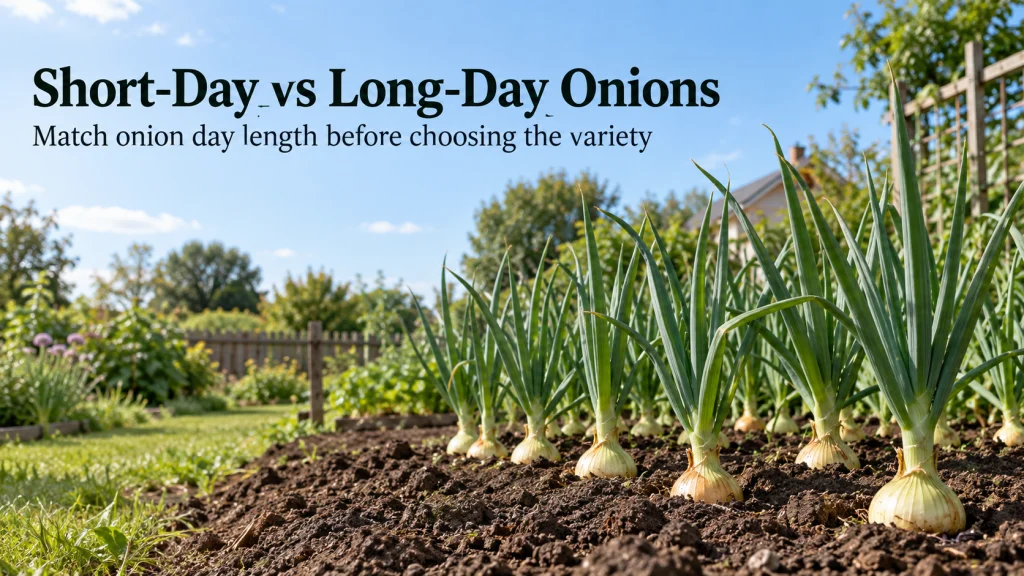
Choosing an onion for bulb production starts with day length, not bulb color, sweetness, or a catalog photo. Short-day, intermediate-day, and long-day onions begin bulbing under different photoperiod conditions, so the right class depends on how seasonal daylight behaves where the garden is located. Latitude is a useful first screen, but regional guidance and the cultivar’s stated class matter because broad geographic bands overlap. Once the day-length class fits, variety preferences and routine growing decisions become much more useful.

These plastic plant labels come in a 120-piece set and are made for outdoor garden marking. The listing describes them as waterproof and includes a permanent marking pen. They can help keep onion cultivars identified while you compare day-length class and field performance.
Check On AmazonIf you click this link and buy, we earn a commission at no additional cost to you.
Understand that day length triggers bulbing after enough vegetative growth
Bulb onions respond to photoperiod, which means increasing day length helps determine when bulb formation begins. Extension guidance commonly describes short-day onions as beginning bulb formation under shorter days, intermediate-day onions between the two main classes, and long-day onions after substantially longer days are available. The important point is not to treat those thresholds as a stopwatch for every cultivar. They are screening ranges that explain why two onions in the same bed can enter bulbing at different stages of plant development.
The amount of foliage present when bulbing begins matters because those leaves support the developing bulb. If the trigger arrives before the plant has built much top growth, the onion may have less capacity to size up even when water, soil, and general care are otherwise reasonable. This is why onion day length should be checked before a gardener assumes that a small bulb came from fertilizer, spacing, or watering alone. Other growing conditions can still limit size, but photoperiod class belongs near the top of the diagnostic checklist when the variety and region do not match.
| Onion class | Useful day-length screening range | Pre-plant question |
|---|---|---|
| Short-day | About 10 to 12 hours for many cultivars | Will the plant build enough foliage before shorter seasonal days trigger bulbing? |
| Intermediate-day | About 12 to 14 hours for many cultivars | Does regional guidance place the garden in a transition area where this class fits? |
| Long-day | About 14 hours or more for many cultivars | Will the location provide long enough seasonal days for the cultivar to bulb normally? |
Use the table as a first filter, not as a performance guarantee. Exact response varies by cultivar, while temperature, planting timing, plant size, soil, moisture, and other stresses still affect the final result. The safest next step is to compare the class on the seed packet or transplant listing with guidance for the state or region where the onions will grow. That local check is more useful than treating one national latitude chart as a rigid boundary.
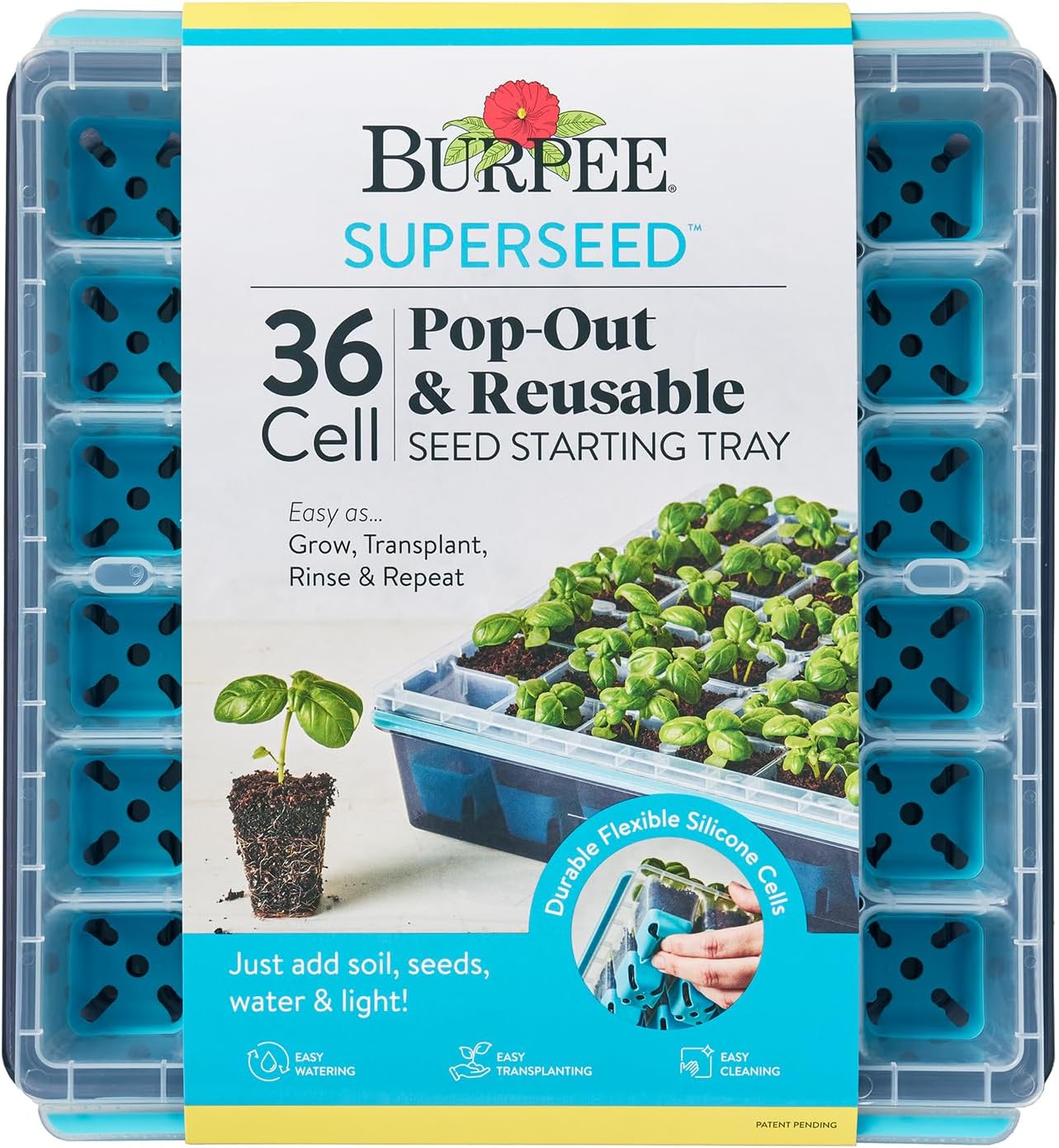
This reusable Burpee tray has 36 cells for starting seedlings indoors. The listing positions it for vegetable, flower, and herb seeds. Separate cells make it practical to keep onion seedlings organized by cultivar before transplanting.
Check On AmazonIf you click this link and buy, we earn a commission at no additional cost to you.
Use short-day types where winter and spring day length fit them
Short-day onions begin bulbing under shorter photoperiods than the other classes, which is why they are commonly associated with southern growing regions and production systems that build leaves through the cooler part of the season. In that setting, the plant can develop vegetative growth before the seasonal day-length trigger pushes it toward bulb formation. The useful decision is not simply that short-day means warm climate. It means the local seasonal pattern gives that class a workable sequence of leaf growth followed by bulbing.
Moving the same class far north can change that sequence. Short-day onions may encounter their bulbing trigger while the plants are still relatively small, so the gardener can end up with modest bulbs even though the foliage looks healthy and no single care mistake stands out. That is a biological fit problem, not a reason to automatically add more fertilizer or water. When local Extension guidance favors longer-day classes, I would treat that recommendation as a stronger signal than a catalog description focused on sweetness, color, or culinary use.
- Start with regional onion recommendations rather than a national hardiness zone alone.
- Confirm that the cultivar is explicitly identified as short-day before buying seed or transplants.
- Check whether the local growing season lets the plant establish useful foliage before bulbing begins.
- Do not assume a southern label or sweet flavor automatically proves the correct day-length class.
After that first class check, move on to the growing factors that can actually be managed during the season. Planting timing, soil condition, moisture, and plant health still influence the crop, but they are easier to interpret when the onion starts from a plausible photoperiod fit. That keeps a gardener from using extra inputs to chase a problem that began with variety selection. It also gives later troubleshooting a cleaner baseline.
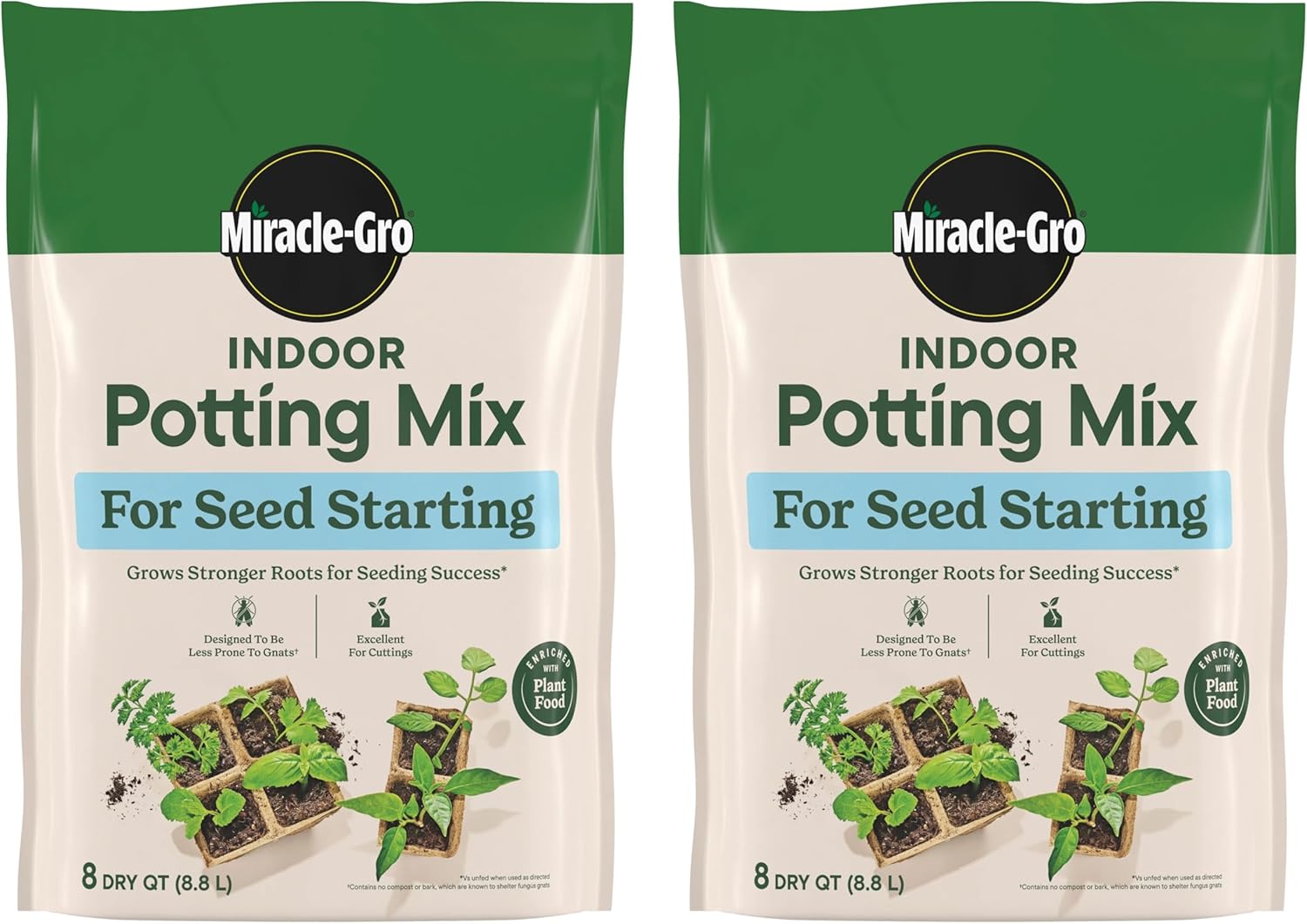
This indoor potting mix is sold as two 8-quart bags for seed starting. It is listed for starting vegetable, flower, and herb seeds indoors and for cuttings. It provides a dedicated seed-starting medium for establishing onion seedlings before they move into the garden.
Check On AmazonIf you click this link and buy, we earn a commission at no additional cost to you.
Use long-day types where long summer days are available
Long-day onions delay bulb initiation until longer photoperiods are reached, which generally fits northern U.S. regions where summer daylight extends long enough to trigger that response. The delay can give the plant more time to produce foliage before bulbing starts. In a suitable region, that sequence supports the basic logic behind choosing a long-day class for full bulb production. It does not mean every long-day cultivar performs the same way in every northern garden.
The opposite mismatch matters just as much. A long-day cultivar grown where seasonal daylight never reaches its required trigger may keep making leaves without moving into normal bulb formation at the expected stage. If you are comparing long-day vs short-day onions, this is the central distinction to keep in mind: the class describes a photoperiod response, not a quality grade. Soil fertility, moisture, temperature, and plant health still matter, but none of them changes the basic daylight requirement built into the cultivar.
Key point: Latitude narrows the field, but it does not create a hard biological border. In transition areas, more than one class may be plausible, so the exact cultivar description becomes more important.
Once the class fits the location, the decision shifts back to ordinary crop management. The site’s vegetable gardening guidance is the better place to handle spacing, bed use, seasonal planning, and general care. Keeping those topics separate prevents photoperiod from becoming an all-purpose explanation for every onion problem. It also makes later symptoms easier to evaluate on their own evidence.

This two-pack includes waterproof seedling heat mats measuring 10 by 20.75 inches. The listing describes them for seed germination and indoor growing and notes ETL listing. They can support an indoor onion seed-starting setup before long-day seedlings are transplanted outdoors.
Check On AmazonIf you click this link and buy, we earn a commission at no additional cost to you.
Treat intermediate-day onions as a regional middle case
Intermediate-day onions are useful where the seasonal photoperiod falls between the conditions that most strongly favor short-day and long-day classes. They are often described as a middle option, but that wording can be misleading if it sounds like they are automatically safe everywhere. A better interpretation is that they have a different bulbing threshold and can fit regions where neither extreme is the clearest match. The local recommendation still matters because climate and planting sequence determine how much vegetative growth develops before that threshold is reached.
Transition areas deserve more caution because the practical boundary is a continuum rather than a sharp line. A garden near the edge of one broad band may still have more than one reasonable option, depending on the cultivar and seasonal pattern. I would narrow the choice with state or regional guidance, then compare only varieties that are described for that kind of setting. That turns uncertainty into a smaller, more useful shortlist instead of a false yes-or-no boundary.
Choose by constraint:
- If regional guidance clearly favors short-day onions, start with that class and then compare cultivars within it.
- If regional guidance clearly favors long-day onions, screen out varieties that need shorter photoperiods before comparing other traits.
- If the garden sits in a transition region, give intermediate-day cultivars serious consideration and verify local recommendations.
- If the cultivar’s day-length class is missing or vague, do not infer it from color, sweetness, bulb shape, or a marketing name.
A small trial can still make sense when two classes are both considered plausible for the area. In that case, compare known cultivars under the same garden conditions rather than treating the test as proof that an entire class succeeds or fails. The result can help refine future choices without turning one season into a universal rule. Photoperiod fit remains the starting filter, not the final guarantee.

This pack contains 100 plastic 4-inch nursery pots with drainage holes. The listing identifies them for transplanting, cuttings, succulents, and seedlings. Individual pots make side-by-side cultivar trials easier to keep separated in a transition-region garden.
Check On AmazonIf you click this link and buy, we earn a commission at no additional cost to you.
Verify the cultivar class instead of relying on bulb color or sweetness
Color and flavor are easy to shop by because they are visible or familiar, but they do not tell a gardener when an onion is triggered to bulb. Yellow, red, white, mild, pungent, sweet, and storage-oriented onions can appear across different day-length classes. That means a label such as red onion or sweet onion is not enough information for the pre-plant decision. The listing, packet, nursery tag, or breeder description should state whether the cultivar is short-day, intermediate-day, or long-day.
When that information is missing, I would verify before buying rather than guessing from appearance. Local retail availability is not enough by itself because one store can serve gardens with different seasonal conditions. Once the class is known, preferences such as kitchen use, storage expectations, color, and shape become useful again. Broader edible gardening planning can then carry the crop choice into the rest of the home food garden.
A useful packet check is simple: identify the named cultivar, find its stated day-length class, and compare that class with the regional recommendation before weighing the traits that made the variety attractive. Treat any broad latitude range on a seller page as a screening aid, not a promise of bulb size. If the information conflicts, look for a more specific horticultural source or a clearer cultivar description. The aim is to resolve the selection question before garden space is committed.
That sequence gives later crop care a cleaner baseline. Water, fertility, spacing, temperature, and plant health can then be judged as separate influences instead of being asked to compensate for an uncertain starting choice. If bulb development still disappoints, the gardener has fewer basic variables to untangle. Good selection does not guarantee a large bulb, but it removes one avoidable source of confusion.

These self-adhesive kraft envelopes come in a 100-pack and measure 2.25 by 3.5 inches. Their small format works for organizing compact seed lots and other small contents. They give gardeners a simple way to keep saved onion seed separated by named cultivar and day-length class.
Check On AmazonIf you click this link and buy, we earn a commission at no additional cost to you.
Final thoughts: match onion day length before choosing the variety
The practical order is simple: narrow the choice by day-length class, then compare varieties within the classes that fit the location. Short-day, intermediate-day, and long-day onions describe different photoperiod responses, not better or worse onions. After that screen, flavor, color, storage use, and other traits can drive the final choice. The sequence keeps variety preference from outrunning biological fit.
Where regional fit is less clear, keep the shortlist conservative and use the best local guidance available. Then let normal crop factors such as planting timing, soil, moisture, and plant health explain the rest of the season. That gives the gardener a cleaner way to learn from the result. One good pre-plant decision makes the later evidence easier to read.

This single-probe soil moisture meter gives an instant reading without batteries. The current listing describes a rust-resistant 304 stainless steel probe and indoor or outdoor use. It is useful for checking soil moisture after onion variety selection has been narrowed by day-length fit.
Check On AmazonIf you click this link and buy, we earn a commission at no additional cost to you.
Frequently asked questions
🧅 What happens if I plant a short-day onion too far north?
It may begin bulbing before it has built enough foliage, which can limit bulb size. Other growing conditions still matter, so small bulbs are not proof of a day-length mismatch by themselves.
☀️ What happens if I plant a long-day onion too far south?
The plant may not receive a long enough seasonal photoperiod to trigger normal bulb formation for that cultivar. Check regional guidance and the exact cultivar description before assuming care changes will fix the problem.
📍 Can I choose onion type from latitude alone?
Latitude is a strong first screen because it affects seasonal day length, but broad bands overlap and cultivar responses vary. Use state or regional horticultural guidance to confirm the class that fits your location.
🌱 Are intermediate-day onions safe for every garden?
No. They are a middle photoperiod class, not a universal option. They are most useful where regional guidance indicates that their day-length requirement fits the local seasonal pattern.
🏷️ Can I tell onion day-length class from color or sweetness?
No. Those traits do not reliably identify photoperiod class. Check the named cultivar’s packet, nursery information, breeder description, or other reliable listing for an explicit class.
🌿 Can good care overcome the wrong day-length class?
Good soil, moisture, and general care support plant growth, but they do not change the cultivar’s basic photoperiod response. Start with a class suited to the region, then improve the other growing conditions around that choice.
References and sources
- Iowa State University Extension and Outreach: Supports the role of photoperiod in bulb initiation and the relationship between foliage present at bulb initiation and bulb size.
- University of Minnesota Extension: Supports long-day onion guidance for northern growing conditions and the importance of day length to bulb formation.
- Nebraska Extension: Supports the practical short-day, intermediate-day, and long-day screening ranges and explains why early bulb initiation can limit bulb size.