Cool-season annuals are most useful as a bridge between the coldest part of the year and the stretch of weather that favors summer flowers. The right planting window depends on the plant, local frost risk, heat buildup, site exposure, and whether the transplant is ready for outdoor conditions. A plant that tolerates a light frost is not automatically suited to every cold event, and a plant that survives warmth may still stop flowering well in sustained heat. The practical goal is to match the plant’s documented temperature response to the weather your garden is actually experiencing.
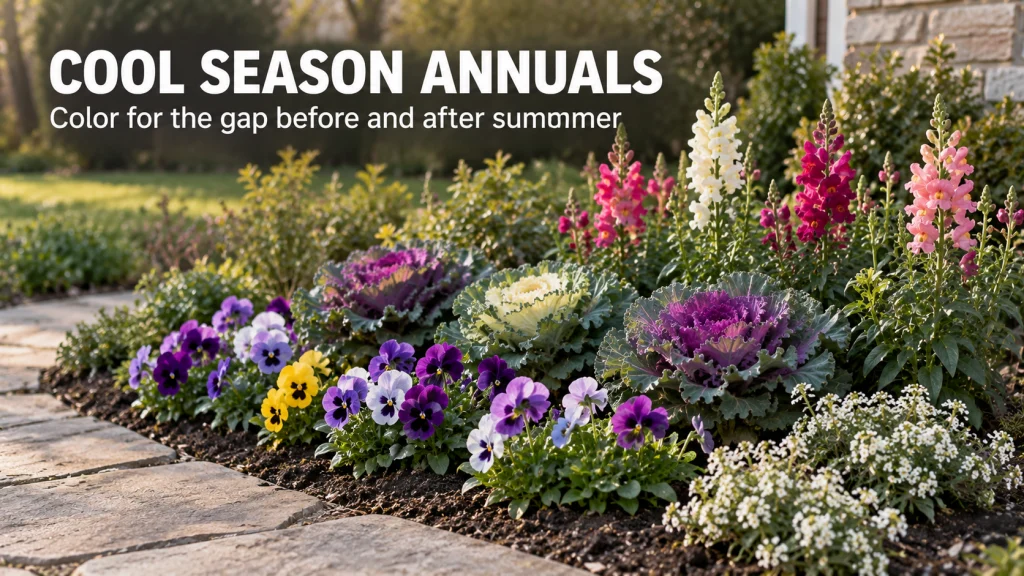
Use cool-season annuals as a seasonal bridge, not a summer substitute
A flower bed can look ready for color while the weather is still too cool for familiar summer annuals, and the same bed can open up again when summer plants fade as temperatures drop. Cool-season annuals fit those gaps because their useful growth and flowering period is tied to cooler conditions. What controls the decision is not simply whether the calendar says spring or fall, but whether the plant can keep growing and flowering under the temperatures the site is likely to deliver. That hidden temperature response is why the same species can be timely in one region and poorly timed in another.
Treat these plants as a time-limited planting choice rather than a permanent replacement for warm-season color. In spring, they can occupy a bed before heat-loving annuals become the better fit, while in fall they can take over as heat-loving plants decline. A broader annual flower gardening approach still needs to account for light, mature habit, moisture, and maintenance, but temperature preference determines whether this particular slot makes sense. Before buying, I would compare the expected weather pattern with the plant’s cold and heat tolerance and ask whether enough favorable weather remains to justify planting it now.

This 16-inch resin planter has a 6-gallon capacity and is designed for indoor or outdoor use. It includes a self-watering disk. Its container format gives seasonal annuals a dedicated space that can be changed as planting conditions shift.
Check On AmazonIf you click this link and buy, we earn a commission at no additional cost to you.
Let temperature response control the decision
The useful biological signal is active growth and flowering under cool conditions, not the word annual by itself. Pansies, violas, snapdragons, sweet alyssum, ornamental cabbage, and several other plants are commonly used when cool weather favors them, but they do not share identical cold or heat limits. Some tolerate a light frost with little injury, while others may be damaged sooner or may survive cold without maintaining attractive flowers. That difference matters because survival, active growth, and good display quality are three separate outcomes.
Heat tolerance needs the same distinction. A cool-weather plant may stay alive as temperatures rise while flowering slows, stems stretch, foliage looks tired, or the overall display loses quality. University guidance for pansies, snapdragons, and other cool-season annuals consistently describes stronger performance in cooler conditions and declining performance as heat becomes sustained. I would treat visible decline as a seasonal signal only after checking water, light, and other obvious site stresses, because heat is not the only reason an annual can look poor.

This wireless thermometer uses an outdoor sensor to report indoor and outdoor temperature. The listing specifies a 500-foot transmission range. Local readings can be compared with the cold and heat response of cool-season annuals before treating the calendar as the main planting signal.
Check On AmazonIf you click this link and buy, we earn a commission at no additional cost to you.
Read local conditions instead of using one national calendar
A national planting date is too blunt because cool-season annuals are grown across climates with very different winter and spring patterns. A cold-winter garden may use them during a relatively narrow spring or fall shoulder season, while a mild-winter garden may use some of the same plants through much more of the cool part of the year. Even within one town, a protected bed near a warm wall can behave differently from an exposed bed that catches cold wind. The planting decision should therefore combine regional guidance with the microclimate in the actual bed or container.
Use the weather forecast as a short-range check, but do not let one mild afternoon override the broader pattern. Look at the plant’s documented frost tolerance, whether the transplant has been hardened for outdoor conditions, whether the soil is workable rather than saturated, and whether a rapid return to severe cold or strong heat is likely. The table below turns those signals into a practical buy now, wait, or skip decision. If a specific cold or heat limit is unclear, confirm it before treating the purchase as ready to plant.
| Site or plant signal | Buy now or wait | Skip when |
|---|---|---|
| Cool weather is established and the selected plant is documented for those conditions | Buy or plant now if the site is workable and the transplant is ready for outdoor exposure | Skip if the favorable cool-weather window is already too short for useful establishment and display |
| Repeated hard cold is still likely beyond the plant’s documented tolerance | Wait for a safer pattern if the plant is suitable but the immediate cold risk is too high | Skip this planting window if repeated cold is likely to stay beyond the plant’s documented tolerance |
| Sustained heat is causing weaker bloom or declining plant quality | Stop adding more cool-season plants and plan the next warm-weather planting instead | Skip buying another cool-season annual when sustained heat is already reducing quality |
| Weather is borderline and the cultivar information is vague | Wait until the cultivar and near-term weather make the fit clearer | Skip if the remaining season is too uncertain to justify another planting |

This acrylic rain gauge measures up to 5 inches of rainfall and uses a magnifying design for easier reading. It provides a simple record of precipitation at the garden site. That local rainfall information can help distinguish wet-bed conditions from a temperature-only planting decision.
Check On AmazonIf you click this link and buy, we earn a commission at no additional cost to you.
Find the earliest safe planting window without rushing the bed
The earliest useful window starts when the selected plant can handle the outdoor pattern and the site is physically ready to receive it. A label that describes frost tolerance is helpful, but it should not be read as permission to plant into any cold spell. Recently purchased or greenhouse-grown transplants may also need gradual exposure to outdoor light, wind, and temperature before they are asked to handle a stressful night. Wet, compacted, or partly frozen soil is another reason to wait even when the plant itself is cold tolerant.
Before planting, I would make a short site check rather than relying on the air temperature alone. That check should focus on the plant’s condition, the next stretch of weather, drainage, and whether the bed receives exposed wind or extra protection from nearby structures. The point is not to eliminate every weather risk, which is impossible, but to avoid placing a plant into conditions that are clearly outside its documented range. A practical pre-plant check looks like this:
- Confirm that the species or cultivar is actually sold and documented for cool-season use in your region.
- Check that the transplant is sturdy, not severely rootbound, wilted, or newly moved from a highly protected environment.
- Make sure the bed drains and can be worked without smearing or compacting wet soil.
- Compare the near-term forecast with the plant’s known cold tolerance rather than with a generic annual-flower rule.
- Delay planting when the weather pattern is clearly moving toward conditions the plant is not prepared to handle.
This approach also prevents a common beginner mistake: treating frost tolerance as the same thing as establishment readiness. A pansy or viola may be much more cold tolerant than a warm-season annual, yet a stressed transplant in saturated soil can still perform poorly. The safest early window is therefore a combination of plant hardiness, transplant readiness, and usable site conditions. Once those pieces line up, planting becomes a reasoned seasonal choice rather than a gamble on one warm day.

This garden trowel is made for digging and planting in beds and pots. It has a cast aluminum rust-resistant head and an ergonomic comfort-grip handle. The hand-tool format suits transplanting when the soil is workable and the bed is ready for an early-season planting.
Check On AmazonIf you click this link and buy, we earn a commission at no additional cost to you.
Use the late window before heat or deeper cold closes it
The late end of the season is controlled by a different limit depending on whether you are moving toward summer or winter. In spring, sustained warmth can reduce the quality of plants that prefer cool conditions even if they remain alive. In fall, increasingly severe cold can shorten the time available for establishment or end the display for plants that are not hardy enough for what follows. The useful window closes when the plant can no longer deliver reasonable growth or display quality for the conditions you can provide.
This is where buy now, wait, or skip becomes more useful than trying to keep every planting going indefinitely. When cool-season flowers begin declining as heat builds, first rule out dry soil, root restriction, or an abrupt care problem, then consider whether the weather has simply moved beyond their preferred range. If you are shopping late in a cool period, compare the remaining suitable weather, cultivar tolerance, transplant readiness, and site exposure before paying for another round of color. When those checks point to a closing window, waiting or skipping is more practical than buying plants with too little favorable season left to establish and perform.

This plant cover measures 10 by 30 feet and uses 0.9 oz per square yard garden fabric. The listing positions it for frost, sun, and pest protection. It provides a temporary protective layer when a short cold event threatens an otherwise workable late-season planting window.
Check On AmazonIf you click this link and buy, we earn a commission at no additional cost to you.
Adjust for species, cultivar, bloom habit, and hardiness
The phrase cool-season annual groups together plants with different behavior, so the label is a starting point rather than a complete planting instruction. Pansies and violas are widely used for cool conditions, snapdragons can flower well in cool weather but lose quality in strong heat, and ornamental cabbage or kale is often chosen more for foliage than for flowers. Sweet alyssum, dianthus, calendula, stock, and other choices may also fit cool periods, but their cold tolerance, light preference, mature size, and response to heat are not interchangeable. A mixed planting works best when each component fits the same site conditions rather than simply sharing a seasonal label.
Cultivar differences add another layer, especially when breeders select for compact habit, flower size, cold tolerance, or improved performance under particular conditions. Do not assume that a general statement about the species guarantees the same result for every named cultivar, and do not treat seasonal nursery placement as proof that a plant can overwinter where you live. A specific temperature or regional use note on the plant label can help separate a buy-now option from one that should wait for better conditions. When that information is vague, local Extension guidance can narrow the choice before you commit the bed or container space.

This pack contains 100 plastic T-type plant labels measuring 6 by 10 cm. The tags can keep species or cultivar names attached to individual plantings. Clear labeling is useful when cold tolerance, bloom habit, or seasonal performance differs among named plants in the same bed.
Check On AmazonIf you click this link and buy, we earn a commission at no additional cost to you.
Work through the window with two regional examples
Consider a cold-winter interior garden where summer annuals are not yet suitable but the soil is workable and the forecast has settled into generally cool conditions. A gardener choosing pansies or violas could use their documented tolerance of cool weather as a reason to plant before warm-season annuals, while still watching for a return to cold beyond what those plants can handle. That is a buy-now window only while the transplant is ready and the near-term pattern remains within the plant’s workable range. Later, when sustained warmth begins reducing flower quality, stop adding more of the same and use the bed for plants that are better matched to summer.
Now consider a mild-winter or subtropical garden where cool-season color may be most useful during the cooler part of the year rather than as a brief spring bridge. UF/IFAS guidance on snapdragons in Florida shows why regional context matters: high temperatures can suppress growth and flowering even though the same plant is familiar across much of the country. In that setting, a transplant may be biologically appropriate but still be a poor buy if hot weather is close enough to cut the useful display period short. The decision depends on how much suitable weather remains, not simply on whether the plant appears on a seasonal flower list.

This wireless weather station pairs its display with one outdoor sensor. It is designed to report indoor and outdoor temperature conditions. Site-specific readings give gardeners another local reference when comparing broad regional guidance with the actual conditions around a bed or container.
Check On AmazonIf you click this link and buy, we earn a commission at no additional cost to you.
Preserve uncertainty when weather shifts the window
Shoulder seasons are variable, so even a well-timed planting can meet an unusual cold snap or a burst of heat. Containers can also change temperature and moisture faster than in-ground beds, while reflected heat from paving or a south-facing wall can make one site warmer than the surrounding yard. Instead of promising a fixed bloom period, watch for continuing new growth, acceptable flower quality, and a root zone that is neither waterlogged nor repeatedly drying out. Those observations tell you whether the plant is still functioning in the site you gave it.
Uncertainty is also a reason to keep the decision reversible. If the remaining season is unclear, a modest planting is easier to change than filling a large bed on the assumption that one weather pattern will hold. For broader choices that include annuals, perennials, bulbs, and other ornamental plants, the site’s light, soil, water, and maintenance needs still matter, so use a wider flower gardening framework for home landscapes when the decision is bigger than seasonal color. That gives you room to plant, wait, or skip without pretending the next stretch of weather is certain.

This battery-free moisture meter is designed for indoor and outdoor soil checks. It uses a single 304 stainless steel probe and provides an instant reading on its display. A direct moisture check helps separate root-zone dryness or excess moisture from weather-driven seasonal decline.
Check On AmazonIf you click this link and buy, we earn a commission at no additional cost to you.
Final thoughts: choose the window before you choose the plants
Cool-season annuals are useful because they can occupy weather that is too cool for familiar summer flowers, not because they erase the limits of heat and cold. Start with the plant’s temperature response, then check local weather, site exposure, transplant readiness, and the condition of the bed. Use frost tolerance as one piece of evidence rather than as a guarantee, and expect the useful window to differ by species, cultivar, and region. That keeps the planting decision grounded in what the plant can realistically do.
Before buying, make one last pass through four filters: remaining cool-weather window, cultivar tolerance, transplant readiness, and site exposure. Buy when those pieces align and there is a realistic period for establishment and display. Wait when the plant is suitable but the immediate weather or site is not ready, and skip when the favorable window is already closing. That turns seasonal color into a condition-based choice instead of a purchase made simply because the bed looks empty.

This three-pack contains 3-by-5-inch top-spiral notebooks with black covers and a universal page pattern. The notebooks are made for weatherproof field notes. They provide a compact way to log planting dates, temperature observations, and site conditions while applying a buy, wait, or skip checklist.
Check On AmazonIf you click this link and buy, we earn a commission at no additional cost to you.
FAQs
🌱 What are cool-season annuals?
They are annual plants used when cooler conditions favor growth or display quality, commonly in spring, fall, or the cool season of mild-winter regions. The group includes plants such as pansies, violas, snapdragons, sweet alyssum, and ornamental cabbage, but their exact cold and heat tolerance varies.
❄️ Can cool-season annuals survive frost?
Many can tolerate a light frost, but tolerance is not identical across species or cultivars. Check the plant label and local guidance before assuming a cool-weather plant will handle a stronger cold event.
☀️ Why do pansies and similar flowers fade when weather turns hot?
Many cool-season plants grow and flower best under cooler conditions, so sustained heat can reduce flower quality or overall vigor. Rule out water stress and other site problems, then treat continued heat-related decline as a signal that the seasonal window may be closing.
🪴 Are containers a good place for cool weather annuals?
Yes, if the container has drainage and the plant matches the site’s light and temperature conditions. Remember that containers can warm, cool, and dry faster than in-ground beds, so they may need closer observation during weather swings.
🌼 Should I replace cool weather annuals with summer flowers?
Replace them when sustained warmth is reducing their quality and warm-season annuals are a better match for the conditions. Make the change when local weather and plant performance show that warm-season flowers are now the better fit.
🌧️ What should I check before planting early in the season?
Check the plant’s cold tolerance, transplant readiness, near-term weather, drainage, and whether the soil is workable. Delay planting when the root zone is saturated or the forecast is clearly outside the plant’s documented range.
References and Sources
- Iowa State University Extension, growing cool season annuals: Supports the seasonal role of cool-weather annuals, examples of suitable plants, frost tolerance, and the transition away from cool-season color as heat builds.
- Virginia Cooperative Extension, annual flowers: culture and maintenance: Supports matching annuals to temperature, light, site conditions, and regional recommendations rather than using one rule for every garden.
- UF IFAS Extension, planting and propagation of snapdragons in Florida: Supports the regional example showing that snapdragons are cool-season plants whose growth and flowering are limited by high temperatures.
- University of Connecticut Home Garden Education Office, annuals: Supports the distinction between cool-season and warm-season annuals and the decline of some cool-season flowers during summer heat.