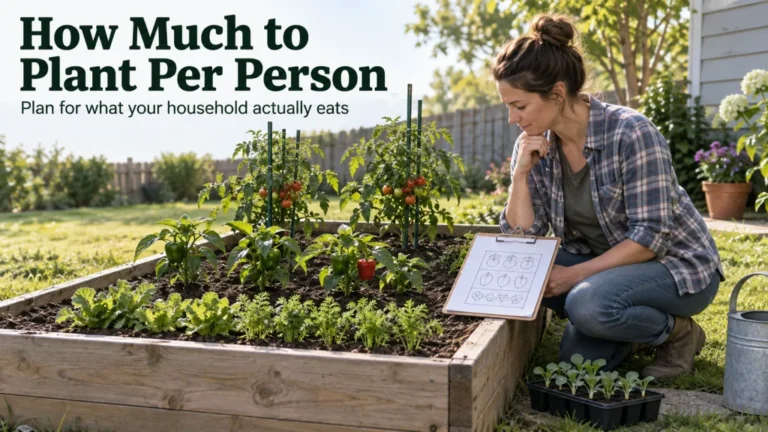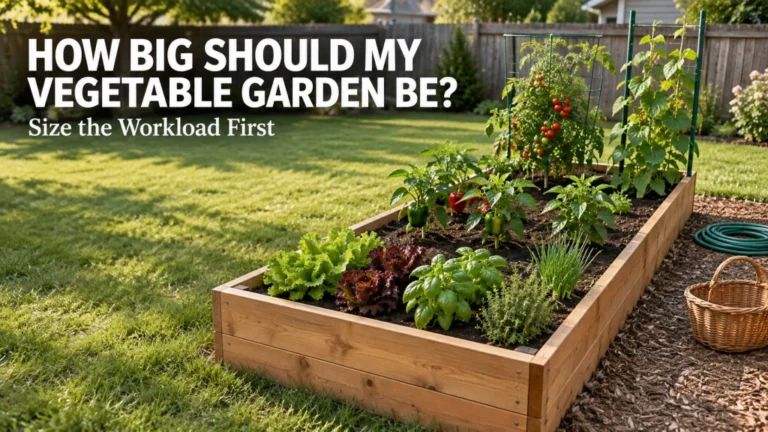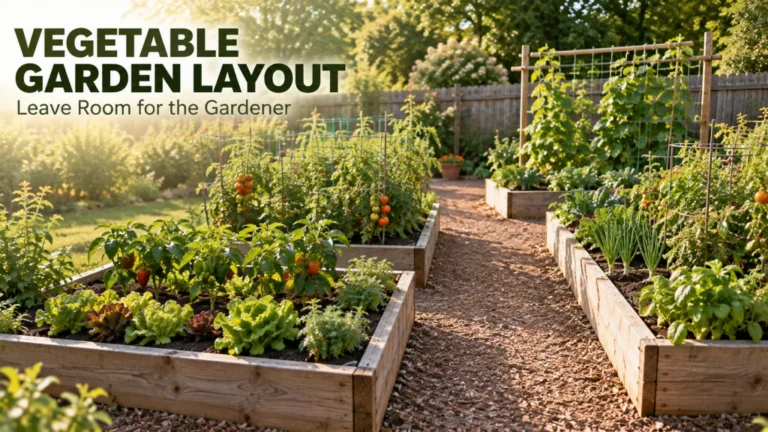
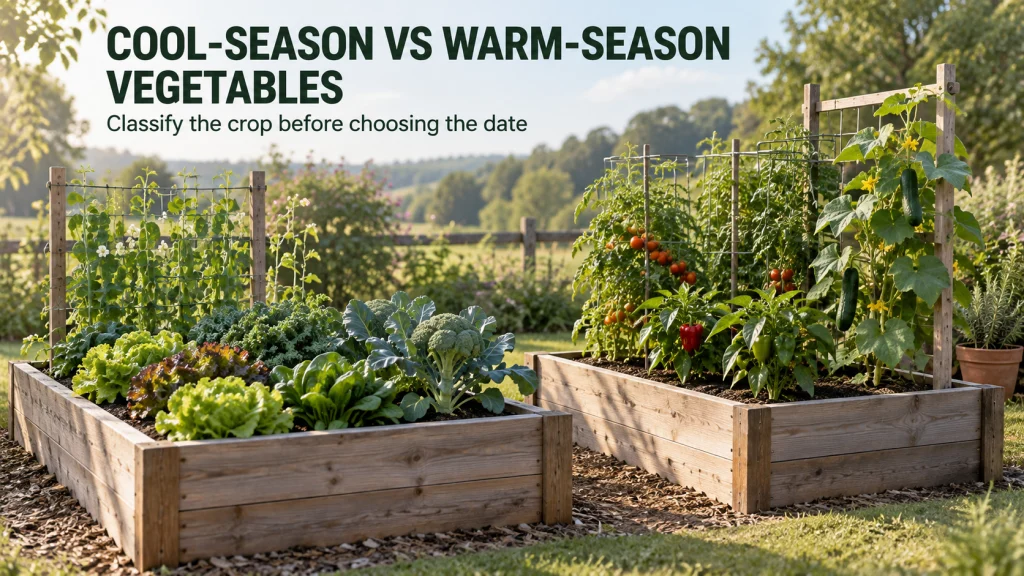
Cool-season and warm-season vegetables belong in different parts of a garden plan because they respond differently to cold, heat, and frost risk. Cool-season crops can use colder parts of the growing year, while warm-season crops need the frost risk to pass and enough warmth for active growth. That classification helps place crops on a planting calendar, identify useful spring and fall windows, and plan handoffs between crops without pretending that one national date fits every garden. Exact timing still depends on the crop, local frost pattern, soil conditions, and the guidance for that individual vegetable.
The crop class comes before the calendar date
Lettuce and tomato can share the same garden, but they should not be assigned the same temperature logic. When comparing cool season vs warm season vegetables, the useful first question is not which date appears on a calendar. It is whether the crop is built to grow through cooler conditions or whether it needs a reliably warm part of the season. That distinction gives the date meaning instead of treating a date as a universal instruction.
A planting calendar is most useful after each crop has been placed in the right seasonal group. A cool-season crop may have an early window, a later cool window, or both, depending on the local climate and the crop itself. A warm-season crop generally belongs in the frost-free, warmer part of the growing year, but the exact start still depends on local conditions. If you are organizing a new garden, this seasonal classification fits naturally into a broader garden planning process before you assign space and timing.
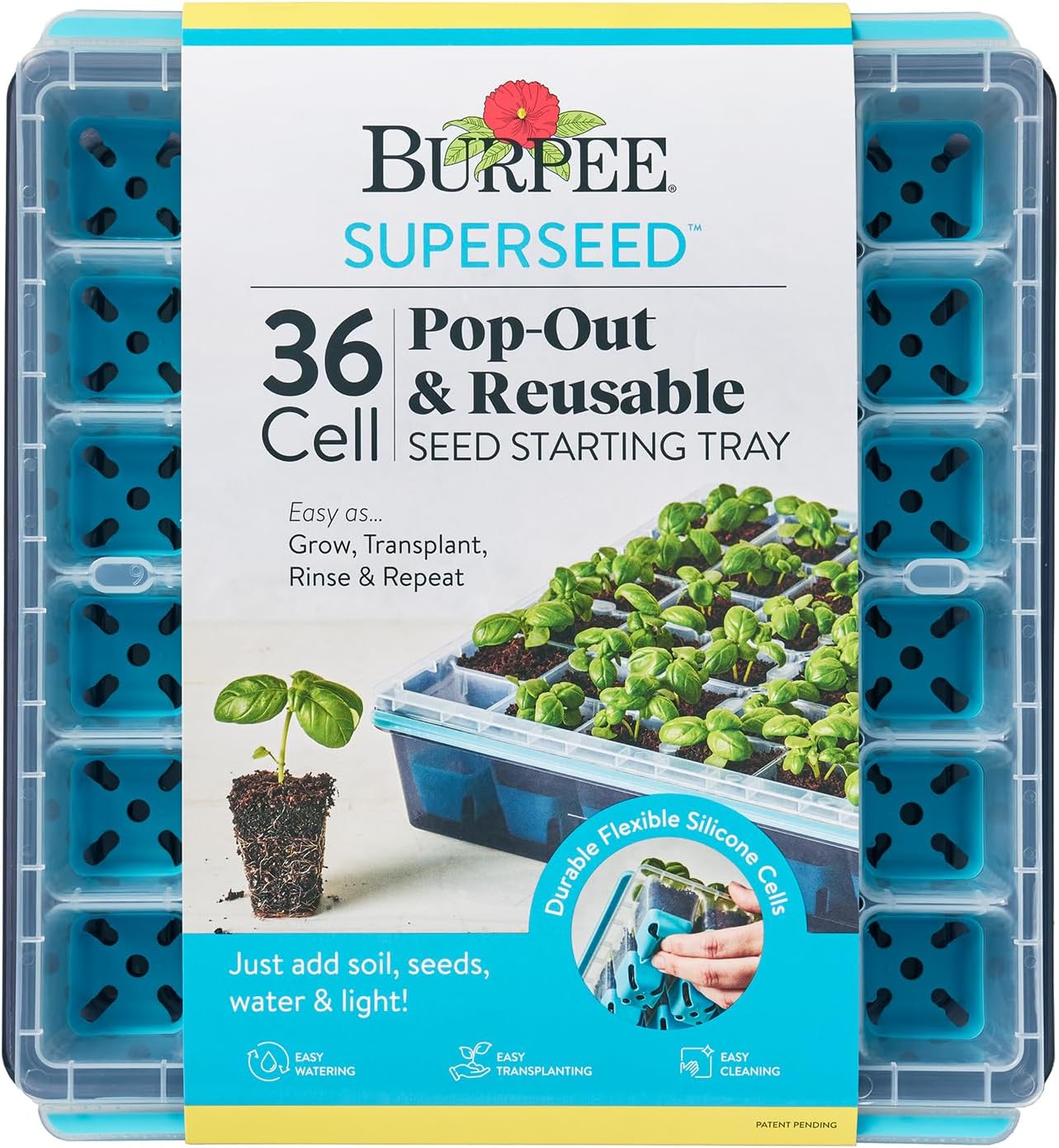
This reusable tray has 36 flexible cells for starting vegetable, flower, and herb seeds indoors. Molded corner slots support drainage and soil aeration, while the watering tray helps contain excess water. The flexible cells are designed to release seedlings with less root disturbance when it is time to transplant.
Check On AmazonIf you click this link and buy, we earn a commission at no additional cost to you.
Cool-season and warm-season vegetables solve different temperature problems
Cool-season vegetables are not simply plants that survive an occasional cold night. They generally perform best during cooler parts of the growing year, and many can tolerate some frost while continuing to grow. Common examples include lettuce, spinach, peas, radishes, carrots, broccoli, cabbage, and kale. Heat can shorten the useful window for some of these crops by reducing quality or pushing leafy crops toward flowering and seed production.
Warm-season vegetables work from the opposite side of the temperature problem. Tomatoes, peppers, cucumbers, beans, squash, sweet corn, eggplant, melons, and similar crops need warmer conditions and are vulnerable to frost. Waiting for the correct warm window is not wasted time if the crop would otherwise sit in cold soil or cold air with little useful growth. The practical difference is that one group uses the cool shoulder seasons, while the other depends on the warmer central window of the local growing season.

This Bluetooth thermometer hygrometer tracks temperature and humidity for indoor growing spaces. Its LCD shows current conditions, while the Govee app can send alerts when readings move outside preset ranges. Stored data can also be reviewed over time to compare changing growing conditions.
Check On AmazonIf you click this link and buy, we earn a commission at no additional cost to you.
Cool-season vegetables can use colder parts of the gardening year
Cool-season crops give gardeners access to periods that would be too cold for tomatoes, peppers, cucumbers, and other warm-season vegetables. In many climates, that means an early growing window before summer heat becomes dominant. Some locations also provide a second opportunity as summer heat eases and cooler conditions return. The exact opportunity changes by region, so the crop class identifies the kind of window to look for rather than supplying one national schedule.
That second cool window is especially useful because heat can be a quality problem even when a plant remains alive. Lettuce may become less useful as hot conditions encourage bolting, while radishes can become coarser and more pungent in heat. Other cool-season crops differ in cold tolerance, so the label does not mean every member of the group can handle the same freeze. Treat the class as a planning category, then narrow the decision with the specific crop and local conditions.

This 10 x 30-foot plant cover is sized for covering garden beds or low hoop setups during cooler weather. The listing identifies it as a breathable frost and sun protection fabric for outdoor plants. It can support spring or fall protection when a cool-season crop still fits the local planting window.
Check On AmazonIf you click this link and buy, we earn a commission at no additional cost to you.
Warm-season vegetables need the frost-risk and warmth gates to pass
Warm-season vegetables should not move onto the outdoor calendar just because the garden has entered spring. The first gate is frost risk, because these crops generally do not tolerate freezing conditions the way many cool-season vegetables can. The second gate is useful warmth in the air and soil, which affects establishment and growth. A date that clears only one of those gates can still be too early for a particular crop or location.
This is why a nearby gardener, a seed packet, and a regional planting chart can appear to give different timing without necessarily contradicting one another. They may be responding to different local frost patterns, soil warming rates, elevation, exposure, or crop requirements. The right use of an average frost date is as a planning reference, not a promise that cold weather has ended. For warm-season crops, the date becomes useful only when it is combined with current garden conditions and crop-specific guidance.

This combo pairs a 10 x 20.75-inch seedling heat mat with a digital thermostat for indoor germination setups. The mat is designed to provide stable warmth for seed starting and cutting propagation. The thermostat adds temperature control, which is useful when warm-season seedlings need protected root-zone warmth before outdoor conditions are ready.
Check On AmazonIf you click this link and buy, we earn a commission at no additional cost to you.
Frost tolerance and preferred growing temperature are related but not identical
A common planning mistake is to reduce the whole cool-season versus warm-season distinction to one question: can the crop survive frost? Frost tolerance matters, but survival is not the same as productive growth. A crop can tolerate a cold event yet still grow slowly under conditions that are colder than its preferred range. Another crop may avoid frost damage but still perform poorly if the soil remains too cool for good establishment.
The same caution applies inside the cool-season group. Lettuce, peas, broccoli, carrots, spinach, and kale are commonly grouped together, yet their tolerance of freezing conditions and their response to warming weather are not identical. That means a gardener should not read the word cool as a promise that every crop can take the same cold or remain productive through the same heat. The useful distinction is between broad seasonal fit and the narrower biological limits that matter for each vegetable.

This VIVOSUN thermostat controller is offered as a temperature-control option for seedling heat mat setups. It lets a compatible warming system regulate heat instead of relying on an uncontrolled warming surface. That makes it relevant when preferred growing temperature matters separately from whether a crop can simply survive a cold event.
Check On AmazonIf you click this link and buy, we earn a commission at no additional cost to you.
Use seasonal class to build the planting calendar
A useful calendar starts with temperature logic and then adds local timing. Put cool-season crops into the cooler windows they can use, and reserve the warmer frost-free window for crops that need it. That simple separation prevents the calendar from becoming a list of dates with no explanation behind them. It also makes conflicts visible before you run out of bed space or try to keep a heat-sensitive crop through the hottest part of the year.
The first table separates the two crop classes by planning role, while the next two turn that distinction into a spring-to-fall sequence and a calendar decision process. None of them supplies a national planting date because climate, crop, and local conditions still control the exact move. Read them as planning filters that tell you what kind of window to look for and what information should come next. The goal is a sequence of usable windows rather than a copied calendar.
| Crop class | Planning role | Main weather question | What to verify next |
|---|---|---|---|
| Cool-season | Uses cooler parts of the growing year | Is the crop within a useful cool window without excessive heat? | Crop-specific frost tolerance, maturity, and local planting window |
| Warm-season | Uses the warmer frost-free window | Has frost risk passed, and are air and soil conditions warm enough? | Crop-specific warmth needs, local conditions, and planting method |
| Season phase | Cool-season role | Warm-season role | Planning question |
|---|---|---|---|
| Early cool window | Primary opportunity for suitable crops | Usually too early for outdoor placement | Which cool-season crops fit the local cold conditions? |
| Warming transition | Some crops continue while heat-sensitive ones approach their limit | Frost risk and useful warmth become the main gates | When should bed space begin shifting between crop classes? |
| Warm window | Many heat-sensitive crops lose quality or finish | Main outdoor growing opportunity | Is the remaining warm period long enough for the crop or variety? |
| Cooling transition | A later opportunity may begin where climate allows | Remaining maturity time becomes increasingly important | Can the next crop establish and finish before conditions become limiting? |
| Later cool window | Possible second window for suitable crops | Generally closes as cold risk returns | Does the local season leave enough time for a useful cool-season crop? |
| Decision step | Question to answer | Calendar action |
|---|---|---|
| 1. Classify the crop | Is it cool-season or warm-season? | Place it in the cooler or warmer part of the year. |
| 2. Identify the local window | Which part of the local season matches that class? | Mark the broad usable window rather than one exact date. |
| 3. Check the weather gate | Are frost risk, heat, and current air conditions suitable? | Narrow the window based on current local conditions. |
| 4. Check the planting method | Will the crop be direct seeded or transplanted? | Account for soil conditions and establishment needs. |
| 5. Check maturity | Is enough useful season left for this crop or variety? | Keep, move, or skip the planned slot. |
| 6. Verify the crop | What does crop-specific guidance say about the final timing? | Choose the practical planting date for that crop and location. |
Use the three tables in order rather than treating any one of them as a planting schedule. The crop class identifies the seasonal lane, the timeline shows where handoffs can occur, and the decision steps expose the checks that can move a planting earlier or later. This also makes it easier to see when a crop does not fit the remaining window instead of forcing it into an open bed. Exact timing still belongs to the individual vegetable and the conditions in the garden.

This set includes five seed-starting trays with vented humidity domes and bases, providing 200 cells in total. The trays are intended for seed starting, indoor gardening, and greenhouse use. Multiple cells make it practical to stage different crop groups or sowing windows while keeping starts organized.
Check On AmazonIf you click this link and buy, we earn a commission at no additional cost to you.
Use cool-season crops for spring and, where climate allows, fall windows
Many cool-season vegetables are valuable because they can occupy garden space before warm-season crops need it. Peas, lettuce, radishes, spinach, carrots, and brassica crops can fit into that cooler part of the season, although their exact planting methods and cold tolerance differ. In climates with a long enough cool period later in the year, some of the same crop types can return for another planting window. That creates a useful planning pattern without requiring every crop to stay in the garden through summer.
Fall planning needs more care than simply reversing a spring calendar. Days are getting shorter, heat may linger at the start of the window, and crops still need enough time to establish and mature before conditions become limiting. A crop that thrives in cool weather can still be a poor choice if the remaining window is too short for that variety. The seasonal label tells you that fall may be possible, while the exact crop guide tells you whether the local window is actually long enough.

This 20-piece variant uses two-inch garden clips for securing cover material to hoops, poles, or frames. The clip family is designed to hold plant covers, shade cloth, or netting with a spring grip. They are useful when cool-season beds need temporary cover during changeable spring or fall weather.
Check On AmazonIf you click this link and buy, we earn a commission at no additional cost to you.
Use warm-season crops for the frost-free warm window
Warm-season crops generally earn the central portion of the vegetable calendar because that is when both frost risk and cold-soil limitations are least likely to interfere. Tomatoes, peppers, cucumbers, beans, squash, corn, eggplant, and melons are familiar examples, but their establishment needs are not identical. Some are commonly transplanted, while others are often direct seeded, and that changes what you need to verify before planting. The seasonal class identifies the broad window, not one shared outdoor start date.
The end of the warm-season window matters too. A crop that requires a long period to mature may not be a useful late planting even if the weather is still warm when it goes into the ground. Likewise, a crop that continues producing can stop being worthwhile as nights cool and frost risk returns. Planning backward from the useful warm window is therefore just as important as deciding when that window opens. This is another reason to check the crop and variety rather than relying on the word warm alone.

This seedling heat mat provides a dedicated warming surface for indoor germination and propagation. Its 10 x 20.75-inch format is designed for common seed-starting trays. It is useful for warm-season starts that need root-zone warmth before the outdoor frost-free window is dependable.
Check On AmazonIf you click this link and buy, we earn a commission at no additional cost to you.
Let succession planning use the handoff between the two groups
Seasonal classification becomes more useful when you plan what follows a crop instead of viewing every planting as an isolated event. A cool-season crop can use a bed early, leave as heat arrives, and make room for a warm-season crop that needs the same space later. In a climate with a workable fall window, that bed may eventually return to a cool-season crop. The sequence turns temperature preference into a space-management decision.
This handoff does not mean every spring crop can be followed by every summer crop. You still need to compare maturity, spacing, light, root disturbance, crop family considerations, and the time needed to clear and replant the bed. A more detailed succession planting plan should account for those constraints instead of assuming the next crop can enter immediately. Seasonal class gives you the broad sequence, while crop duration and garden space determine whether the sequence can realistically fit the available bed.

This 9-quart potting mix is formulated for vegetables, flowers, and herbs in containers or raised beds. Burpee lists coconut coir among its components to help retain moisture between waterings. It can support a fresh container or raised-bed planting when one crop is cleared and the next crop in the succession is ready to establish.
Check On AmazonIf you click this link and buy, we earn a commission at no additional cost to you.
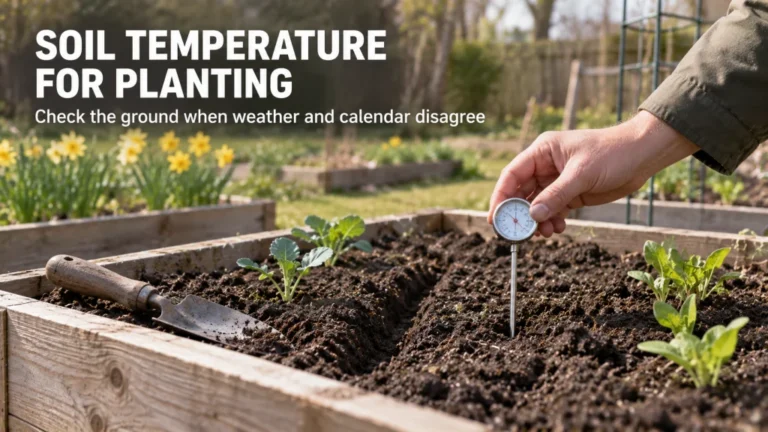
Soil temperature can refine timing but does not replace the crop-specific guide
Soil temperature matters because seeds and roots experience the soil environment directly, and cool soil can slow or disrupt establishment for crops that need more warmth. Cool-season seeds generally tolerate cooler soil conditions better than warm-season seeds, but that does not produce one universal threshold for either group. Species, planting method, moisture, and local soil conditions all affect the useful decision. A broad seasonal category should therefore narrow the search, not turn into a single temperature rule.
If a crop is direct seeded, pay closer attention to the soil conditions needed for germination. If it is transplanted, both root-zone conditions and the air conditions around the transplant matter after it leaves a protected environment. The seed packet, local Extension guidance, and the crop-specific page are better places for exact requirements than a general classification article. Use soil temperature as a refinement after seasonal class and frost risk have put the crop in the correct part of the calendar.

This digital soil meter measures soil temperature, moisture, pH, and sunlight intensity. Its probe is intended for garden soil, including vegetable rows and raised beds. The temperature reading helps refine planting timing after seasonal class and frost risk have already narrowed the usable window.
Check On AmazonIf you click this link and buy, we earn a commission at no additional cost to you.
Check the individual crop guide before choosing an exact planting date
Once a crop has a seasonal window, the practical question becomes whether the seed or transplant in front of you can actually use that window. Before buying or planting, compare its season class, frost sensitivity, planting method, and days to maturity with the time your garden still has available. That check matters most near the edges of a season, when a crop can belong to the correct class and still run out of useful growing time. It also helps prevent buying a variety simply because the crop name looks appropriate for the month.
- Check whether the crop belongs to the cool-season or warm-season group before treating a calendar date as relevant.
- Check frost sensitivity instead of assuming every crop in the same seasonal group handles the same cold.
- Check whether the crop is intended for direct seeding or transplanting under your conditions.
- Check days to maturity against the useful window that remains in your garden.
- Check whether rising heat or returning cold is likely to reduce quality or end useful growth.
These checks turn seasonal classification into a crop-choice filter rather than another fact to memorize. If two varieties fit the same seasonal group but one needs substantially more time to mature, the shorter option may fit a narrowing window while the longer one does not. If you are still building the whole garden from the ground up, the broader process for starting a home garden can connect crop choice with site conditions, space, and seasonal planning. The next useful decision is therefore not to buy more seed or transplants, but to choose material whose timing and planting method actually fit the window you have.

This two-pack provides two separate seedling heat mats for indoor seed-starting setups. Separate warming surfaces can support different transplant groups when their crop guides call for protected germination before outdoor planting. It is most relevant after the gardener has confirmed that a crop will be started indoors rather than direct seeded.
Check On AmazonIf you click this link and buy, we earn a commission at no additional cost to you.
Final thoughts: classify the crop before assigning the date
Cool-season and warm-season labels are most useful when they change how you build the calendar. Cool-season crops can use colder parts of the gardening year and may offer more than one useful window, while warm-season crops need the warmer frost-free period. Neither label gives every crop in the group the same tolerance or the same exact planting date. The practical sequence is crop class first, local seasonal window second, and crop-specific timing last.
That sequence also makes the rest of the garden easier to organize. You can see which beds may change occupants, where a fall opportunity may exist, and which crops need the limited warm window protected for them. Instead of copying a date and hoping it fits, use the seasonal class to ask the right next question. Then verify the individual crop and local conditions before planting.

This set contains 40 two-inch garden clips designed to secure netting, shade cloth, or plant covers to frames and hoops. The clips use a metal body with a spring grip for holding cover material in place. They are useful when seasonal protection needs to be added or removed as garden beds move between cool and warm windows.
Check On AmazonIf you click this link and buy, we earn a commission at no additional cost to you.
FAQs
🥬 What are common cool-season vegetables?
Lettuce, spinach, peas, radishes, carrots, broccoli, cabbage, and kale are common examples. Their exact frost tolerance and planting windows still differ, so use the group for seasonal planning and verify the individual crop before planting.
🍅 What are common warm-season vegetables?
Tomatoes, peppers, cucumbers, beans, squash, sweet corn, eggplant, and melons are common warm-season vegetables. They generally need frost risk to pass and warmer growing conditions, but each crop has its own establishment and maturity requirements.
❄️ Can all cool-season vegetables survive a freeze?
No. Cool-season is a broad planning category, not a guarantee that every crop has the same cold tolerance. Check the individual vegetable and local Extension guidance before relying on freeze tolerance.
🌡️ Is the last frost enough to tell me when to plant warm-season crops?
Not by itself. The frost reference helps identify the broad window, but soil warmth, air conditions, crop requirements, and the current local forecast can still change the practical planting decision.
🌱 Can I grow cool-season vegetables again after summer?
Often, yes, if your climate provides enough cooling weather and enough remaining time for the crop to establish and mature. Fall opportunities vary by region and crop, so work backward from local conditions and the crop’s maturity needs rather than copying a spring date.
References and sources
- Iowa State University Extension and Outreach: Supports the cool-season and warm-season distinction, frost response, heat-related quality changes, and the possibility of a later cool-season crop.
- Iowa State University Extension and Outreach garden planning guidance: Supports using seasonal crop groups as part of planting-calendar and garden-space planning.
- Penn State Extension: Supports seasonal crop classification, frost sensitivity, warm and cool growing windows, and heat effects on some cool-season vegetables.