Peppers do not have a single harvest color that works for every variety or every use. A fruit can be mature enough to pick while still green, or it can stay on the plant longer to develop the cultivar’s full color and, in many sweet types, a sweeter flavor. The practical decision is to confirm the cultivar’s mature color, check that the fruit is full-sized and firm, then weigh intended use against the time left in the growing season. When frost is becoming a risk, harvesting mature green fruit can make more sense than waiting for perfect color.
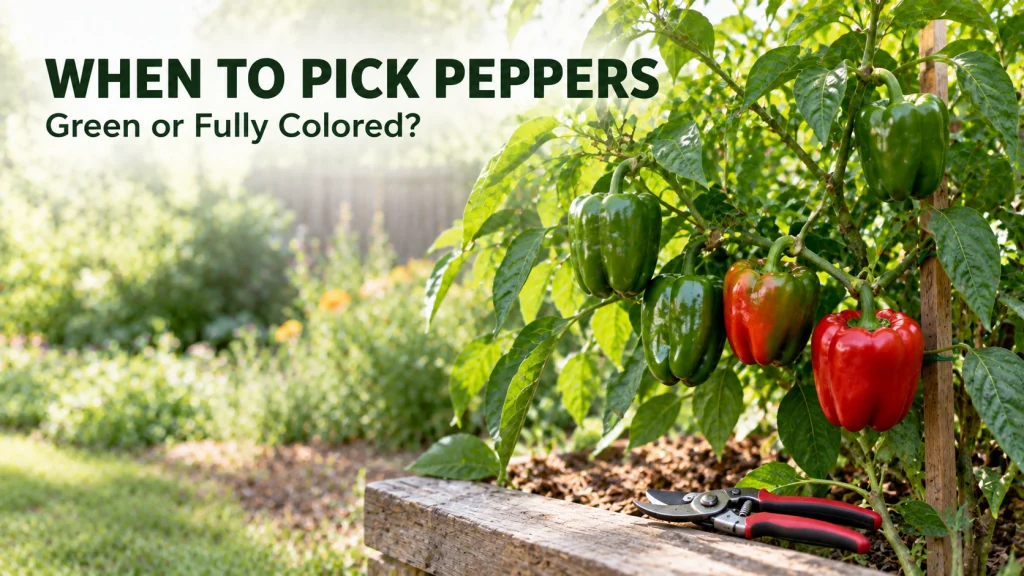
A green pepper can already be ready to pick
If you are deciding when to pick peppers, color should be treated as one cue, not as a pass or fail test. A green bell pepper and a red bell pepper can be the same fruit at different stages, and both stages may be useful in the kitchen. Many peppers are harvested after they have reached mature size but before they develop their final cultivar color. Waiting longer changes the fruit, but it does not automatically make the earlier harvest wrong.
The right choice starts with what you want from that particular fruit. Mature green peppers are often firm and crisp, while fully colored sweet peppers generally have had more time to develop sweetness and their mature flavor. Some hot peppers are also commonly used green even though they can color later on the plant. If you are planning a larger succession of crops and harvests, the broader vegetable gardening guidance can help place this decision in the rest of the season rather than treating one pepper as an isolated event.
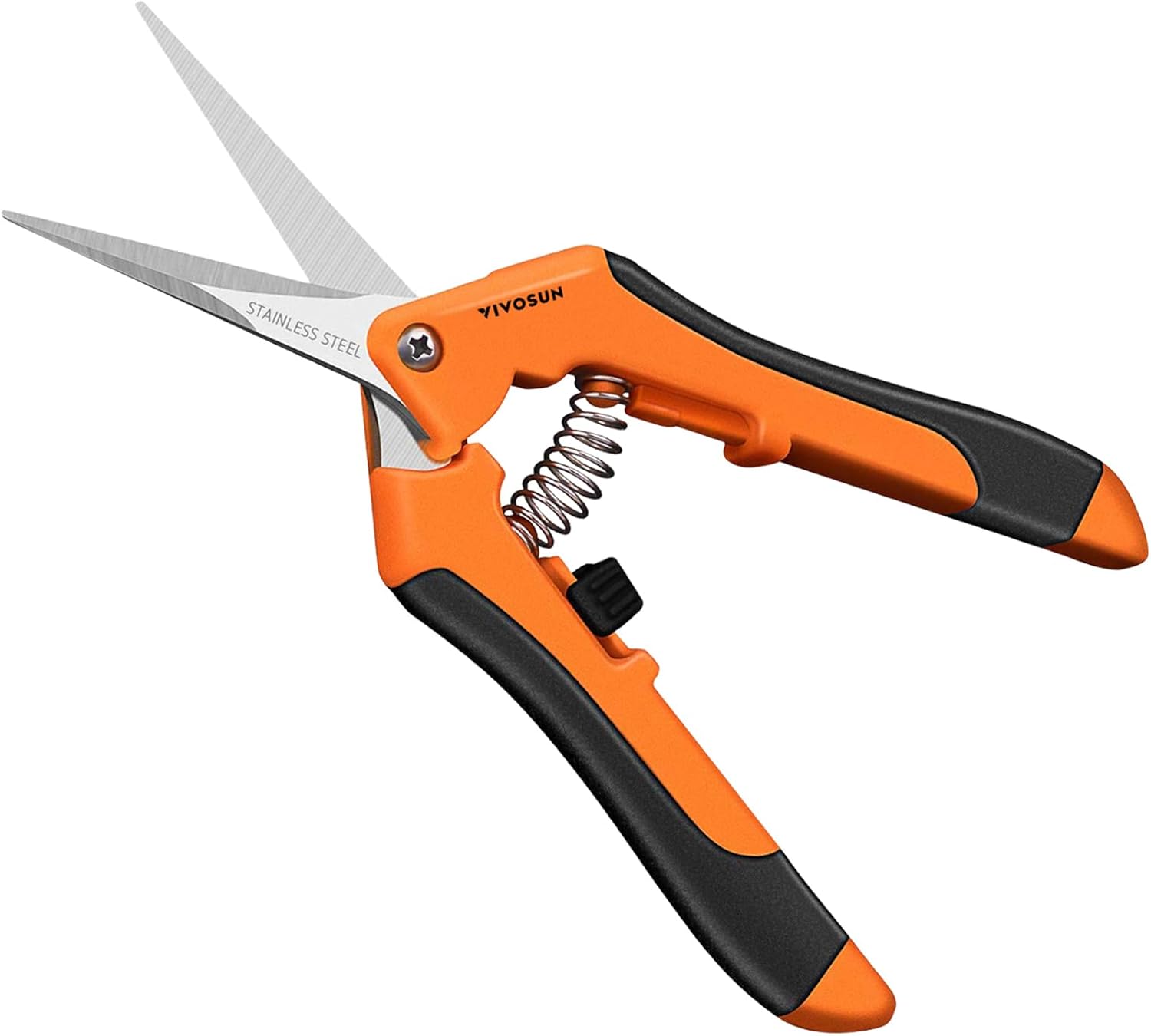
These 6.5-inch gardening scissors use precision-sharpened stainless steel blades for controlled cuts. The micro-tip design can reach into vegetable plants while helping avoid nearby stems and branches. A side locking mechanism keeps the blades closed when the tool is not in use.
Check On AmazonIf you click this link and buy, we earn a commission at no additional cost to you.
Learn the cultivar’s mature color before judging ripeness
The seed packet, plant label, or cultivar description should be your first reference because peppers do not all finish at the same color. Many varieties move from green toward red, orange, yellow, brown, or another mature color, while some display purple, pale yellow, or other colors before they are fully ripe. That means a purple or yellow fruit is not automatically at its final stage just because it no longer looks green. The cultivar name gives you the context that the fruit color alone cannot provide.
This matters most when the plant was purchased as a transplant and the tag has been lost. In that case, use the information you still have, such as the fruit type, the color progression of multiple fruits on the same plant, and whether older fruit is clearly moving toward another color. Avoid inventing a precise maturity rule from appearance alone when you no longer know the cultivar. If the exact variety cannot be recovered, make a conservative harvest decision based on full size, firmness, intended use, and season pressure rather than waiting indefinitely for a color that may not be the one you expect.

These 100 white T-type labels measure 2.4 by 3.9 inches and provide room to record cultivar names. The PVC labels are water resistant and reusable for garden use. Their matte surface can be written on with a permanent marker, helping keep pepper varieties identified through the season.
Check On AmazonIf you click this link and buy, we earn a commission at no additional cost to you.
Separate mature green harvest from fully colored harvest
Mature green and fully colored are two useful harvest stages, not a simple wrong versus right choice. At the mature green stage, the fruit has reached the size and firmness expected for harvest even though it has not completed its color change. Leaving that same fruit on the plant longer can allow it to reach the cultivar’s mature color and develop additional flavor, especially in sweet peppers. The trade-off is time, because every extra day needed for color change is a day the fruit remains exposed to weather, damage, and the end of the season.
| What you see | What it usually means | Reason to pick now | Reason to wait |
|---|---|---|---|
| Full-sized, firm fruit that is still green | The pepper may be at a usable mature green stage | You want a crisp green pepper, need the fruit now, or have limited season left | You know the cultivar should color further and want that later stage |
| Fruit beginning to change from green toward the cultivar’s mature color | The pepper is moving beyond the mature green stage | Weather risk or immediate use matters more than complete color | Conditions are favorable and you want fuller color development |
| Fruit at the expected mature color and still firm | The pepper has reached the full color stage for that cultivar | Harvest for use before quality declines or damage occurs | There is usually little reason to wait merely for more color once the expected color is reached |
| Fruit color is unfamiliar or does not match expectations | The cultivar may have a different color progression than assumed | Pick if it is full-sized, firm, and season pressure is increasing | Wait only if the cultivar information supports another mature color and conditions remain suitable |
The most useful way to use the table is to decide what you are optimizing for before you reach for the fruit. If the goal is a mature green pepper for cooking, full size and firmness can be enough when the cultivar is suitable for green harvest. If the goal is a sweeter, fully colored sweet pepper, leave an otherwise healthy fruit on the plant until it reaches the expected mature color. That same condition-based thinking is useful across home edible gardening decisions, where harvest timing often depends on the crop stage you actually want rather than a single universal calendar rule.
Use this pick-now-or-wait sequence when the color alone is not giving you a clear answer. Start with cultivar identity, then move through fruit development, intended use, and season pressure in that order. Each answer either supports harvesting now or gives the fruit a reason to stay on the plant. If you cannot verify the cultivar, rely more heavily on full size, firmness, and weather risk instead of guessing at a final color.
| Decision check | If yes | If no |
|---|---|---|
| Do you know the cultivar’s expected mature color? | Use that color as the target if you want the fully colored stage, then move to the next check. | Do not wait for an assumed color. Use fruit size, firmness, and season pressure to make a conservative harvest call. |
| Has the fruit reached its expected full size and a firm texture for its type? | It may be ready for mature-green harvest. Move to the intended-use check. | Wait if conditions are favorable and the fruit still appears clearly immature. |
| Do you want the mature-green stage for the way you plan to use it? | Pick now if the fruit is developed and firm. | Leave it on the plant for further color development when that later stage is the goal. |
| Is frost or other end-of-season pressure making extra time on the plant risky? | Pick developed fruit now rather than waiting for ideal final color. | Keep selected fruit on the plant longer if full color matters and growing conditions remain favorable. |
This sequence keeps color in the decision without letting it dominate every other cue. A green fruit that is developed, firm, useful at that stage, and facing limited season may be an easy pick-now decision, while a healthy fruit with plenty of warm weather left may be worth waiting on for full cultivar color. The important distinction is that waiting should have a specific purpose, not simply continue because the pepper is still green. Once one branch clearly points toward harvest, there is little benefit in holding the fruit for a cosmetic target that does not fit your intended use.

These long straight snips use narrow tempered steel blades for precise harvesting and detailed cutting. The blades are suited to flowers, herbs, vegetables, and other small plant material without crushing or bruising plants. An attached leather strap holds the snips closed for storage.
Check On AmazonIf you click this link and buy, we earn a commission at no additional cost to you.
Use firmness and full size as cross-checks
Color becomes much more useful when you check it against physical development. A pepper that is still obviously undersized for its type is not equivalent to a full-sized mature green fruit just because both are green. For many garden peppers, a fruit that has reached its expected mature size and feels firm is a stronger harvest candidate than a small fruit that happens to have started changing color. The aim is to use several cues together instead of asking one cue to do all the work.
Firmness also helps separate normal maturity from fruit that is losing quality. A mature pepper should generally feel solid for its type rather than limp, deeply wrinkled, or soft. Surface appearance varies among cultivars, so do not turn one cosmetic feature into a universal rule, but obvious softening or damage is a reason to stop waiting for an idealized final color. If the fruit is full-sized, firm, and appropriate for the stage you want, it is reasonable to harvest rather than leave it on the plant simply because another pepper in a photograph looked darker.
- Confirm the cultivar or at least the pepper type whenever possible.
- Compare the fruit with the expected mature size for that cultivar rather than with a random pepper from another plant.
- Check for firm walls and a fruit that feels developed rather than thin and immature.
- Decide whether you want the mature green stage or the fully colored stage before treating color as the deciding cue.
- Shorten the wait when weather or the remaining season makes further on-plant ripening uncertain.
These checks are especially useful when several peppers on one plant are at different stages. You may choose to harvest the largest mature green fruit and leave younger fruit to continue developing, rather than treating the whole plant as ready or not ready. That keeps the decision tied to individual fruit development. It also prevents a common beginner mistake: assuming every pepper must reach its final color before any fruit can come off the plant.

This four-piece stainless steel ruler set includes 6-, 8-, 12-, and 14-inch lengths for checking fruit dimensions against cultivar expectations. Each ruler carries both inch and centimeter scales with etched markings. The mixed lengths provide a consistent reference for comparing pepper size during repeated garden checks.
Check On AmazonIf you click this link and buy, we earn a commission at no additional cost to you.
Let frost or season pressure change how long fruit stays on the plant
Waiting for full color makes the most sense when the plant still has enough favorable growing weather to finish the job. Peppers are warm-season plants and are not frost tolerant, so the value of waiting changes sharply as cold weather approaches. A fruit that might reasonably stay on the plant longer in a long warm season may be a better mature green harvest in a short season. The decision is not whether full color is desirable in theory, but whether the garden still offers enough safe time to reach it.
As the season closes, prioritize fruit that is already full-sized and firm instead of gambling every mature pepper on a final color change. Do not count on a harvested pepper to complete the same ripening process it would have finished on the plant. Peppers do not reliably continue ripening after harvest, even if a fruit that already shows some color appears to shift slightly as it sits. That visible change should not be treated as a substitute for on-plant ripening when full cultivar color is the goal. If frost is a realistic threat, protecting a usable mature-green harvest can matter more than waiting for a color stage the fruit may no longer have time to reach outdoors.
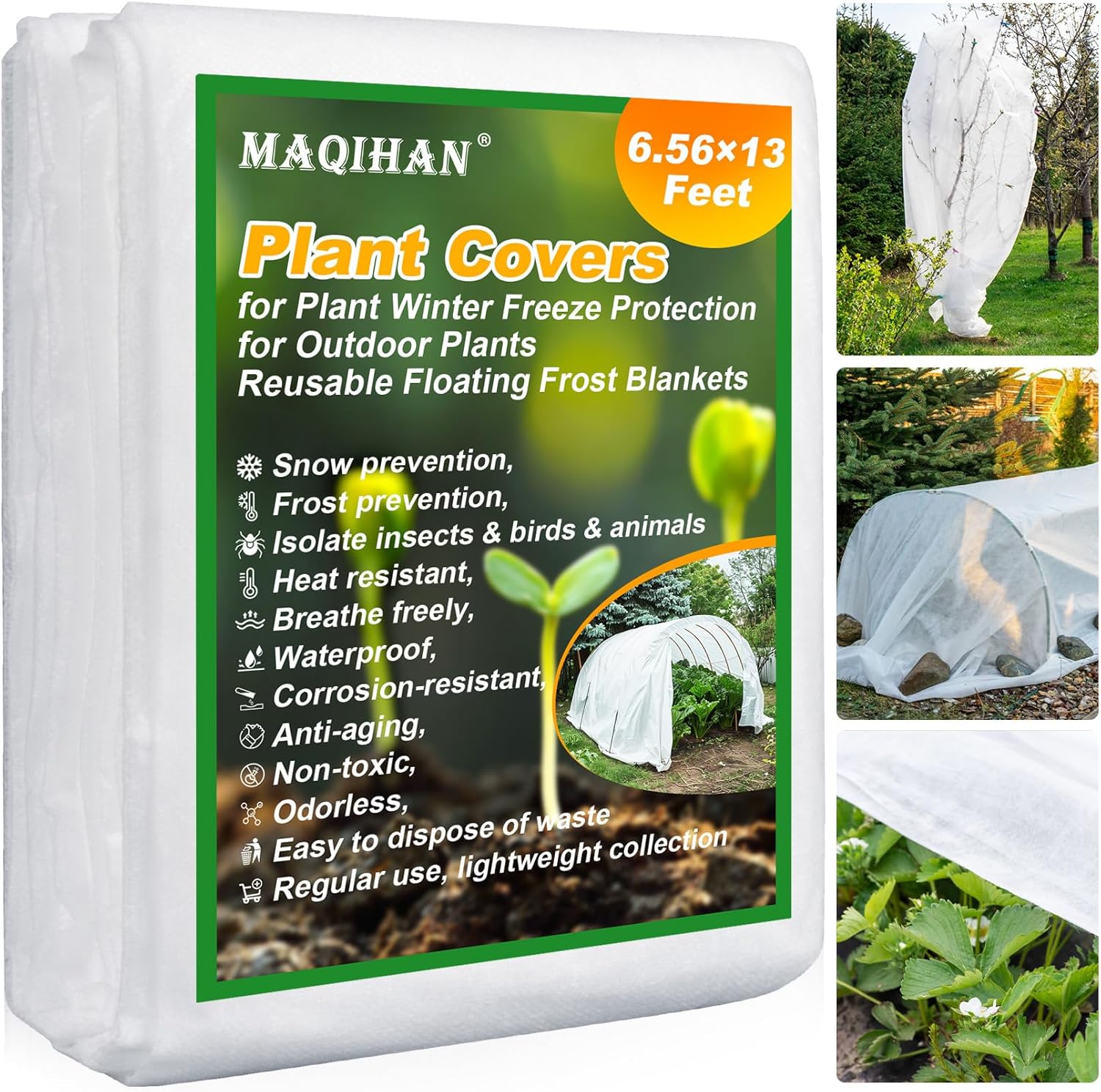
This 6.5-by-13-foot nonwoven frost cloth is designed to protect outdoor plants from frost, cold, and wind. The material can be cut to fit and laid loosely over plants or supported with hoops or frames. The listing advises putting the cover on before sunset and removing it after morning temperatures rise above freezing.
Check On AmazonIf you click this link and buy, we earn a commission at no additional cost to you.
Pick peppers without tearing branches or bruising fruit
Pepper branches can be brittle, especially when they are carrying several heavy fruits. Pulling a stubborn pepper can snap a branch or strip foliage along with the fruit, which turns a simple harvest into unnecessary plant damage. The safer default is to support the branch with one hand and cut the fruit stem cleanly with a sharp, clean pair of garden scissors or pruners. You do not need to force the fruit free to prove that it is ripe enough.
Handle the harvested pepper by the body and stem without squeezing or dropping it, particularly if the fruit is fully colored and has remained on the plant longer. If a pepper separates easily, that can be another maturity cue, but ease of separation should not replace the cultivar, size, firmness, and color checks already discussed. Hot peppers deserve an extra handling boundary because capsaicinoids can irritate skin and especially eyes, so gloves are sensible when harvesting or processing pungent varieties. Once the fruit is off the plant, move on to the use or storage method that fits your plans rather than leaving harvested peppers in direct sun.

These 8-inch bypass pruning shears use an SK-5 steel blade with a titanium coating. The tool is rated for live stems and branches up to 3/4 inch in diameter and includes a sap groove to reduce sticking. Non-slip aluminum handles wrapped with PVC provide a secure grip for controlled stem cuts.
Check On AmazonIf you click this link and buy, we earn a commission at no additional cost to you.
Final thoughts: choose the harvest stage that fits the pepper and the use
The useful question is not whether a green pepper has failed to ripen, but whether it has reached the harvest stage you want. Mature green fruit can be the correct endpoint for one meal, while another fruit from the same plant may be worth leaving for its cultivar’s full color. Treat those as two legitimate outcomes rather than a right answer and a wrong one. That keeps the harvest decision tied to use instead of turning color into a universal rule.
Before picking, run through the same short sequence each time: identify the cultivar if possible, confirm that the fruit is developed and firm, decide which stage you want, then account for the weather still available. If those checks point to harvest, cut the fruit cleanly and move on instead of waiting for a cosmetic target with no practical benefit. If they point to more time on the plant, wait for a specific reason, such as fuller cultivar color, rather than from habit. A clear reason to pick or wait is more useful than a calendar date.

This three-pack of garden pruning shears uses stainless steel blades for general trimming and precise plant cuts. The set includes three blade styles for different garden cutting tasks, and each tool has a safety lock. The shears are designed for precise cuts while helping avoid damage to nearby plant parts.
Check On AmazonIf you click this link and buy, we earn a commission at no additional cost to you.
FAQs
🫑 Can I pick a green bell pepper before it turns red?
Yes. A bell pepper can be harvested at the mature green stage once it has reached a developed size and feels firm. If the cultivar normally turns red, you can also leave selected fruit on the plant longer when you want the fully colored stage and the season allows it.
🌈 How do I know what color my pepper should be when fully ripe?
Check the seed packet, plant tag, or cultivar description because mature color varies by variety. Do not assume every pepper should turn red, and remember that some unusual colors can appear before the fruit reaches its final stage.
✋ What does a mature green pepper feel like?
It should generally be full-sized for its cultivar and firm rather than thin, soft, or deeply wrinkled. Use firmness together with cultivar information and fruit size instead of relying on touch alone.
❄️ Should I pick peppers before frost?
If frost is becoming a realistic threat, harvest mature fruit rather than assuming it has enough time to finish coloring outside. Peppers are not frost tolerant, so a usable mature green harvest can be the better choice late in the season.
✂️ Is it better to cut or pull peppers from the plant?
Cutting the fruit stem is the safer default because pepper branches can break when fruit is pulled. Support the branch and make a clean cut with sharp, clean scissors or pruners.
🌶️ Do hot peppers have to turn red before I pick them?
No. Many hot peppers are used at a green stage, while others are commonly harvested after they reach their mature color. Check the cultivar and the intended use, and wear gloves when handling pungent peppers if skin irritation is a concern.
References and Sources
- Illinois Extension pepper guidance: Supports mature green harvest, full color development, firmness cues, and cutting fruit to reduce plant damage.
- University of Minnesota Extension pepper guidance: Supports harvesting at mature size, using green or fully colored stages, and clipping most peppers from the plant.
- University of Maryland Extension pepper guidance: Supports full-size harvest cues, on-plant color development, the boundary that peppers do not ripen further after harvest, branch protection, and frost-related harvest considerations.