Choosing what vegetables to grow is easier when every crop has to justify the space it will occupy. Start with food your household will actually use, then filter the list by local season, mature footprint, support needs, time to production, care burden, and how you expect to use the harvest. The right shortlist changes with climate, available space, and the amount of routine care you can realistically provide. A small first-season list is usually more useful than a long collection of crops that all compete for the same bed space and attention.
The wish list is longer than the garden
A seed catalog can make twenty crops look equally reasonable, but a measured garden cannot hold every appealing idea. When deciding what vegetables to grow, I would treat the first list as a draft rather than a planting commitment. The useful question is not which vegetables are popular in general, but which ones fit your household, your season, your space, and your routine. That shift turns an overwhelming catalog into a shortlisting problem you can actually solve.
Start by writing down every crop you are genuinely interested in, then expect some of them to be removed. A crop does not fail the shortlist because it is difficult or unpopular, and another does not earn a place because someone called it easy. Each one has to fit the conditions you already have or a change you are willing to make. If the whole garden is still only an idea, use a broader garden planning process first so the crop list is being matched to a real site rather than an imagined one.

This five-year garden journal includes a planting calendar and plant logs in a hardcover format. Its pages are designed for tracking seasons, plants, and garden progress over time. The combined planner and log-book format keeps planting plans and observations together in one record.
Check On AmazonIf you click this link and buy, we earn a commission at no additional cost to you.
Start with vegetables the household will actually use
Food preference is the cleanest first filter because unused produce still consumes space, water, attention, and harvest time. Keep crops that already have a place in your kitchen, and be more cautious with vegetables that sound interesting but rarely make it onto your plate. This does not mean the garden has to copy the grocery list exactly. It means familiar use should carry more weight than novelty when space is tight.
Think about how each crop will be used before you count plants or buy seed. A vegetable eaten fresh several times a week may deserve more room than one used only occasionally, while a crop intended for freezing or storage may justify a larger planting even if it is not eaten immediately. Household size matters less than actual eating habits, because two households of the same size can use vegetables very differently. The first pass should therefore remove crops that nobody is excited to cook, eat, preserve, or share.
| Shortlist question | What to record |
|---|---|
| Will we use it? | Often, sometimes, rarely, or mostly experimental |
| Does the season fit? | Likely planting window and whether the crop can finish |
| How much room does it claim? | Mature spread, height, and support needs |
| How long does it occupy space? | Quick turnover, long wait, or repeated harvest |
| What care does it add? | Watering attention, tying, training, pest checks, or frequent harvest |
| What happens after harvest? | Eat fresh, preserve, store, share, or use gradually |
Use the worksheet to compare crops on the same terms instead of relying on enthusiasm alone. A crop that survives the first filter should still face the season, space, and workload checks that follow.
Remove crops that do not fit the local season
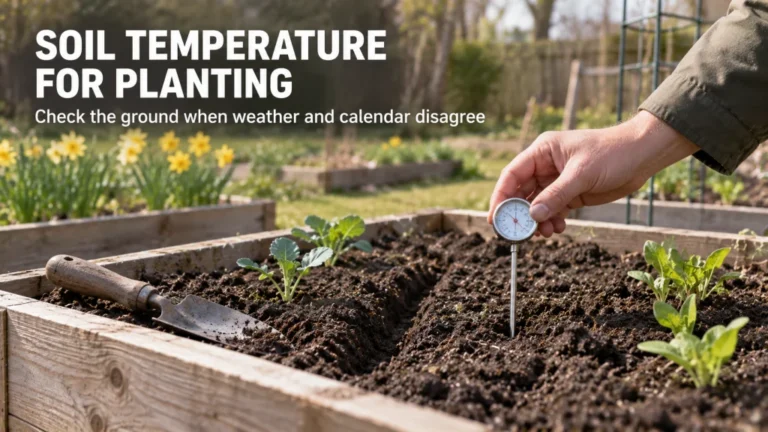
A vegetable can be a household favorite and still be a poor fit for the planting window available to you. Cool-season and warm-season crops respond differently to temperature, and the useful growing period varies by region rather than by a national calendar. Check local Extension planting guidance before assuming that a crop can simply go into the ground whenever garden space opens. The shortlist should favor crops that have a realistic path from planting to harvest under your local conditions.
Time to maturity is part of this filter, but it should not be read in isolation from planting method and local weather. A crop started from a transplant may enter the garden at a different stage than one direct-sown from seed, while heat or cold can slow development even when the package gives a neat number. Treat those numbers as planning information, not a promise. If the season is marginal, move that crop to the research list until you have verified a locally workable planting window.

The REOTEMP K82-3 uses a 5-inch stainless-steel stem for garden soil temperature measurement. Its 2-inch dial reads from 0 to 220 degrees Fahrenheit. The waterproof thermometer is designed for seeding, transplanting, and gardening.
Check On AmazonIf you click this link and buy, we earn a commission at no additional cost to you.
Compare mature footprint and support before counting plants
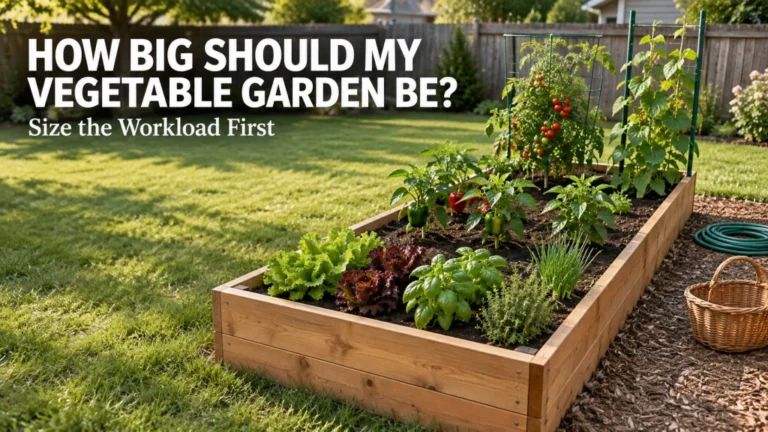
Seedlings make almost every crop look compact, so plan from mature size instead of the size that fits in your hand at planting time. A sprawling vine, a tall staked plant, and a low leafy crop can all begin as tiny transplants while claiming very different amounts of usable space later. Support can reduce the ground area used by some crops, but stakes, cages, or trellises still need room and access. Count that structure as part of the crop’s footprint rather than as free vertical space.
Footprint also changes how neighboring plants receive light and how easily you can reach them for watering, weeding, and harvest. A crop that technically fits on paper may still be awkward if it blocks a path or makes the center of the bed unreachable. Compare mature width, height, and support needs before deciding how many plants belong on the final list. Exact spacing comes later, after the crop itself has earned a place.

This VIVOSUN trellis netting measures 5 by 15 feet and is made from heavy-duty braided polyester. Its 6 by 6-inch mesh supports vertical or horizontal garden training. The netting is reusable and is designed to support vining crops including cucumbers, peas, cantaloupes, and tomatoes.
Check On AmazonIf you click this link and buy, we earn a commission at no additional cost to you.
Let time to production change how much space a crop deserves
Two crops can occupy similar space and still use the garden very differently if one turns over quickly and the other stays in place for much longer. In a small bed, that time cost matters because a long-season crop can prevent you from using the same area for another planting. This does not make long-season vegetables a bad choice. It simply means their value to your household should justify the space they hold for the length of the season.
Compare crops by both physical footprint and how long they are expected to occupy that footprint. A quick crop may fit before or after another planting, while a slow crop may be a season-long commitment. Local planting guidance and the specific seed or transplant information should be checked before you build a sequence around exact timing. For the first shortlist, the goal is only to notice which crops tie up space briefly and which ones ask for a longer reservation.
Separate one-time harvests from crops that keep producing
Harvest pattern changes the practical value of a crop even when its mature footprint looks reasonable. Some vegetables are largely removed when the main harvest comes out, while others can continue producing over an extended period if conditions remain favorable. That difference affects how often you visit the garden and how soon the space may become available again. It also affects whether a small planting can meet the way your household wants to use the crop.
Do not turn repeated harvest into a universal reason to favor one crop over another. A steady producer is useful only if you want the ongoing harvest and can keep up with picking, while a concentrated harvest can be convenient for preserving or batch cooking. Match the harvest pattern to your routine rather than chasing maximum output per square foot. The better shortlist is the one whose harvest rhythm fits what you will actually do with the food.

This 8-quart Maine Garden Hod uses pine ends, a solid oak handle, and PVC-coated wire mesh. It measures 16 inches long by 9 inches wide by 5.25 inches high. The USA-made basket is designed for collecting and transporting vegetables, flowers, or garden tools.
Check On AmazonIf you click this link and buy, we earn a commission at no additional cost to you.
Add care burden and known disease pressure without pretending any crop is foolproof
Care burden is easy to ignore while every crop is still a name on paper. Some choices add repeated tying, training, close pest checks, frequent harvest, or more careful watering, while others fit a simpler routine. The important comparison is not whether a crop is labeled easy or hard, but whether its normal care fits the time and attention you can give it. A smaller garden can still become demanding if every crop asks for a different high-touch routine.
Previous garden problems can also inform the shortlist, but they should not be turned into a certain diagnosis for the next season. If a crop or plant family repeatedly struggled in the same area, record that history and investigate rotation, resistant cultivars, or a different location when you reach crop-specific planning. Resistance does not mean immunity, and visual symptoms alone do not prove the same disease will return. Use past problems as evidence to investigate, not as a reason to declare an entire crop impossible.
- Keep routine care that fits the time you can reliably give the garden.
- Flag crops that need support, training, or frequent picking so those jobs are visible before planting.
- Record recurring pest or disease problems for later crop-specific research rather than guessing at the cause.
- Reduce the number of demanding crops if several of them compete for the same limited attention.
The point of this filter is workload balance. A crop can stay on the list because you value it enough to accept extra care, but that choice should be deliberate.

This VIVOSUN soil tester checks moisture, pH, and light with a probe inserted into the soil. Its instructions call for placing the probe near plant roots and reading the pointer on the dial. The three-in-one meter combines those soil and light checks in one handheld tool.
Check On AmazonIf you click this link and buy, we earn a commission at no additional cost to you.
Decide whether storage or immediate eating changes the shortlist
What happens after harvest can change how much of a crop is worth growing. A vegetable that stores well under conditions you can provide may support a larger planting, while a highly perishable crop can become waste if harvest arrives faster than the household uses it. Storage space, preservation plans, and willingness to share extra produce all belong in the decision. The garden should not create a second job in the kitchen that nobody planned to do.
This is also where intended use can rescue a crop that looked inefficient on a simple space comparison. A concentrated harvest may be exactly what you want for freezing, canning, drying, or another established preservation routine, while a repeated fresh harvest may suit daily meals better. Keep the decision tied to your real habits and safe preservation practices. If you do not already have a realistic use for a large harvest, start with less and learn from what you actually consume.
Keep one small slot for experimentation instead of filling the whole plan with unfamiliar crops
A first garden does not need to be predictable from edge to edge. Trying one unfamiliar crop can teach you about your site, your cooking preferences, and the amount of care you enjoy giving without putting the whole garden at risk of becoming an experiment. I would keep that test deliberately small. The rest of the shortlist can then be built around crops with a clearer household use and a better-understood fit.
The experimental slot also gives interesting seed catalog finds somewhere to go without displacing everything familiar. If the crop performs poorly, you have learned something without losing a large share of the available space. If it performs well and earns a place in the kitchen, it can move into the regular shortlist later. Experimentation works best when it produces information, not when it turns every bed into a collection of unknowns.

This VIVOSUN set includes five square 5-gallon grow bags made from 260-gram thickened nonwoven fabric. Reinforced double-stitched handles are built into each fabric pot for moving it. Each pot also has four corner holders for support poles up to 0.6 inch in diameter.
Check On AmazonIf you click this link and buy, we earn a commission at no additional cost to you.
Choose the crop first, then compare varieties and detailed growing requirements
Do not spend an hour comparing tomato varieties if tomatoes have not yet earned space in the garden. The first decision is crop-level fit: household use, local season, footprint, harvest pattern, and care burden. Variety-level details become useful after that decision because cultivar choice can change size, maturity, disease resistance, and other practical traits. Reversing the order creates more research before you know whether the crop belongs in the plan at all.
Once a crop survives the shortlist, move into exact growing requirements using reliable local guidance and the specific seed or plant information. This is the stage to compare spacing, planting timing, support, cultivar traits, and other details that were too specific for the first pass. Keep crop selection and crop management as two different jobs. That separation makes it easier to stop researching options that no longer fit the garden.
Next step: For every crop that remains, verify local planting timing, mature spacing, support needs, and cultivar-specific traits before buying seed or setting the final plant count.
The shortlist is stable when removing another crop would mean giving up something you genuinely want, not merely something that looked appealing in a catalog. At that point, detailed research becomes narrower and more useful.

This KINGLAKE pack contains 100 plastic T-type plant labels for nursery and garden use. Each label measures 6 by 10 centimeters. The T-type format provides individual markers for identifying plants in nursery or garden settings.
Check On AmazonIf you click this link and buy, we earn a commission at no additional cost to you.
Put the final shortlist back into the measured garden plan
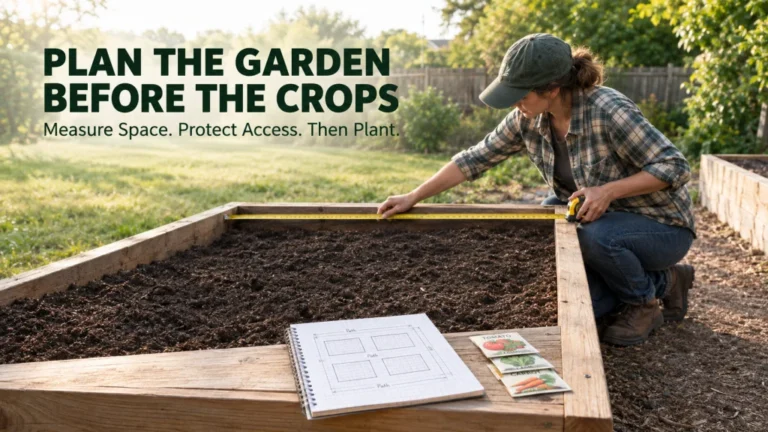
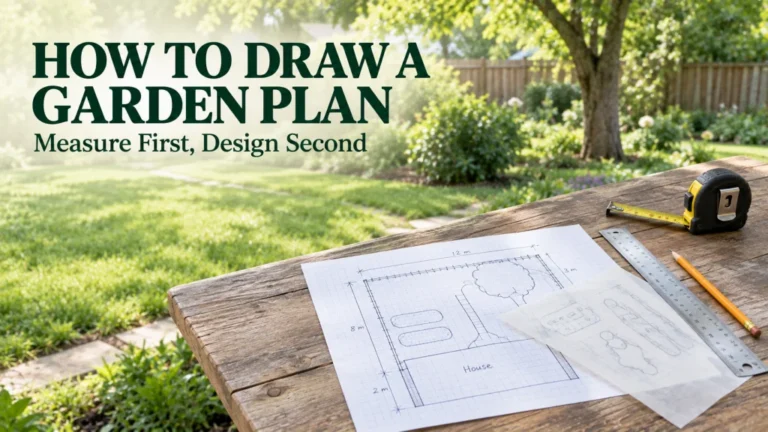
A crop list is not finished until it fits the measured space. Put the survivors back onto the garden sketch and check mature footprint, access, support, and likely season occupancy together. This is where an attractive shortlist may need one more cut, because several individually reasonable crops can still compete for the same sunny corner or trellis position. If the plan only works by squeezing spacing or blocking access, the list is still too long.
Use the final pass to balance familiar crops, long and short commitments, repeated and concentrated harvests, and the one experimental slot if you want one. Do not chase a mathematically perfect mix, because weather and plant performance will not follow the sketch exactly. The goal is a garden that has enough room to function and a crop list you can explain in practical terms. For a first garden, that kind of restraint is part of starting a garden with workable constraints rather than trying to solve every growing decision at once.
| Wish-list crop | Shortlist decision | Reason |
|---|---|---|
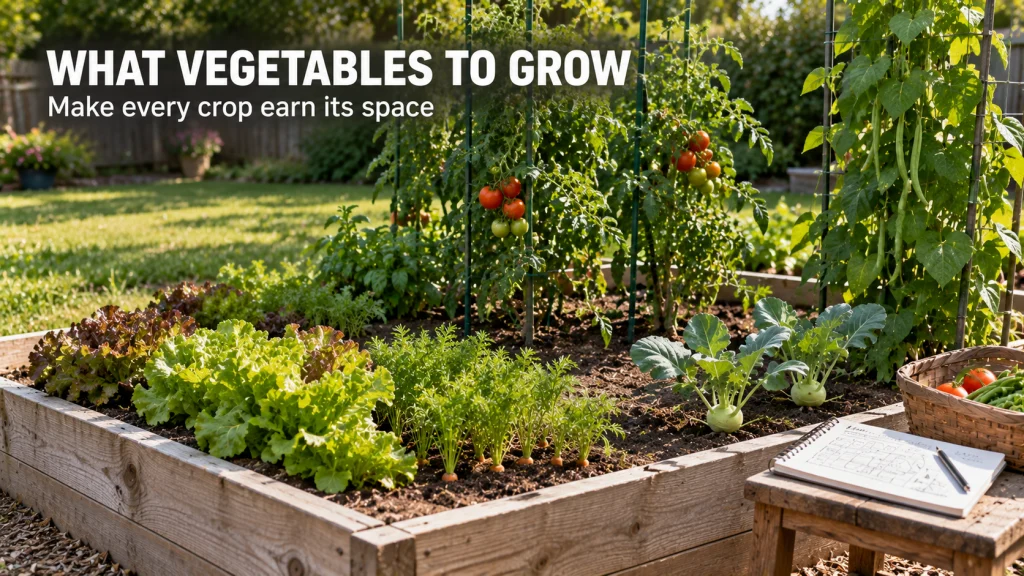
| Tomatoes | Keep | Frequently used, but reserve room for mature size and support |
| Leaf lettuce | Keep | Fits a cool part of the season and suits frequent fresh use |
| Winter squash | Remove for now | Desired, but the available bed cannot spare the mature spread this season |
| Green beans | Keep | Household uses them often and support can be planned before planting |
| Kohlrabi | Small experiment | Unfamiliar in the kitchen, so a limited trial gives useful information without claiming much space |
This example is a method, not a recommended crop list. The same five crops could produce a different result in another climate, another kitchen, or a garden with different space and support options.

The Komelon SL2825 is a 25-foot self-lock power tape with an automatic blade lock. Its nylon-coated blade retracts with a push button, and the case uses impact-resistant ABS with a rubber overmold. The blade also carries stud markings at 16-inch intervals.
Check On AmazonIf you click this link and buy, we earn a commission at no additional cost to you.
Final Thoughts: every crop must earn its space
The most useful answer to the question of which vegetables to grow is rarely a national list of easy crops. Start with what you will use, then let season, mature footprint, support, time to production, harvest pattern, care burden, and intended use remove options that do not fit. A shorter list is not a compromise if every crop on it has a clear reason to be there. It is a plan that matches the garden you actually have.
Once the shortlist is stable, move into local planting guidance, exact spacing, cultivar comparison, and crop-specific care. Keep records of what fit well, what demanded too much attention, what went unused, and what you would gladly grow again. Those observations make the next shortlist better without pretending one season proves a universal rule. The best first-season result is a manageable garden that gives you enough evidence to make the next plan more precise.
FAQs
🥕 What vegetables should I grow as a beginner?
Start with vegetables your household already eats and that fit your local planting season, available space, and realistic care routine. A short list of crops that fit those conditions is more useful than a universal beginner list.
🌱 How many different vegetables should I plant in a small garden?
There is no useful fixed number because mature plant size, support, paths, and harvest pattern change how much space each crop consumes. Sketch the mature footprint first, then reduce the crop count until every plant and access route fits without crowding.
☀️ Which vegetables make sense for a short growing season?
Use local Extension planting guidance to identify crops and planting methods that can realistically finish in your available season. Check variety-specific maturity information only after you have decided which crops fit your conditions.
🧺 Should storage crops get more space than vegetables eaten fresh?
Only if you have a real plan and suitable conditions for storing or preserving the harvest. Give more space to storage crops when that matches how your household uses food, not because storage automatically makes a crop more valuable.
🪴 Is it better to choose compact vegetables for limited space?
Compact growth can help, but the label alone does not settle the decision. Check mature dimensions, support requirements, harvest pattern, and the exact variety because a supported climbing crop may sometimes use ground space differently from a bush form.
References and Sources
- Iowa State University Extension: Supports using household preference, production time, planting season, mature size, support, storage, past success, and care difficulty when choosing what to grow.
- University of Maryland Extension: Supports starting with a manageable garden size and matching the garden to the time and resources available for planting, maintenance, and harvest.
- NC State Extension: Supports matching crop choice to household use, space, growing season, mature size, and garden layout.
- UGA Cooperative Extension: Supports using previous disease problems and resistant varieties as part of crop planning while recognizing that resistance can be partial.